The Obelisk of Aksum
- Dated
- Place
- Aksum, Tigray, Ethiopia · Kingdom of Aksum
- Coordinates
- 14° 08′ N · 38° 43′ E (approximate)
- Remains
- Reconstructed
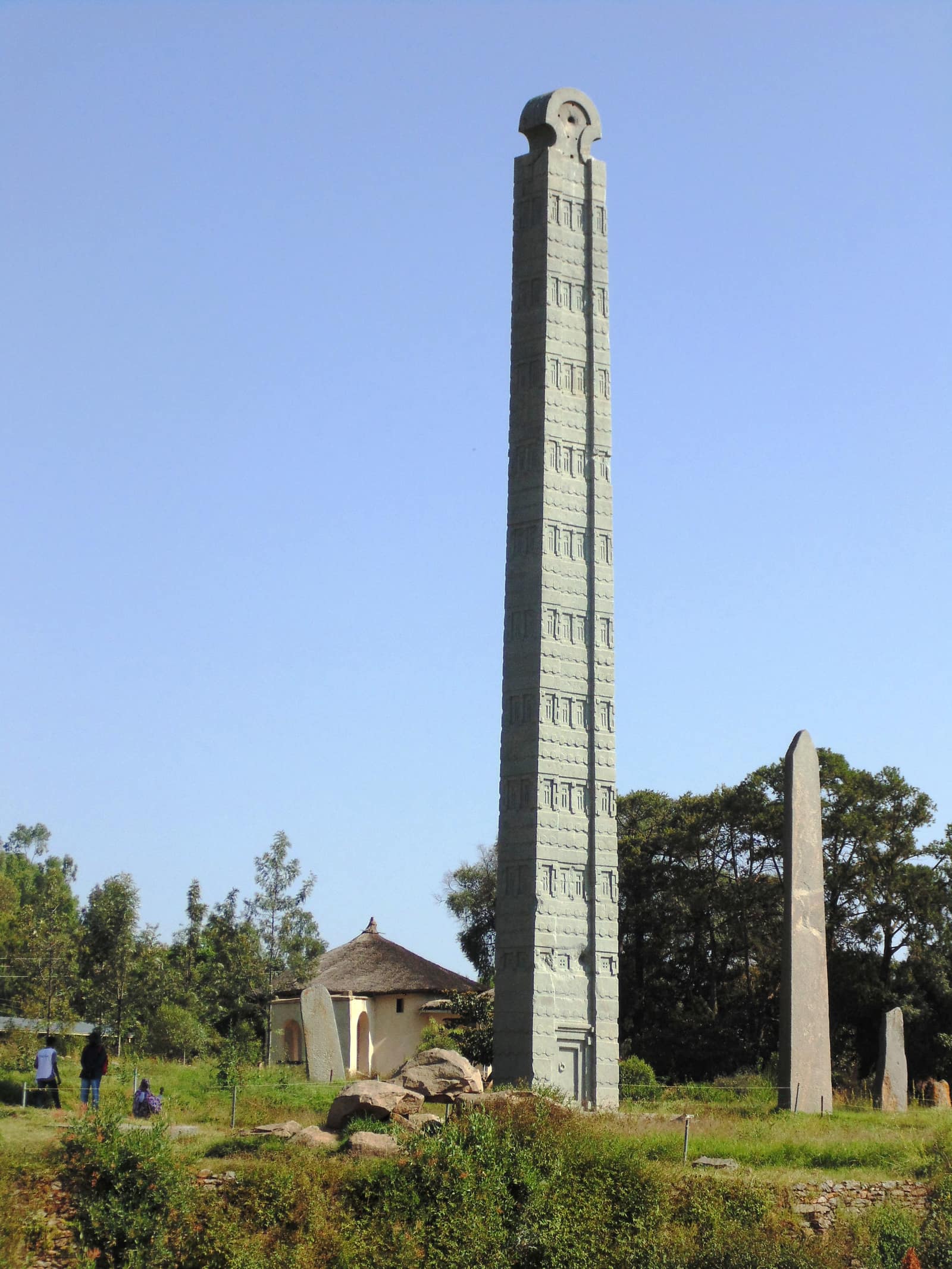
O.Mustafin, CC0, via Wikimedia CommonsCC0-1.0Original record
Data saver is on. Images load only when you ask. You can change this in Settings at any time.
From the archivist
This civilization raised stones taller than its houses to stand over its dead. At Aksum, in the highlands of northern Ethiopia, the kings of a trading empire had single blocks of granite quarried, dressed and set upright over their tombs. On the largest, the stone was carved to look like a tower of many storeys: false doors at the foot, then rows of windows, and the round ends of beams between each floor.
This one is twenty-four metres high. For about sixteen centuries it belonged to Aksum.
In 1937 an occupying army carried it off in pieces to Rome, where it was set up near the Circus Maximus as a trophy of conquest. A treaty after the war promised its return. It took almost sixty years.
In 2005 it came home in three sections, flown in by cargo plane. Engineers reassembled it on its old ground, and in 2008 it stood again among the other stones of Aksum, and the town celebrated its return.
Established
- The stela is 24 metres high and weighs about 150 tonnes; it is the second largest of the stelae of Aksum and is about 1,700 years old (UN News 2008).
- It was taken to Rome by Mussolini's troops in 1937 and set up there near the Circus Maximus (UN News 2008; UNESCO).
- Italy decided in 2005 to return it and paid the costs; because of its size it had to be cut into three pieces, and the last block was set in place in its original location at the end of July 2008 (UN News 2008).
- Aksum, with its monolithic stelae, tombs and ruins, was inscribed on the UNESCO World Heritage List in 1980 (UNESCO).
- The largest Aksumite stelae are carved to look like tall buildings, with false doors and windows and the ends of timber beams, and stood over royal and elite tombs (Phillipson 2012).
Interpretation
The stela is usually linked to the tombs of Aksumite rulers of the 3rd or 4th century CE, before the kingdom's conversion to Christianity, but which ruler it marked, and when in antiquity it fell, are uncertain.
In 10,000 years
In 10,000 years, will anyone know that this stone crossed the sea twice before it came to rest?
Sources (3)
- UNESCO World Heritage Centre. Aksum (property 15), inscribed 1980. · whc.unesco.org
- United Nations News. UNESCO teams successfully reinstall Ethiopian obelisk to original site, August 2008. · news.un.org
- Phillipson, D. W. Foundations of an African Civilisation: Aksum and the Northern Horn, 1000 BC to AD 1300. Woodbridge, James Currey, 2012.