Skip to content
Stela
ENFR

Halls

We built IWe discovered IIWe imagined IIIWe changed the world IVWhat we lost VWhat we leave behind VI

Explore

TimelineMapJourneysSearch the archive

Language

Français

Settings

V

Hall V

What we lost

From the archivist

Not everything was kept. Libraries burned, languages fell silent, whole ways of knowing left no written trace. This hall keeps what we know was lost, so that the absence itself is remembered.

9 fragments in this hall · Africa 4 · Asia 3 · Oceania 2
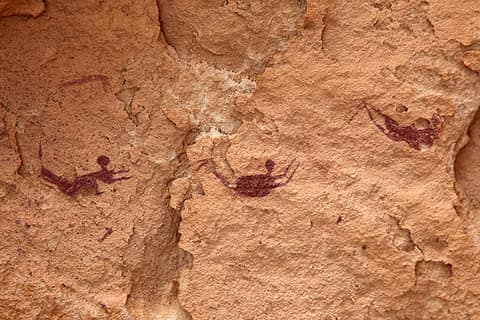
A rough orange sandstone wall on which three small human figures are painted in dark red. Each lies horizontal, with a round head, arms reaching forward and legs bent up behind, as if swimming. Between them the rock surface has cracked and peeled away in pale patches.Image not loaded · data saverThe image could not be loaded.Image not saved on this deviceRH-0126

7000 to 4000 BCE

The Cave of Swimmers, in a desert that was green

Wadi Sura, Gilf Kebir, New Valley Governorate, Egypt · Africa
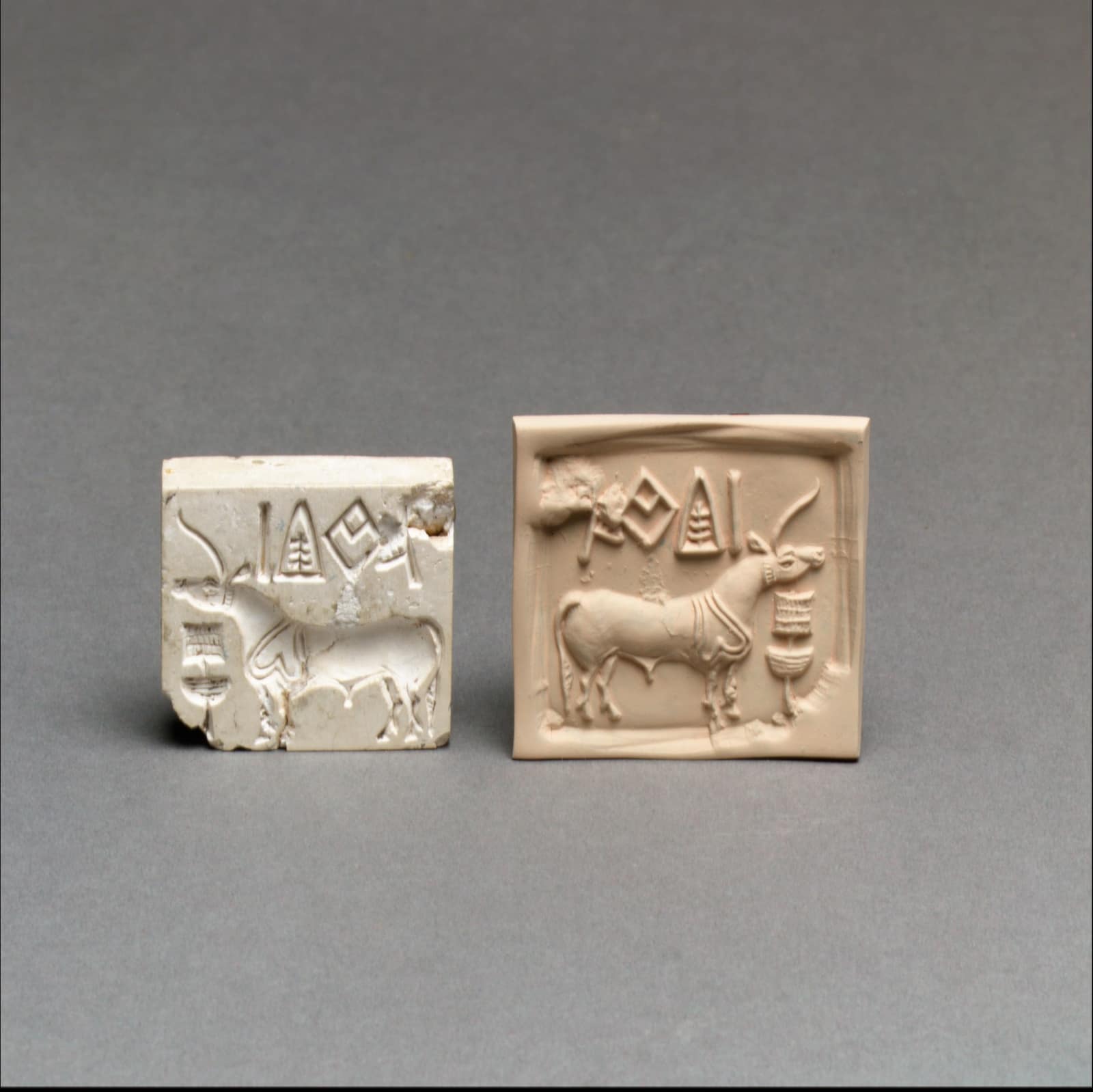
Two small square objects side by side on a grey background. On the left, a seal of pale, whitish stone, chipped at the corners, its picture carved in reverse; on the right, its modern impression in buff clay, where the picture reads the right way round: a bull-like animal with a single long horn, in profile, a harness pattern on its shoulder, its head lowered towards a tall tiered object on a stand. Above its back runs a short row of signs, among them a diamond, a pointed arch filled with lines like a little tree, and a single upright stroke.Image not loaded · data saverThe image could not be loaded.Image not saved on this deviceRH-0138

2600 to 1900 BCE

A seal from the Indus, and the readers we lost

Mohenjo-daro, Larkana District, Sindh, Pakistan · Asia
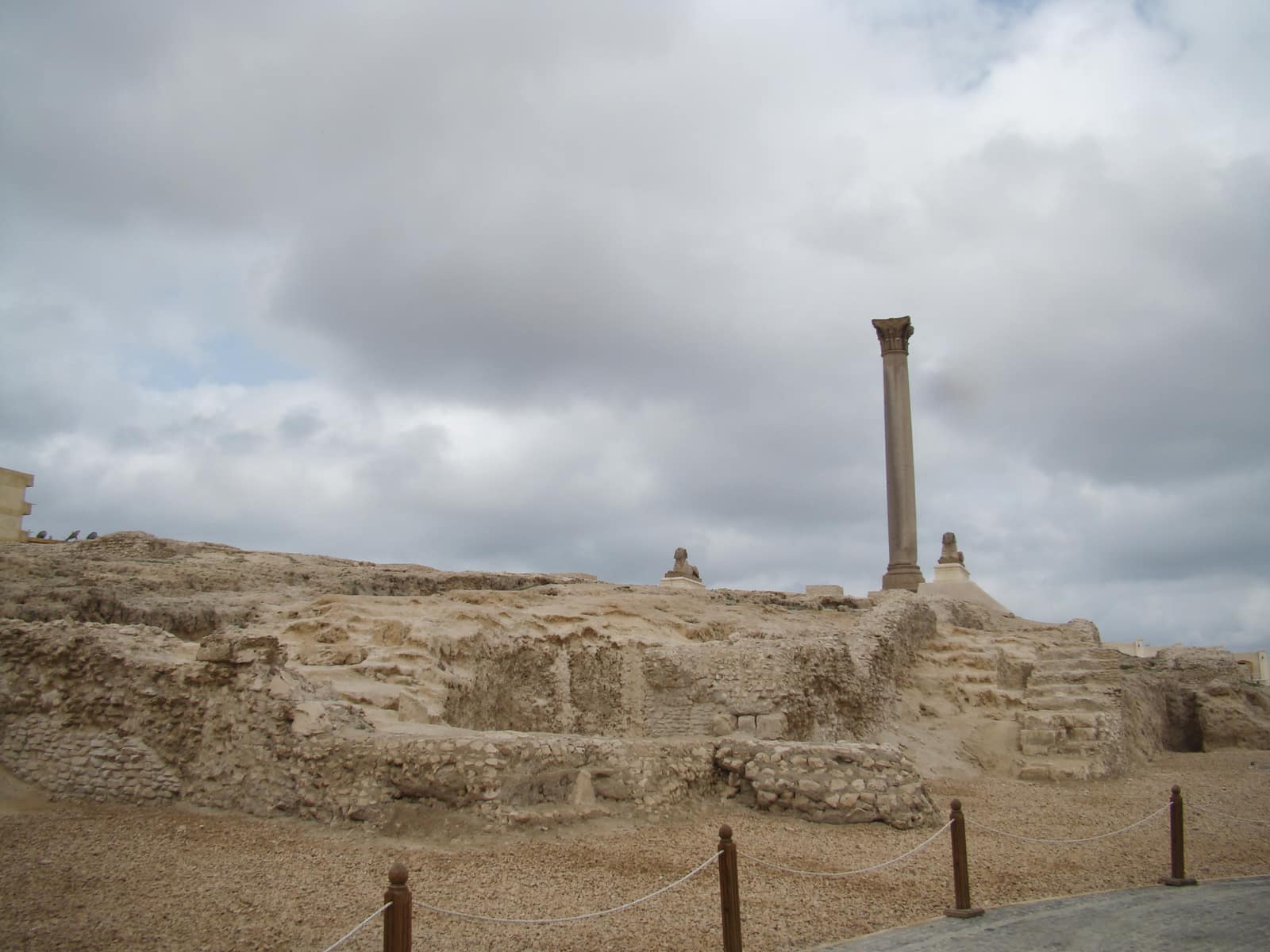
Low ruined walls and foundations of pale limestone on a rise under a grey, clouded sky at the site of the Serapeum in Alexandria, with a single tall granite column standing alone on the right and a rope barrier along the path in the foreground.Image not loaded · data saverThe image could not be loaded.Image not saved on this deviceRH-0022

300 to 250 BCE

The Library of Alexandria

Alexandria, Egypt · Africa
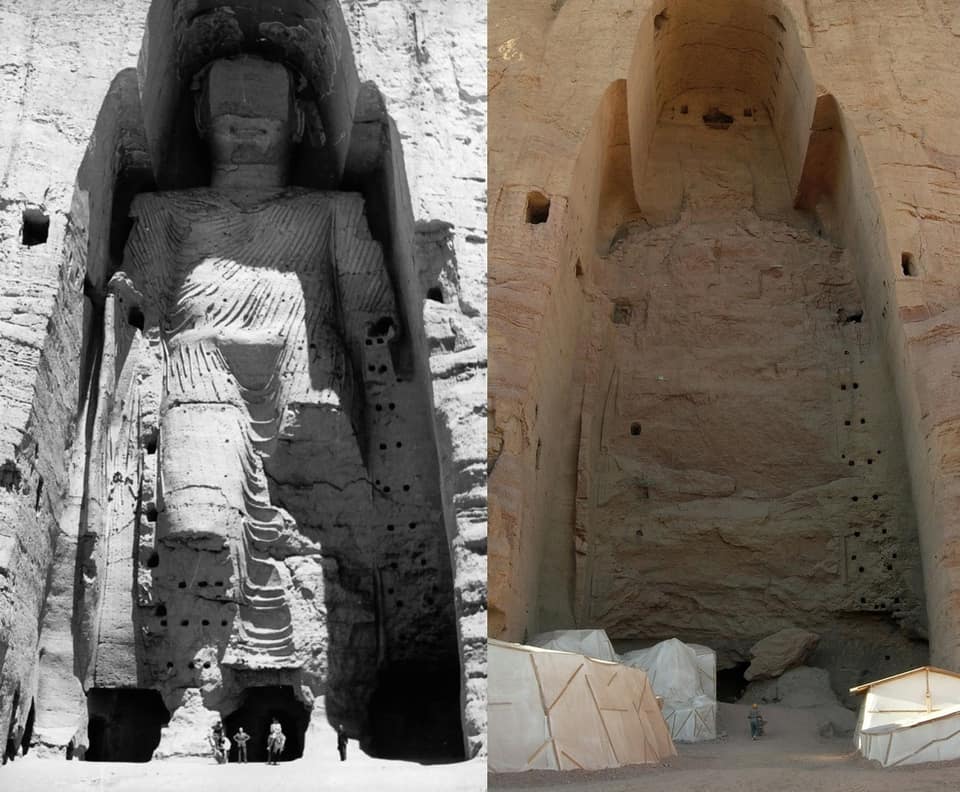
Two photographs side by side: on the left, in black and white, a giant standing Buddha carved into a pale cliff, its face cut away, its robe falling in folds, filling a tall arched niche, with tiny human figures at its feet; on the right, in colour, the same niche empty, its back wall bare and scarred, with pale structures at its foot.Image not loaded · data saverThe image could not be loaded.Image not saved on this deviceRH-0048

550 to 620 CE

The Buddhas of Bamiyan

Bamyan, Afghanistan · Asia
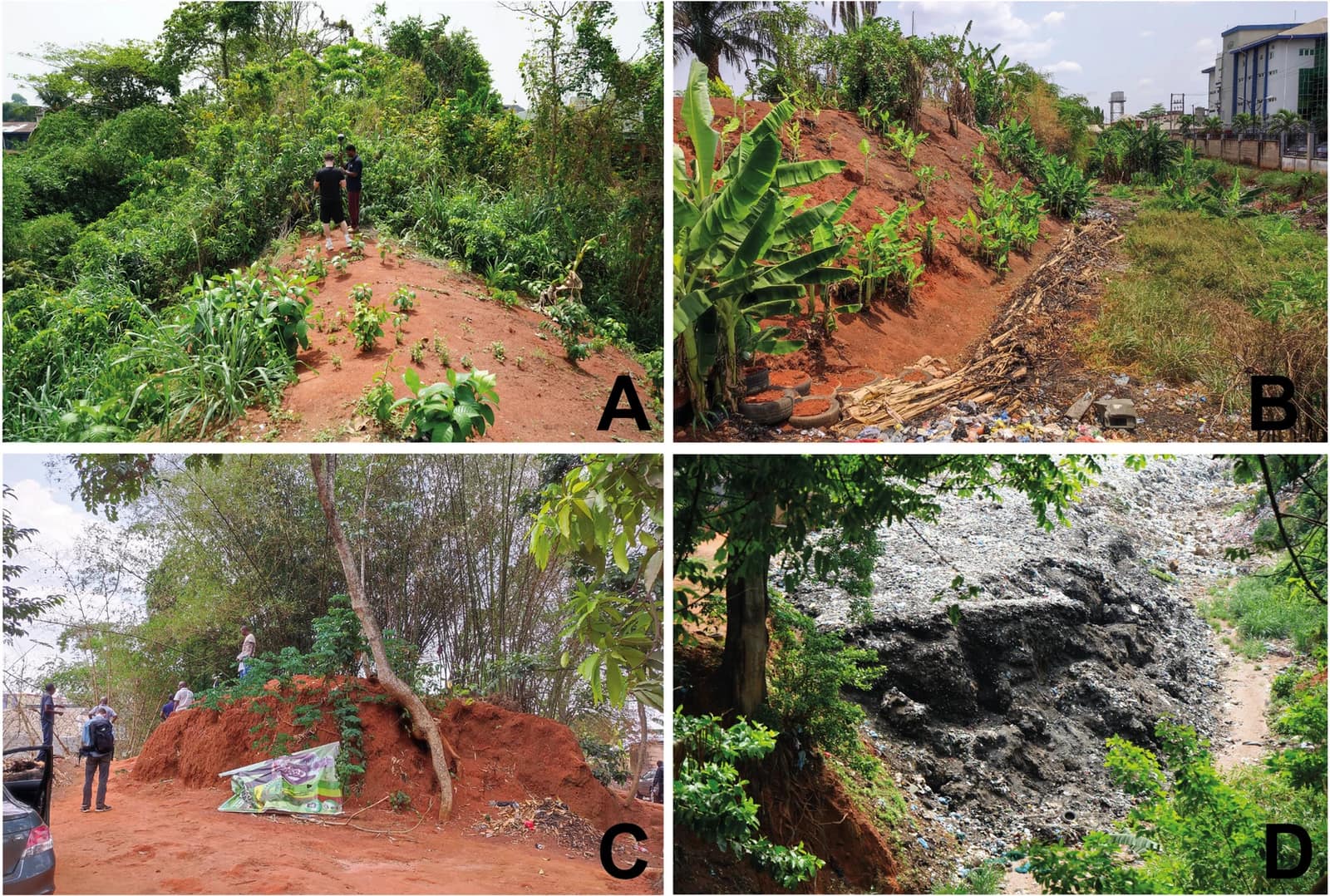
Four photographs side by side, labelled A to D, of the same earthwork in different states. A: a steep bank of red earth overgrown with green plants, two people standing on its crest. B: a bank of red earth planted with banana trees, its ditch littered with rubbish and old tyres, a modern office building behind. C: a cut face of red earth with a tree growing out of it, a sign propped at its foot, a parked car and people standing on a dirt road. D: a ditch almost filled with a dark heap of waste and plastic, half hidden by trees.Image not loaded · data saverThe image could not be loaded.Image not saved on this deviceRH-0130

700 to 1500

The Iya of Benin: the earth walls of a kingdom, disappearing

Benin City and Edo State, Nigeria · Africa
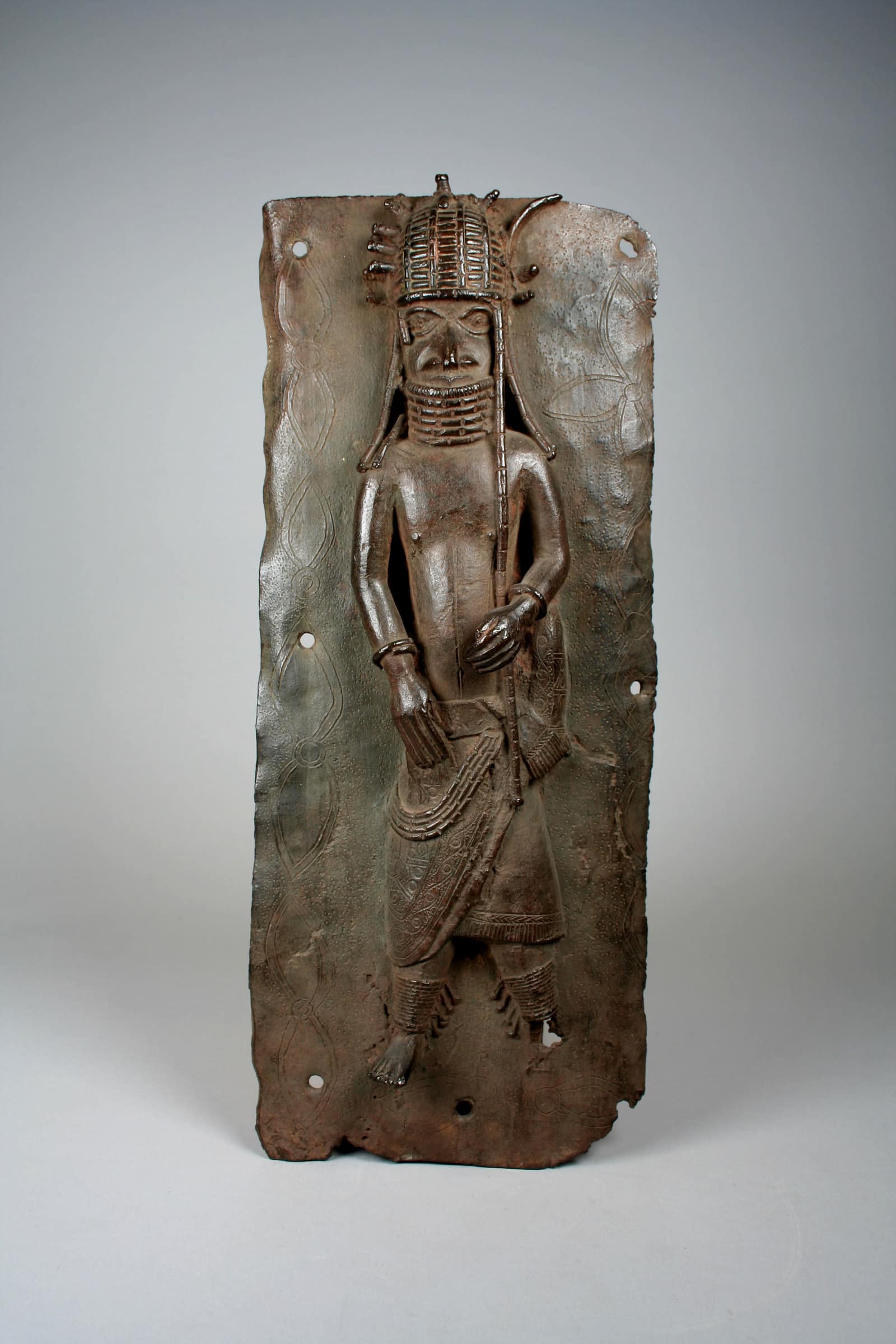
A tall rectangular brass plaque, dark brown with age and pierced with nail holes at its edges, photographed against a grey background: a single standing man in high relief faces forward, wearing a tall beaded cap with projecting spikes, a high collar of beads up to his chin, a wrapped skirt with patterned edges and beaded bands at the ankles, holding a long staff; faint engraved leaf and quatrefoil patterns cover the background.Image not loaded · data saverThe image could not be loaded.Image not saved on this deviceRH-0021

1500 to 1897

The Benin Bronzes

Benin City, Edo State, Nigeria · Africa
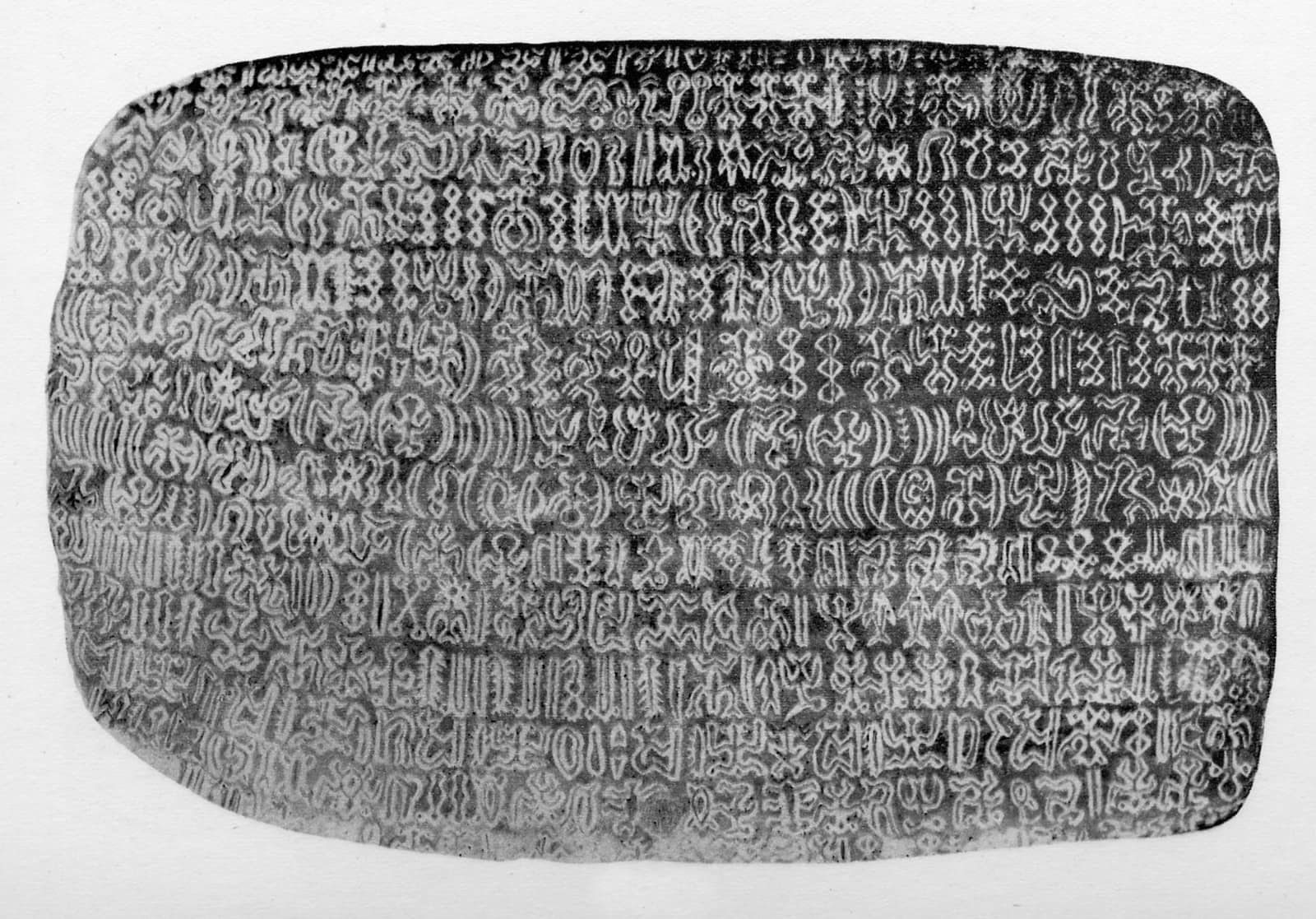
An old black and white photograph of a wooden tablet with rounded corners, one face covered from edge to edge with tight horizontal rows of small carved signs that stand out pale against the dark wood: little human figures, crescents, loops and zigzags.Image not loaded · data saverThe image could not be loaded.Image not saved on this deviceRH-0116

before 1864

Rongorongo, the tablets no one can read

Rapa Nui (Easter Island), Chile · Oceania
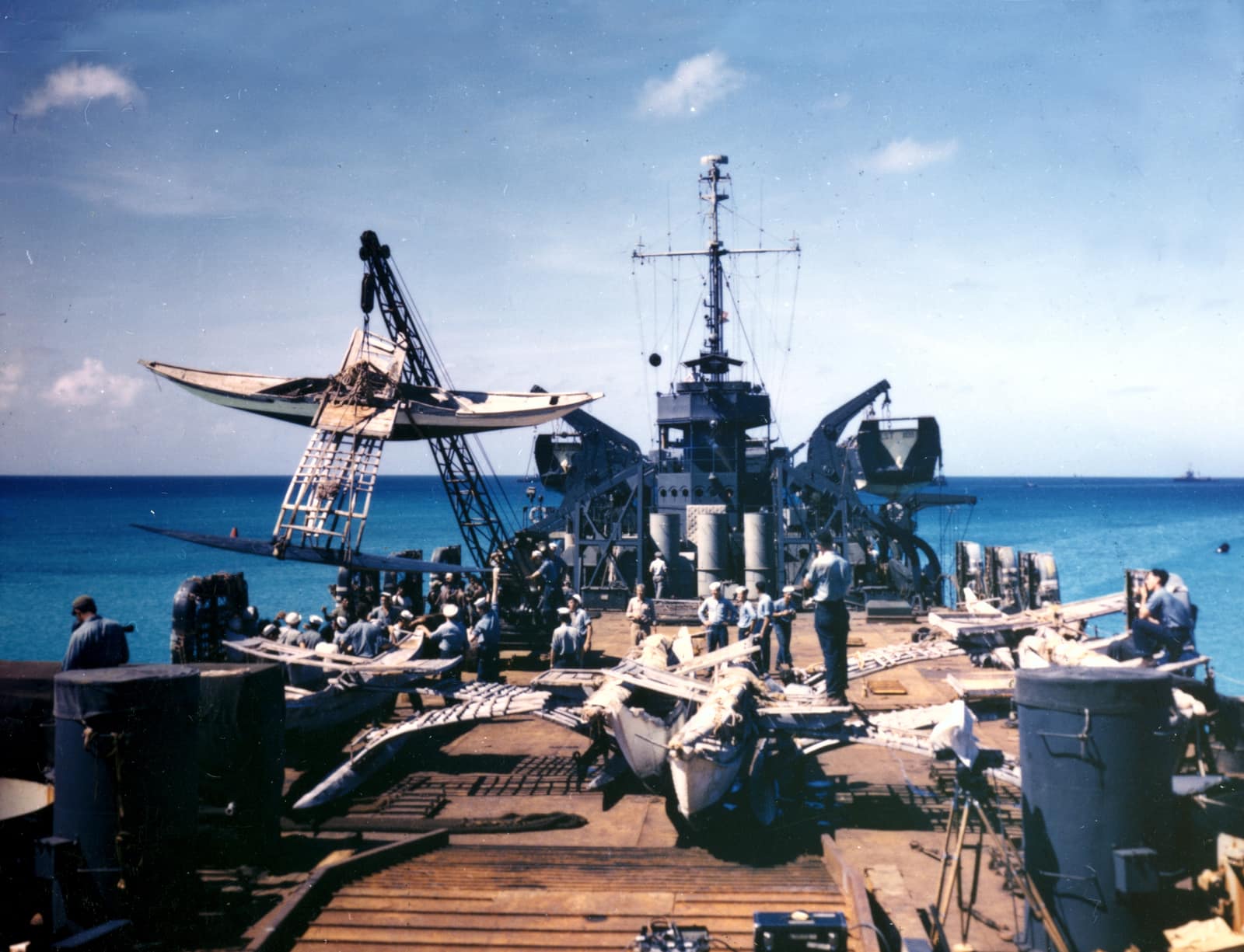
A colour photograph from March 1946 taken on the deck of a United States Navy landing ship under a bright sky: a crane lifts a Marshallese outrigger canoe, its hull and float hanging in the air, while sailors crowd around; several other outrigger canoes already lie on the deck in the foreground, and the open blue sea of the lagoon stretches behind.Image not loaded · data saverThe image could not be loaded.Image not saved on this deviceRH-0136

1946

Bikini: a home left for the good of mankind

Bikini Atoll, Republic of the Marshall Islands · Oceania
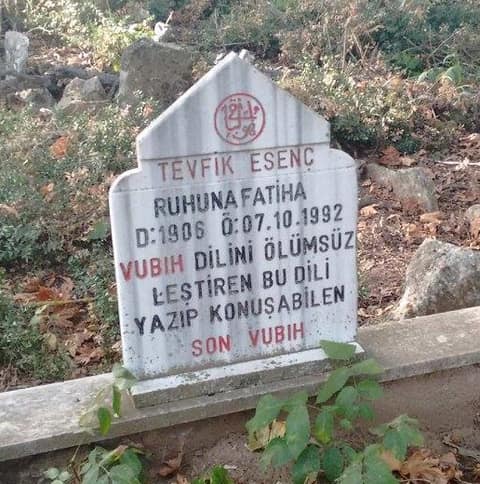
A small white gravestone with a pointed top stands in an overgrown village cemetery among grass and fallen leaves. Under a round red calligraphic emblem, capital letters in black and red, in Turkish, give the name Tevfik Esenç, the dates 1906 and 07.10.1992, and an epitaph calling him the last Ubykh able to write and speak the Ubykh language.Image not loaded · data saverThe image could not be loaded.Image not saved on this deviceRH-0115

1992

Tevfik Esenç, the last voice of Ubykh

Hacıosman, Manyas, Balıkesir Province, Turkey · Asia