The Buddhas of Bamiyan
- Dated
- Place
- Bamyan, Afghanistan · Buddhist communities of the Bamiyan valley, on the routes linking Central Asia, India and China
- Coordinates
- 34° 50′ N · 67° 50′ E (approximate)
- Remains
- Lost
This fragment shows an object held as sacred.
It is shown here as the institution that holds it presents it. Some communities connected to it ask that it be viewed with care. You may choose to see the image, or read the record without it.
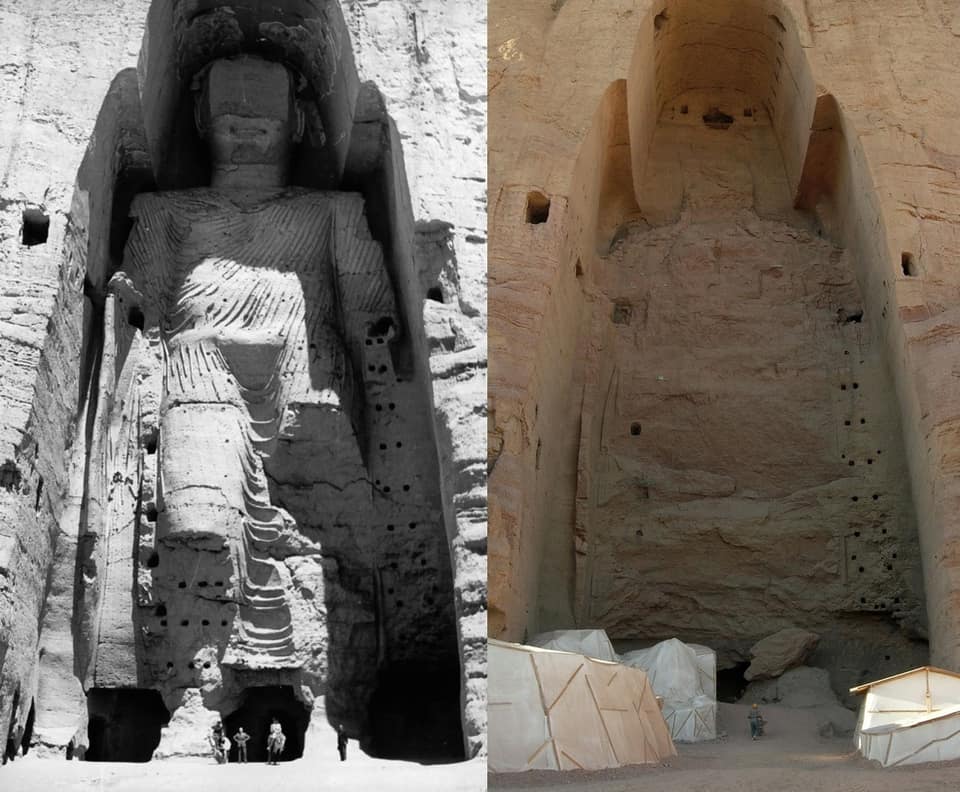

Image veiled by default
UNESCO/A. Lezine (1963); Carl Montgomery (CC BY 2.0); derivative work by Zaccarias, CC BY-SA 3.0, via Wikimedia CommonsCC-BY-SA-3.0Original record
Data saver is on. Images load only when you ask. You can change this in Settings at any time.
From the archivist
For fourteen centuries they stood in the cliff and looked out over the valley.
Monks and craftsmen of this civilization had cut them from the living rock, the larger as tall as a building of eighteen storeys, and dressed them in mud plaster painted in colours, their robes falling in folds held by ropes set into the stone. Around them the cliff was honeycombed with caves where monks prayed and lived beneath painted ceilings. Travellers on the roads between India, Central Asia and China stopped to see them; a Chinese pilgrim of the seventh century described them shining with gold.
The religion of the valley changed. The statues remained, their faces gone, weathered and still immense.
In March 2001 a government that ruled Afghanistan declared them idols and destroyed them, with shells and then with explosives, over several weeks. The world watched; appeals from many countries, including Muslim nations, did not stop it.
What we lost here was stone and plaster and paint. What we kept is the shape of the absence.
Established
- Two colossal standing Buddhas, about 55 and 38 metres high, were carved into the cliff of the Bamiyan valley, in the Hindu Kush, and finished with mud plaster and paint (UNESCO).
- Radiocarbon dates from organic material in the statues place the smaller, eastern Buddha around the middle of the sixth century and the larger, western Buddha in the early seventh century (Blänsdorf et al. 2009).
- The cliffs around them hold hundreds of caves that served as Buddhist monasteries, chapels and sanctuaries, many of them painted (UNESCO).
- In March 2001 the Taliban government destroyed both statues with artillery and explosives, despite international appeals (UNESCO).
- In 2003 the Cultural Landscape and Archaeological Remains of the Bamiyan Valley was inscribed on the World Heritage List and, at the same time, on the List of World Heritage in Danger (UNESCO).
Interpretation
Whether the Buddhas should be rebuilt from their fragments, left as empty niches, or recalled by other means, such as the light projection shown in one of the niches in 2015, is still debated among Afghan communities, heritage specialists and UNESCO. The exact dates of carving depend on how the radiocarbon results are read. The meaning of the destruction itself, iconoclasm, political defiance or both, is interpreted differently by historians.
In 10,000 years
In 10,000 years, what will an empty niche say about those who carved it, and about those who emptied it?
Sources (4)
- UNESCO World Heritage Centre. Cultural Landscape and Archaeological Remains of the Bamiyan Valley (property 208), inscribed 2003. · whc.unesco.org
- UNESCO World Heritage Centre. Commemorating 20 years since the destruction of two Buddhas of Bamiyan, Afghanistan, March 2021. · whc.unesco.org
- Blänsdorf, C., Nadeau, M.-J., Grootes, P. M., Hüls, M., Pfeffer, S. Chapter on the AMS radiocarbon dating of organic materials from the Buddha statues. In: Petzet, M. (ed.), The Giant Buddhas of Bamiyan: Safeguarding the Remains. Monuments and Sites XIX, ICOMOS, Berlin, Bässler, 2009.
- Nagaoka, M. (ed.). The Future of the Bamiyan Buddha Statues: Heritage Reconstruction in Theory and Practice. Paris and Cham, UNESCO and Springer, 2020. · doi.org
Related fragments
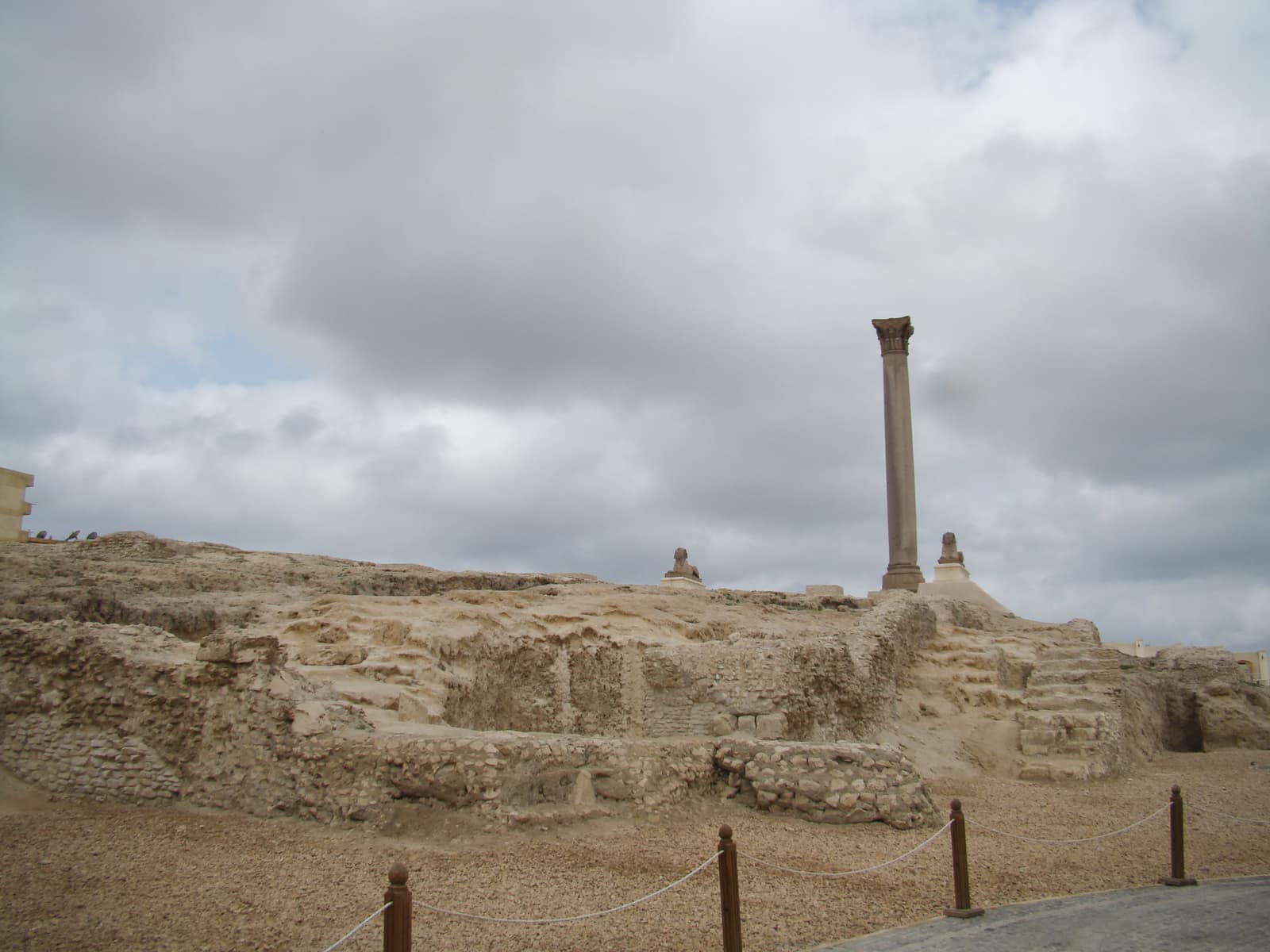
300 to 250 BCE
The Library of Alexandria
Alexandria, Egypt · Africa
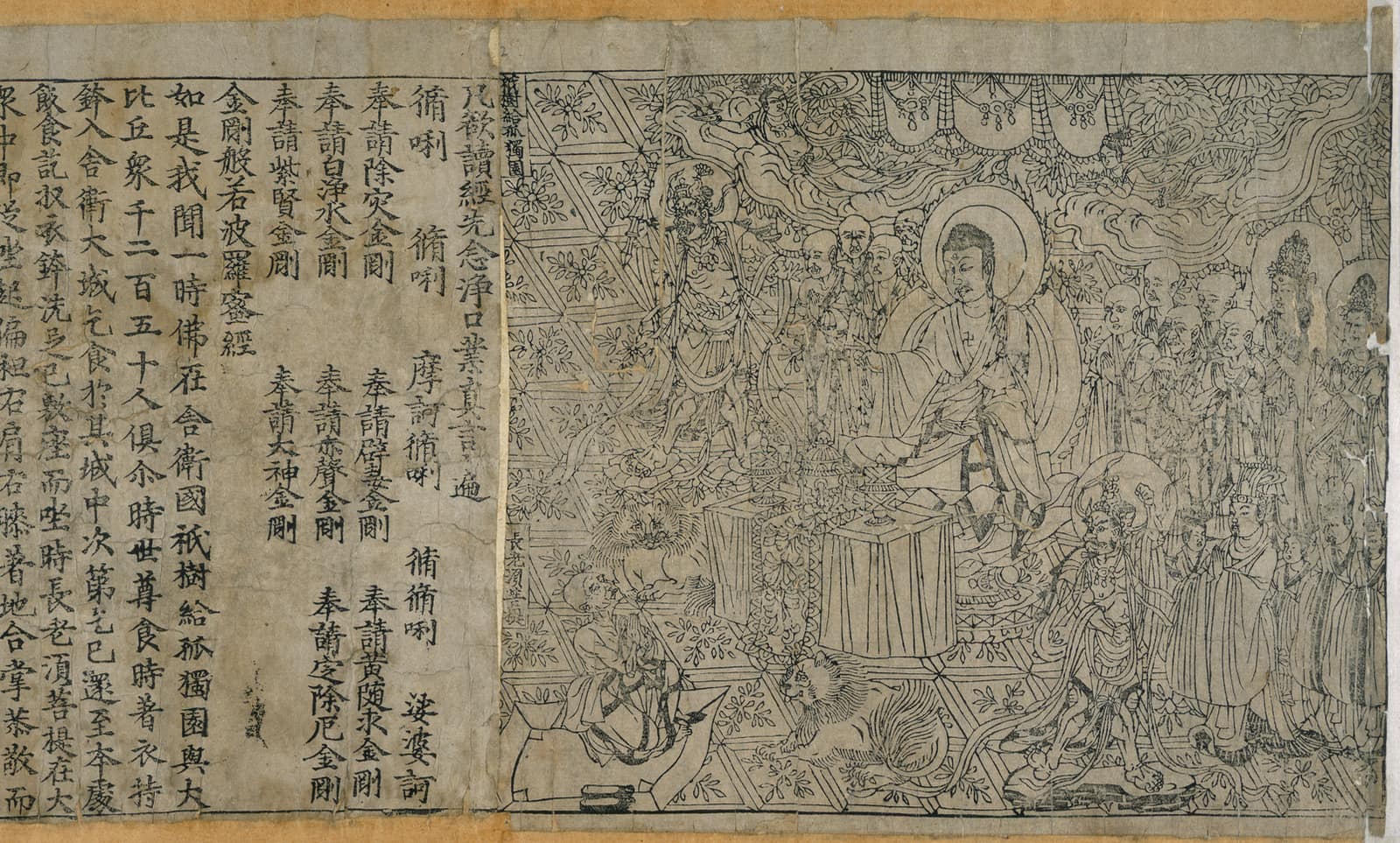
868 CE
The Diamond Sutra of 868
Mogao Caves, Dunhuang, Gansu, China · Asia