Skip to content
Stela
ENFR

Halls

We built IWe discovered IIWe imagined IIIWe changed the world IVWhat we lost VWhat we leave behind VI

Explore

TimelineMapJourneysSearch the archive

Language

Français

Settings

II

Hall II

We discovered

From the archivist

This civilization could not stop measuring. It notched bones to keep a count, read the swell of an ocean it could not see across, and built gears to follow the sky. This hall holds the traces of that wanting to know.

28 fragments in this hall · Africa 5 · Asia 5 · Europe 10 · Americas 4 · Oceania 3 · Antarctica 1
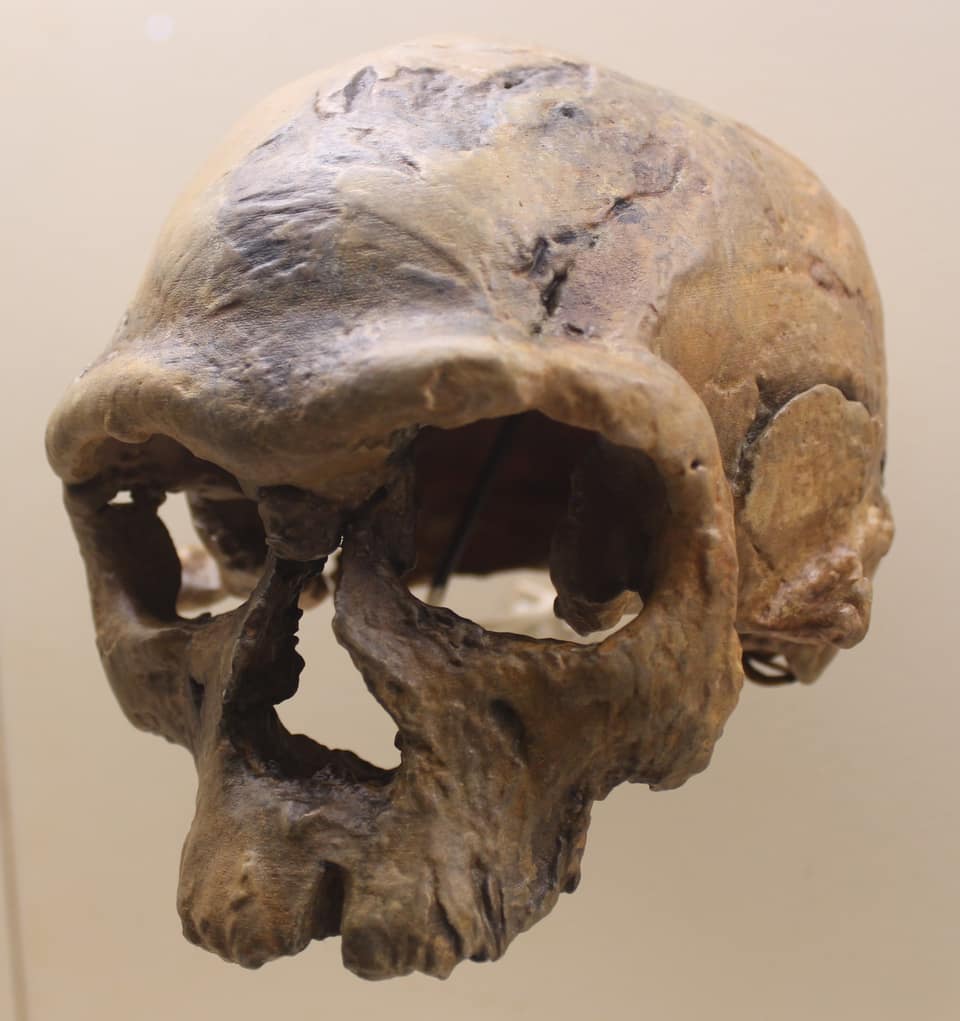
A cast of the Irhoud 1 skull in a museum case, seen from the front and slightly to one side against a pale background: a long, low braincase with a heavy brow ridge above two wide eye sockets, a broad nasal opening and a flat, short face; the cast is brown and ochre, with cracks and darker patches reproducing the fossil's surface, and the lower jaw is absent.Image not loaded · data saverThe image could not be loaded.Image not saved on this deviceRH-0069

c. 320,000 years ago

The earliest known Homo sapiens, Jebel Irhoud

Jebel Irhoud, about 100 km west of Marrakech, Morocco · Africa
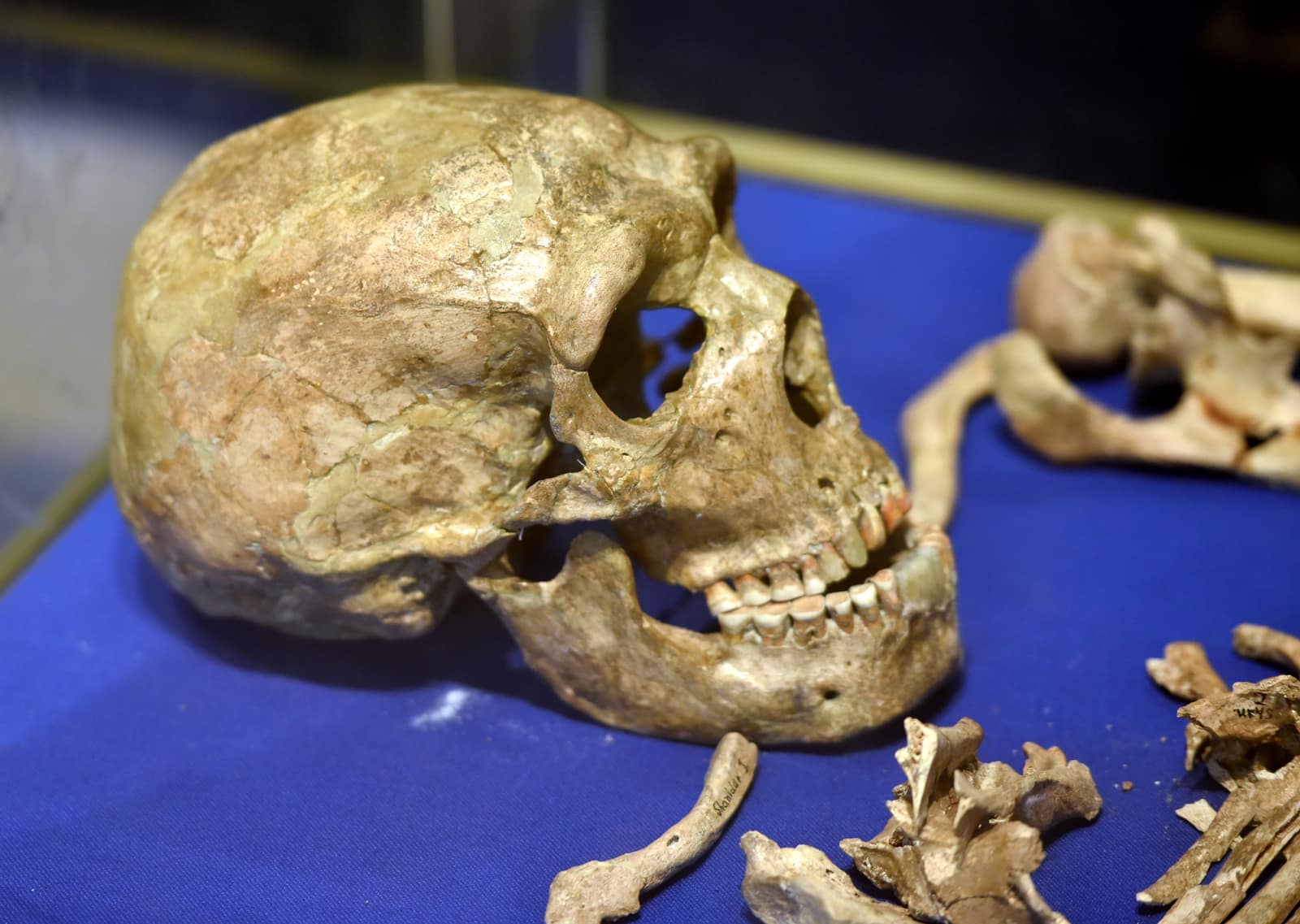
The skull of Shanidar 1 in a glass case on dark blue cloth, seen in profile facing right: a long, low braincase marked by cracks and lighter patches where it was pieced together, a heavy ridge over the eye sockets, a projecting face and the lower jaw with worn teeth in place; around it lie other brown bones of the skeleton, one of them, a slender bone in the foreground, marked in ink with the words Shanidar I.Image not loaded · data saverThe image could not be loaded.Image not saved on this deviceRH-0119

c. 70,000 years ago

Shanidar 1, a Neanderthal who lived on with his wounds

Shanidar Cave, Erbil Governorate, Kurdistan Region, Iraq · Asia
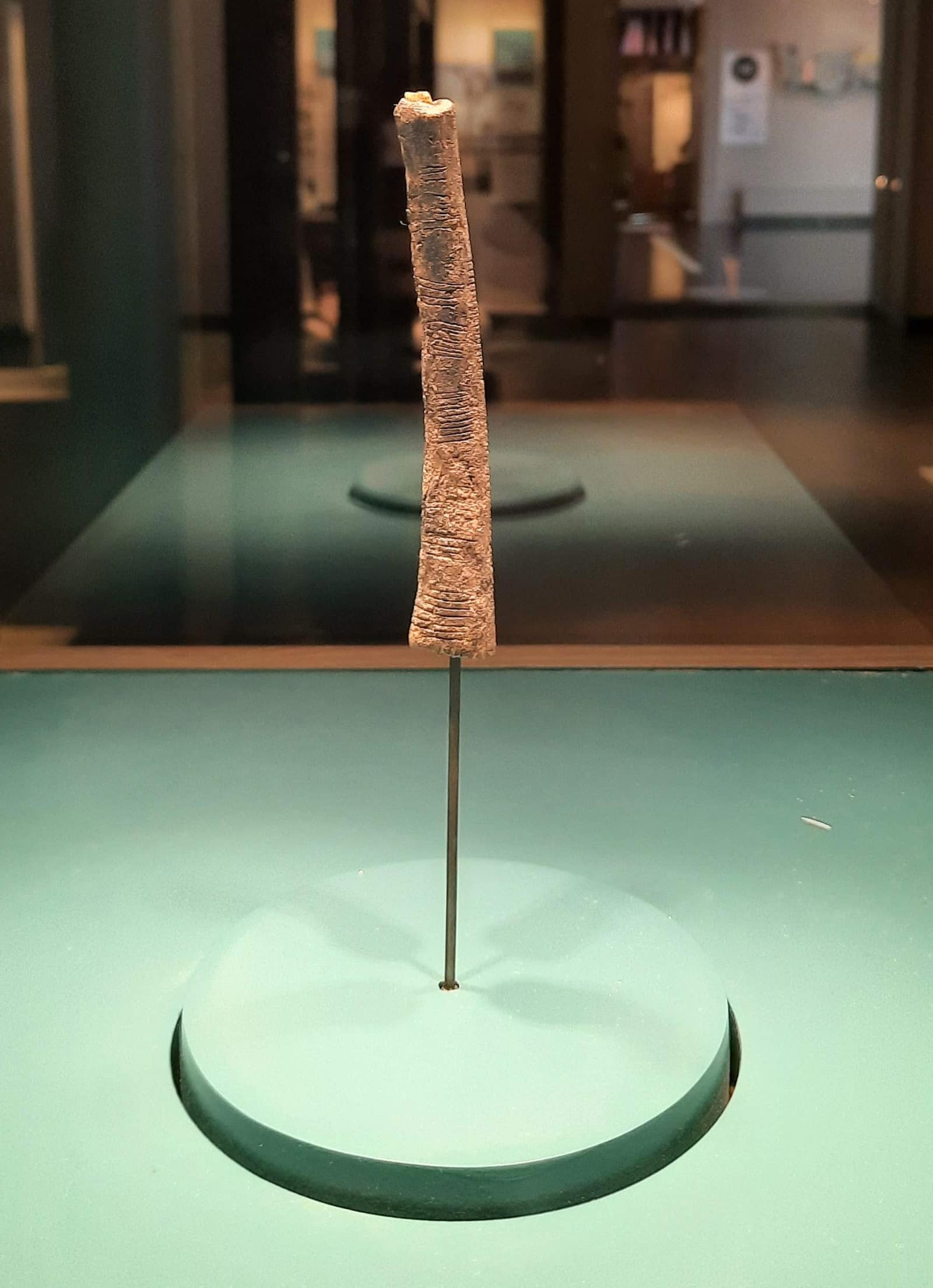
A slender, pale brown bone about ten centimetres long, mounted upright on a thin metal pin in a museum case; fine parallel notches run across its surface in grouped rows.Image not loaded · data saverThe image could not be loaded.Image not saved on this deviceRH-0001

c. 20,000 years ago

The Ishango bone

Ishango, Virunga National Park, North Kivu, Democratic Republic of the Congo · Africa
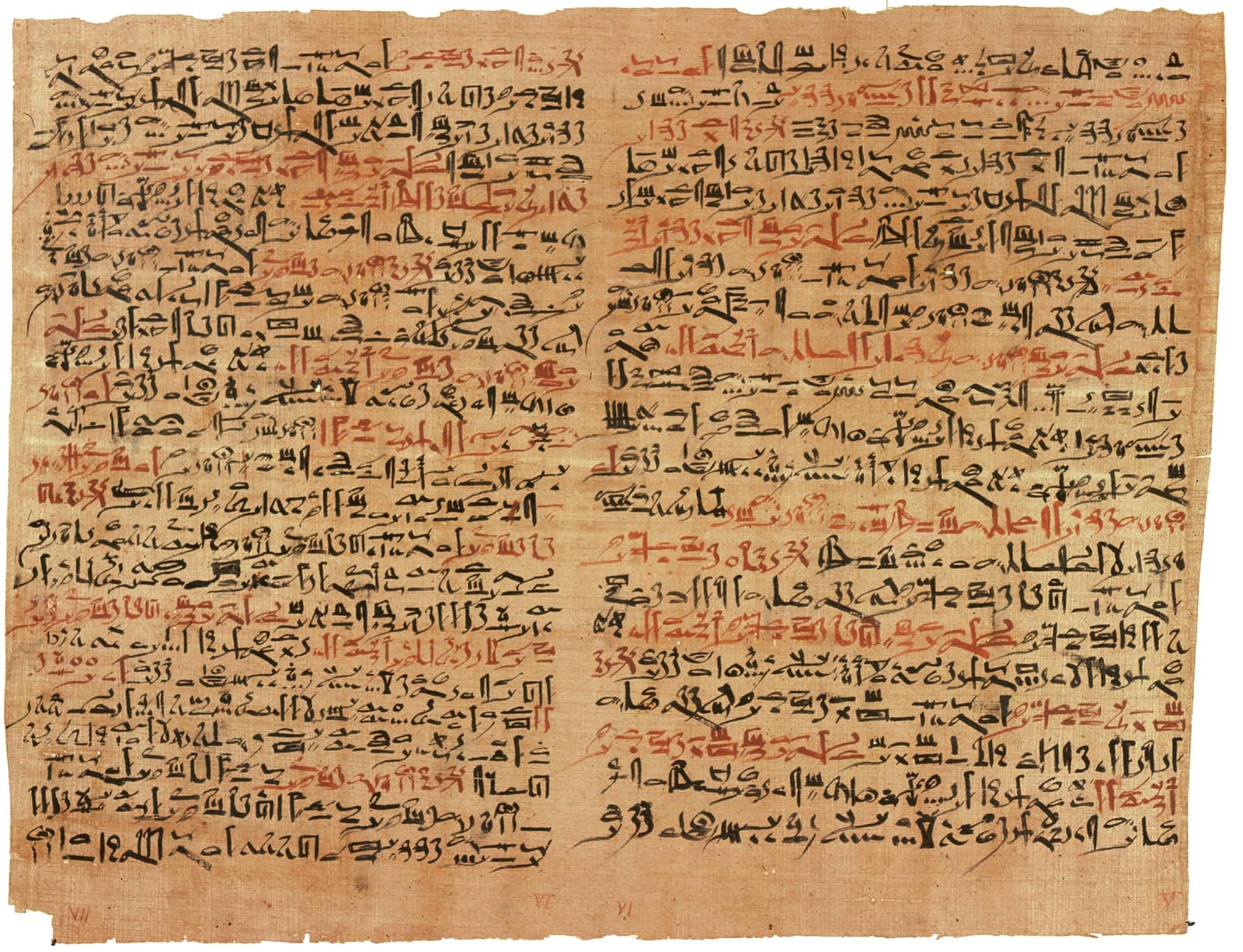
Two columns of a papyrus side by side on a pale, fibrous beige sheet, filled with dense lines of black cursive hieratic script read from right to left, with many phrases picked out in red ink; small roman numerals mark the columns at the foot.Image not loaded · data saverThe image could not be loaded.Image not saved on this deviceRH-0017

c. 1600 BCE

The Edwin Smith Papyrus

Luxor, Egypt (place of purchase); now in New York, United States · Africa
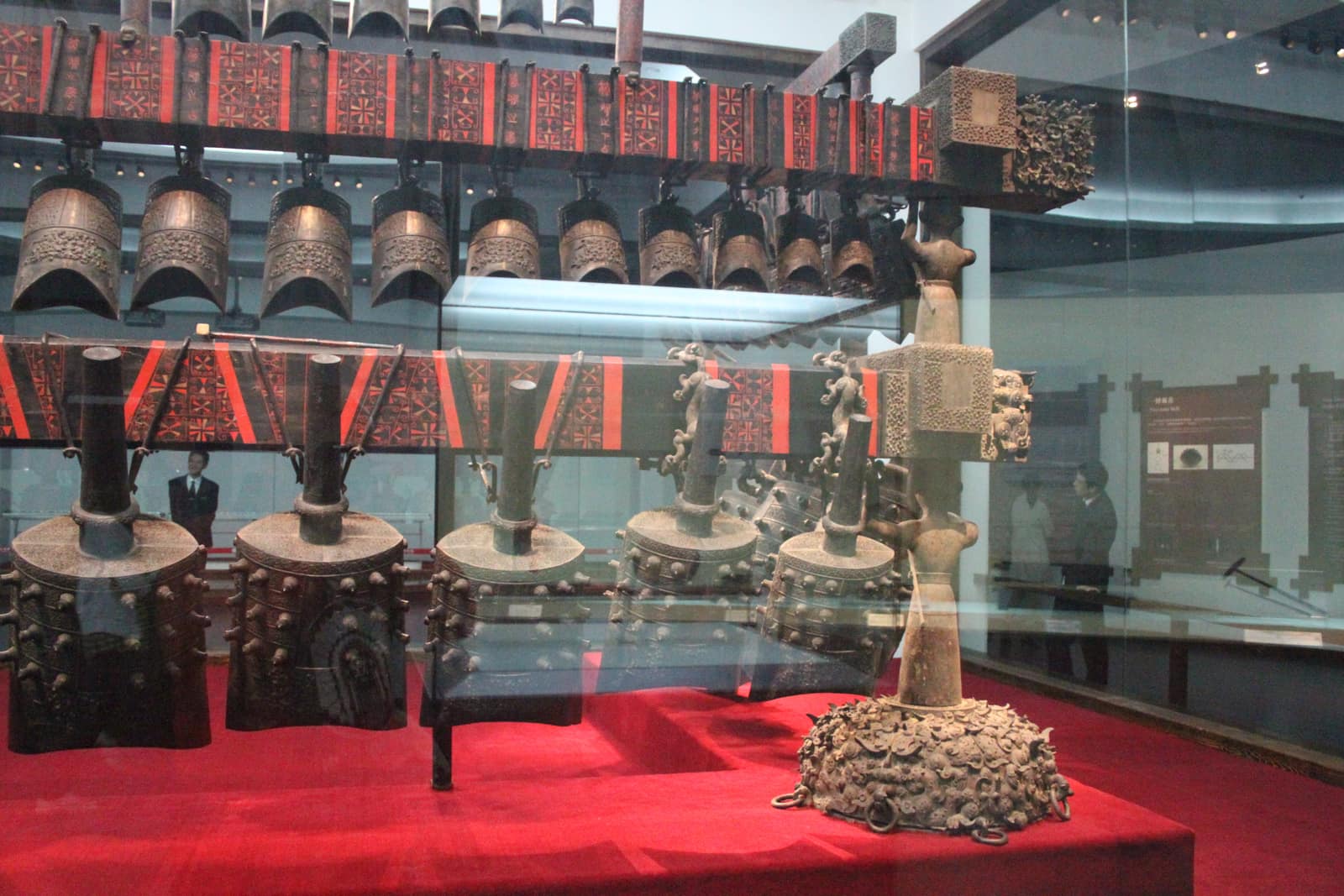
In a museum gallery, behind glass, a long wooden frame lacquered black and red with geometric patterns holds rows of dark bronze bells: a line of smaller bells hangs from an upper beam, and below them large, heavy bells studded with rows of knobs hang from a lower beam by their long handles. On the right a bronze figure, standing on a round, densely ornamented bronze base, holds up the end of the frame. The floor beneath the bells is covered with red cloth.Image not loaded · data saverThe image could not be loaded.Image not saved on this deviceRH-0140

c. 433 BCE

The bells of Marquis Yi: an orchestra buried with a man

Leigudun, Suizhou, Hubei Province, China · Asia
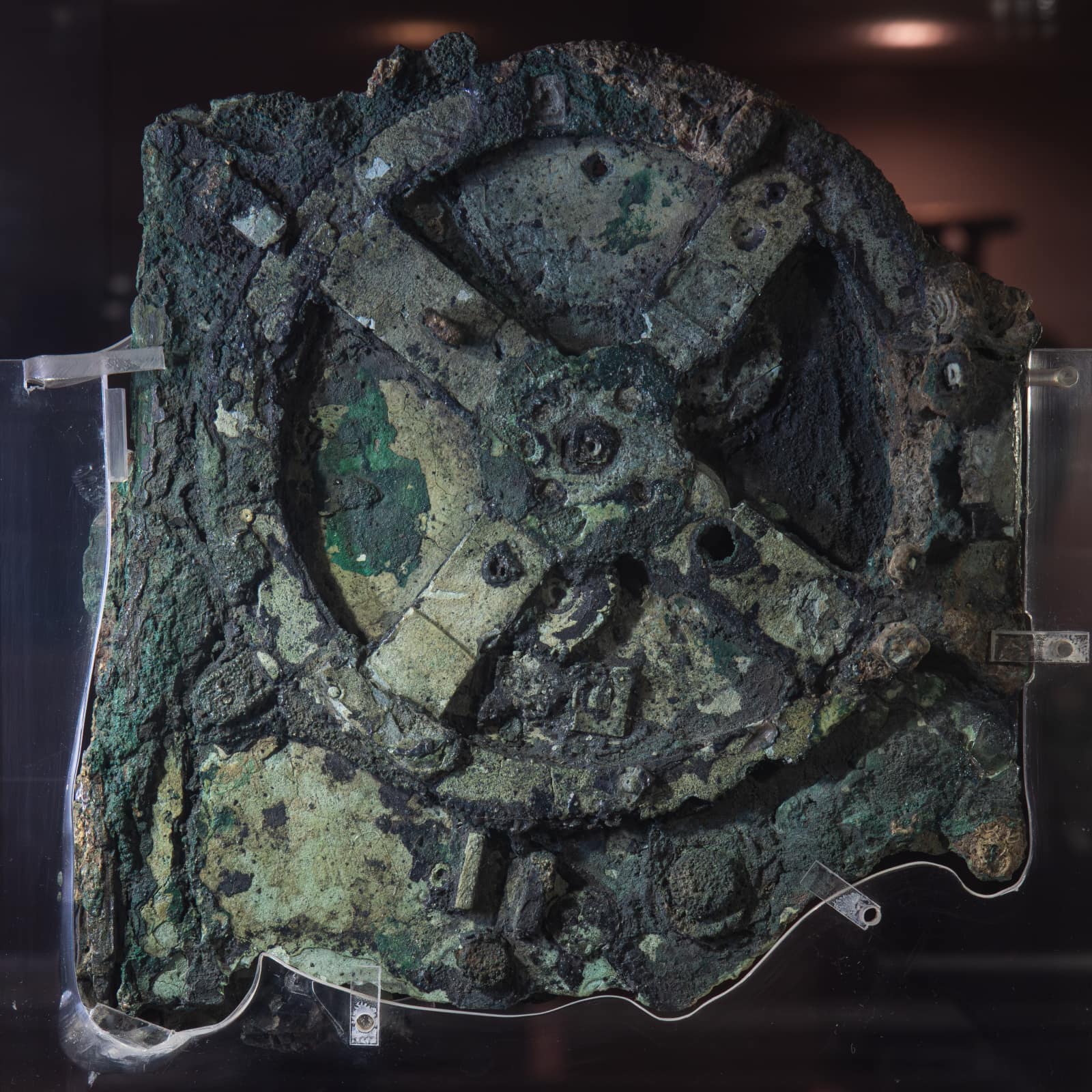
A roughly square slab of corroded bronze, green and black, held by clear mounts against a dark background: in its centre, the outline of a large gearwheel with four spokes, and around it traces of smaller wheels fused into the mass.Image not loaded · data saverThe image could not be loaded.Image not saved on this deviceRH-0008

205 to 60 BCE

The Antikythera mechanism

Antikythera, Greece (find spot); National Archaeological Museum, Athens · Europe

A torn, brown leaf of birch bark against a black ground, written in lines of dark ink in an old Indian script; near the bottom left, figures are set inside ruled boxes, and small solid dots stand among the signs, the marks read as zero.Shown at its source: its licence does not yet allow the archive to host it.View the image on Wikimedia Commons
RH-0031

224 to 993 CE

The Bakhshali manuscript

Near Mardan, Khyber Pakhtunkhwa, Pakistan · Asia
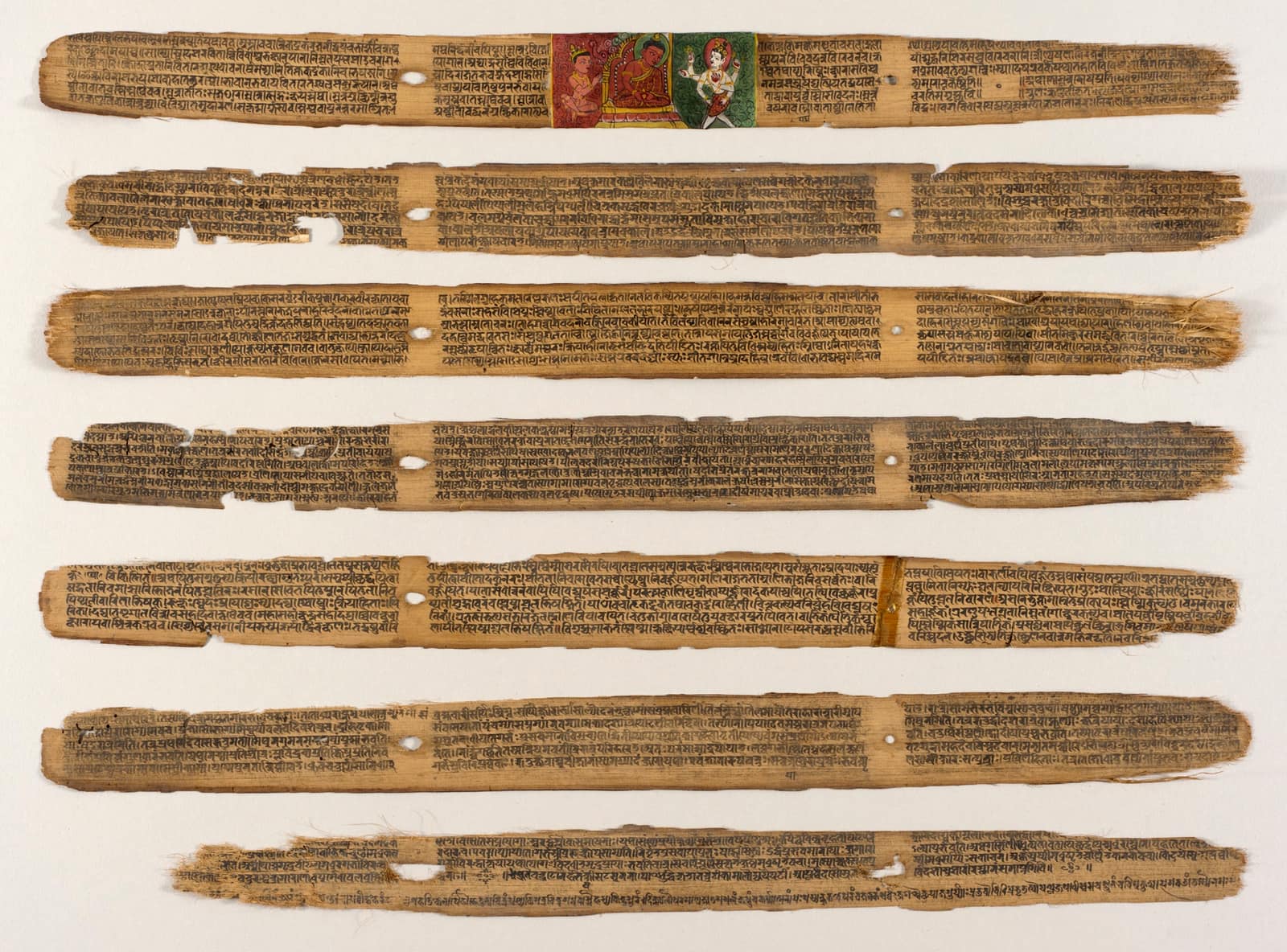
Seven long, narrow palm leaves laid one above the other on a white ground, their brown edges frayed and pierced by string holes, each covered in fine lines of dark Sanskrit script; on the top leaf a small painted panel shows seated figures in red, green and gold.Image not loaded · data saverThe image could not be loaded.Image not saved on this deviceRH-0030

before 500 CE

The Sushruta Samhita

Varanasi, India; manuscript in Kathmandu, Nepal · Asia
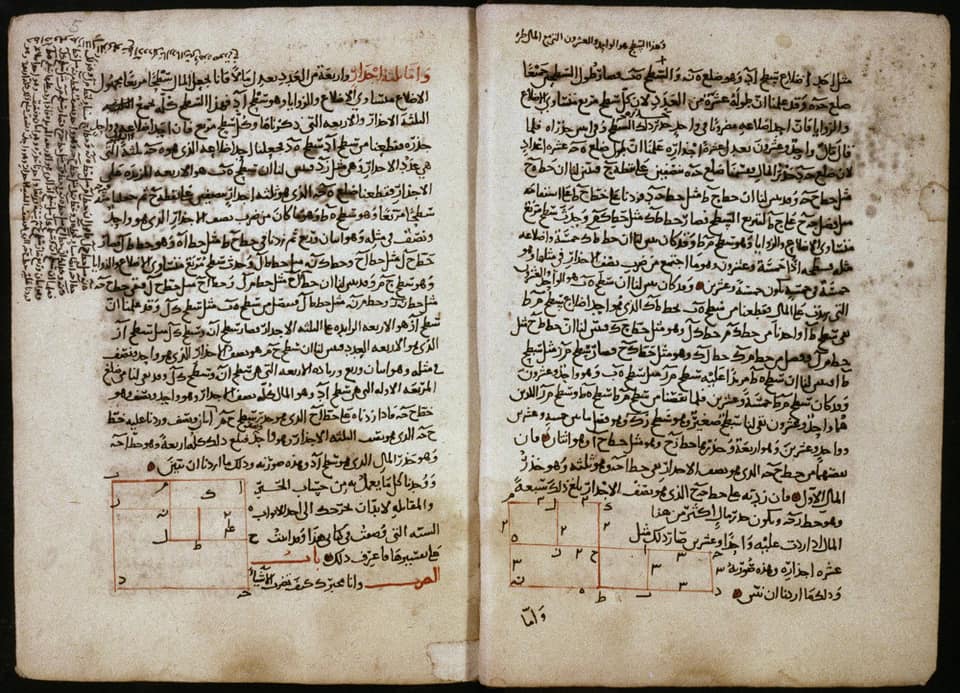
Two facing pages of an old Arabic manuscript on yellowed, stained paper, each filled with lines of close black handwriting, with a few words in red and dense notes squeezed into the left margin. Near the foot of each page is a small diagram drawn in red ink: squares and rectangles divided into smaller parts and marked with Arabic letters, the geometric proofs of two quadratic equations.Image not loaded · data saverThe image could not be loaded.Image not saved on this deviceRH-0096

c. 820 CE

The book of al-jabr: al-Khwarizmi's algebra

Baghdad, Iraq · Asia
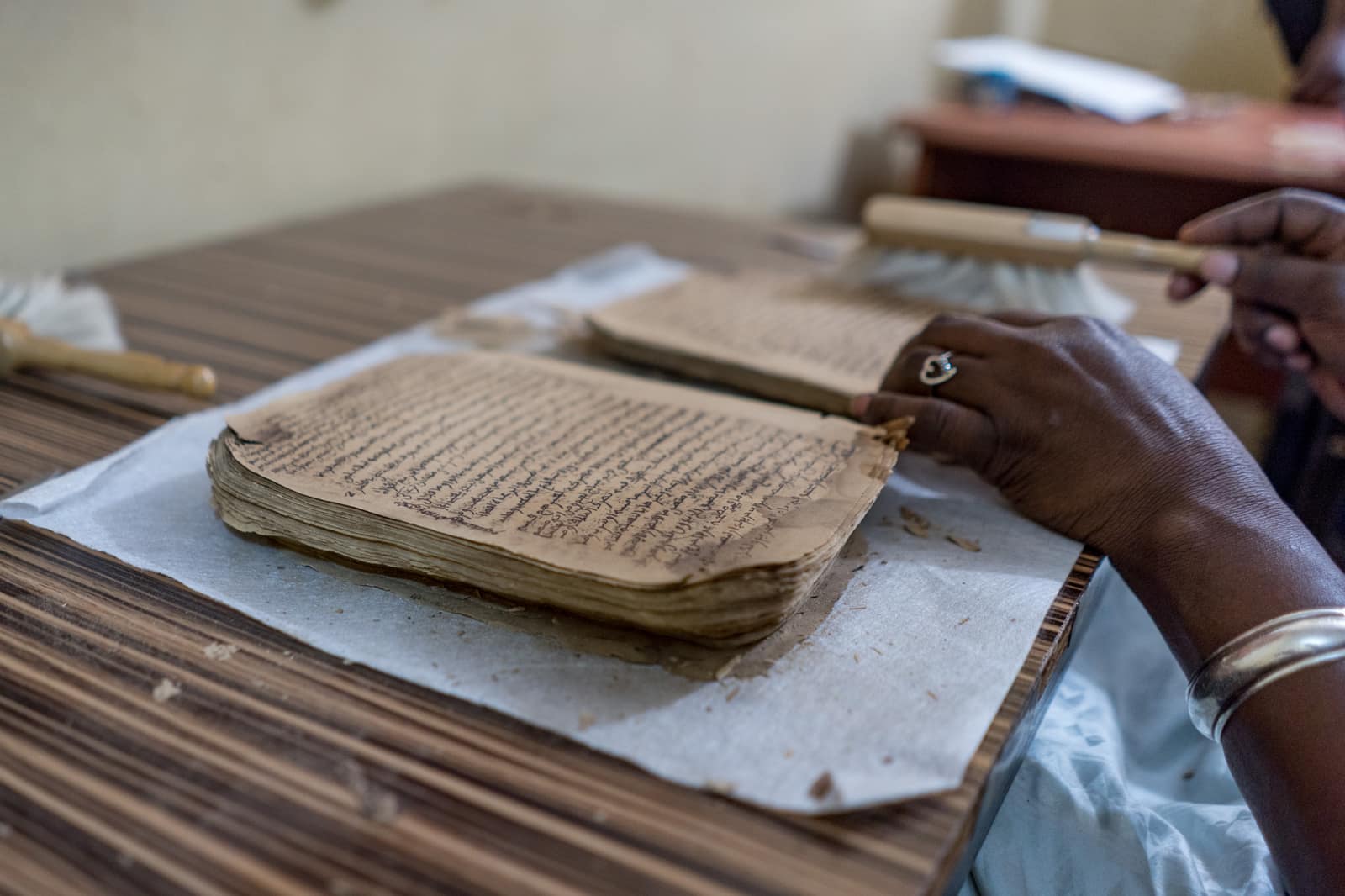
Two dark hands wearing a ring and a silver bracelet hold a soft brush over a stack of brittle, yellowed manuscript leaves covered in dense lines of Arabic script, laid on white paper on a wooden table; flakes of old paper lie around them.Image not loaded · data saverThe image could not be loaded.Image not saved on this deviceRH-0004

after 1200 CE

The Timbuktu manuscripts

Timbuktu, Mali · Africa
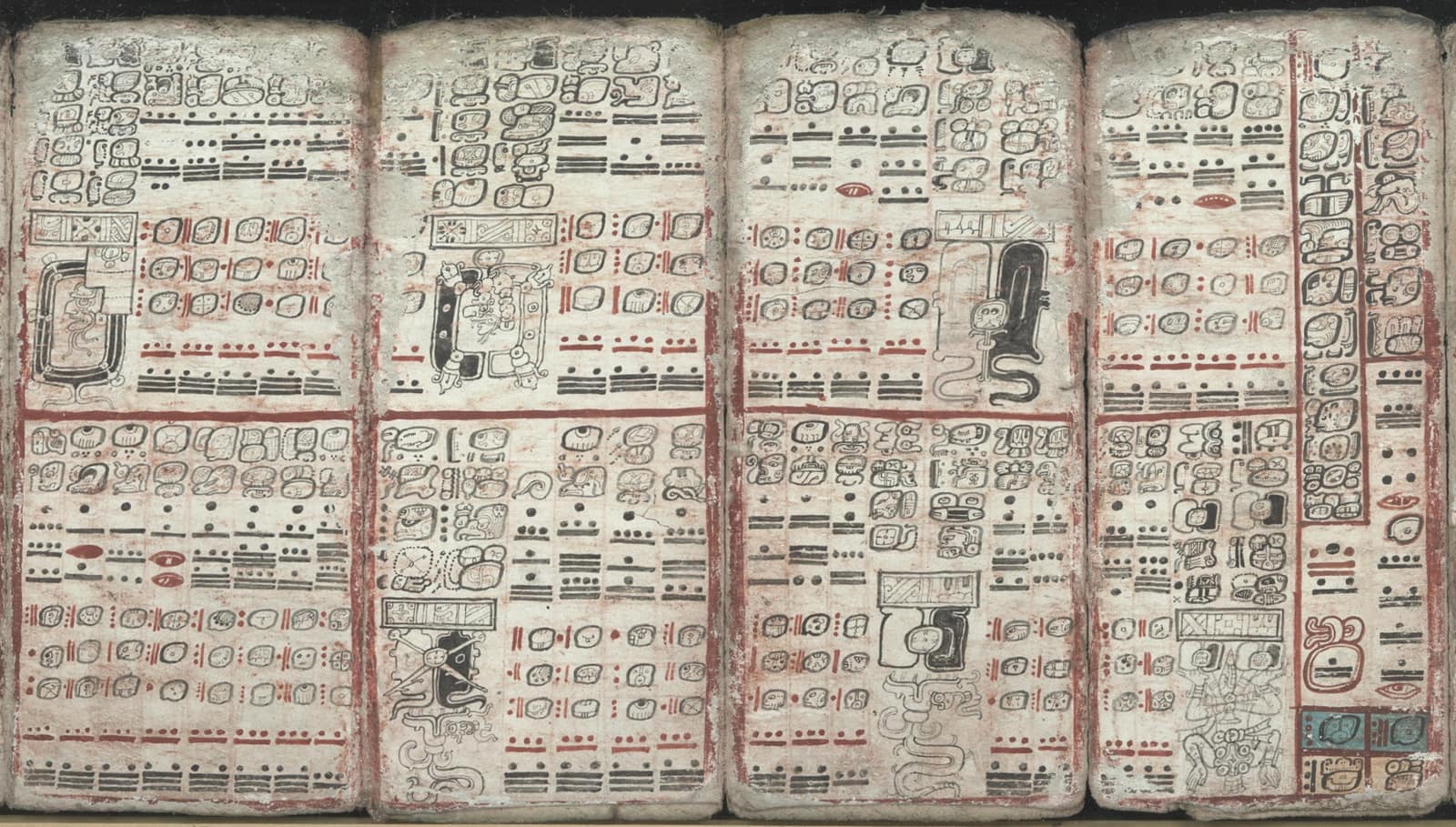
Four tall, narrow pages of a folded Maya book, side by side, their pale plaster surface cracked, stained and worn at the edges. Each page is ruled by thin red lines into bands filled with small rounded hieroglyphs in black and with rows of numbers written as black and red bars and dots. Small framed panels hold painted figures and symbols, and a few patches of blue survive near the bottom right.Image not loaded · data saverThe image could not be loaded.Image not saved on this deviceRH-0143

1200 to 1500

The Dresden Codex: eight scribes who counted the sky

Yucatán Peninsula, Mexico (presumed place of origin) · Americas
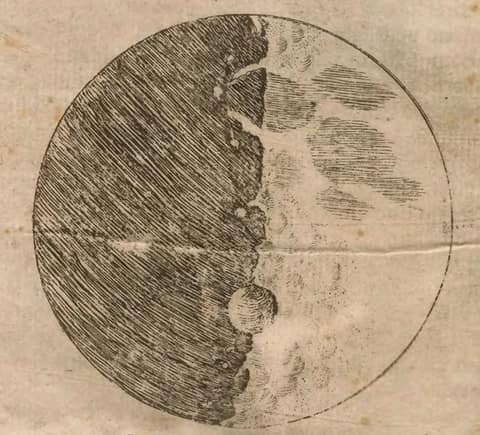
A circular etching of the Moon at half phase on aged, creased paper: the left half filled with dense dark hatching, the lit right half pale, and along the boundary between them a ragged line of bright spots and dark hollows where Galileo saw mountains and craters catching the sunlight.Image not loaded · data saverThe image could not be loaded.Image not saved on this deviceRH-0042

1610

Sidereus Nuncius (Galileo, 1610)

Venice, Italy · Europe
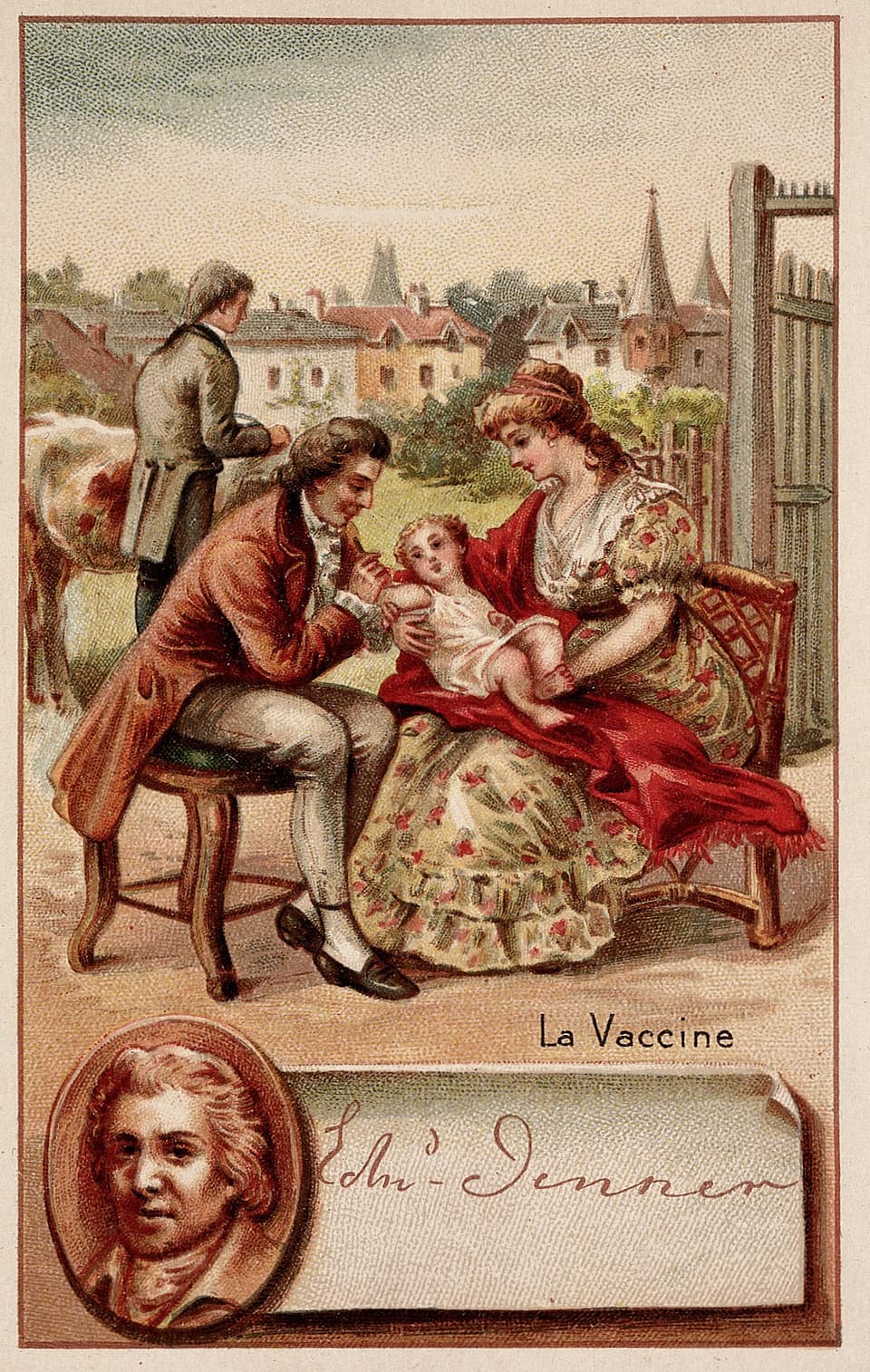
A coloured print titled La Vaccine: a man in an eighteenth century red coat, seated, pricks the arm of a baby held on the lap of a woman in a flowered dress, while behind them another man takes matter from a cow; below, a small oval portrait of Jenner and his signature.Image not loaded · data saverThe image could not be loaded.Image not saved on this deviceRH-0043

1796 to 1980

The end of smallpox

Berkeley, Gloucestershire, United Kingdom · Europe
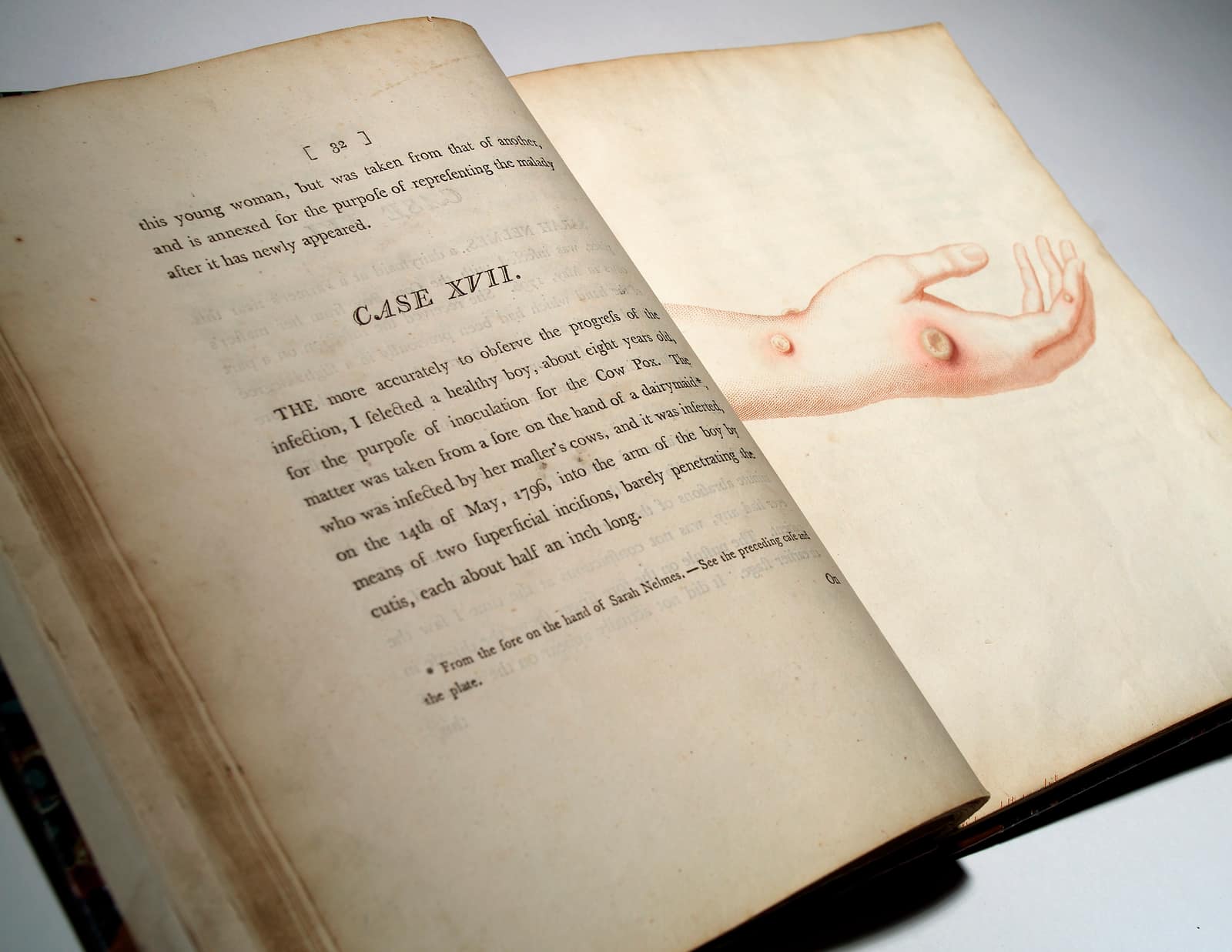
An old book lies open on a white surface. The left page, yellowed, bears the heading Case XVII and a paragraph in which the author says he selected a healthy boy of about eight to inoculate with cowpox matter taken from a sore on the hand of a dairymaid, on the 14th of May 1796, by two superficial incisions in the arm. The right page carries a hand-coloured engraving of a forearm and open hand, pale pink, with two raised round sores ringed with red, one on the back of the wrist and one near the base of the thumb.Image not loaded · data saverThe image could not be loaded.Image not saved on this deviceRH-0110

1796

From variolation to vaccination: Jenner and the cowpox

Berkeley, Gloucestershire, England, United Kingdom · Europe
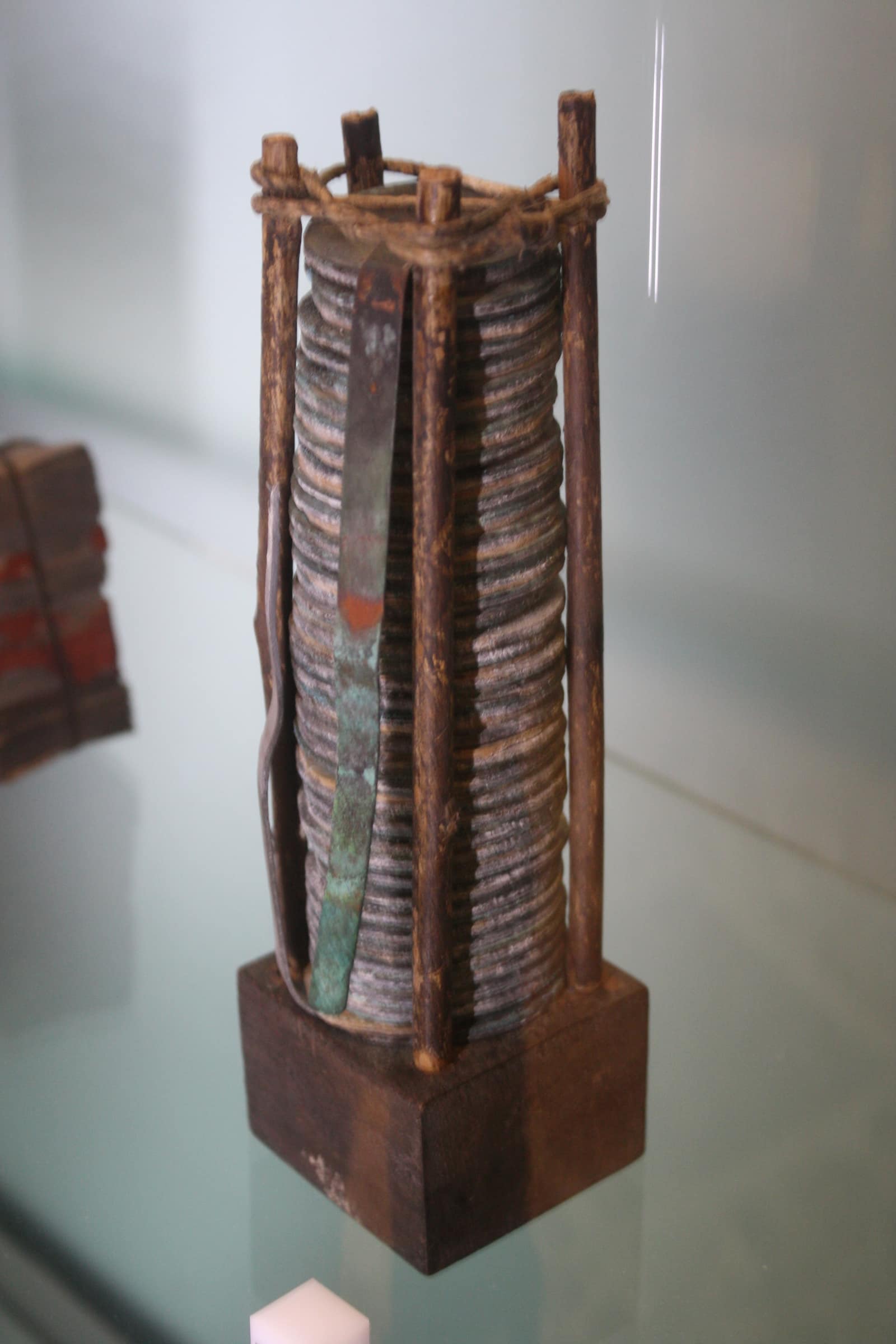
A slender column of grey metal discs, dozens of them stacked flat one on another, held upright between four rough wooden rods tied with cord at the top and set in a dark wooden block; a green corroded strip of copper runs down the front of the stack. It stands in a glass case at the Tempio Voltiano in Como.Image not loaded · data saverThe image could not be loaded.Image not saved on this deviceRH-0083

1800

Volta's pile, the first electric battery

Como, Lombardy, Italy · Europe
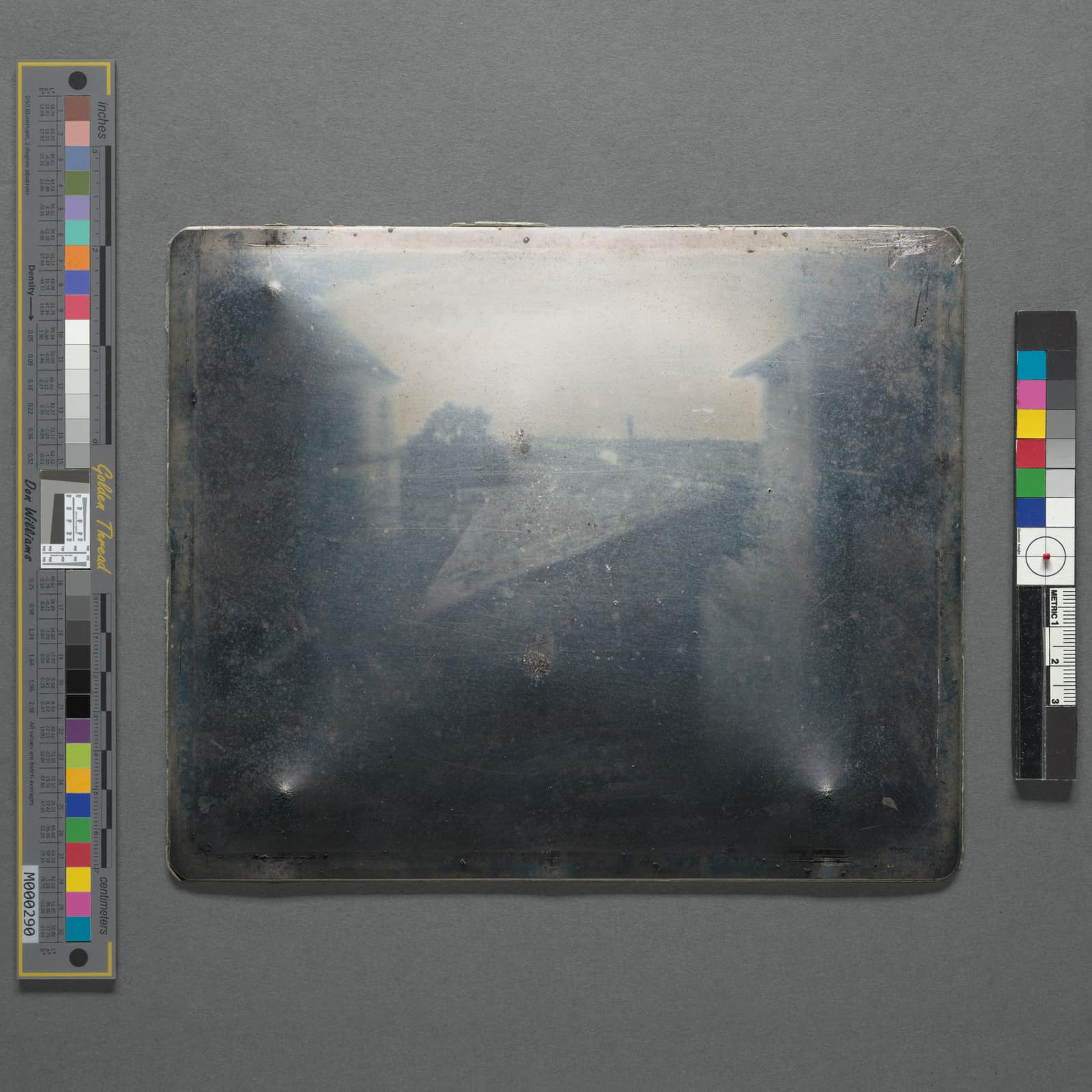
A nearly square metal plate with slightly rounded corners, photographed on a grey card between two strips of colour and grey reference patches. Its polished surface is dark and mirror-like, clouded with haze and small spots; only on looking closely do faint shapes appear in it: pale roofs sloping inward from left and right, a lighter band of sky, a dim tree, as if seen through fog.Image not loaded · data saverThe image could not be loaded.Image not saved on this deviceRH-0073

1826 to 1827

The first photograph from a camera: the view from the window at Le Gras

Saint-Loup-de-Varennes, Saône-et-Loire, France · Europe
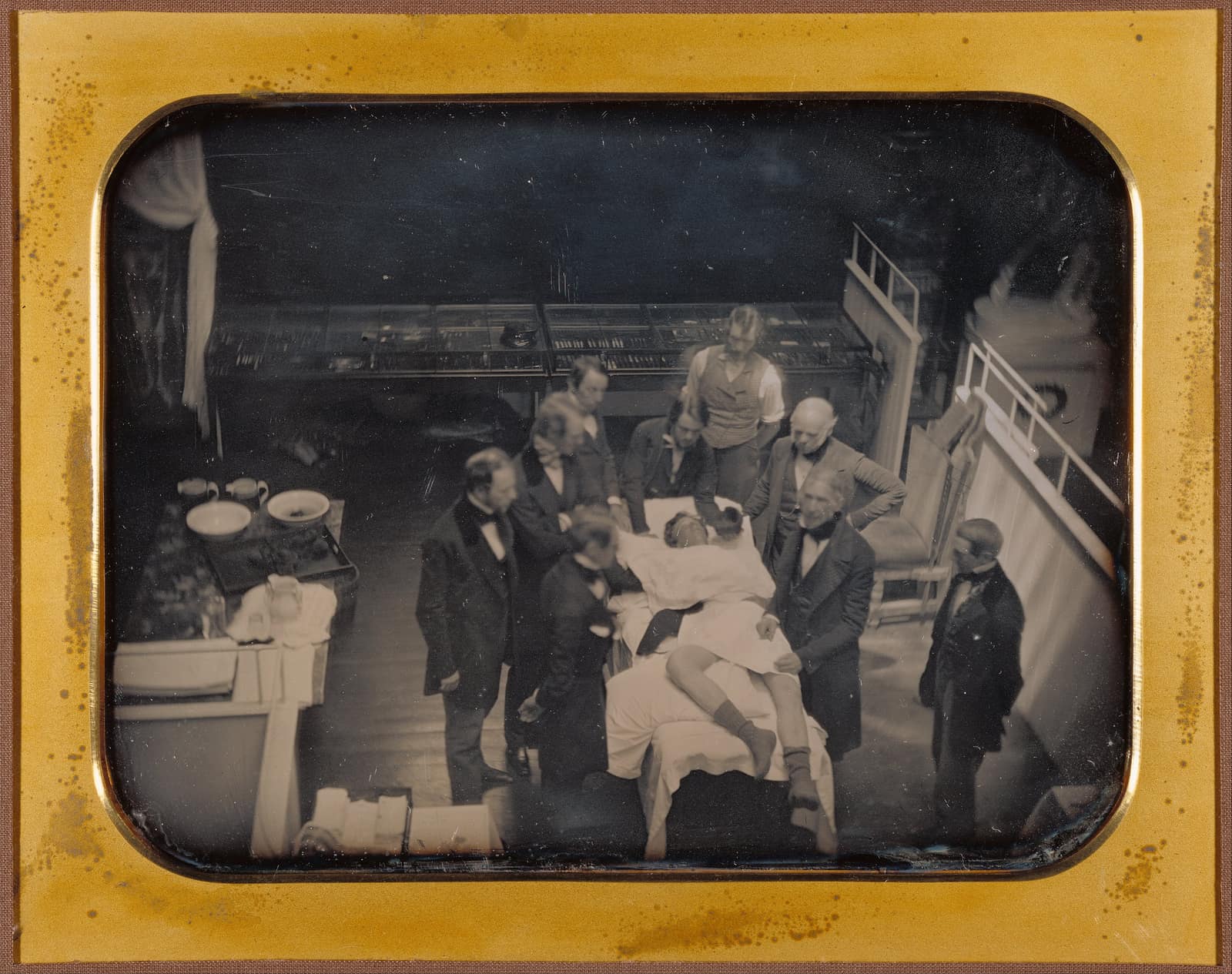
A silvery daguerreotype in a gilt brass mat with rounded corners, seen from above. In a bare operating room a patient lies on a table under white sheets, his bare legs in dark socks. About ten men in dark frock coats stand around him; one holds a sponge near his face, and an older man rests his hands on the patient's thigh. Their heads are blurred by the long exposure. Behind them, glass cases of instruments; on the left, a side table with basins and folded linen.Image not loaded · data saverThe image could not be loaded.Image not saved on this deviceRH-0105

1846

Ether Day: the first public operation under anaesthesia

Ether Dome, Massachusetts General Hospital, Boston, Massachusetts, United States · Americas
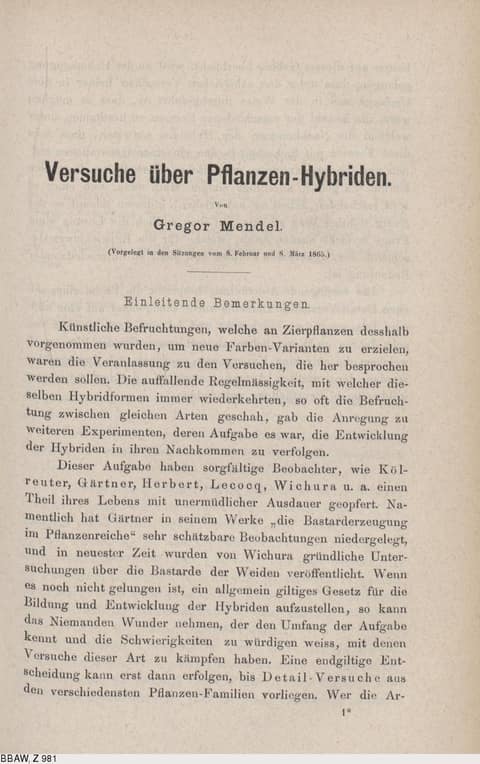
A printed page of greyish paper in German, in the Gothic-influenced type of the 1860s. At the top, in large bold letters: Versuche über Pflanzen-Hybriden, then Von Gregor Mendel, and in small type the note that it was presented at the sessions of 8 February and 8 March 1865. Below a short rule begin the Introductory remarks, two paragraphs of dense text. A library stamp, BBAW Z 981, is visible at the bottom left.Image not loaded · data saverThe image could not be loaded.Image not saved on this deviceRH-0098

1856 to 1866

Mendel's peas: experiments on plant hybrids

St Thomas's Abbey, Old Brno, Brno, Czech Republic · Europe
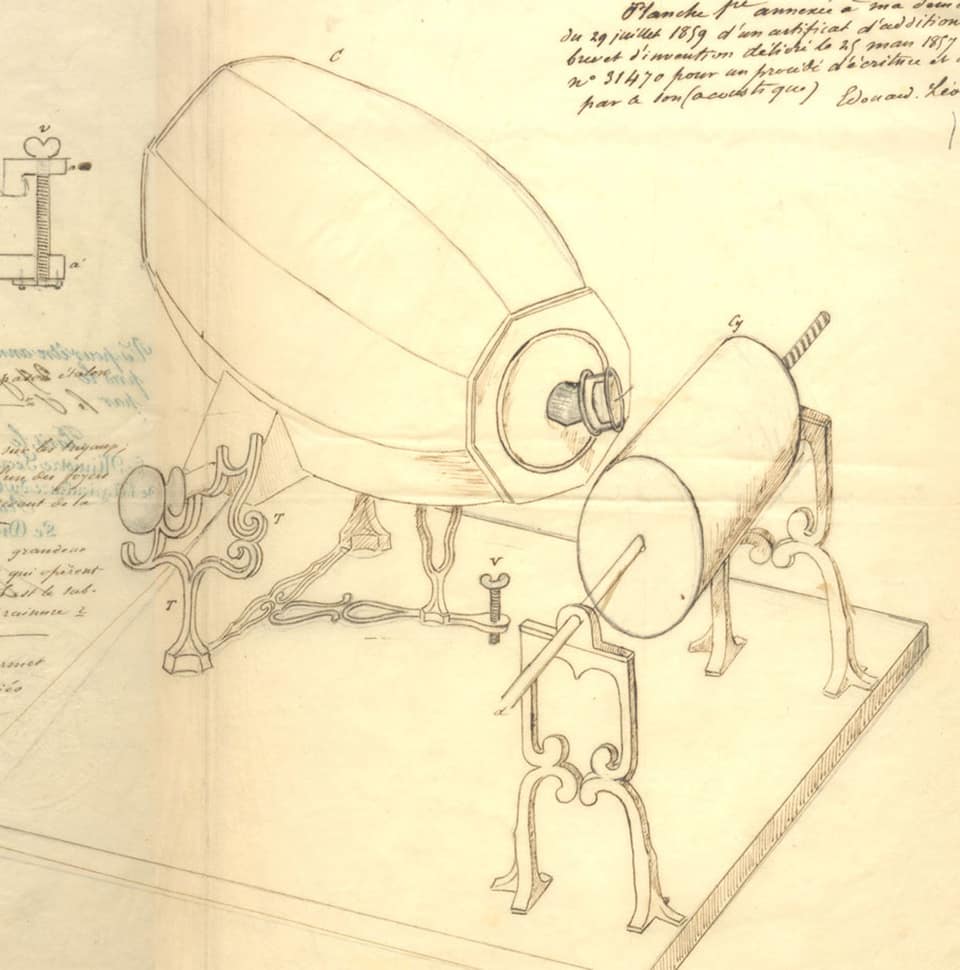
A pen and ink drawing on yellowed paper: a large barrel-shaped horn, lying on its side on an ornate cast-iron stand, narrows to a small round opening closed by a membrane; just in front of it, a horizontal cylinder with a crank rod turns on two curved supports fixed to a flat board. In the top right corner, a handwritten note in French refers to a certificate of addition of 29 July 1859 to patent no. 31470, granted on 25 March 1857, and is signed Édouard Léon.Image not loaded · data saverThe image could not be loaded.Image not saved on this deviceRH-0097

1860

The phonautograph and the oldest recognisable recorded voice

Paris, France · Europe
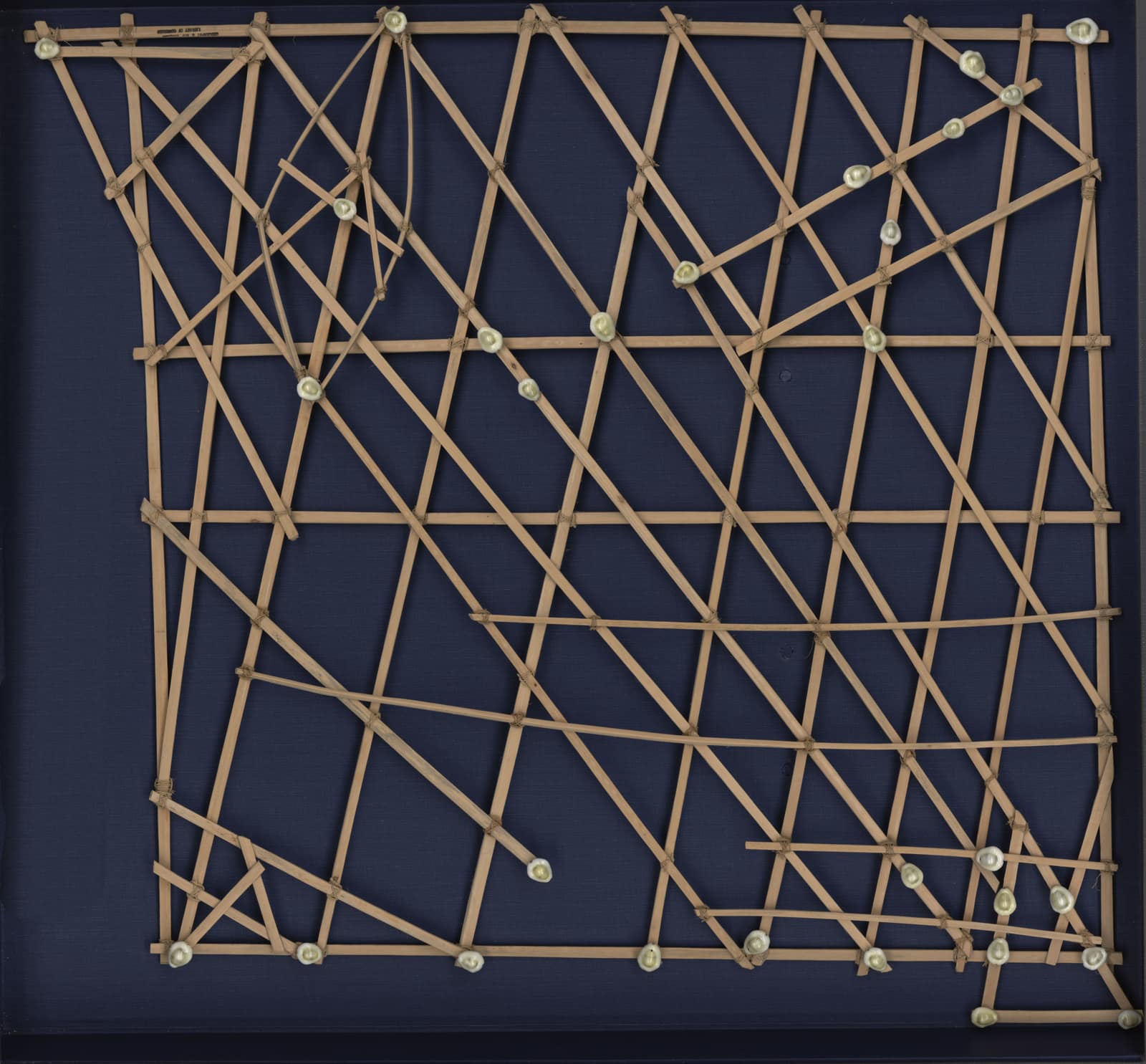
A square lattice of thin wooden sticks lashed together with fibre on a dark blue backing: straight sticks cross diagonally, a few curved sticks sweep across the frame, and small white shells are tied at many of the crossings.Image not loaded · data saverThe image could not be loaded.Image not saved on this deviceRH-0009

1920 to 1929

A map of the swell: Marshall Islands stick charts

Majuro, Marshall Islands · Oceania
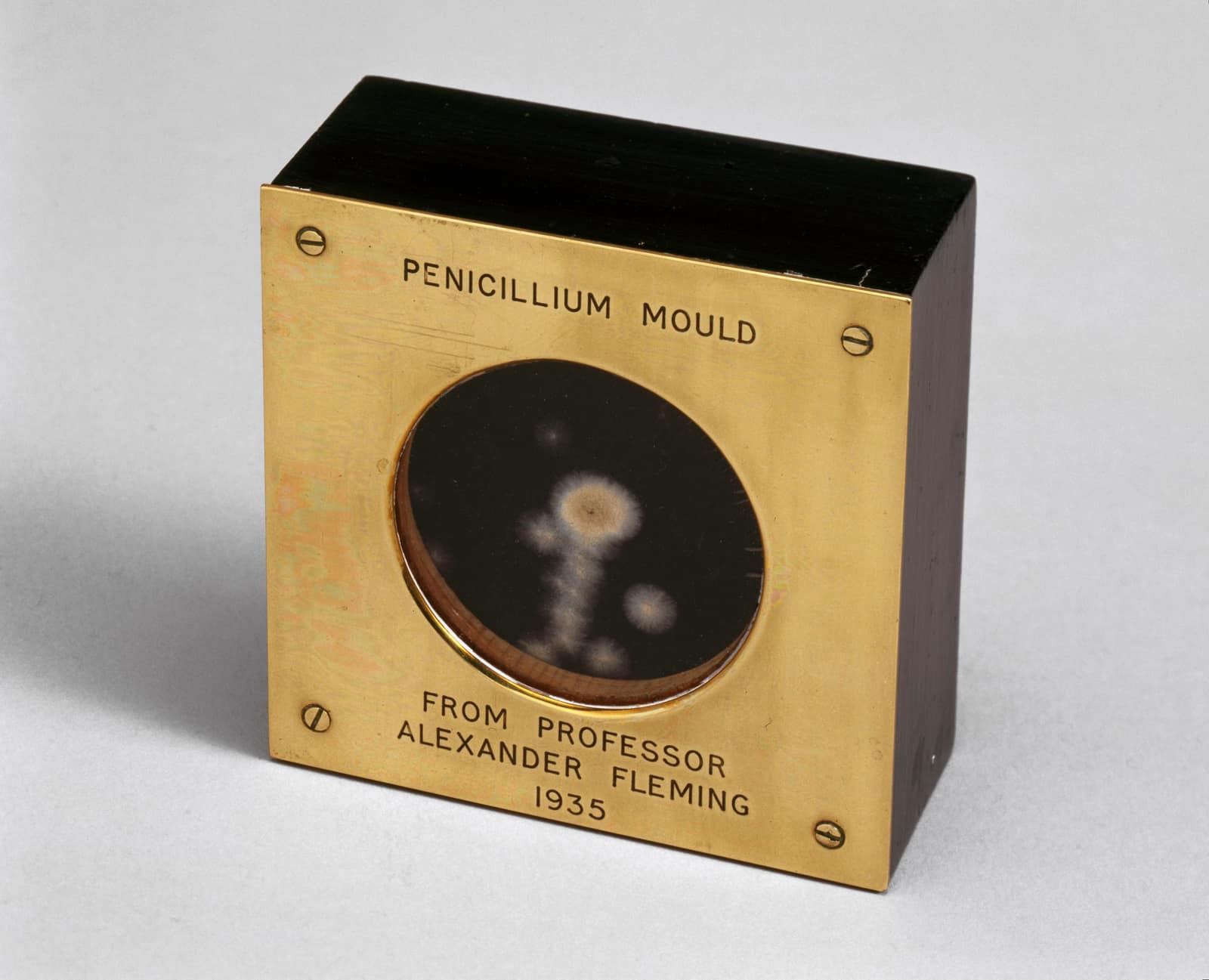
A small square box of dark wood with a brass front, photographed on a pale grey background. Engraved on the brass: Penicillium mould, and below, From Professor Alexander Fleming 1935. In a round glass window at its centre, a dark culture disc bears pale, fuzzy spots of mould, one larger than the others, like tiny grey flowers.Image not loaded · data saverThe image could not be loaded.Image not saved on this deviceRH-0075

1928 to 1945

The discovery of penicillin

St Mary's Hospital, Paddington, London, United Kingdom · Europe
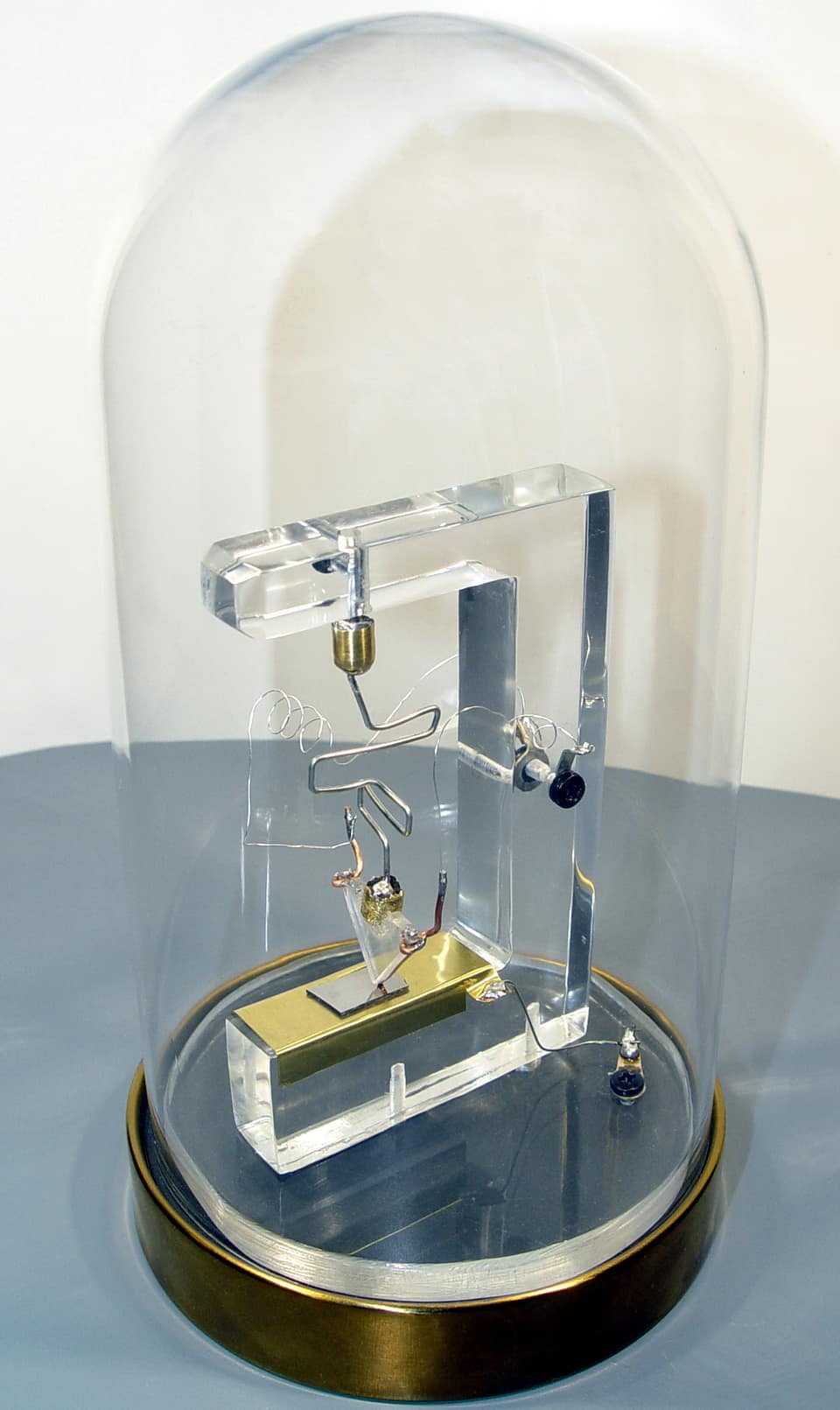
A replica of the first transistor under a tall glass dome on a brass base: a clear plastic frame shaped like an upside down L holds a thin bent wire that presses down, through a small plastic wedge, onto a slab of metal resting on a gold coloured block, with loose connecting wires coiled around it.Image not loaded · data saverThe image could not be loaded.Image not saved on this deviceRH-0088

1947

The transistor

New Providence, New Jersey, United States · Americas
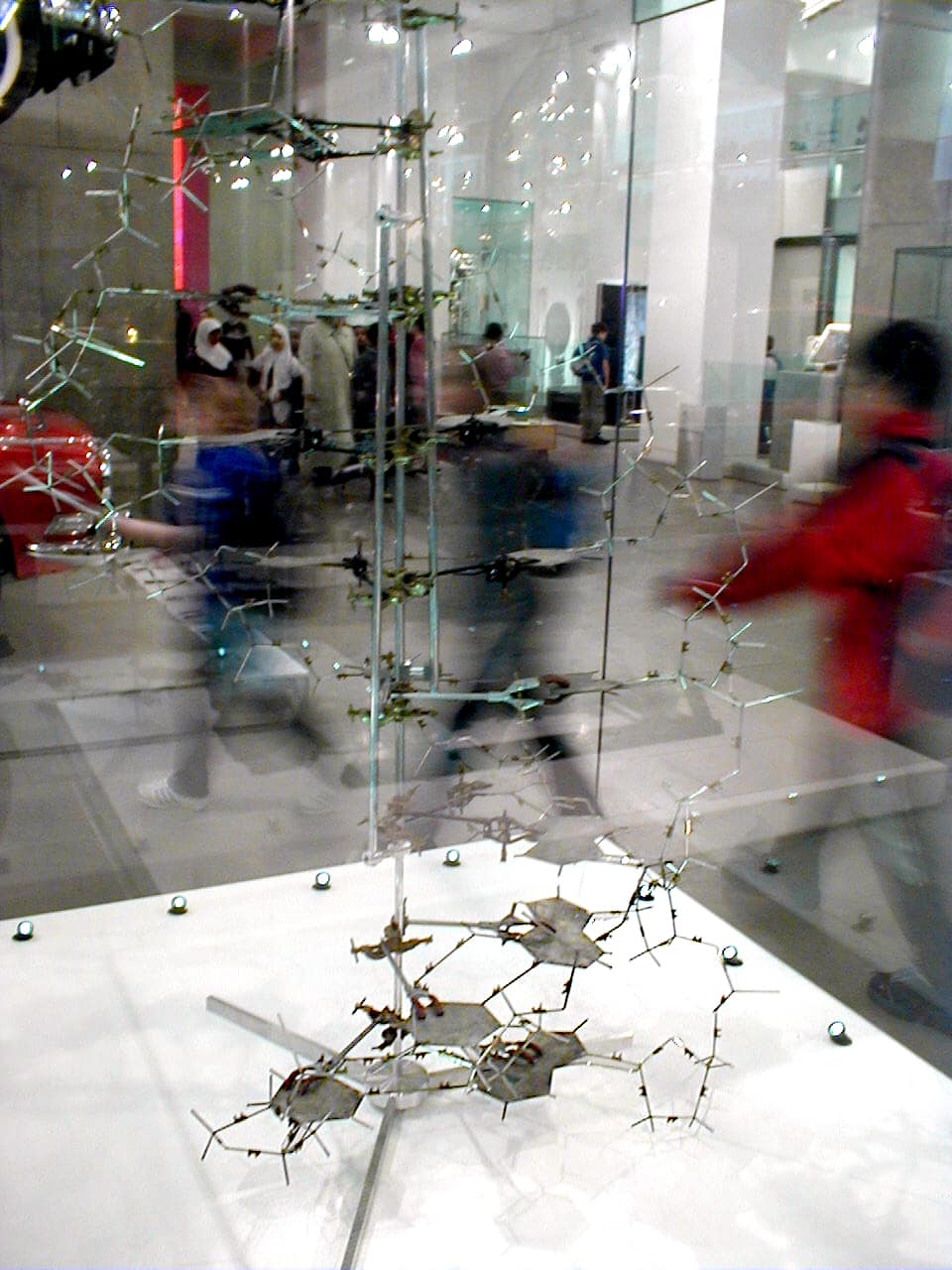
Behind glass in a museum hall, a tall, spindly model built from thin metal rods and flat metal plates cut in the shape of rings, stacked around a central vertical pole and twisting slowly upward; blurred visitors walk past in the background.Image not loaded · data saverThe image could not be loaded.Image not saved on this deviceRH-0078

1953

The double helix: the structure of DNA

Cambridge, United Kingdom · Europe
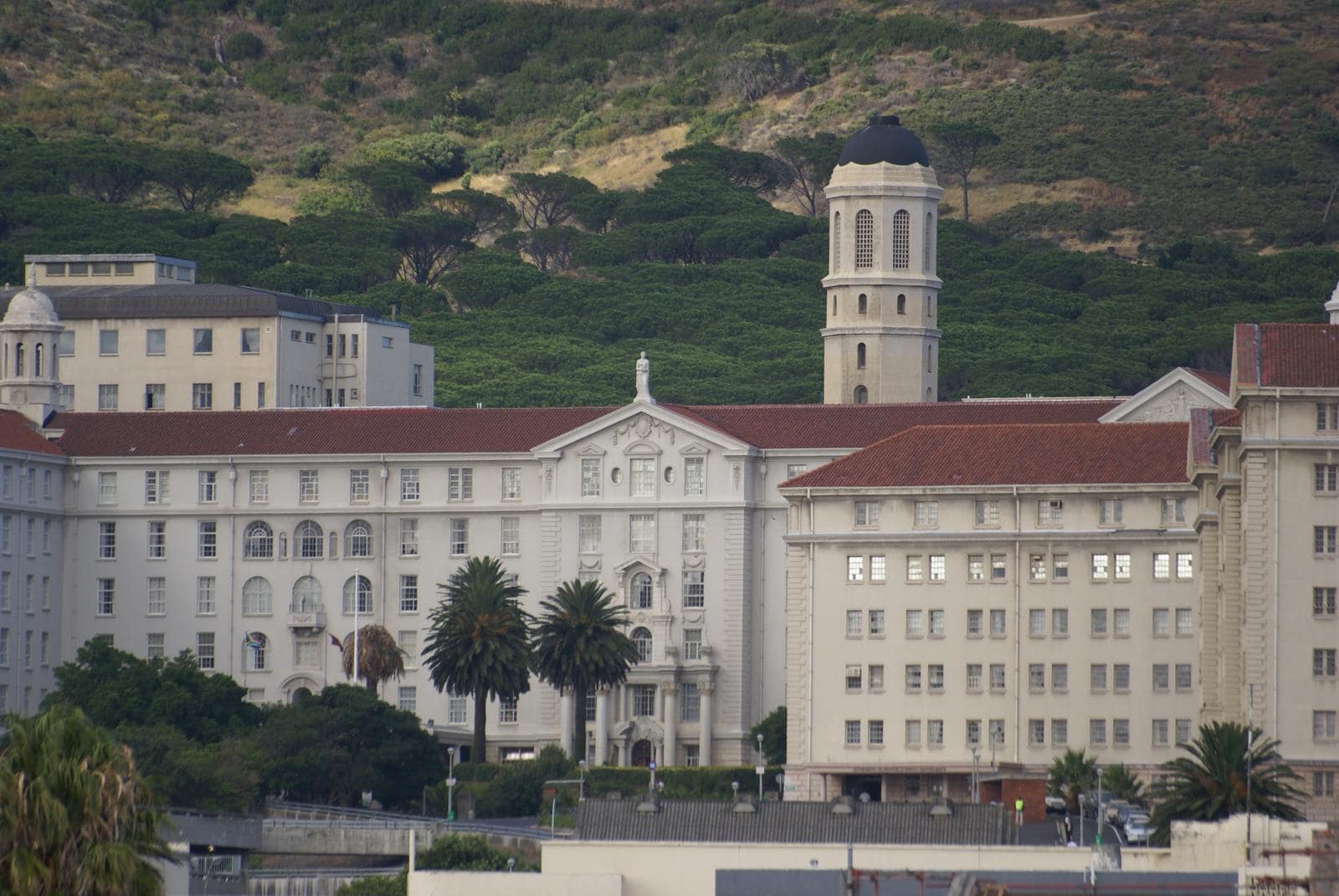
A long pale hospital building of several storeys with red tiled roofs, rows of regular windows and an ornate central gable, flanked by palm trees; a domed bell tower rises behind it against a steep green hillside of pines.Image not loaded · data saverThe image could not be loaded.Image not saved on this deviceRH-0080

1967

The first human heart transplant

Groote Schuur Hospital, Observatory, Cape Town, South Africa · Africa
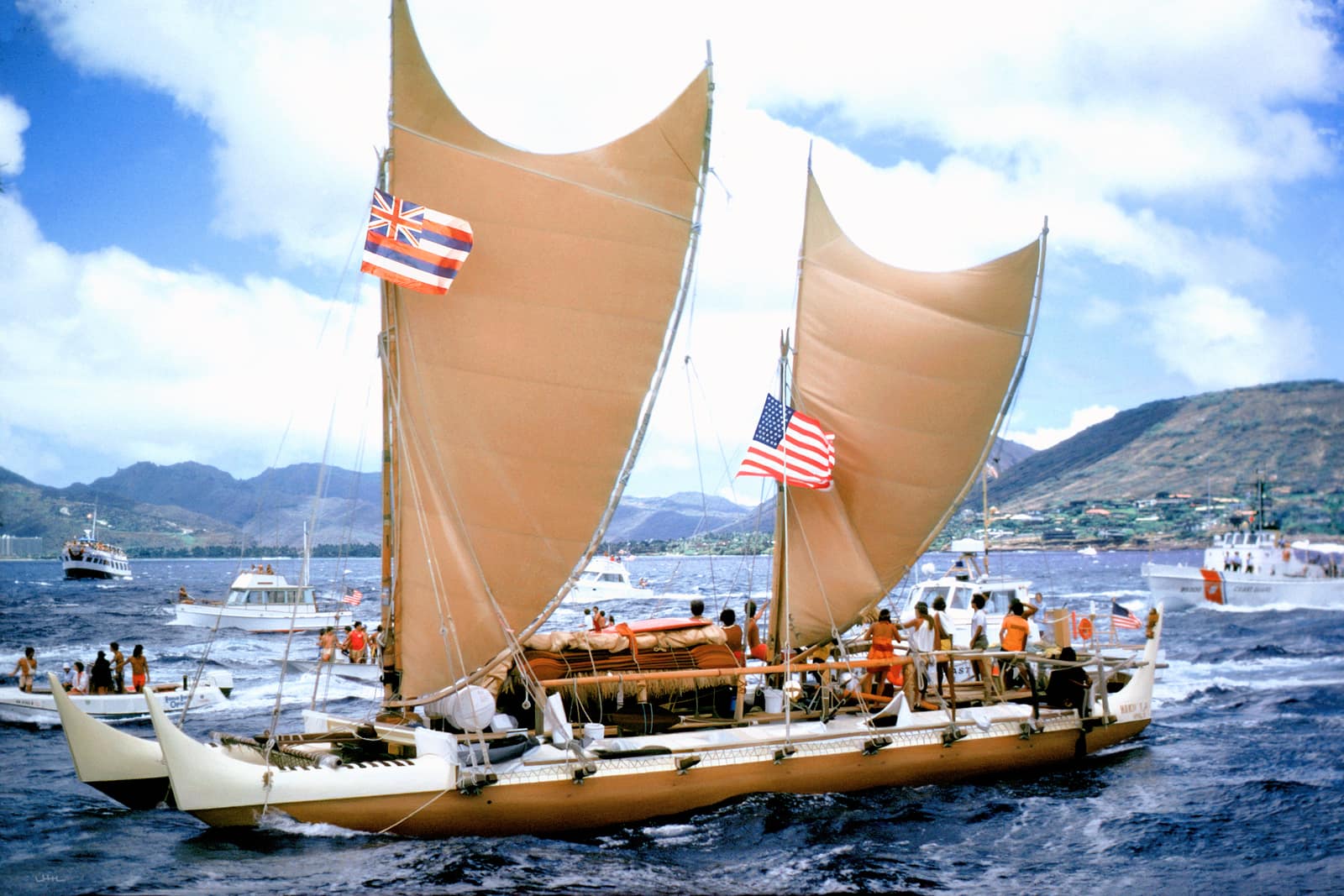
A double-hulled voyaging canoe under two tan crab claw sails crosses choppy blue water towards the shore, flying the Hawaiian flag and the United States flag; crew in bright clothes stand on the deck between the hulls, small motorboats follow, and green mountains rise behind under white clouds.Image not loaded · data saverThe image could not be loaded.Image not saved on this deviceRH-0058

1976

Hōkūleʻa

Hawaiʻi, United States, to Tahiti, French Polynesia · Oceania
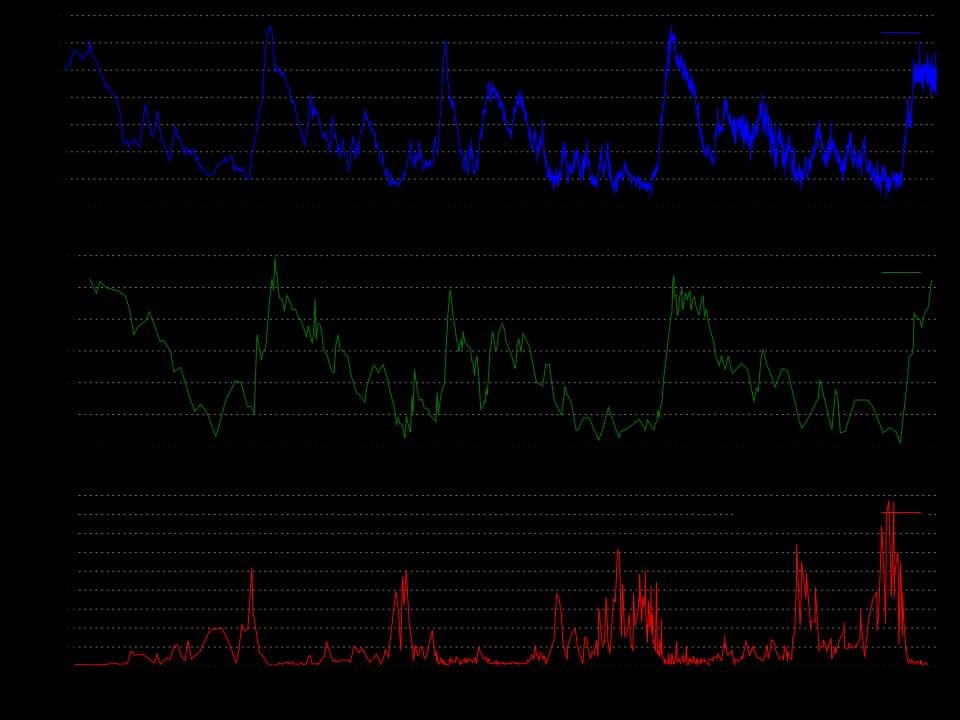
Three line charts stacked one above the other on a white ground, sharing a time axis that runs from 420,000 years ago on the left to the present on the right. At the top, a blue line of temperature change swings between about 10 degrees below and 3 degrees above today's value; in the middle, a green line of carbon dioxide rises and falls between about 180 and 300 parts per million, its peaks and troughs keeping step with the blue line; at the bottom, a red line of dust concentration flares in spikes during the cold periods.Image not loaded · data saverThe image could not be loaded.Image not saved on this deviceRH-0099

1990 to 1999

The ice at Vostok: 420,000 years of air

Vostok Station, East Antarctica · Antarctica
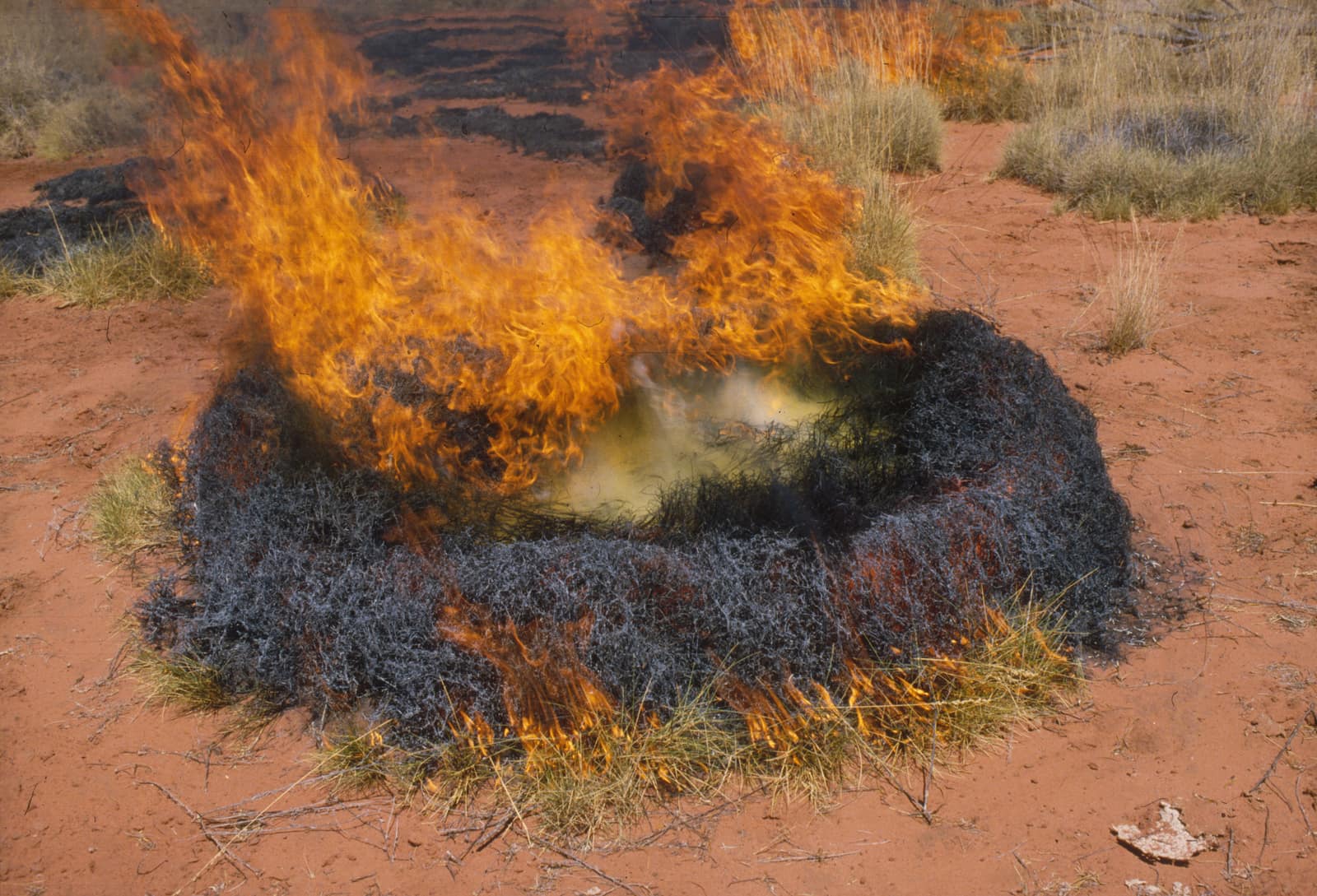
A clump of spinifex grass burning on red desert sand: tall orange flames rise from one side of a ring of blackened, still-smoking tussock, while the green and straw-coloured grass at its base is just catching; around it lie bare red earth, scattered dry stems and, behind, a strip of ground already burned black between unburned tussocks. This is a controlled burn photographed by CSIRO in 1989, not a cultural burn by the Martu.Image not loaded · data saverThe image could not be loaded.Image not saved on this deviceRH-0137

c. 2002

Cool fire: Aboriginal burning that cares for Country

Around Parnngurr, Western Desert, Western Australia, Australia · Oceania
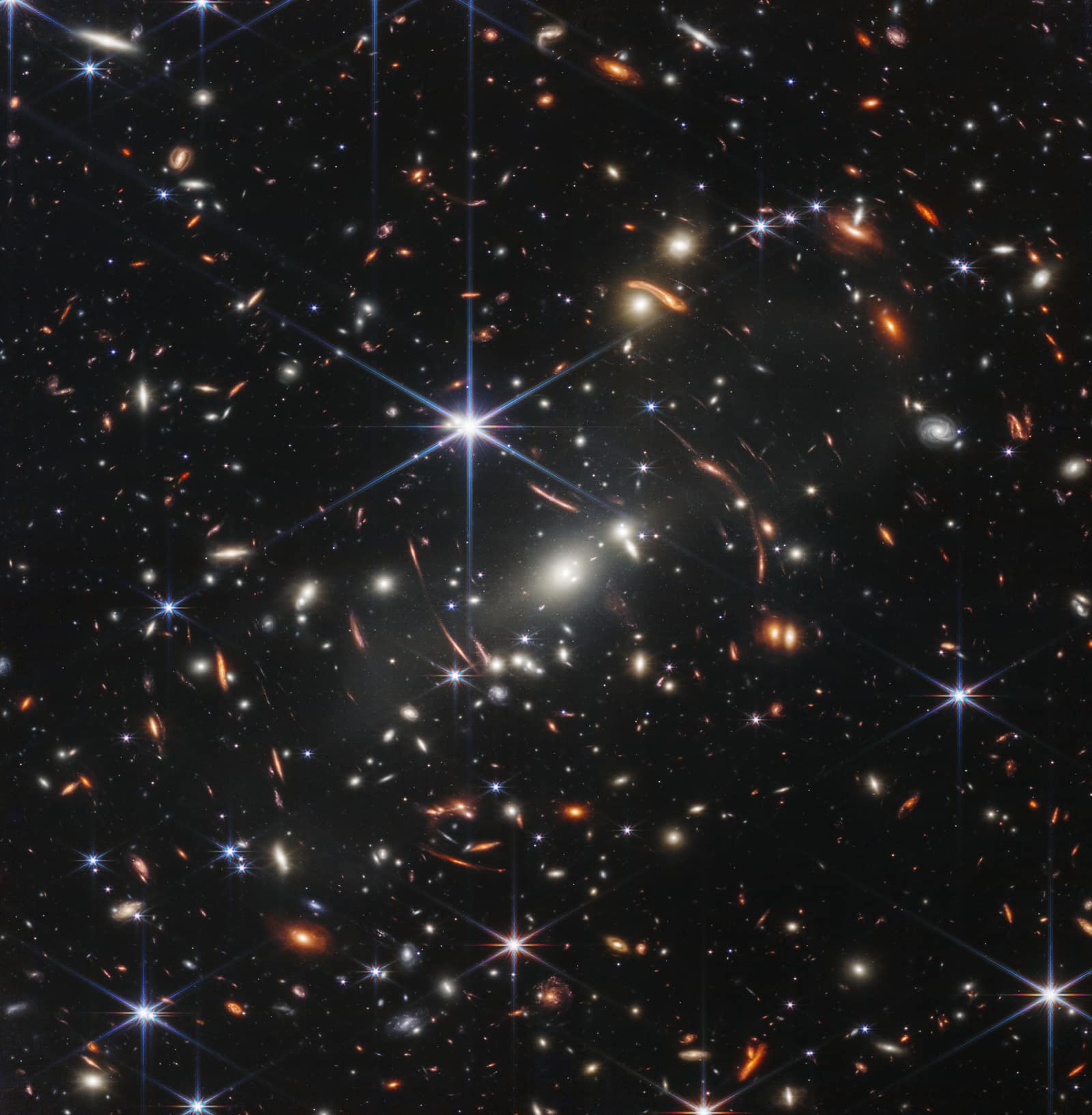
A square of black sky crowded with thousands of small glowing shapes: white, yellow and orange galaxies, some round, some spiral, some stretched into thin curved arcs around a pale cluster of bright galaxies near the centre; a few stars in the foreground stand out with six long spikes of light.Image not loaded · data saverThe image could not be loaded.Image not saved on this deviceRH-0092

2022

Webb's First Deep Field

Orbit around the Sun and Earth's second Lagrange point, looking towards the galaxy cluster SMACS 0723 in the southern constellation Volans · Americas