The earliest known Homo sapiens, Jebel Irhoud
Before these finds, our species was thought to have appeared about 200,000 years ago in East Africa; after them, its origins are placed at least 300,000 years ago and across the whole African continent.
- Dated
- Place
- Jebel Irhoud, about 100 km west of Marrakech, Morocco · Early Homo sapiens of North Africa, makers of Middle Stone Age tools
- Coordinates
- 31° 52′ N · 8° 52′ W (approximate)
- Remains
- Fragmentary
This fragment shows human remains.
It is shown here as the institution that holds it presents it. Some communities connected to it ask that it be viewed with care. You may choose to see the image, or read the record without it.
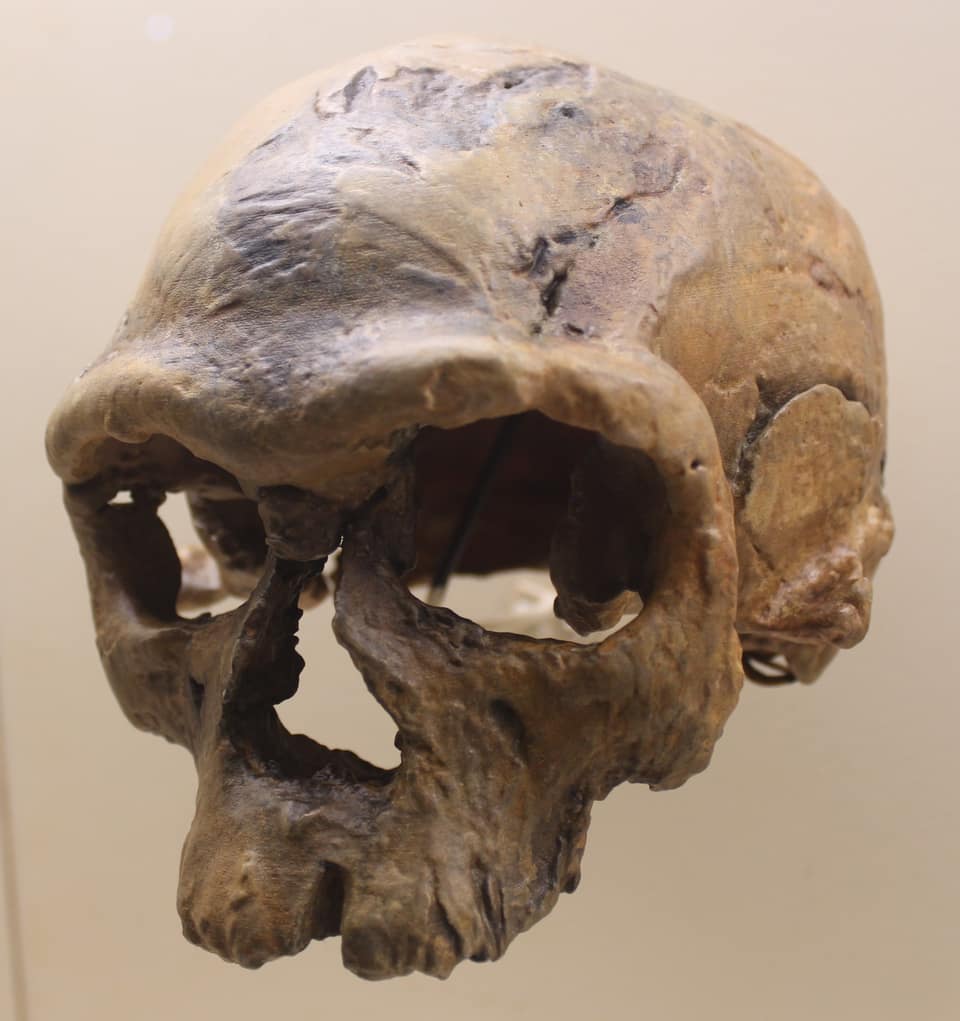

Image veiled by default
Jonathan Chen, CC BY-SA 4.0, via Wikimedia CommonsCC-BY-SA-4.0Original record
Data saver is on. Images load only when you ask. You can change this in Settings at any time.
From the archivist
They were not looking for us. In 1961, workers cutting barite from a hill between Marrakech and the sea broke into an old cave filled with sediment, and found in it the skull of a person.
For decades this archive filed that face in the wrong drawer. It was thought too recent, then too strange. Only when excavators returned in 2004 and found more of these people, beside the flints they had dropped into their fires, could the heat stored in the stone be measured. It had last been heated about three hundred thousand years ago.
The faces of Jebel Irhoud are ours: short, flat, with teeth like our own. Behind them, the skull still runs long and low, as if the head had not yet finished becoming what it is now. These people hunted gazelle on the plain, carried good flint from elsewhere, and shaped it with care.
The remains of at least five of them are kept today in Morocco. We show here only a cast, and ask that it be looked at as one looks at a portrait of an ancestor.
Established
- In 1961 miners digging for barite at Jebel Irhoud, about 100 km west of Marrakech, found a fossil human skull; further remains followed, first taken for Neanderthals and later for Homo sapiens about 160,000 years old (Smithsonian; Max Planck Society).
- Excavations resumed in 2004 by a Moroccan and German team raised the number of human fossils from six to 22, from at least five individuals: skulls, teeth and long bones (Max Planck Society).
- Flint tools burnt in ancient fires, lying in the same layers as the new fossils, were dated by thermoluminescence to a weighted average of 315,000 ± 34,000 years; a recalculated date for a tooth from the Irhoud 3 jaw gave 286,000 ± 32,000 years (Richter et al. 2017).
- The face and teeth fall within the range of living humans, while the braincase remains long and low, more archaic in shape (Hublin et al. 2017).
- The layers also held Middle Stone Age tools made with Levallois techniques from flint brought to the site, and bones of hunted animals, mostly gazelles (Max Planck Society).
Interpretation
Whether these people should be called Homo sapiens or an early stage leading to it is still discussed, since the braincase is not yet modern. The authors read the finds, with others from southern and eastern Africa, as a sign that our species emerged across the continent rather than in one cradle; other researchers think the fossil record is still too thin to decide. The dates themselves have not been seriously challenged.
In 10,000 years
In 10,000 years, will our descendants look at our bones and still recognise their own face?
Sources (4)
- Hublin, J.-J., Ben-Ncer, A., Bailey, S. E., Freidline, S. E., Neubauer, S., Skinner, M. M., Bergmann, I., Le Cabec, A., Benazzi, S., Harvati, K., Gunz, P. New fossils from Jebel Irhoud, Morocco and the pan-African origin of Homo sapiens. Nature 546, 2017, p. 289-292. · doi.org
- Richter, D., Grün, R., Joannes-Boyau, R., Steele, T. E., Amani, F., Rué, M., Fernandes, P., Raynal, J.-P., Geraads, D., Ben-Ncer, A., Hublin, J.-J., McPherron, S. P. The age of the hominin fossils from Jebel Irhoud, Morocco, and the origins of the Middle Stone Age. Nature 546, 2017, p. 293-296. · doi.org
- Max Planck Society. The first of our kind: fossils from Jebel Irhoud, Morocco, 7 June 2017. · www.mpg.de
- Smithsonian Institution, Human Origins Program. Our species arose at least 300,000 years ago, 8 June 2017. · humanorigins.si.edu
Related fragments
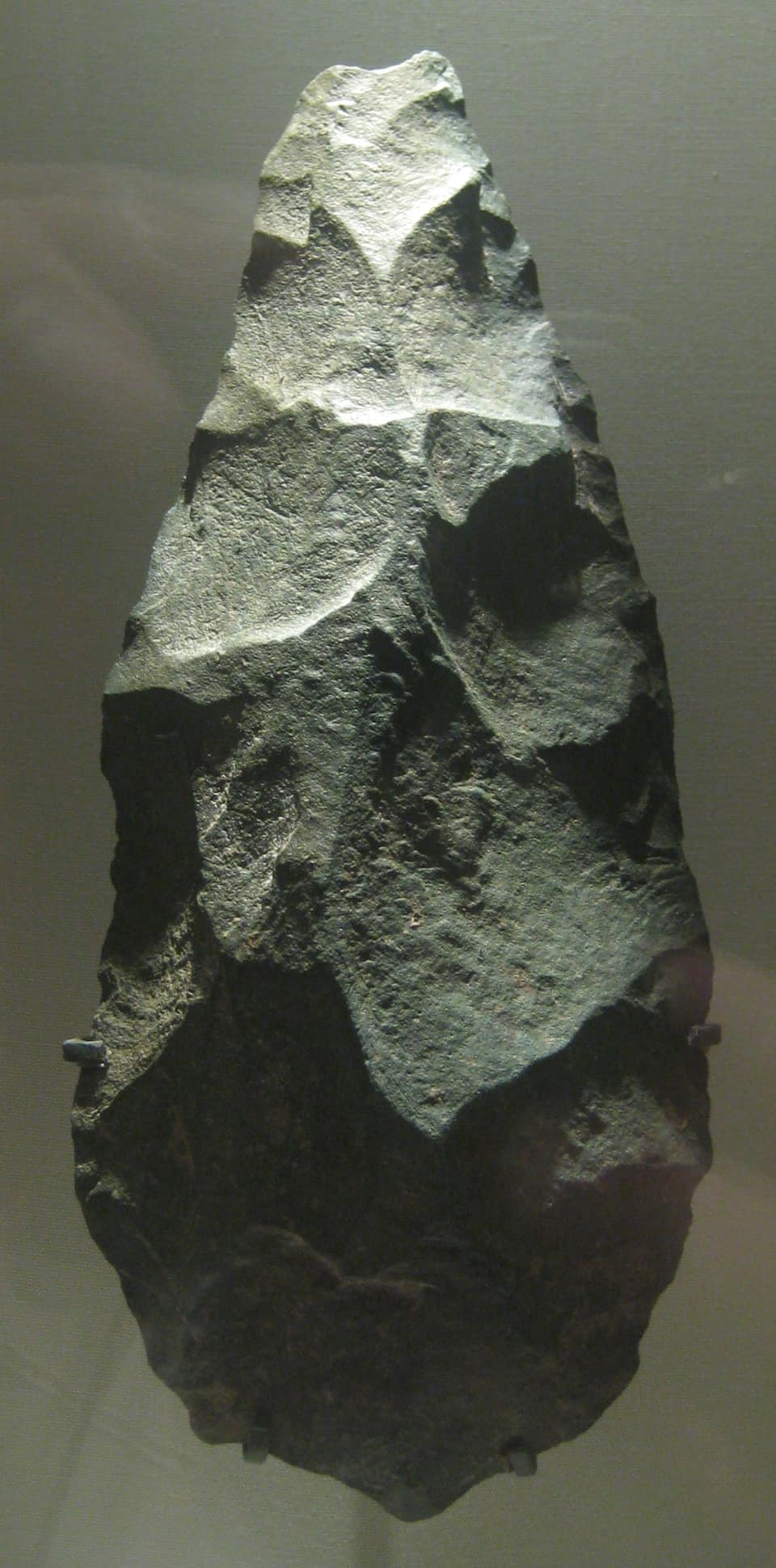
c. 1.4 million years ago
A handaxe from Olduvai Gorge
Olduvai Gorge, Ngorongoro Conservation Area, Tanzania · Africa
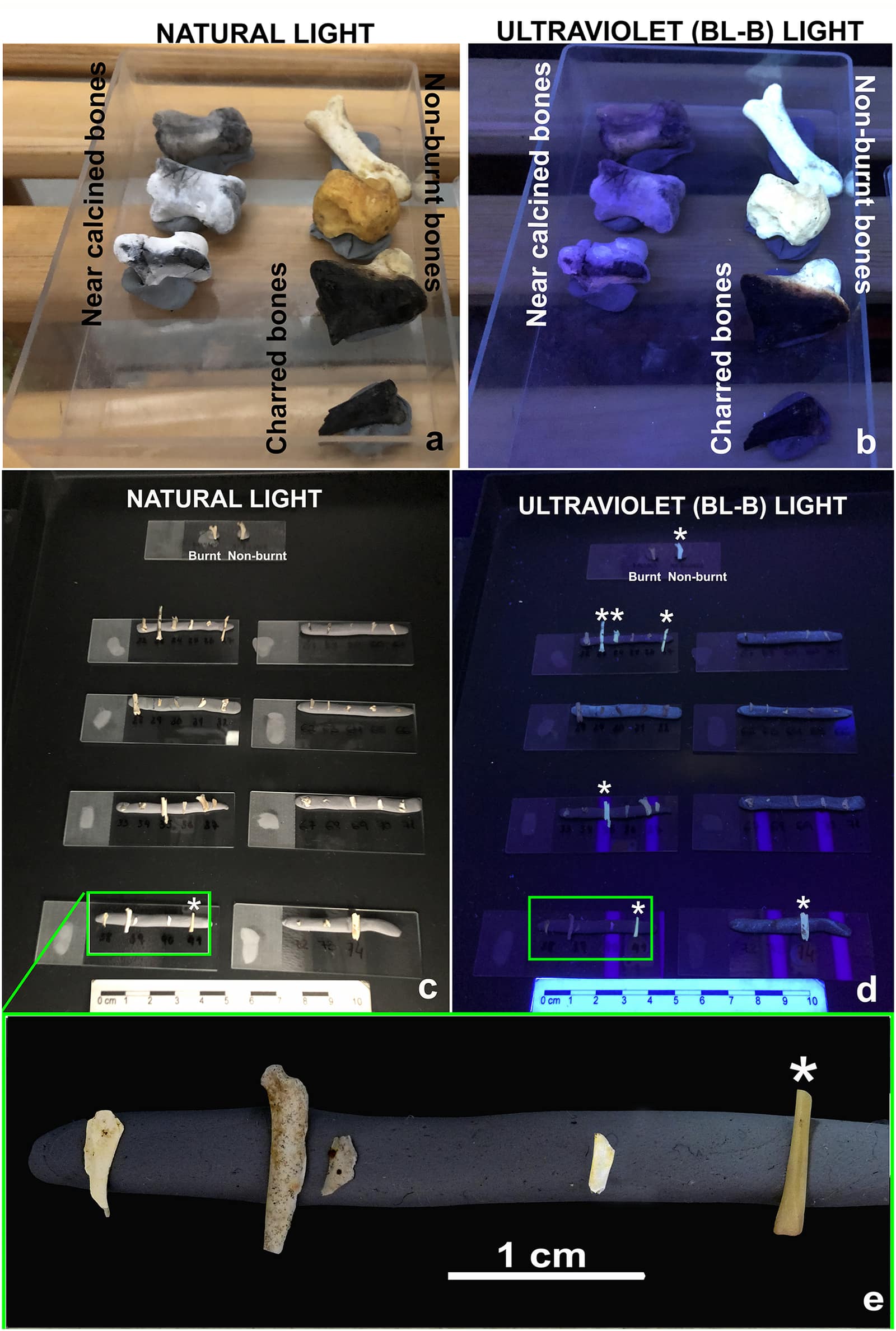
c. 1 million years ago
Early fire at Wonderwerk Cave
Between Danielskuil and Kuruman, Northern Cape, South Africa · Africa
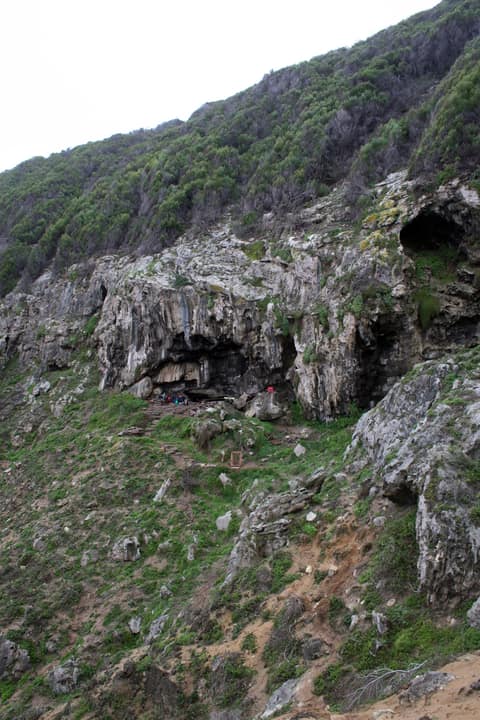
c. 77,000 years ago
The engraved ochre of Blombos Cave
Near Still Bay, Western Cape, South Africa · Africa