The first human heart transplant
Before 3 December 1967 a failing human heart could not be replaced; after it, one person's heart had beaten in another person's body, and heart transplantation, slow to succeed at first, became a treatment that has since given years of life to many thousands of people.
- Dated
- Place
- Groote Schuur Hospital, Observatory, Cape Town, South Africa · The cardiac surgery team of Groote Schuur Hospital and the University of Cape Town, led by Christiaan Barnard, in apartheid South Africa
- Coordinates
- 33° 56′ S · 18° 28′ E (approximate)
- Remains
- Intact
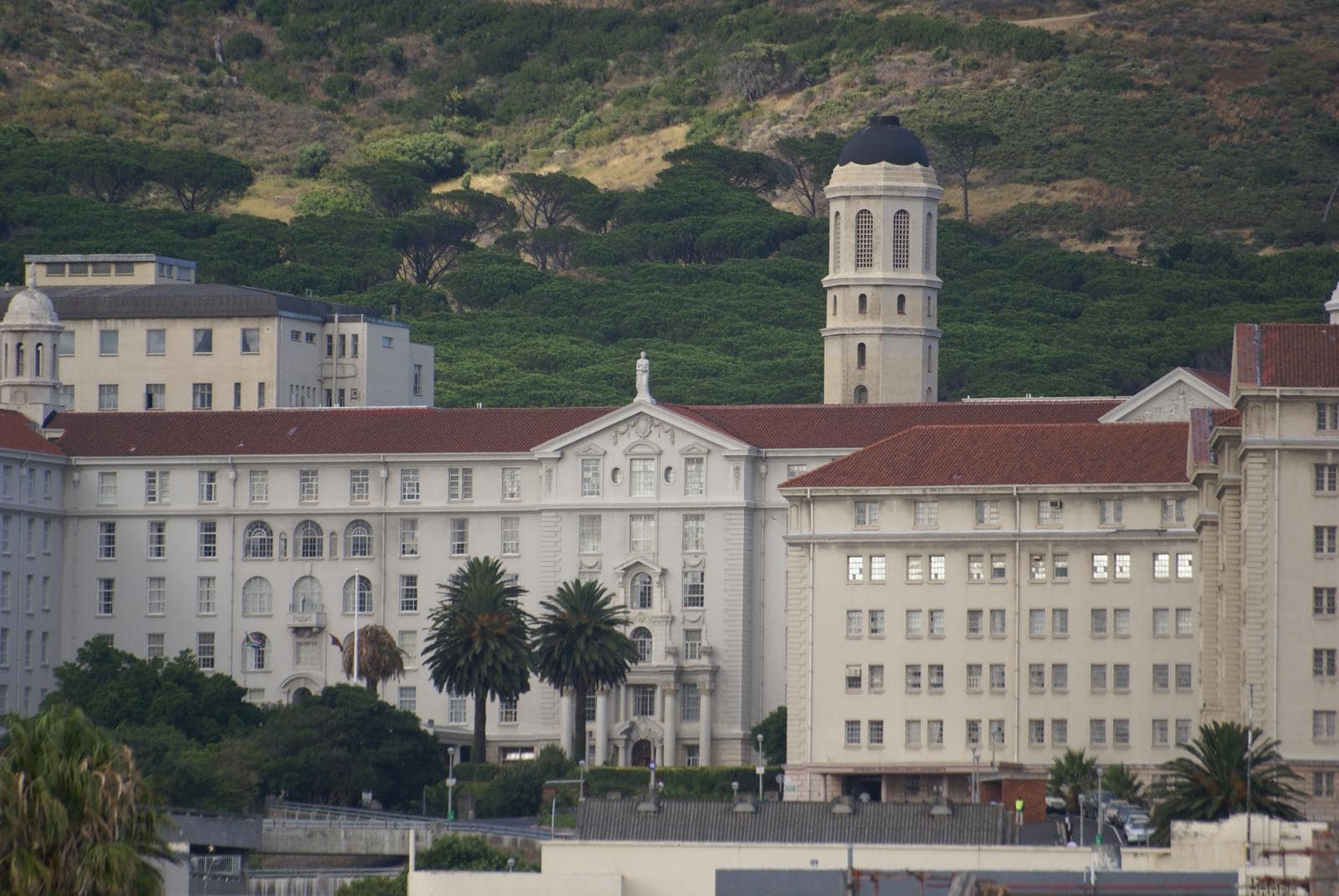
Danie van der Merwe, CC BY 2.0, via Wikimedia CommonsCC-BY-2.0Original record
Data saver is on. Images load only when you ask. You can change this in Settings at any time.
From the archivist
On a Saturday afternoon in December, a young woman and her mother crossed a road in Cape Town after stopping at a bakery. A car struck them both. The mother died on the road. The daughter, Denise Darvall, was twenty five, and by evening the doctors at the hospital on the hill knew she would not wake.
In the same hospital lay a man whose heart was failing, Louis Washkansky. Her father was asked. He thought about his daughter for a few minutes and said yes.
Shortly after midnight, two theatres were opened side by side. Before six on Sunday morning, a heart that had stopped was given an electric shock in another person's chest, and it began to beat.
Washkansky woke. He spoke with his wife. He lived eighteen days, and died of an infection his body could no longer fight.
This civilization had learned to move the organ it had always taken for the seat of life, from one body to another. What it asked, first, was a gift, from a father, on the worst night of his life.
Established
- On the afternoon of 2 December 1967, Denise Darvall, aged 25, and her mother were struck by a car while crossing a road in Observatory, Cape Town; her mother died at once, and Denise was declared brain dead that evening (Heart of Cape Town Museum; UCT).
- Her father, Edward Darvall, agreed that her heart be given; her kidneys went to a boy of ten, Jonathan van Wyk (Heart of Cape Town Museum).
- In an operation that began shortly after midnight, a team led by Christiaan Barnard placed her heart in the chest of Louis Washkansky, a 53 year old Cape Town businessman; it was started with an electric shock just before 6 a.m. on Sunday 3 December 1967 (UCT).
- Washkansky woke and spoke with his wife, but died of pneumonia on 21 December 1967, eighteen days later, his immunity weakened by the drugs given to prevent rejection (South African History Online).
- Hamilton Naki, a laboratory technician at the university's medical school, became highly skilled in animal surgery and assisted the experimental work that preceded the transplant; he did not take part in the operation of 1967 and never worked at Groote Schuur Hospital (Dent, BMJ 2005).
Interpretation
In 2005 obituaries in the BMJ, The Economist and other publications stated that Naki had removed Denise Darvall's heart and had been hidden by apartheid; they were corrected, since he was not present. His real skill, in a laboratory where a black man could not be recognised as a surgeon, is itself part of the story, and the University of Cape Town gave him an honorary degree in 2003. Surgeons in the United States had prepared the technique for years, and whether Cape Town went first through readiness or through haste is still discussed; the operation also came before brain death was widely accepted as a definition of death.
In 10,000 years
In 10,000 years, will anyone remember that the first heart to be given away belonged to a young woman crossing a road on her way back from a bakery?
Sources (6)
- University of Cape Town, Chris Barnard Division of Cardiothoracic Surgery. World's First Human Heart Transplant. · health.uct.ac.za
- Barnard, C. N. The operation. A human cardiac transplant: an interim report of a successful operation performed at Groote Schuur Hospital, Cape Town. South African Medical Journal 41, 30 December 1967, p. 1271-1274.
- South African History Online. Louis Washkansky dies, 21 December 1967. · sahistory.org.za
- Heart of Cape Town Museum. Denise Darvall, first heart transplant donor. · heartofcapetown.co.za
- Dent, D. M. Obituary of Hamilton Naki: obituary was historically inaccurate. BMJ 331 (7515), 3 September 2005, p. 517. · pmc.ncbi.nlm.nih.gov
- Africa Check. History-check: was Hamilton Naki directly involved with the first heart transplant? · africacheck.org