Hōkūleʻa
- Dated
- Place
- Hawaiʻi, United States, to Tahiti, French Polynesia · Native Hawaiians and the Polynesian Voyaging Society, guided by the Micronesian navigator Mau Piailug of Satawal
- Coordinates
- 21° 01′ N · 156° 38′ W (approximate)
- Remains
- Intact
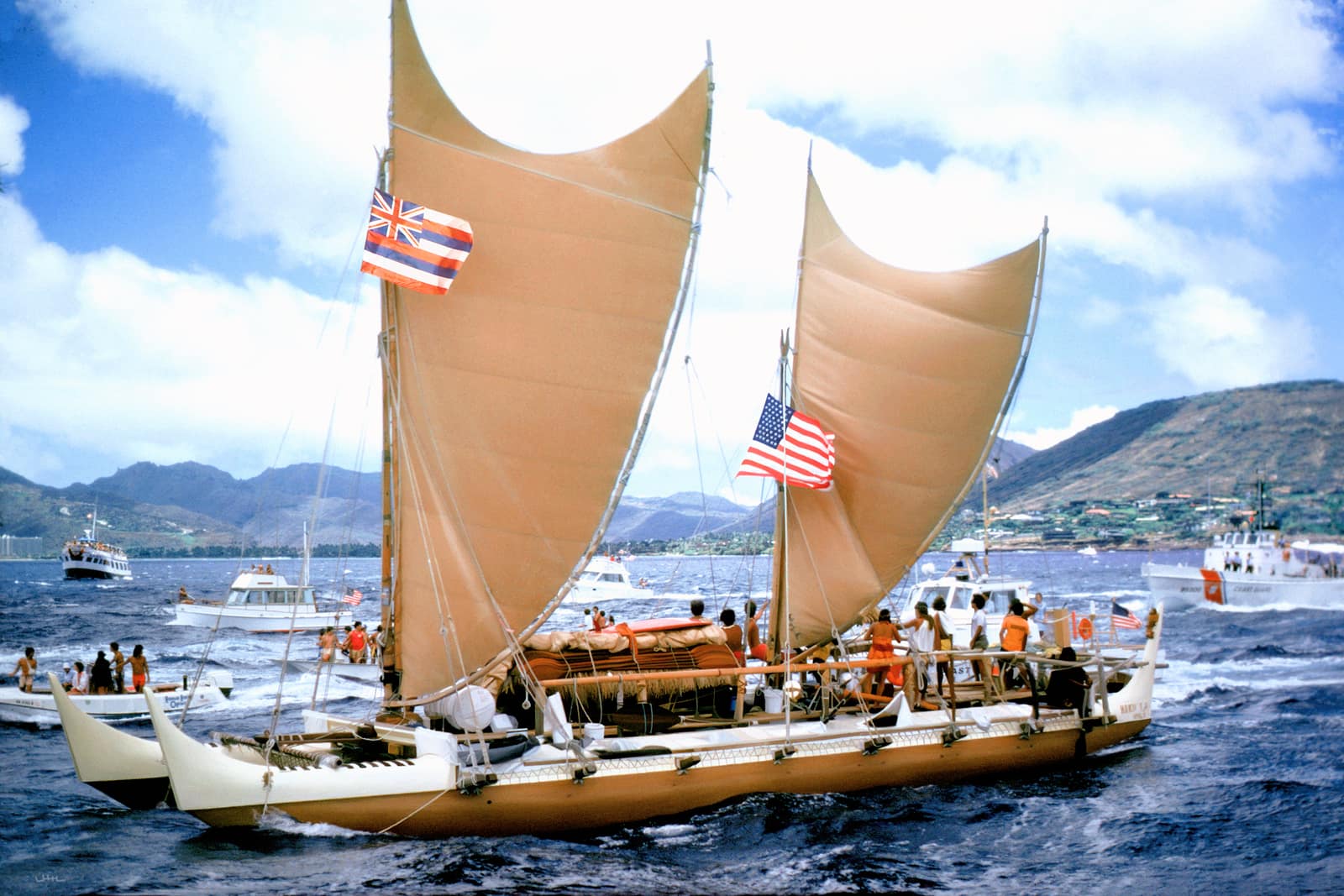

Phil Uhl, CC BY-SA 3.0, via Wikimedia CommonsCC-BY-SA-3.0Original record
Data saver is on. Images load only when you ask. You can change this in Settings at any time.
From the archivist
The ancestors crossed this ocean without charts or compasses, and then, for centuries, the world stopped believing they had done it on purpose. Scholars wrote of canoes blown off course, of islands found by luck.
In the 1970s a group in Hawaiʻi built a canoe to answer them: two hulls lashed together, two sails shaped like the claws of a crab. They named her Hōkūleʻa, Star of Gladness, after a star that passes overhead in Hawaiʻi. No Hawaiian then living knew how to find Tahiti without instruments. The man who did came from Satawal, a small island in Micronesia, where the old knowledge had been kept. His name was Mau Piailug.
On 1 May 1976 they sailed south. He watched the rising and setting of stars, the shape of the swells under the hull, the clouds over unseen land, the flight of birds at dusk. Thirty-one days later they sighted an atoll. On 4 June, in Papeʻete, a crowd waited on the shore.
He then taught others. The knowledge has not been lost again.
Established
- Hōkūleʻa, whose name means Star of Gladness, is a double-hulled voyaging canoe conceived by the artist Herb Kawainui Kāne with Ben Finney, Tommy Holmes and others of the Polynesian Voyaging Society (PVS).
- On 1 May 1976 she left Honolua Bay, Maui, for Tahiti, navigated without instruments by Mau Piailug of Satawal in Micronesia, who read the stars, winds, swells, clouds and sea life (PVS).
- After 31 days at sea she made landfall at Mataiva on 1 June 1976 and reached Papeʻete on 4 June, where more than 17,000 people welcomed her (PVS).
- The voyage set out to show that the ancestors of the Polynesians were skilled navigators who settled the Pacific on purpose, against the theory that the islands were found by accidental drift (PVS; Finney 1977).
- In 1980 the Hawaiian navigator Nainoa Thompson, taught by Mau Piailug, guided Hōkūleʻa to Tahiti and back without instruments (PVS).
Interpretation
A modern voyage in a reconstructed canoe proves that such crossings were possible, not exactly how the first settlers made them; the design of the ancient canoes and the routes they took are still debated. For many Hawaiians and other Pacific peoples, the canoe's meaning lies less in the experiment than in the revival of knowledge that had nearly been lost.
In 10,000 years
In 10,000 years, when every ship knows its position, will anyone still know how to read a swell?
Sources (3)
- Polynesian Voyaging Society. Polynesian Voyaging Society honors the 50th anniversary of Hōkūleʻa's 1976 maiden voyage to Tahiti, 2026. · hokulea.com
- Polynesian Voyaging Society. History. · hokulea.com
- Finney, B. R. Voyaging canoes and the settlement of Polynesia. Science 196 (4296), 1977, p. 1277-1285. · doi.org
Related fragments
1920 to 1929
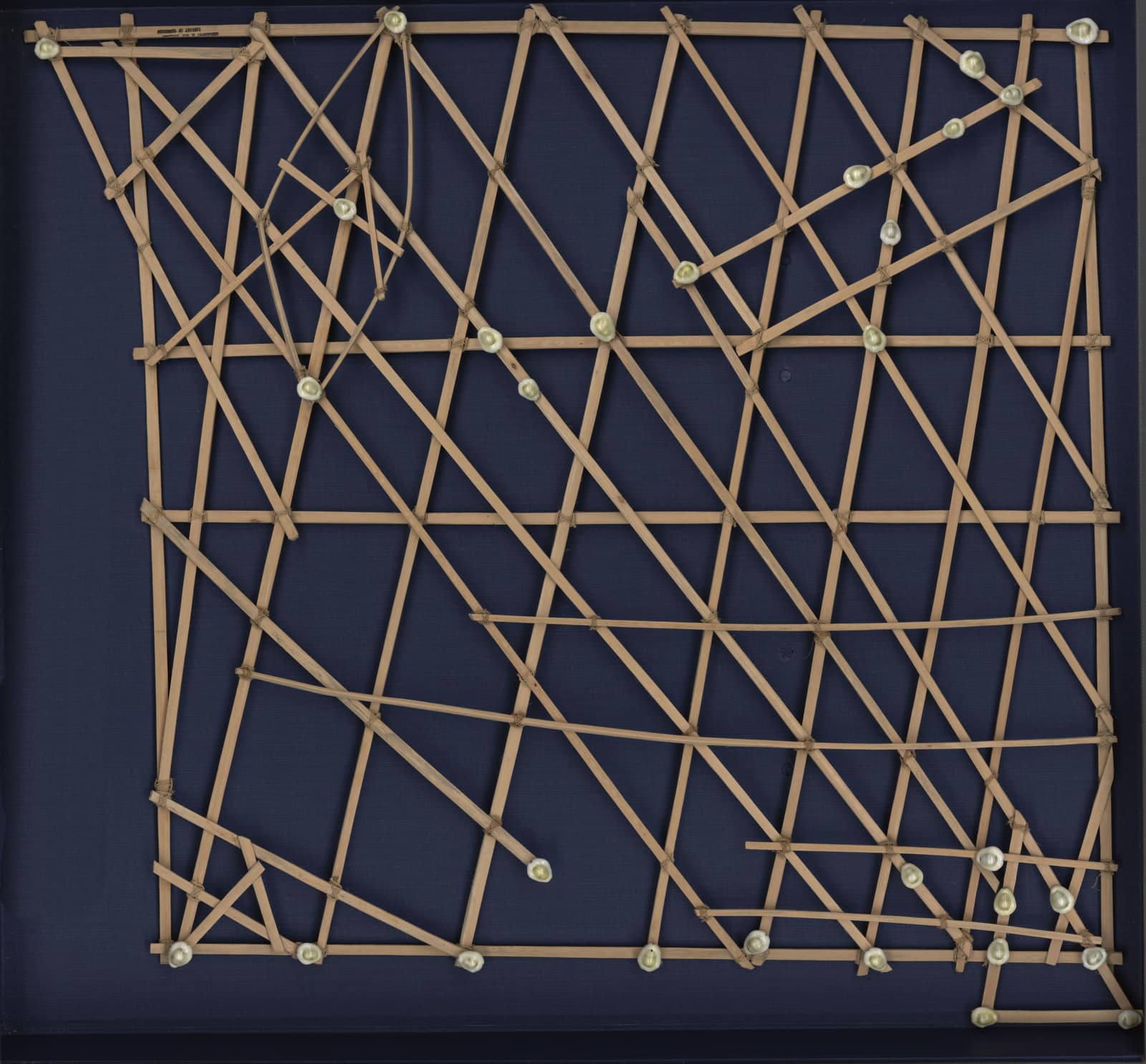
A map of the swell: Marshall Islands stick charts
Majuro, Marshall Islands · Oceania
c. 1000 BCE
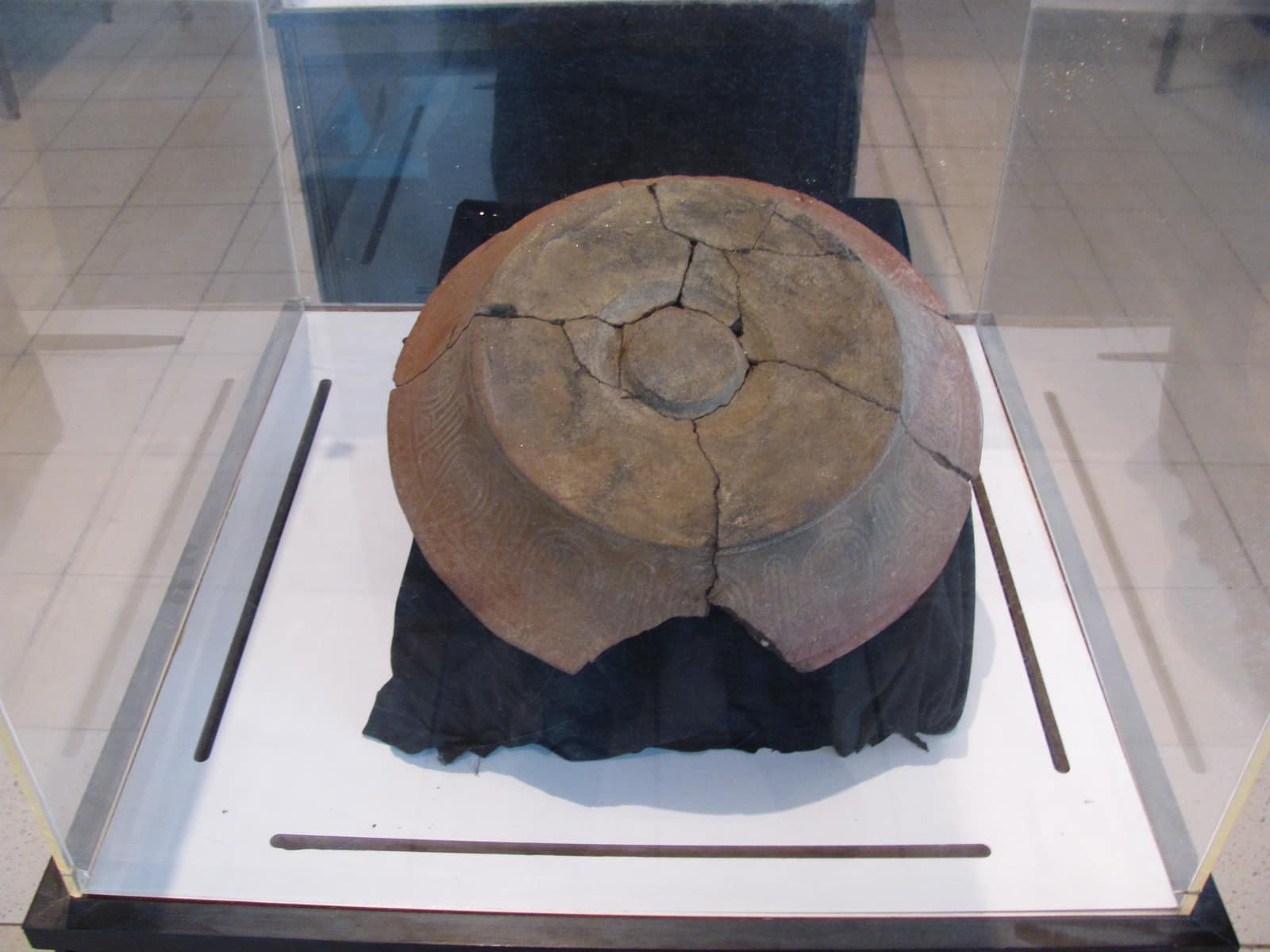
Lapita pottery
Teouma, Efate, Shefa Province, Vanuatu · Oceania
1200 to 1650
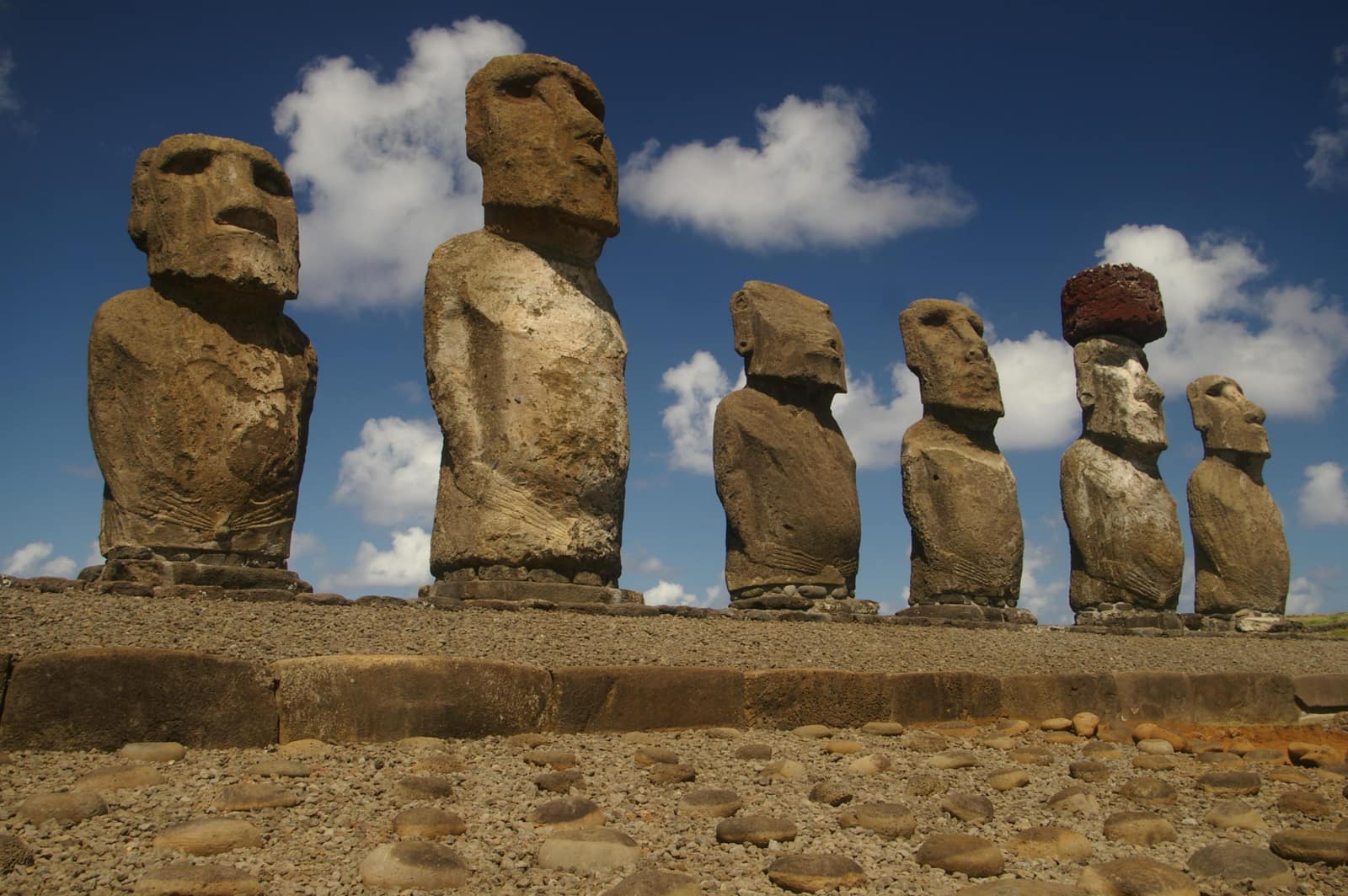
The moai of Rapa Nui
Ahu Tongariki, Rapa Nui National Park, Valparaíso Region, Chile · Oceania