Ether Day: the first public operation under anaesthesia
Before October 1846 surgery was done on patients who were awake, and speed was the surgeon's chief mercy; within months of the Boston demonstration, operations under ether were performed in London before the year was out and on the European continent early in 1847, and general anaesthesia became part of surgery.
- Dated
- Place
- Ether Dome, Massachusetts General Hospital, Boston, Massachusetts, United States · William T. G. Morton, Boston dentist, John Collins Warren and the surgeons of Massachusetts General Hospital; Crawford W. Long, country physician in Jefferson, Georgia
- Coordinates
- 42° 22′ N · 71° 04′ W (approximate)
- Remains
- Intact
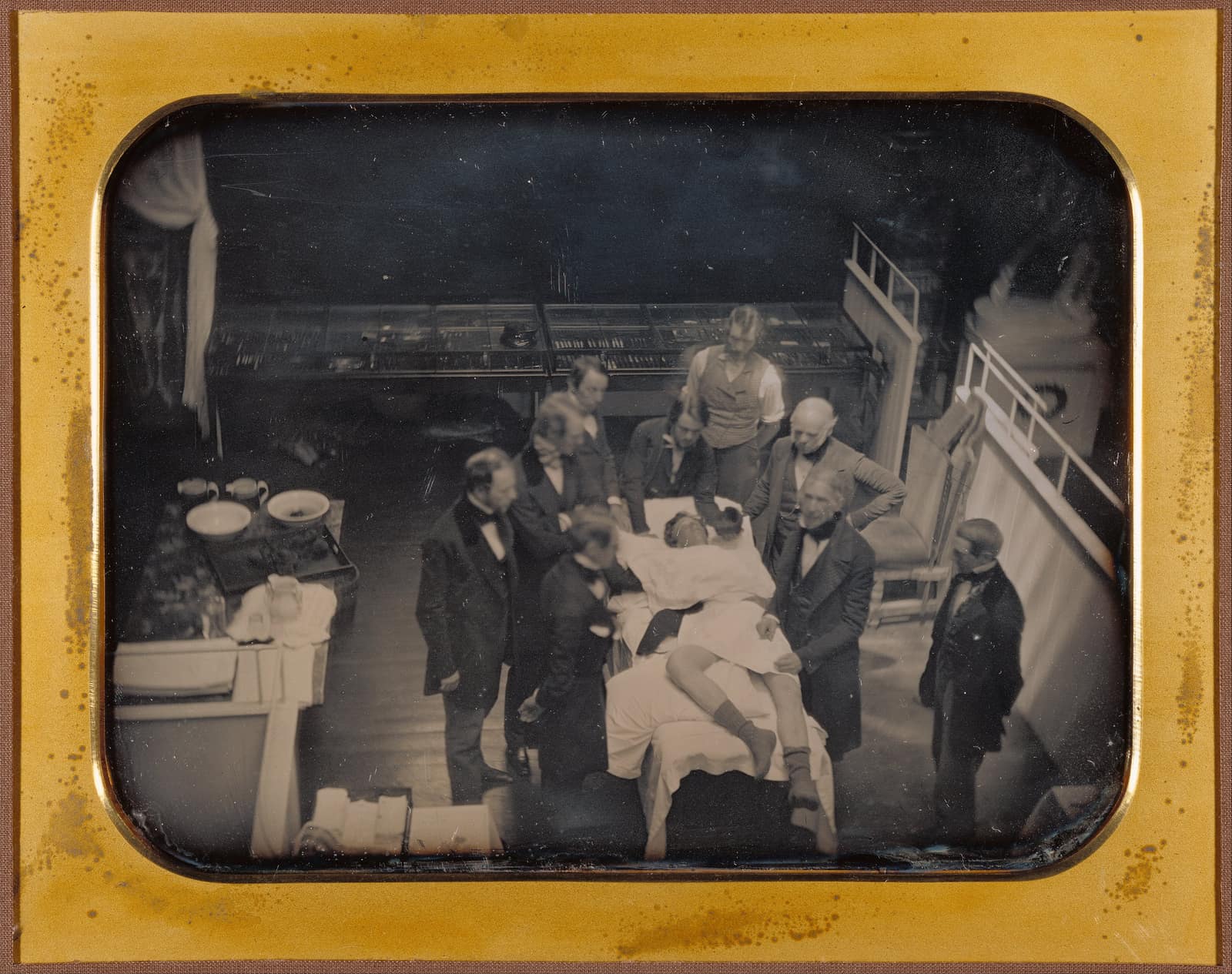
_-_Use_of_Ether_for_Anesthesia_-_Google_Art_Project.jpg)
Southworth & Hawes, 1847, The J. Paul Getty Museum, domaine public, via Wikimedia CommonsPDMOriginal record
Data saver is on. Images load only when you ask. You can change this in Settings at any time.
From the archivist
Before this morning, the best a surgeon could offer was speed. Patients were held down, given alcohol or opium, and cut while they were awake; the fastest operators were the most admired.
On 16 October 1846, under the dome of a hospital in Boston, a young man named Gilbert Abbott sat in the operating chair with a tumour on his neck. A dentist, William Morton, arrived late with a glass flask. Abbott breathed from it and fell into a heavy sleep. The surgeon, John Collins Warren, made his incision. When he woke he said, by one account, that it had felt as if his neck had been scratched.
The vapour was ether, a solvent well known in chemists' shops and at parties. A country doctor in Georgia had used it quietly four years before; others had tried and failed. What changed here was the audience, and the speed with which the news crossed the ocean. By Christmas a leg had been amputated in London under ether.
The picture kept here is from the following spring, in the same room: the surgeons blurred, the patient still.
Established
- On 16 October 1846, in the operating amphitheatre of Massachusetts General Hospital in Boston, the surgeon John Collins Warren removed a tumour from the neck of Gilbert Abbott while the dentist William T. G. Morton had him breathe the vapour of sulphuric ether; it was the first successful public demonstration of ether as an anaesthetic (Massachusetts General Hospital).
- Henry Jacob Bigelow, a surgeon at the hospital, reported the new method in the Boston Medical and Surgical Journal in November 1846 (Massachusetts General Hospital).
- On 12 November 1846 Morton and the chemist Charles T. Jackson were granted United States patent no. 4,848 for an agent they called Letheon, without saying at first that it was ether (Boston Medical and Surgical Journal 1847).
- In a letter to Morton dated 21 November 1846, the physician Oliver Wendell Holmes proposed calling the state anaesthesia; the original letter is not known to survive (Haridas 2016).
- On 30 March 1842, in Jefferson, Georgia, Crawford W. Long had already removed a tumour from the neck of James Venable under ether, but he published his cases only in December 1849 (Georgia Historical Society).
- On 21 December 1846 Robert Liston amputated the leg of Frederick Churchill under ether at University College Hospital, London, the first public operation under ether in Britain (Grand Rounds).
- The Ether Dome was designated a National Historic Landmark in 1965 (Massachusetts General Hospital).
Interpretation
Who discovered surgical anaesthesia was fought over for decades. Long used ether first but did not publish; Horace Wells, a Hartford dentist and Morton's former partner, had tried nitrous oxide before an audience at the same hospital about two years earlier, and the demonstration was judged a failure; Jackson claimed that the idea of ether was his; Morton sought a reward from Congress and never obtained one. What is not disputed is that the Boston demonstration, being public and quickly published, is what spread the practice. The words attributed to Warren after the operation, Gentlemen, this is no humbug, may be a later embellishment.
In 10,000 years
In 10,000 years, will anyone be able to imagine a surgeon who had to work fast because the patient could feel every cut?
Sources (6)
- Massachusetts General Hospital, Treadwell Virtual Library. Ether and Ether Dome history (including Bigelow, H. J. Insensibility during surgical operations produced by inhalation. Boston Medical and Surgical Journal 35, 1846, p. 309-317). · libguides.massgeneral.org
- Georgia Historical Society. Dr. Crawford W. Long and anesthesia for surgery (historical marker). · www.georgiahistory.com
- The patent Letheon: Jackson and Morton's specification. Boston Medical and Surgical Journal 36, 7 April 1847. · www.nejm.org
- Haridas, R. P. The etymology and use of the word 'anaesthesia': Oliver Wendell Holmes' letter to W. T. G. Morton. Anaesthesia and Intensive Care 44 (suppl.), 2016. · doi.org
- 'A Yankee dodge': the first British public demonstration of anaesthesia. Grand Rounds. · www.grandroundsjournal.com
- The J. Paul Getty Museum. Southworth & Hawes, Early operation using ether for anesthesia, daguerreotype, late spring 1847. · artsandculture.google.com
Related fragments
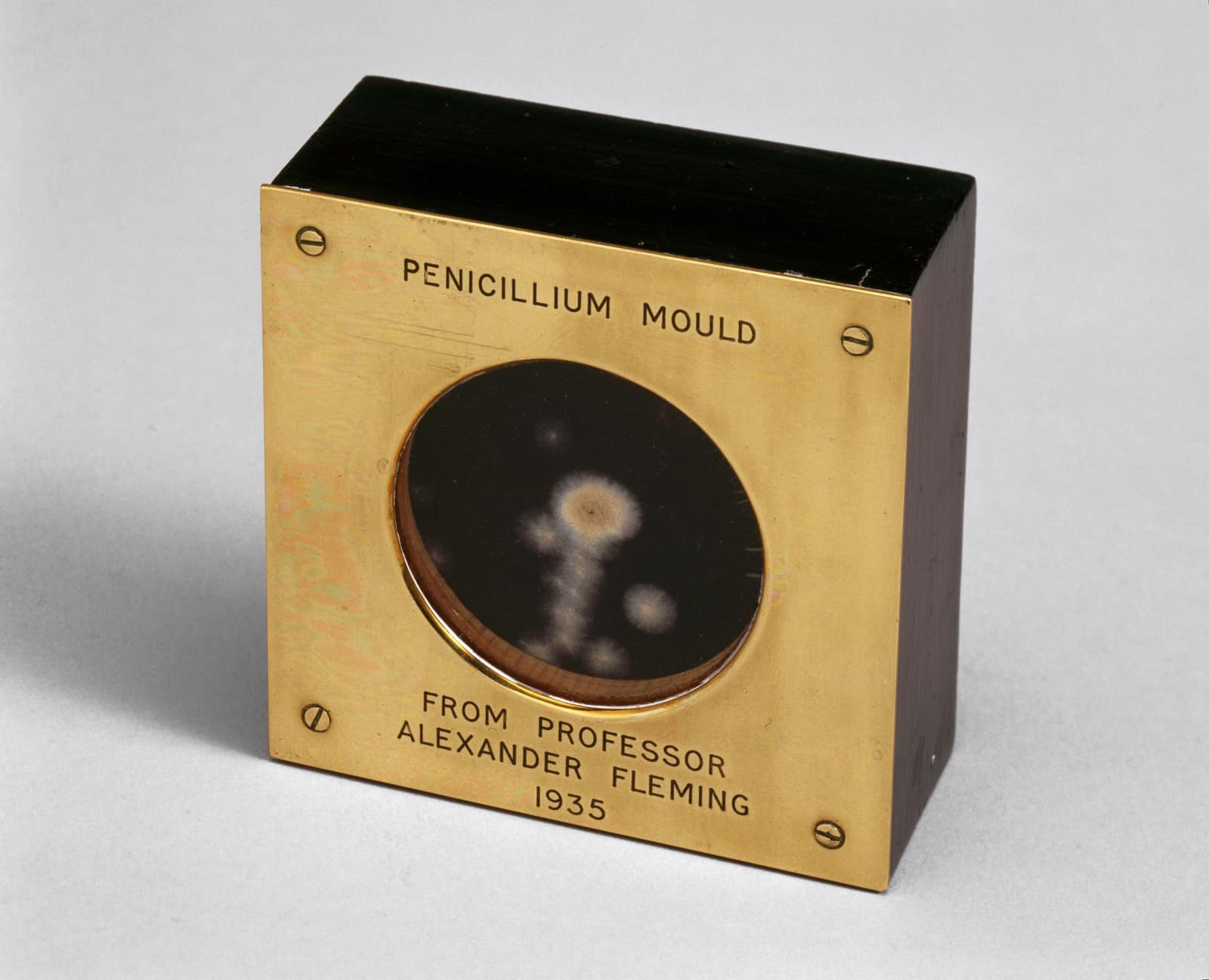
1928 to 1945
The discovery of penicillin
St Mary's Hospital, Paddington, London, United Kingdom · Europe
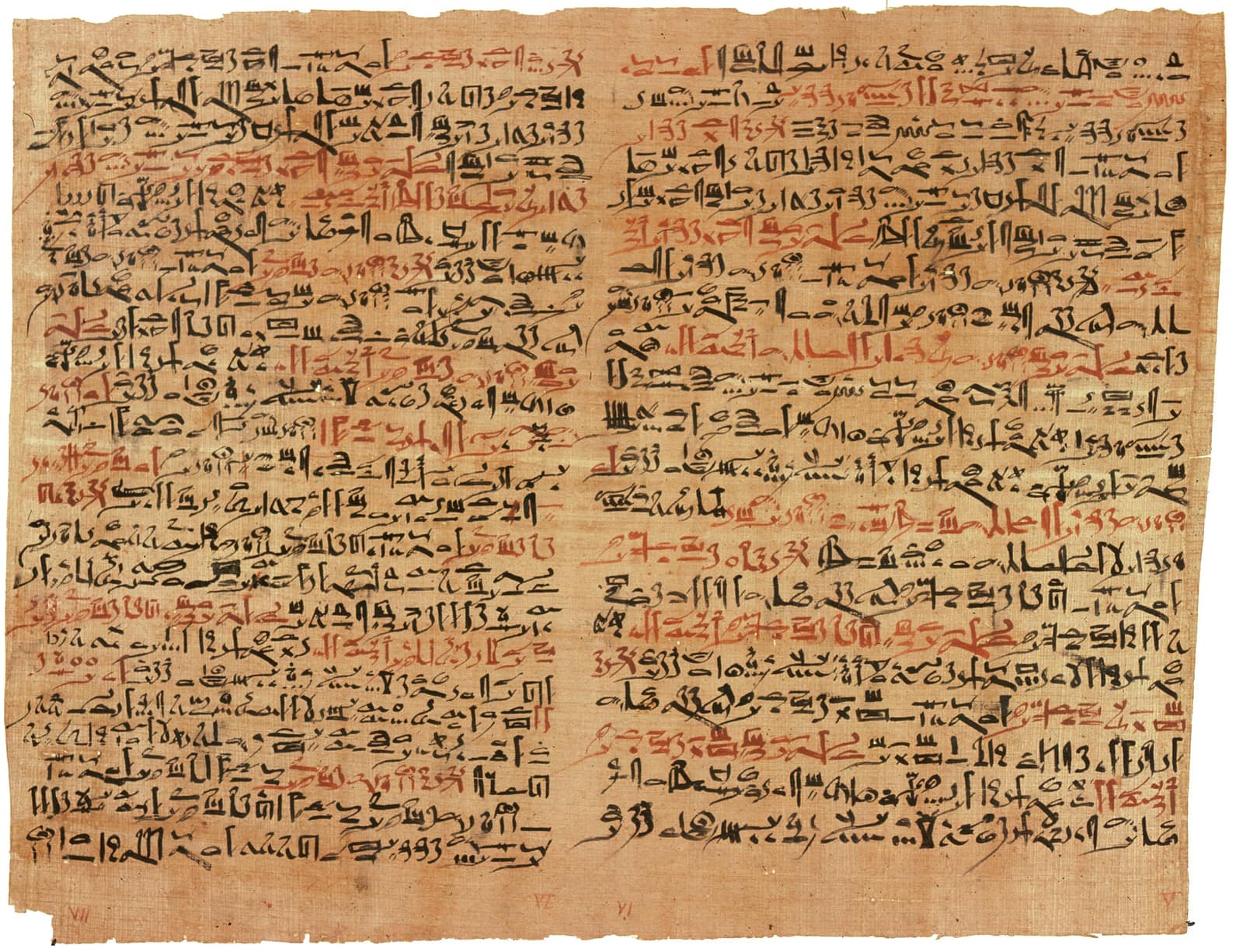
c. 1600 BCE
The Edwin Smith Papyrus
Luxor, Egypt (place of purchase); now in New York, United States · Africa
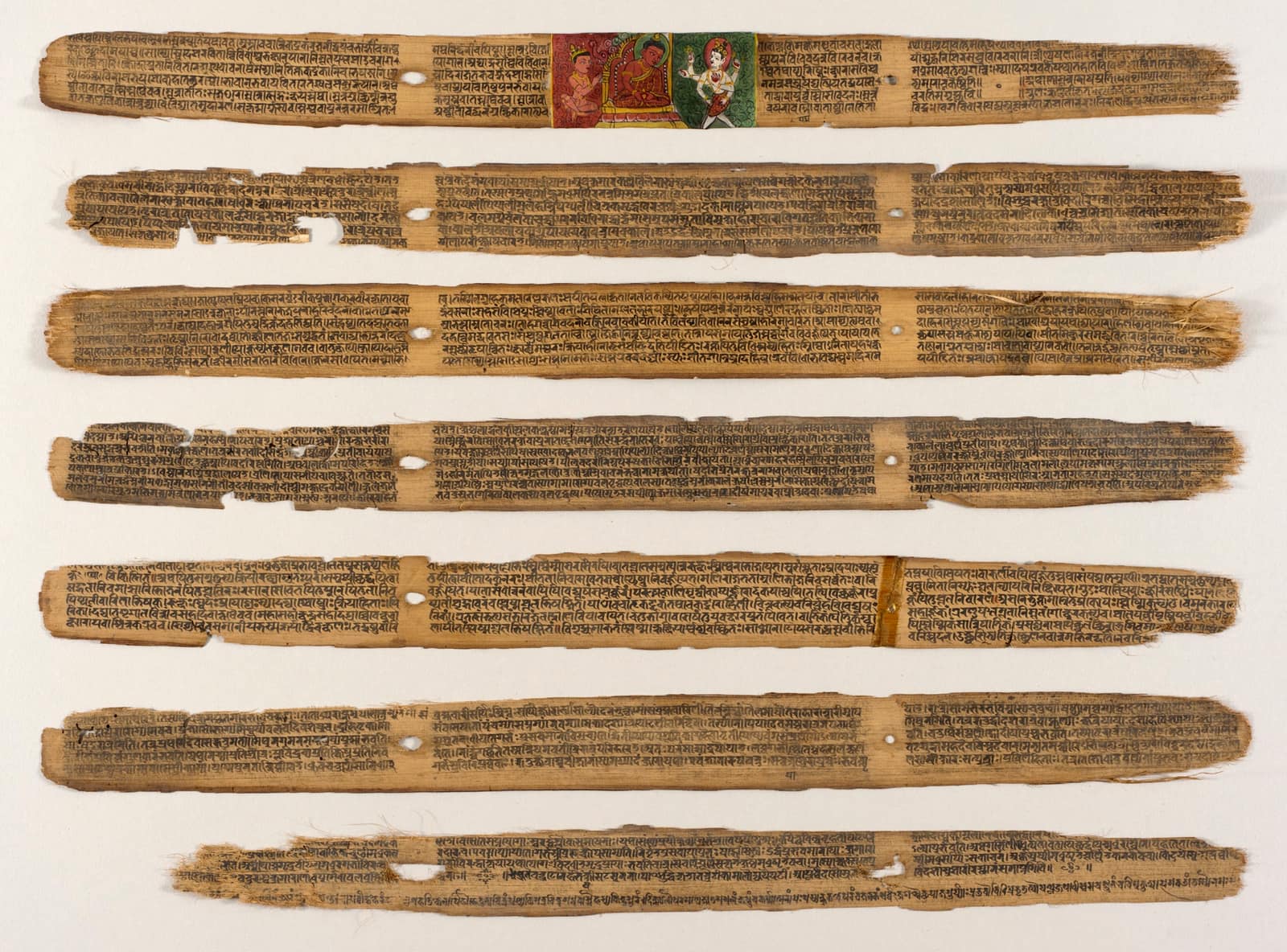
before 500 CE
The Sushruta Samhita
Varanasi, India; manuscript in Kathmandu, Nepal · Asia
1967
The first human heart transplant
Groote Schuur Hospital, Observatory, Cape Town, South Africa · Africa
1796
From variolation to vaccination: Jenner and the cowpox
Berkeley, Gloucestershire, England, United Kingdom · Europe