Tevfik Esenç, the last voice of Ubykh
- Dated
- Place
- Hacıosman, Manyas, Balıkesir Province, Turkey · The Ubykh, a people of the northwestern Caucasus exiled to Anatolia in 1864
- Coordinates
- 39° 59′ N · 27° 49′ E (approximate)
- Remains
- Digital
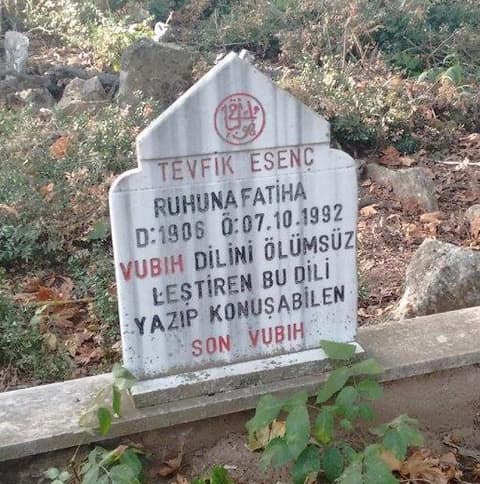
Rhona Fenwick, CC0, via Wikimedia CommonsCC0-1.0Original record
Data saver is on. Images load only when you ask. You can change this in Settings at any time.
From the archivist
In the village cemetery of Hacıosman, in the north-west of Turkey, a small white stone stands among the weeds. Its words are in Turkish. They say that the man beneath it was the last Ubykh who could write and speak the Ubykh language, and that he made it immortal. He chose those words himself.
Tevfik Esenç was born in that village some forty years after his people had been driven from the mountains above the Black Sea, near Sochi, in 1864. His grandparents raised him and spoke to him in Ubykh, a language so crowded with consonants, around eighty of them, that it became a legend among linguists. He went to them. In Paris and in Oslo he sat for long hours with Georges Dumézil and Hans Vogt, repeating words, correcting them, telling stories onto magnetic tape. One of the stories he recorded in 1968 is the story of the exile.
Dumézil called him "my master and friend". His own sons could not hold a conversation in Ubykh.
He died on 7 October 1992. This civilization had lost languages before. This one it lost knowing the day, and the name of the man.
Established
- Tevfik Esenç died on 7 October 1992, aged 88; he was born in the village of Hacıosman, in the Manyas district of Balıkesir province, Turkey, and was raised there by his grandparents, from whom he learned Ubykh (Durhan 2014).
- Ubykh belongs to the Northwest Caucasian (Abkhaz-Adyghe) family and was spoken around present-day Sochi; in 1864, at the end of the Russian conquest of the western Caucasus, almost all the Ubykh left for the Ottoman Empire (Durhan 2014; Glottolog).
- The language is known for its consonants: 81 in John Colarusso's analysis, against only two or three vowels (Durhan 2014).
- Georges Dumézil, who first made Ubykh known to linguists in 1931, worked with Tevfik Esenç from the 1950s and called him 'my master and friend'; Hans Vogt published a dictionary of the language in 1963 (Durhan 2014; Pangloss).
- In 1968 Dumézil recorded him in Paris reading word lists and telling seven stories, among them one titled 'The exodus of the Ubykh'; the tapes are published online by the CNRS (Pangloss).
- His gravestone in Hacıosman bears the epitaph he chose, in Turkish: the last Ubykh able to write and speak the Ubykh language, who made it immortal (photograph by Rhona Fenwick, 2017).
- Glottolog lists Ubykh as extinct.
Interpretation
Calling him the last speaker simplifies: in the 1980s other elders still remembered words and phrases, but none had his full command of the language (Durhan 2014). His three sons could not hold a conversation in Ubykh. His birth year is given as 1904 by Durhan but as 1906 on his gravestone. The English epitaph often quoted online ('This is the grave of Tevfik Esenç. He was the last person able to speak the language they called Ubykh') does not match the Turkish text on the stone. The exact number of consonants depends on the analysis.
Looking ahead
Ask the oldest person you know for one word that only they still use. A hundred years from now, who will say it for them?
Sources (5)
- Durhan, Ö. S. Tevfik Esenç and the Ubykh language. Tehlikedeki Diller Dergisi / Journal of Endangered Languages 3 (4-5), 2014, p. 267-269. · dergipark.org.tr
- Collection Pangloss, CNRS (LACITO). Corpus oubykh : enregistrements de Georges Dumézil avec Tevfik Esenç, Paris, 1968. · pangloss.cnrs.fr
- Glottolog, Max Planck Institute for Evolutionary Anthropology. Ubykh (ubyk1235). · glottolog.org
- Vogt, H. Dictionnaire de la langue oubykh. Oslo, Universitetsforlaget, 1963.
- Dumézil, G. Documents anatoliens sur les langues et les traditions du Caucase III : nouvelles études oubykh. Paris, Institut d'ethnologie, 1965.
Related fragments
before 1864
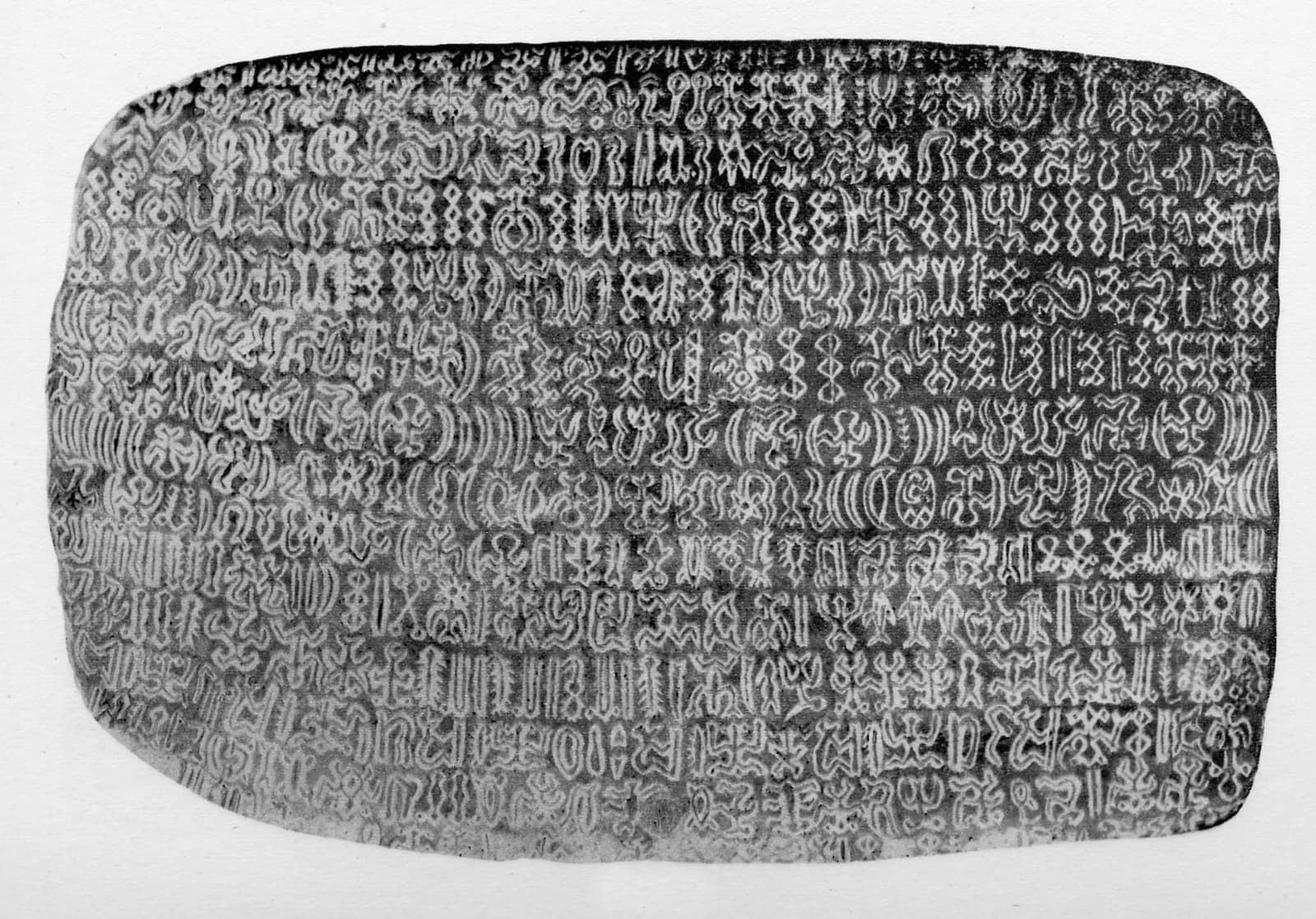
Rongorongo, the tablets no one can read
Rapa Nui (Easter Island), Chile · Oceania
196 BCE
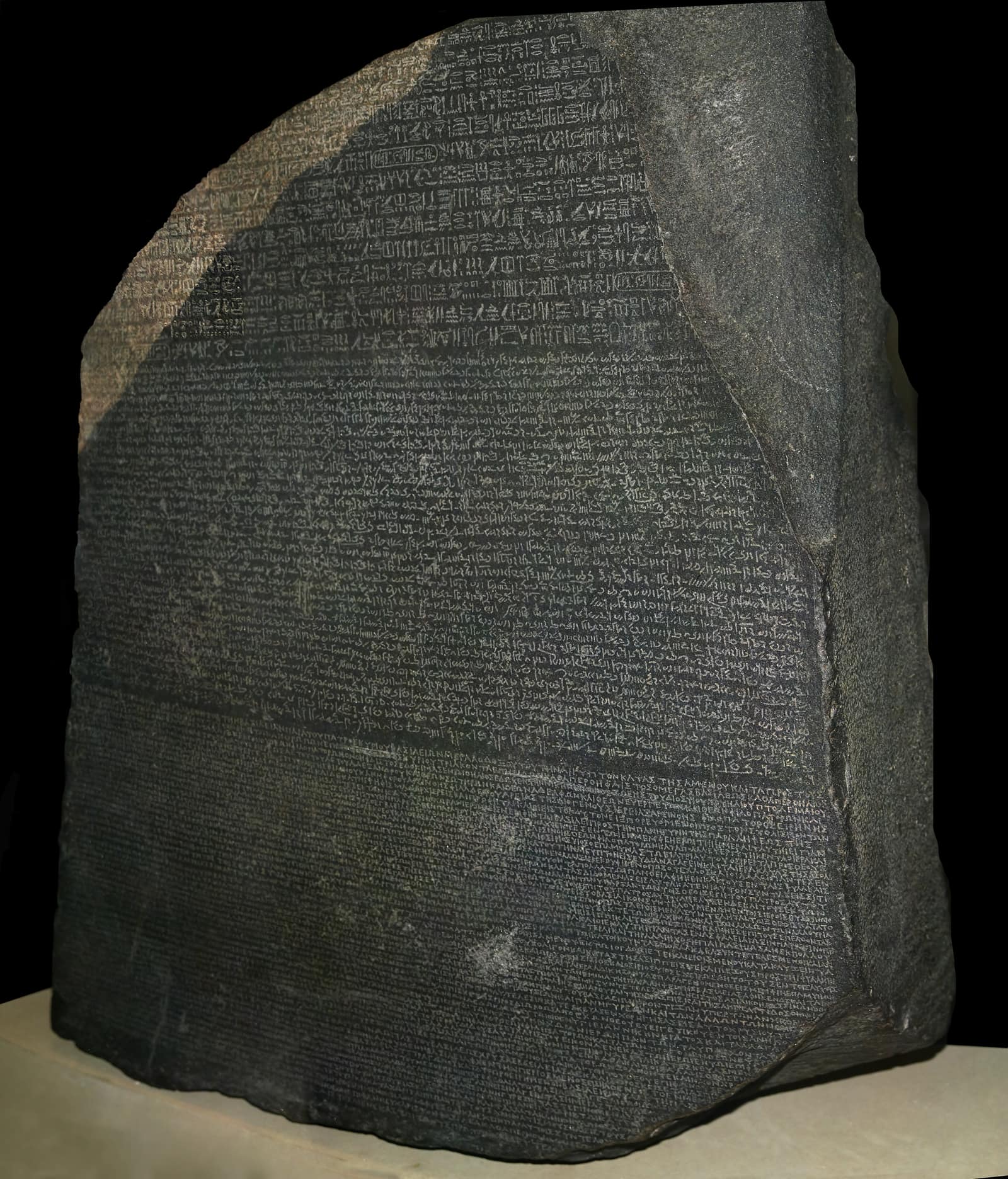
The Rosetta Stone
Rashid, Beheira, Egypt; now in London, United Kingdom · Africa