The Rosetta Stone
- Dated
- Place
- Rashid, Beheira, Egypt; now in London, United Kingdom · Ptolemaic Egypt (decree of the priestly council at Memphis for Ptolemy V)
- Coordinates
- 31° 24′ N · 30° 25′ E (approximate)
- Remains
- Fragmentary
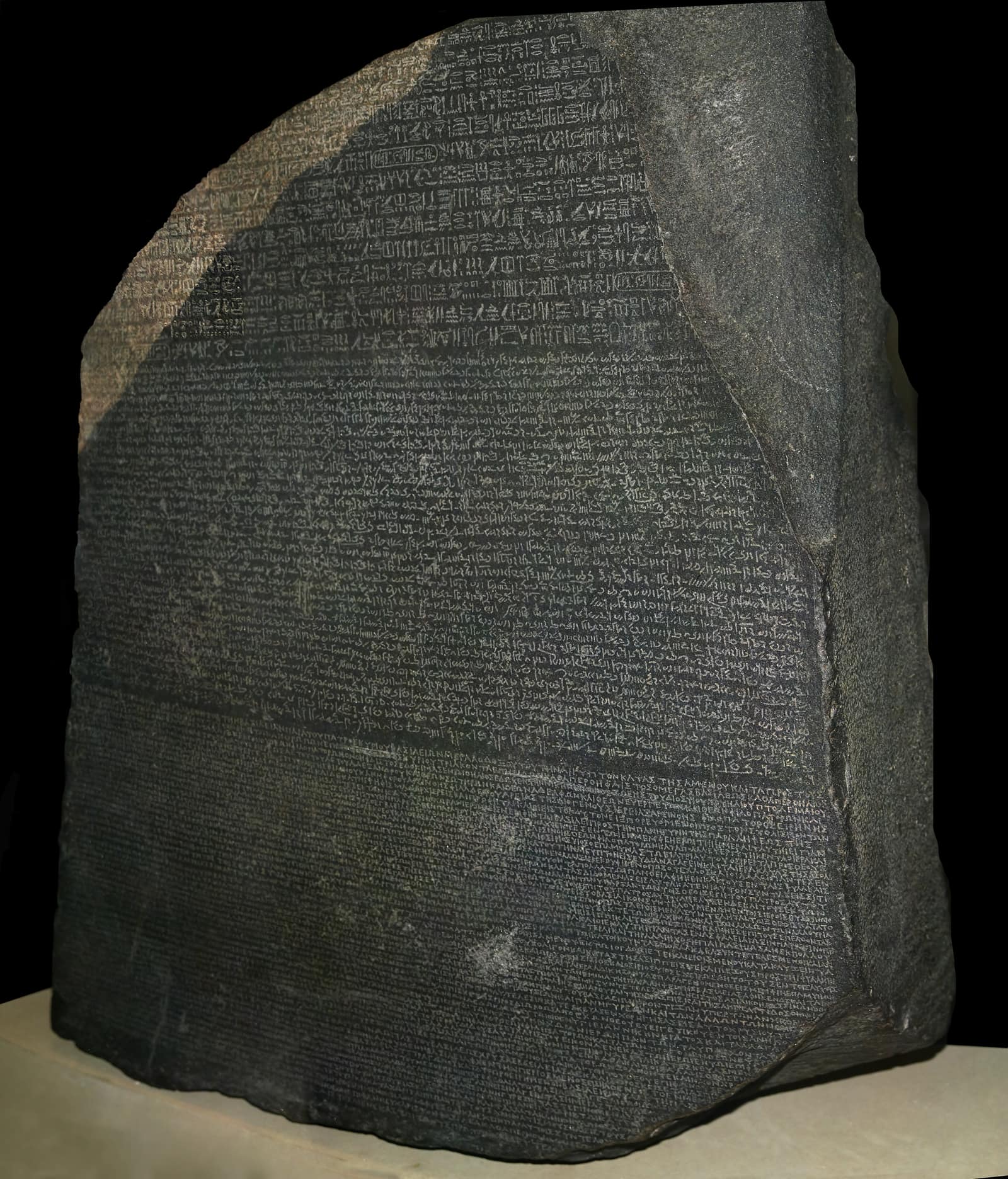

© Hans Hillewaert, CC BY-SA 4.0, via Wikimedia CommonsCC-BY-SA-4.0Original record
Data saver is on. Images load only when you ask. You can change this in Settings at any time.
From the archivist
The priests who met at Memphis in the spring of 196 BCE did not mean to write a key. They meant to honour a young king, Ptolemy V, and so they ordered their decree carved in the temples of Egypt in three scripts: the sacred hieroglyphs of the gods, demotic for everyday writing, and Greek for the rulers who had come from Macedonia.
For centuries one of those stones, already broken, lay built into a wall. In 1799 French soldiers, repairing a fort near the town the Europeans called Rosetta, pulled it out. Two years later, after the French defeat, it passed to the British and was shipped to London.
By then no one had read a hieroglyph for some fourteen hundred years. Scholars set the known Greek against the unknown signs, counting names and matching words. In 1822 Jean-François Champollion showed that the pictures could stand for sounds as well as ideas.
A forgotten language came back because the same words had been written three times. Egypt has asked more than once for the stone to come home.
Established
- The Rosetta Stone (British Museum EA24) is part of a granodiorite stela inscribed with a decree issued at Memphis on 27 March 196 BCE by a council of Egyptian priests, during the reign of Ptolemy V Epiphanes (British Museum).
- The same decree is written three times: in hieroglyphs at the top, in demotic script in the middle and in ancient Greek at the bottom (British Museum).
- Soldiers of Napoleon's army found it by chance on 15 July 1799 while digging the foundations of an addition to a fort near Rashid, which the French called Rosetta (British Museum).
- On the French defeat in Egypt the stone became British property under the terms of the capitulation signed at Alexandria in 1801; it has been in the British Museum since 1802 (British Museum).
- Using its Greek text and other inscriptions, Jean-François Champollion announced in September 1822, in his Lettre à M. Dacier, that hieroglyphs combined sound signs with signs for ideas (Champollion 1822; Parkinson 1999).
Interpretation
Champollion's share of the decipherment against that of Thomas Young, who had made progress on the demotic text and royal names before him, was argued bitterly in their lifetimes and is still weighed differently in Britain and France. Whether the stone should stay in London or return to Egypt is a live dispute.
In 10,000 years
In 10,000 years, will a single sentence written in three ways be enough to bring one of our languages back?
Sources (4)
- The British Museum. The Rosetta Stone, museum number EA24, collection online. · www.britishmuseum.org
- The British Museum. Everything you ever wanted to know about the Rosetta Stone (blog). · www.britishmuseum.org
- Parkinson, R. B. Cracking Codes: The Rosetta Stone and Decipherment. London, British Museum Press, 1999.
- Champollion, J.-F. Lettre à M. Dacier relative à l'alphabet des hiéroglyphes phonétiques. Paris, Firmin Didot, 1822.
Related fragments
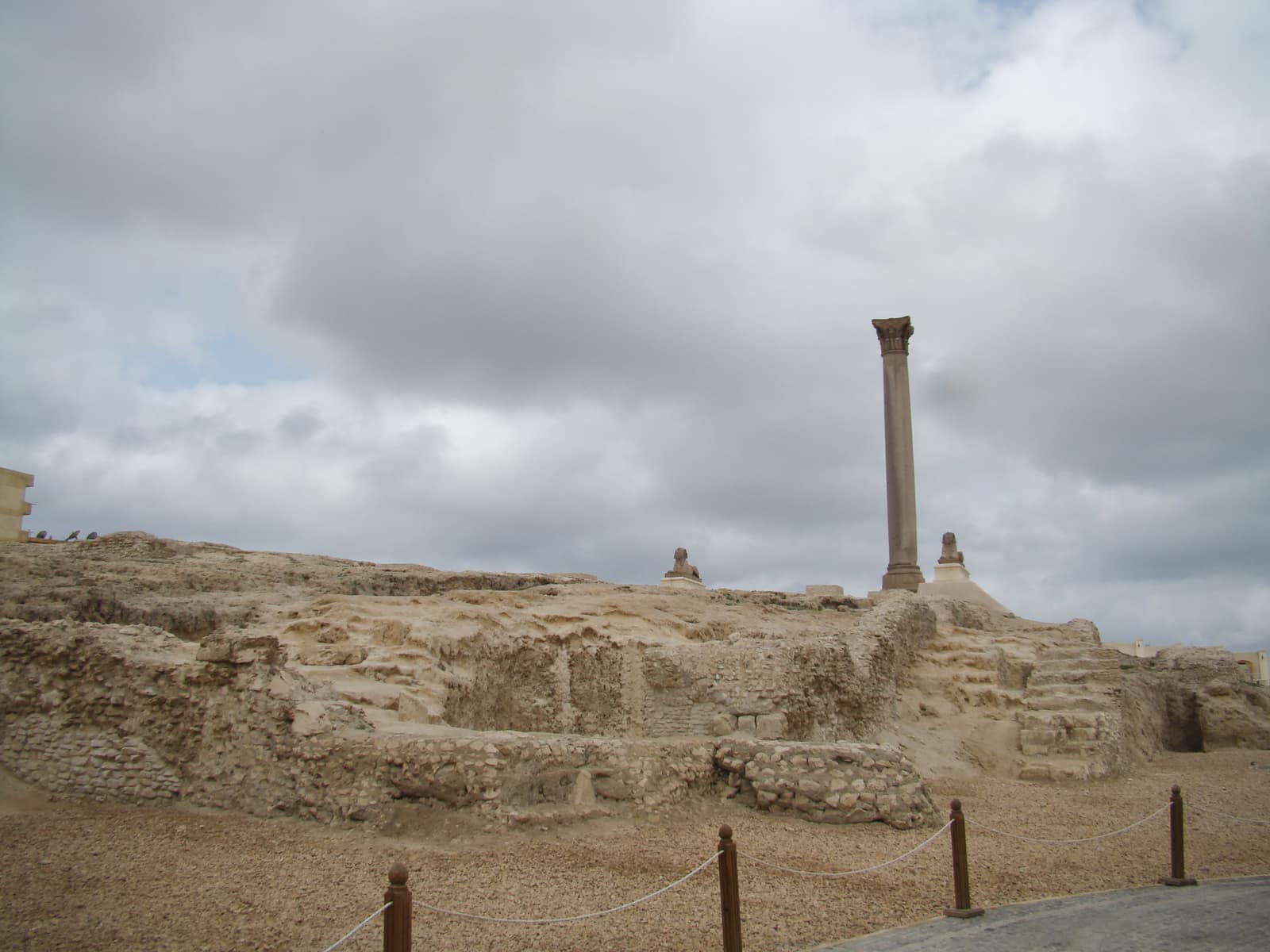
300 to 250 BCE
The Library of Alexandria
Alexandria, Egypt · Africa
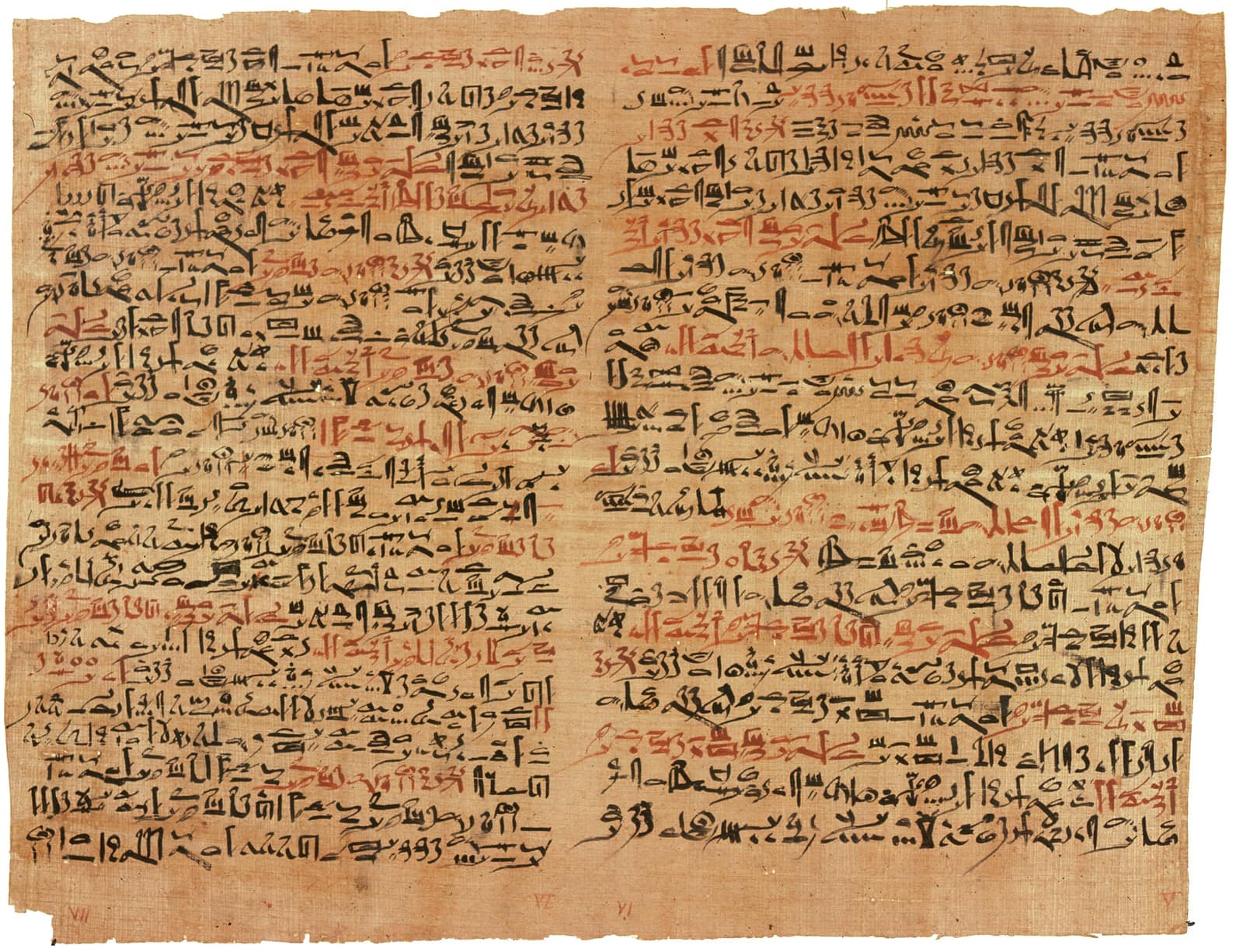
c. 1600 BCE
The Edwin Smith Papyrus
Luxor, Egypt (place of purchase); now in New York, United States · Africa