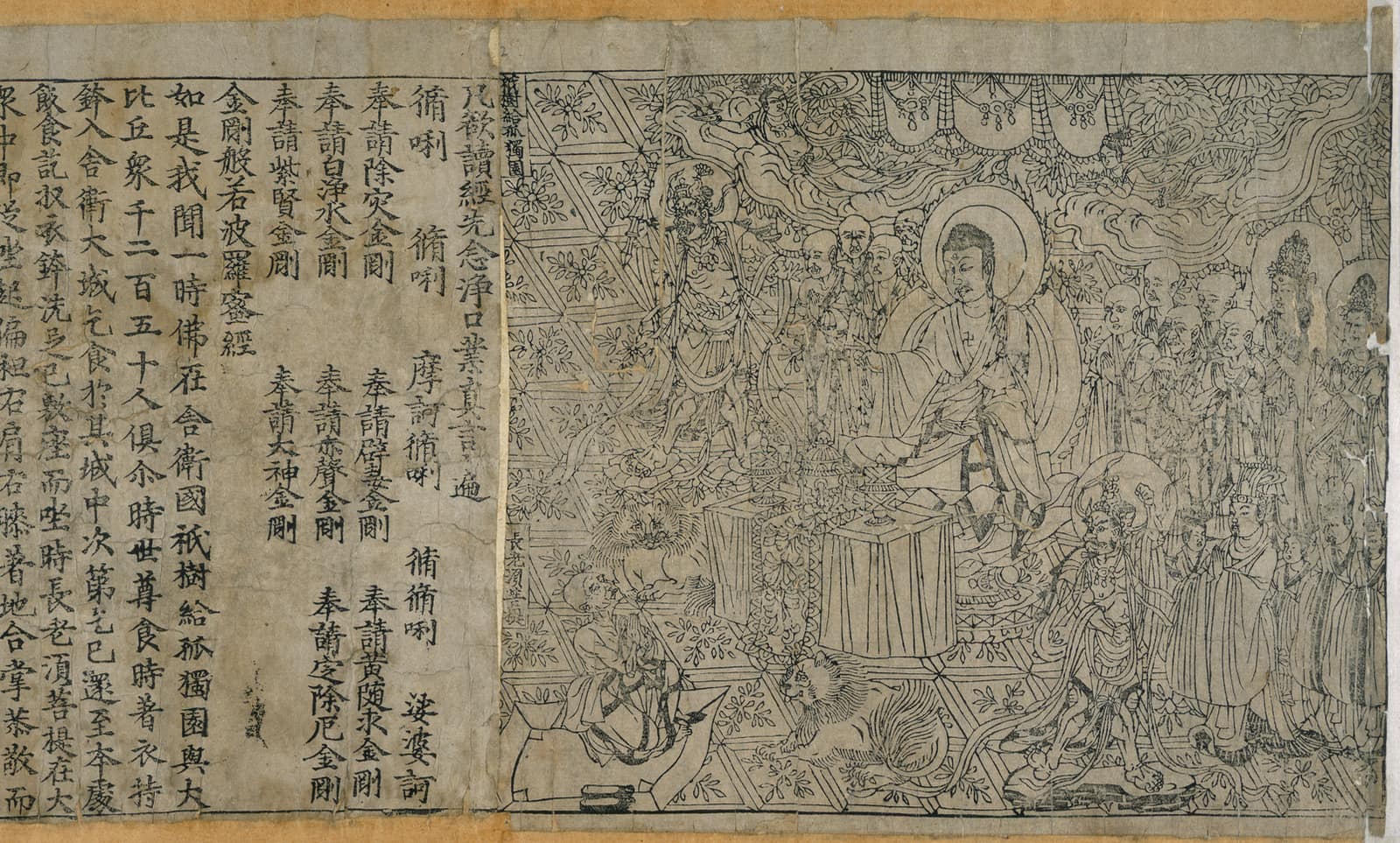
The Analects of Confucius
- Dated
- Place
- Qufu, Shandong, China · Disciples of Confucius and their successors, China of the Warring States and the Han
- Coordinates
- 35° 36′ N · 116° 59′ E (approximate)
- Remains
- Intact
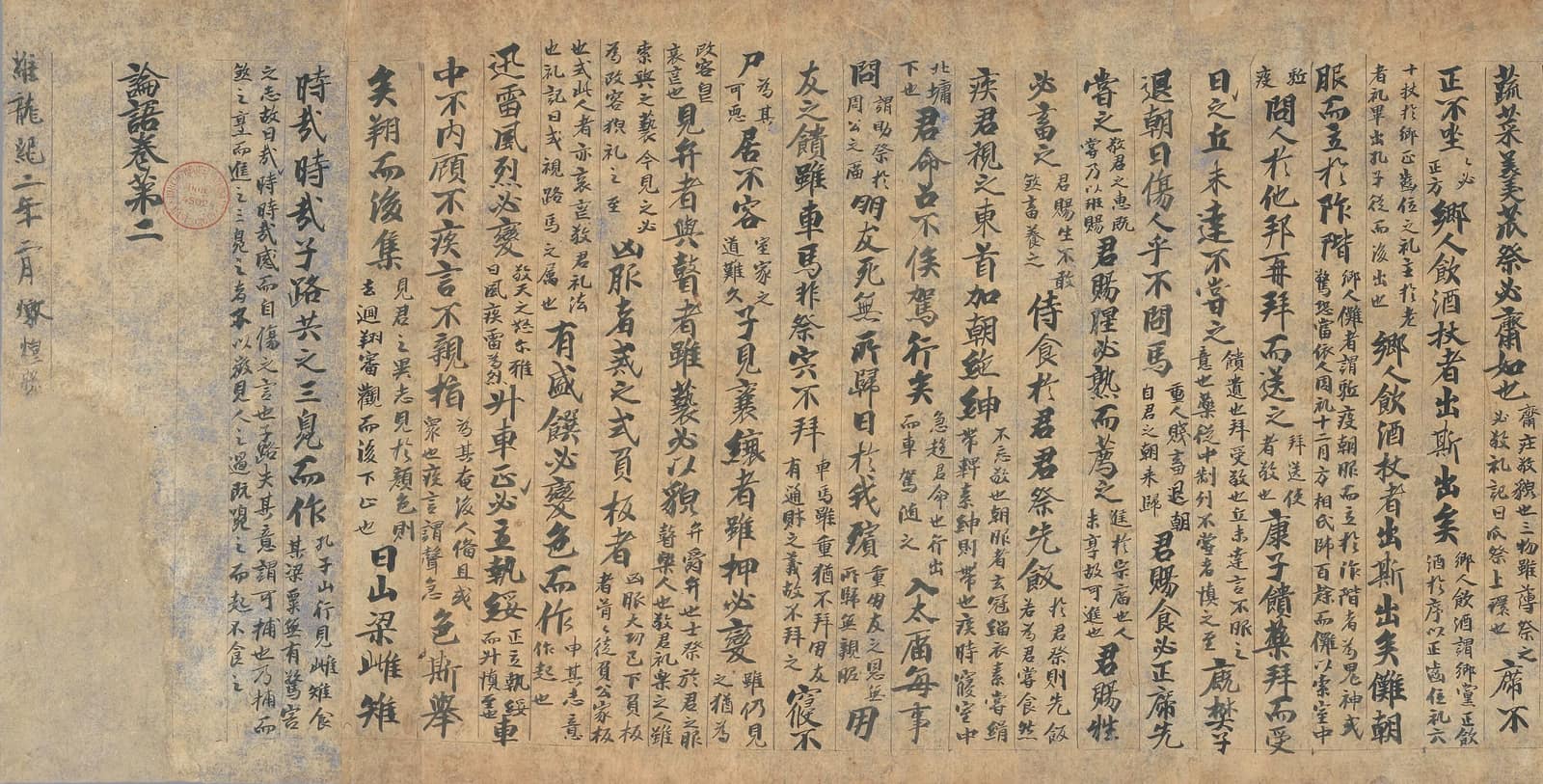
Bibliothèque nationale de France (Pelliot chinois 2510), domaine public, via Wikimedia CommonsPDMOriginal record
Data saver is on. Images load only when you ask. You can change this in Settings at any time.
From the archivist
The book begins with a question. Is it not a pleasure to learn something and to practise it at the right time? Is it not a joy to have friends come from afar?
This civilization kept the voice of a teacher from the state of Lu who held no great office and wrote, as far as anyone knows, nothing down. His students remembered what he said: about ritual and music, about the duties of a son and a ruler, about how a person of worth behaves when no one is watching. They and their students wrote it on slips of bamboo tied with cord.
The oldest of those slips were buried with Han nobles more than four hundred years after the master died. The scroll here is later still. A copyist at Dunhuang, on the edge of the desert, wrote the text in large characters and squeezed the commentary of a second century scholar between the lines in small ones. The chapter ends with how the master sat, ate and greeted his neighbours.
For two thousand years, pupils across East Asia learned this book by heart.
Established
- The Analects (Lunyu) gather sayings of Confucius, traditionally dated 551 to 479 BCE, and exchanges with his disciples; the received text has twenty books (Hunter and Kern 2018).
- The oldest known manuscripts of the Analects are bamboo slips of the Western Han dynasty from the first century BCE: from the tomb of the Marquis of Haihun, who died in 59 BCE, from a tomb at Dingzhou sealed in 55 BCE and found in 1973, and from a tomb in Pyongyang (van Els 2018; Chu 2025).
- The Haihun slips include a chapter titled Zhi dao, which appears to belong to the Qi version of the Analects, a version recorded in Han sources and otherwise lost (Chu 2025).
- The scroll shown, found at Dunhuang, carries the Analects with the commentary of Zheng Xuan (127 to 200), otherwise lost; it is dated to 890, though it may have been copied around the mid 8th century (BnF, Pelliot chinois 2510).
Interpretation
How and when the Analects took shape is debated. The traditional view holds that Confucius's disciples and their own followers compiled it in the generations after his death; some scholars argue that the text as we know it was assembled much later, in the second century BCE, from a wider pool of sayings attributed to the master (Hunter 2017). How closely its words record what Confucius actually said cannot be known.
In 10,000 years
In 10,000 years, will someone still be learning, and practising at the right time what they have learned, as the first line asks?
Sources (4)
- Bibliothèque nationale de France. Les Entretiens de Confucius, version de Kong [Anguo] avec le commentaire de Zheng Xuan, Dunhuang, daté de 890, Pelliot chinois 2510 (BnF Essentiels). · essentiels.bnf.fr
- van Els, P. Confucius's sayings entombed: on two Han dynasty bamboo Lunyu manuscripts. In Hunter, M., Kern, M. (eds), Confucius and the Analects Revisited: New Perspectives on Composition, Dating, and Authorship, Leiden, Brill, 2018, p. 152-186. · scholarlypublications.universiteitleiden.nl
- Chu, D. A brief overview of the unearthed Analects documents in East Asia over the past 50 years. Journal of Chinese Humanities, 2025. · journals.sagepub.com
- Hunter, M. Confucius Beyond the Analects. Leiden, Brill, 2017.