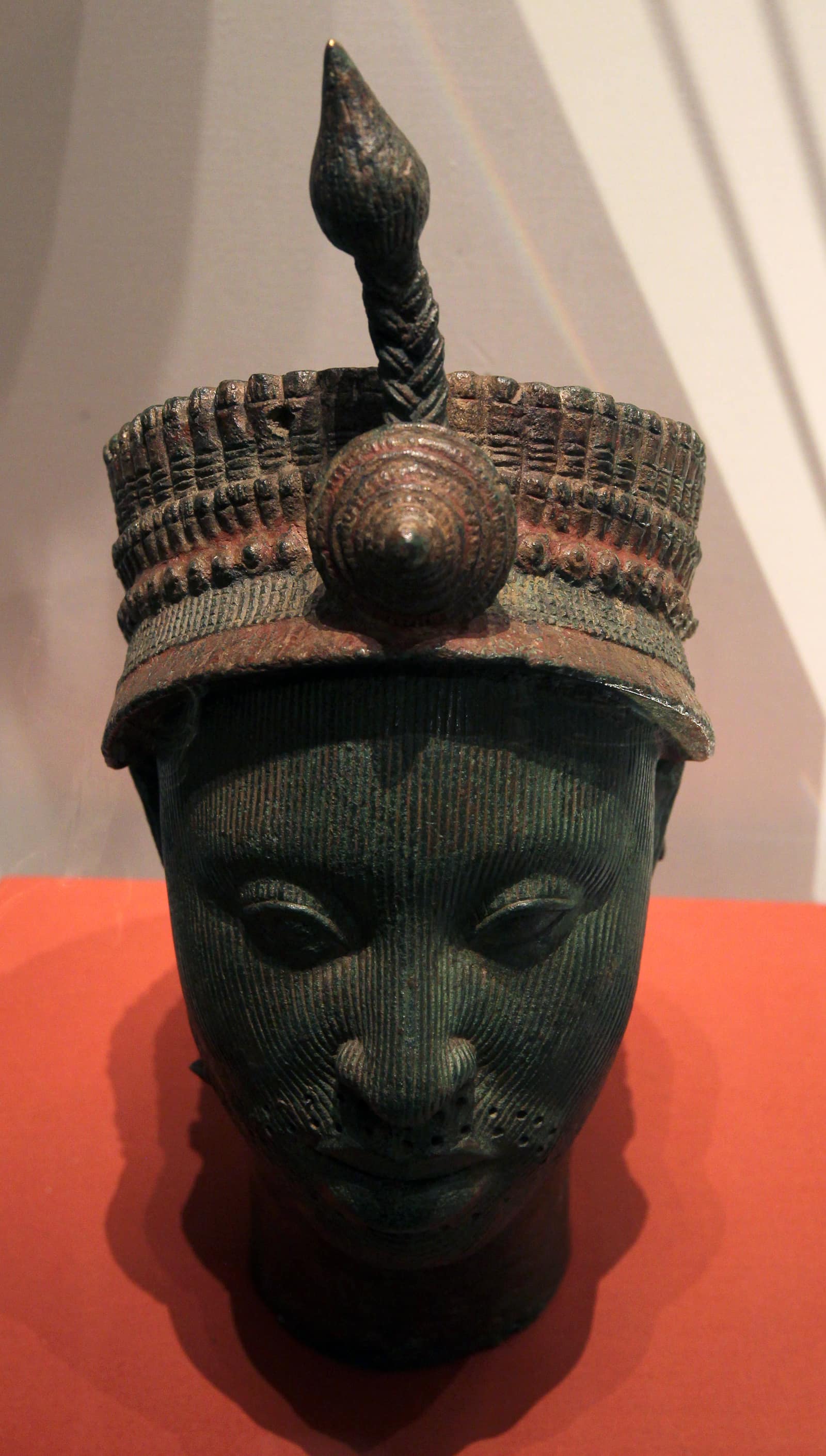
The Benin Bronzes
- Dated
- Place
- Benin City, Edo State, Nigeria · Kingdom of Benin (Edo); royal brass casters of the Igun Eronmwon guild
- Coordinates
- 6° 20′ N · 5° 38′ E (approximate)
- Remains
- Intact
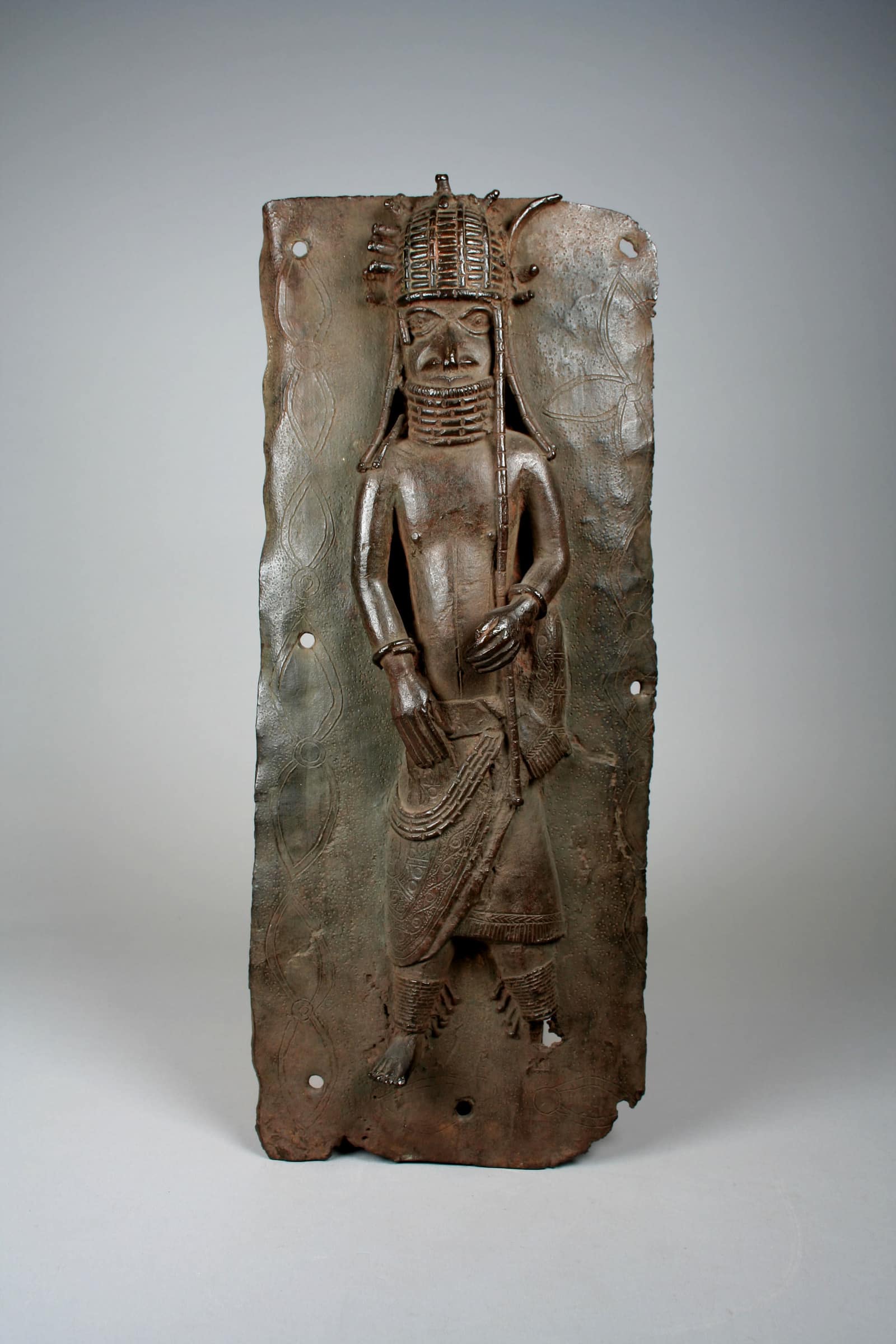
The Metropolitan Museum of Art, The Michael C. Rockefeller Memorial Collection, Bequest of Nelson A. Rockefeller, 1979 (1979.206.98), CC0, via Wikimedia CommonsCC0-1.0Original record
Data saver is on. Images load only when you ask. You can change this in Settings at any time.
From the archivist
For centuries the brass casters of Benin worked only for the king. In the royal palace of Benin City their plaques were nailed in rows to the wooden pillars of the courtyards: warriors and chiefs in full regalia, musicians, hunters, Portuguese traders with their long hair, the Oba himself. Heads of the kings, cast in brass, stood on the altars of their ancestors.
In February 1897 a British force attacked the city after a British party had been killed on the road to it. The soldiers burned much of the city and the palace, and carried away everything they could lift: thousands of works of brass, ivory and wood. The Oba was sent into exile. Many of the works were sold in London to pay for the expedition, and from there they travelled to museums and collectors across Europe and America.
More than a century later, a few have begun to come back. Most are still far from the city for which they were made.
Established
- In February 1897 British forces sacked Benin City and looted the royal palace; the objects taken, known as the Benin Bronzes, include brass plaques and heads, ivories and wooden works (Hicks 2020; Digital Benin).
- The Digital Benin catalogue, launched on 4 November 2022 by the MARKK museum in Hamburg, records more than 5,240 objects taken in 1897, held by 131 institutions in 20 countries (Digital Benin).
- The Metropolitan Museum's Plaque with Warrior Chief, cast in brass about 1540 to 1570 by the royal casters' guild, is one of the plaques that once covered the pillars of the palace in Benin City (Metropolitan Museum of Art).
- In October 2021 Jesus College, Cambridge, and the University of Aberdeen returned Benin works; on 1 July 2022 Germany and Nigeria signed a declaration on the return of Benin Bronzes, and on 11 October 2022 the Smithsonian transferred ownership of 29 to Nigeria (Smithsonian Institution; Joint Declaration 2022).
Interpretation
Where the returned works should be kept and by whom, in a national museum or with the Oba of Benin whose ancestors commissioned them, is debated in Nigeria and among lending museums; some institutions argue for loans and shared custody rather than full restitution.
In 10,000 years
In 10,000 years, will these plaques speak of the court that made them, or of the war that scattered them?
Sources (5)
- Digital Benin. A catalogue of royal objects from the Kingdom of Benin held in collections worldwide, MARKK, Hamburg, launched 4 November 2022. · digitalbenin.org
- Hicks, D. The Brutish Museums: The Benin Bronzes, Colonial Violence and Cultural Restitution. London, Pluto Press, 2020.
- Smithsonian Institution. Smithsonian returns 29 Benin Bronzes to the National Commission for Museums and Monuments in Nigeria, 11 October 2022. · www.si.edu
- Federal Republic of Germany and Federal Republic of Nigeria. Joint Declaration on the Return of Benin Bronzes and Bilateral Museum Cooperation, 1 July 2022. · kulturstaatsminister.de
- The Metropolitan Museum of Art. Plaque with Warrior Chief, Edo peoples, ca. 1540-70, brass, 1979.206.98. · www.metmuseum.org