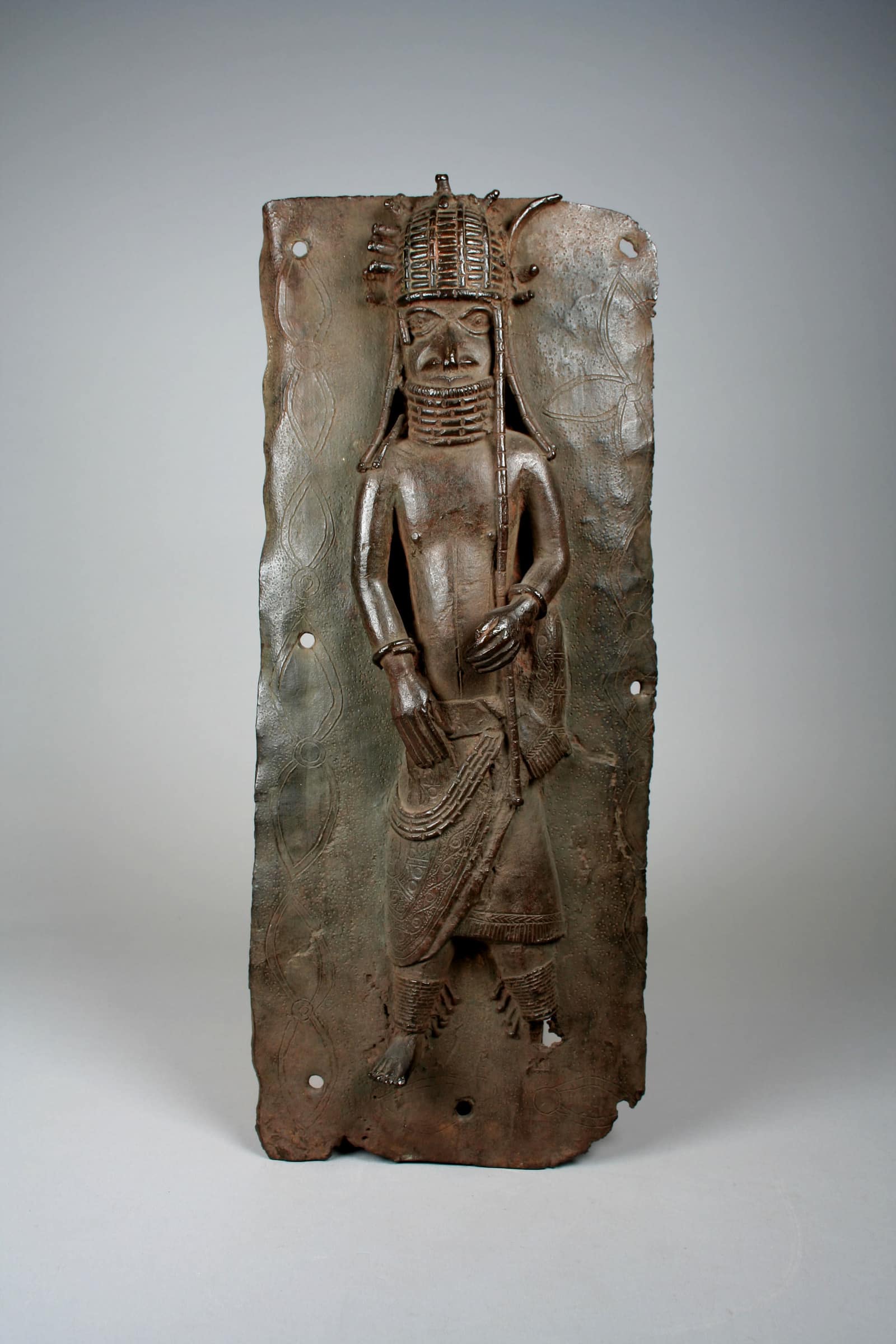
The heads of Ifẹ
- Dated
- Place
- Ile-Ife, Osun State, Nigeria · Yorùbá of Ilé-Ifẹ̀
- Coordinates
- 7° 29′ N · 4° 33′ E (approximate)
- Remains
- Intact
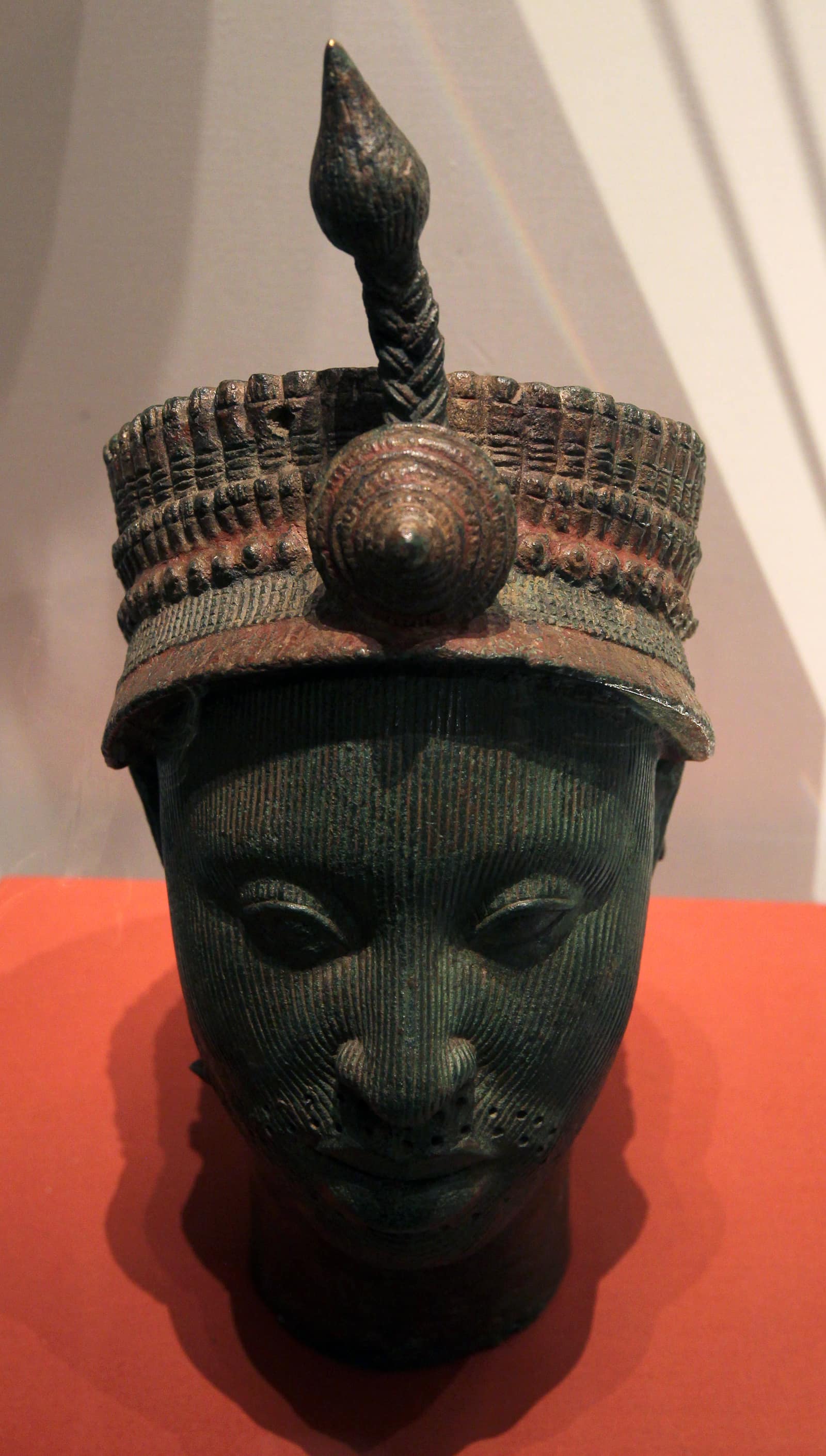
Vassil, CC0, via Wikimedia CommonsCC0-1.0Original record
Data saver is on. Images load only when you ask. You can change this in Settings at any time.
From the archivist
The faces are calm. Their lips are full, their eyes half closed, and fine lines run down the whole face from brow to chin. On some the crown is a tall cap of beads, crested with a plume. They are cast in copper and brass, almost life size.
They were made at Ilé-Ifẹ̀, the city the Yorùbá hold to be the place where the world was created, around the fourteenth century. The artists shaped each head in wax over a clay core, covered it in clay, melted the wax out and poured metal in its place.
In 1910 a German scholar saw the art of Ifẹ̀ and decided it must be the work of lost Atlanteans. In 1938 builders digging near the palace uncovered more than a dozen heads. Their makers were not strangers. They were the ancestors of the people who still live in the city.
Established
- Seventeen or eighteen life-size or near life-size copper alloy heads, with the upper half of a figure, were found in 1938 and 1939 during building work at Wúnmọníjẹ̀ Compound in Ilé-Ifẹ̀; published counts differ (Evans 2023).
- Thermoluminescence dates on the fired clay cores of the castings range between the 12th and 16th centuries CE; the heads are usually placed in the 14th and 15th centuries (Evans 2023; British Museum).
- Most of the heads are in the Ifẹ̀ National Museum; one, made of heavily leaded zinc brass by the lost wax method, is in the British Museum (Af1939,34.1) (Evans 2023; British Museum).
- In 1910 the German ethnologist Leo Frobenius, working at Ifẹ̀, argued that its sculpture came from a lost Atlantis rather than from the Yorùbá; the 1938 finds, cast in the same style, helped overturn that claim (Willett 1967).
Interpretation
The heads are usually read as portraits or idealised images of Ọọ̀ni, the sacred rulers of Ifẹ̀, perhaps used in funerary or commemorative rites, with the fine lines as facial marks or as the fringe of a veiled crown; none of these readings is certain, and the individuals they depict are unknown.
In 10,000 years
In 10,000 years, will a face cast in metal still be taken for the likeness of someone real?
Sources (4)
- Evans, T. L. A copper alloy head count: contextualising and accounting for the Wúnmọníjẹ̀ Compound discoveries of Ilé-Ifẹ̀, Nigeria. Afrique : Archéologie & Arts 19, 2023. · journals.openedition.org
- The British Museum. Head of a ruler (Ife head), museum number Af1939,34.1, collection online. · www.britishmuseum.org
- Willett, F. Ife in the History of West African Sculpture. London, Thames and Hudson, 1967.
- Drewal, H. J., Schildkrout, E. Dynasty and Divinity: Ife Art in Ancient Nigeria. New York, Museum for African Art, 2009.