The golden rhinoceros of Mapungubwe, and the person buried with it
- Dated
- Place
- Mapungubwe National Park, Limpopo Province, South Africa · The rulers of Mapungubwe, middle Limpopo valley, 13th century
- Coordinates
- 22° 12′ S · 29° 14′ E (approximate)
- Remains
- Reconstructed
This fragment shows human remains.
It is shown here as the institution that holds it presents it. Some communities connected to it ask that it be viewed with care. You may choose to see the image, or read the record without it.
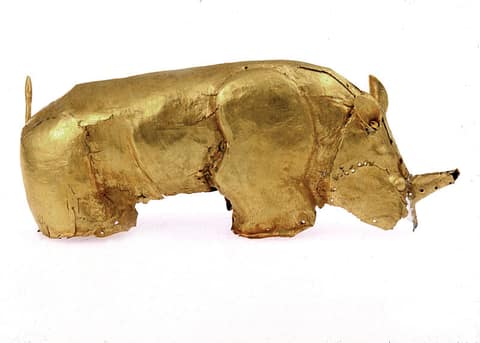
Image veiled by default
Sian Tiley-Nel, University of Pretoria Museums, CC BY-SA 4.0, via Wikimedia CommonsCC-BY-SA-4.0Original record
Data saver is on. Images load only when you ask. You can change this in Settings at any time.
From the archivist
Someone in the thirteenth century took gold beaten thinner than a fingernail and pressed it over a small carved animal, then fixed it with tiny gold tacks. The ears and the little tail were made apart, in solid gold, and pinned on. It was a small rhinoceros, made to be seen up close.
It was laid in a grave on top of Mapungubwe Hill, with a young adult, a bowl of gold, gold beads and bands of gold wire for the arms and ankles. Centuries later the people of the valley would not even point at that hill. The wood inside the rhinoceros rotted. The gold stayed.
On the last day of 1932 five men climbed the hill, opened the grave and split what they found into five shares. When a professor came looking, he found the rhinoceros's head with one man, its tail and ears with another, its rump with a third. It took decades, and a conservator in London, to make the animal whole again.
The dead took longer to come home. In November 2007, after some seventy years in university collections, the people of Mapungubwe were carried back and laid in the ground again. The rhinoceros stayed behind, in a glass case, far from the grave where it had kept company with the dead.
Established
- The rhinoceros is made of thin plate gold fixed with tiny gold tacks over a core, probably of wood, that has perished; its tail and ears were made in solid gold and tacked on (Fouché 1937, quoted in Duffey 2012).
- It came from a grave on the summit of Mapungubwe Hill, which was first occupied around 1200 CE. The same grave held a gold bowl, a gold circlet and horn, gold beads, arm and ankle bands of gold wire, many gold pins, glass beads, iron bands and pots (Duffey 2012).
- On 31 December 1932 a party of five men, among them E. A. J. van Graan and his son Jerry, removed gold from the grave and divided it into five roughly equal shares; Jerry van Graan informed Leo Fouché of the University of Pretoria in February 1933 (Duffey 2012).
- Fouché later wrote that he found the head of a rhinoceros with one of the men, the tail and ears with another and the rump with a third. The University of Pretoria bought the fragments from 1933 onward (Duffey 2012).
- Twenty-seven graves were excavated on the hilltop between 1933 and 1940; only three held gold. Of the person in this grave, a young adult, only a few fragments of the skull were recorded (Duffey 2012, citing Steyn 2007).
- In 1937 Fouché recorded that local people would not so much as point at the hill, which they held to be sacred to 'the Great Ones' (Fouché 1937, quoted in Duffey 2012).
- The rhinoceros was restored by the British Museum's senior metals conservator in 1999 (University of Pretoria repository).
- Human remains from Mapungubwe held for research were handed over in a ceremony at the University of Pretoria on 29 October 2007 and reburied at Mapungubwe from 18 to 20 November 2007, each skeleton sealed in its own container, with no samples taken for destructive analysis beforehand (South African History Online; Keough, Nienaber and Steyn 2008).
Interpretation
Duffey argues that the rhinoceros and the other gold animals from the grave were once tacked onto a single carved wooden divining bowl that has rotted away; others read the rhinoceros as an emblem of royal power. Steyn proposes that this 'Gold Grave' was a secondary burial. Because the grave was dug by its finders before any archaeologist saw it, the position of the body and of the objects, and who the person was, are not known. The rhinoceros has no direct date: it is placed in the thirteenth century through the occupation of the hilltop. South African History Online counts 150 individuals reburied in 2007; whether the remains from this particular grave were among them is not stated in the sources consulted here.
Looking ahead
Ten centuries from now, will anyone ask our permission before opening our graves, and will they put back what they take?
Sources (5)
- Duffey, A. E. Mapungubwe: interpretation of the gold content of the Original Gold Burial M1, A620. Journal of African Archaeology 10 (2), 2012, p. 175-187. · repository.up.ac.za
- Steyn, M. The Mapungubwe gold graves revisited. South African Archaeological Bulletin 62 (186), 2007, p. 140-146. · repository.up.ac.za
- Keough, N., Nienaber, W. C., Steyn, M. Repatriation of the Mapungubwe human remains: an overview of the process and procedure. Poster, Faculty of Health Sciences, University of Pretoria, 2008. · repository.up.ac.za
- University of Pretoria repository. Visser, H. Mapungubwe Gold Rhinoceros, colour slide, 1998 (record noting its restoration by the British Museum's senior metals conservator in 1999). · repository.up.ac.za
- South African History Online. Reburial of Mapungubwe human remains, 18 to 20 November 2007. · www.sahistory.org.za
Related fragments
1100 to 1500
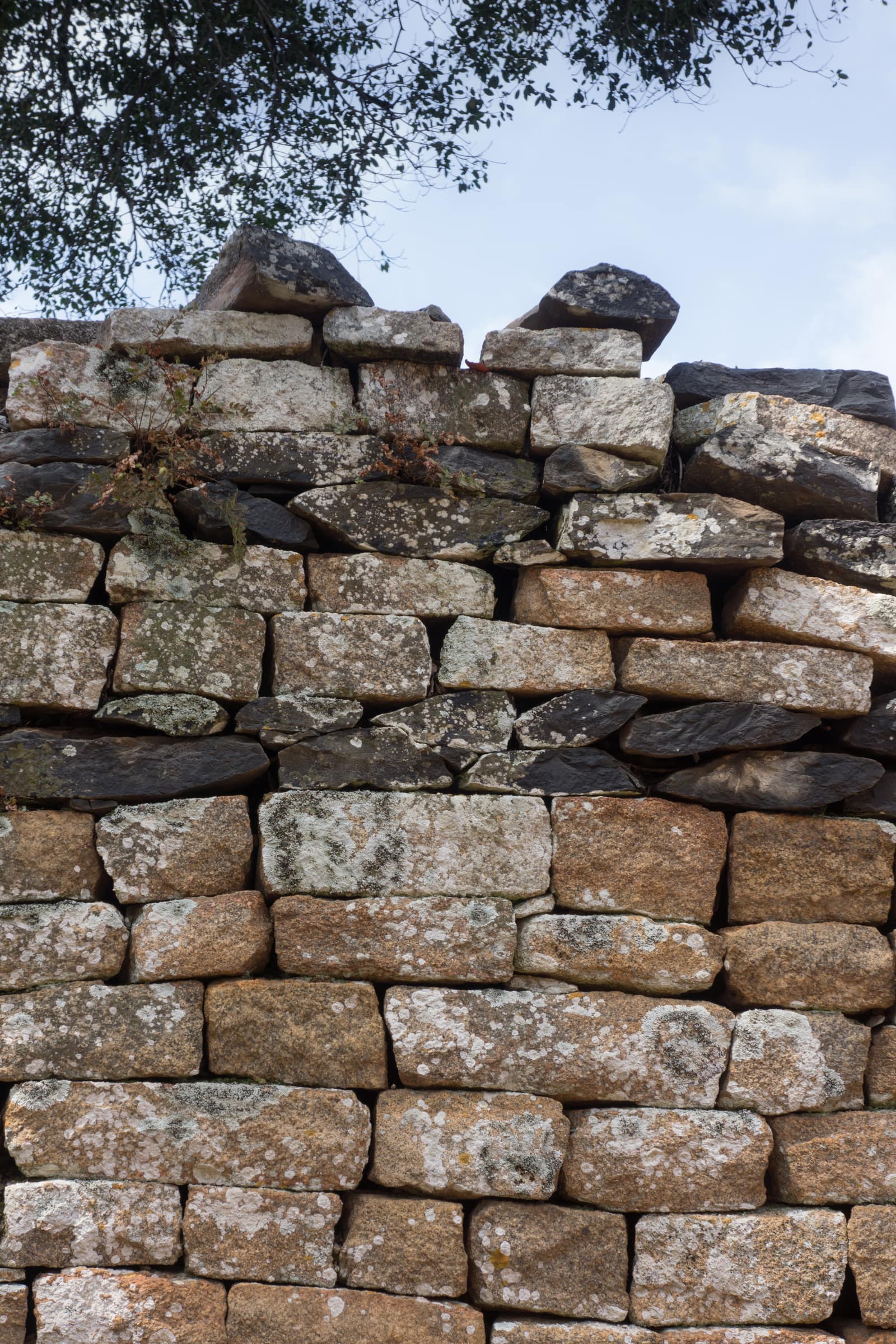
Great Zimbabwe
Near Masvingo, Zimbabwe · Africa
1875 to 1925
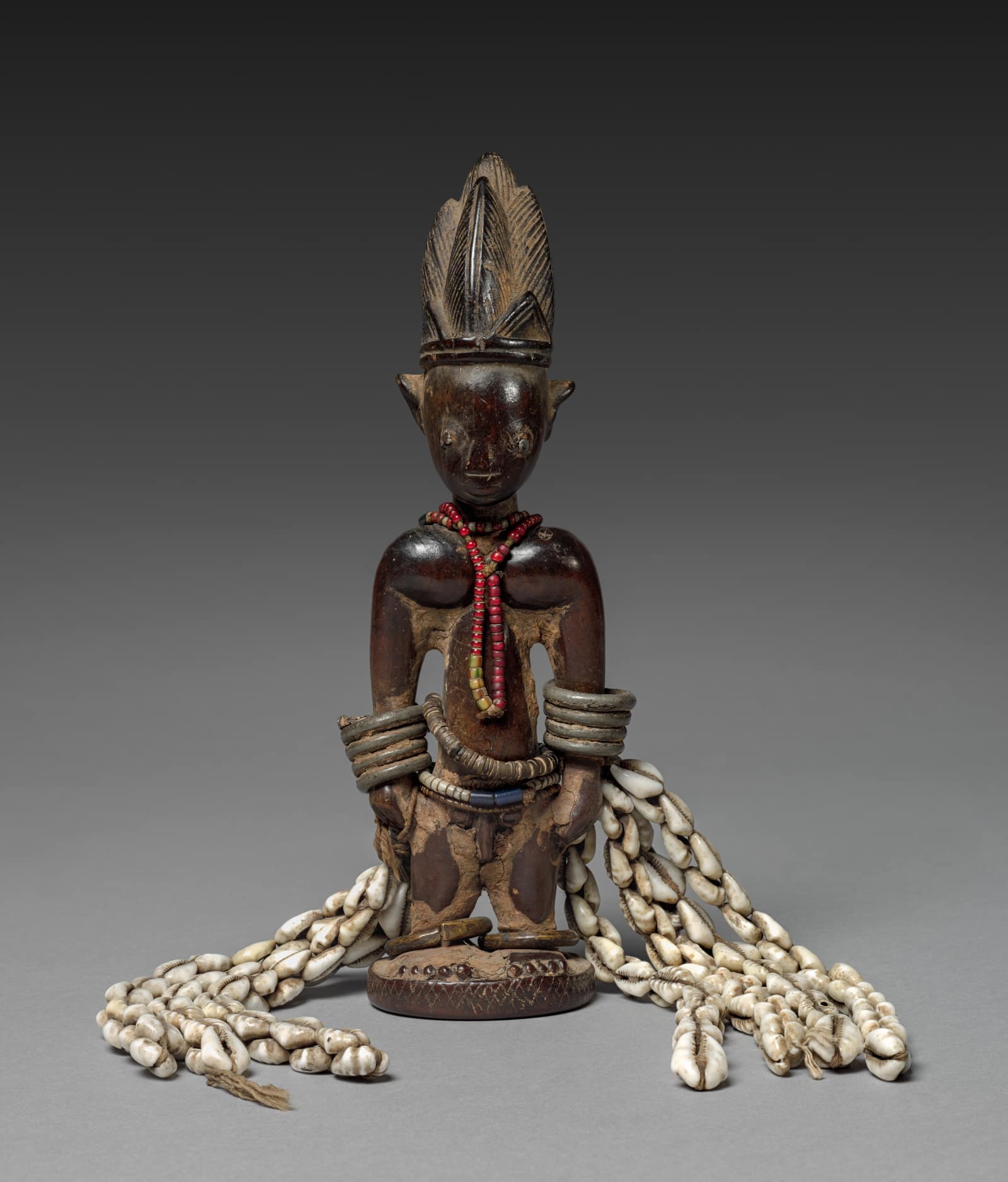
Ère ìbejì: a figure for a twin who died
Southwestern Nigeria · Africa
1500 to 1897
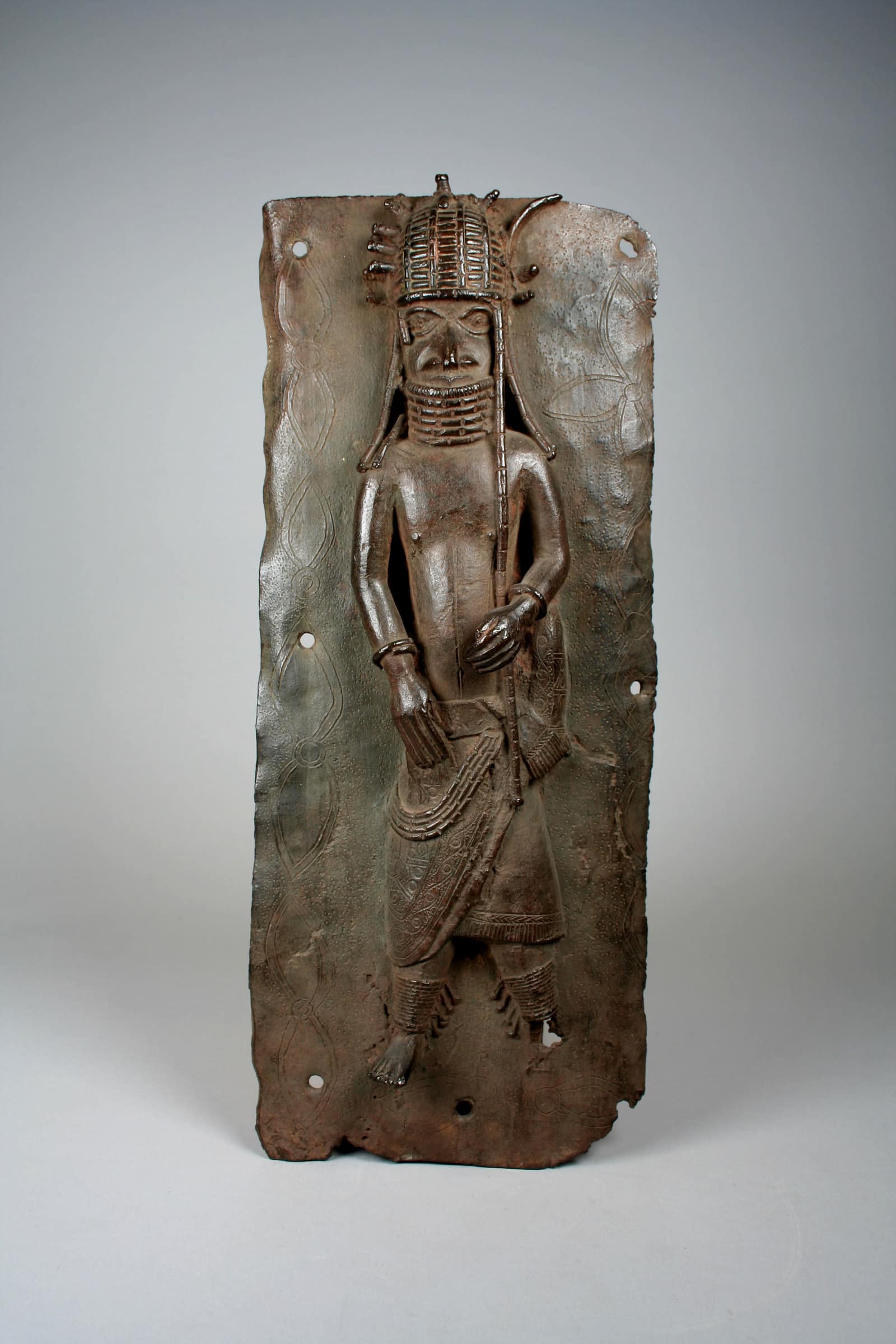
The Benin Bronzes
Benin City, Edo State, Nigeria · Africa