The paintings of Chauvet Cave
- Dated
- Place
- Vallon-Pont-d'Arc, Ardèche, France · Aurignacian and later Gravettian hunter-gatherers of the Ardèche gorges
- Coordinates
- 44° 23′ N · 4° 25′ E (approximate)
- Remains
- Intact
.jpg)
HTO, public domain, via Wikimedia CommonsPDMOriginal record
Data saver is on. Images load only when you ask. You can change this in Settings at any time.
From the archivist
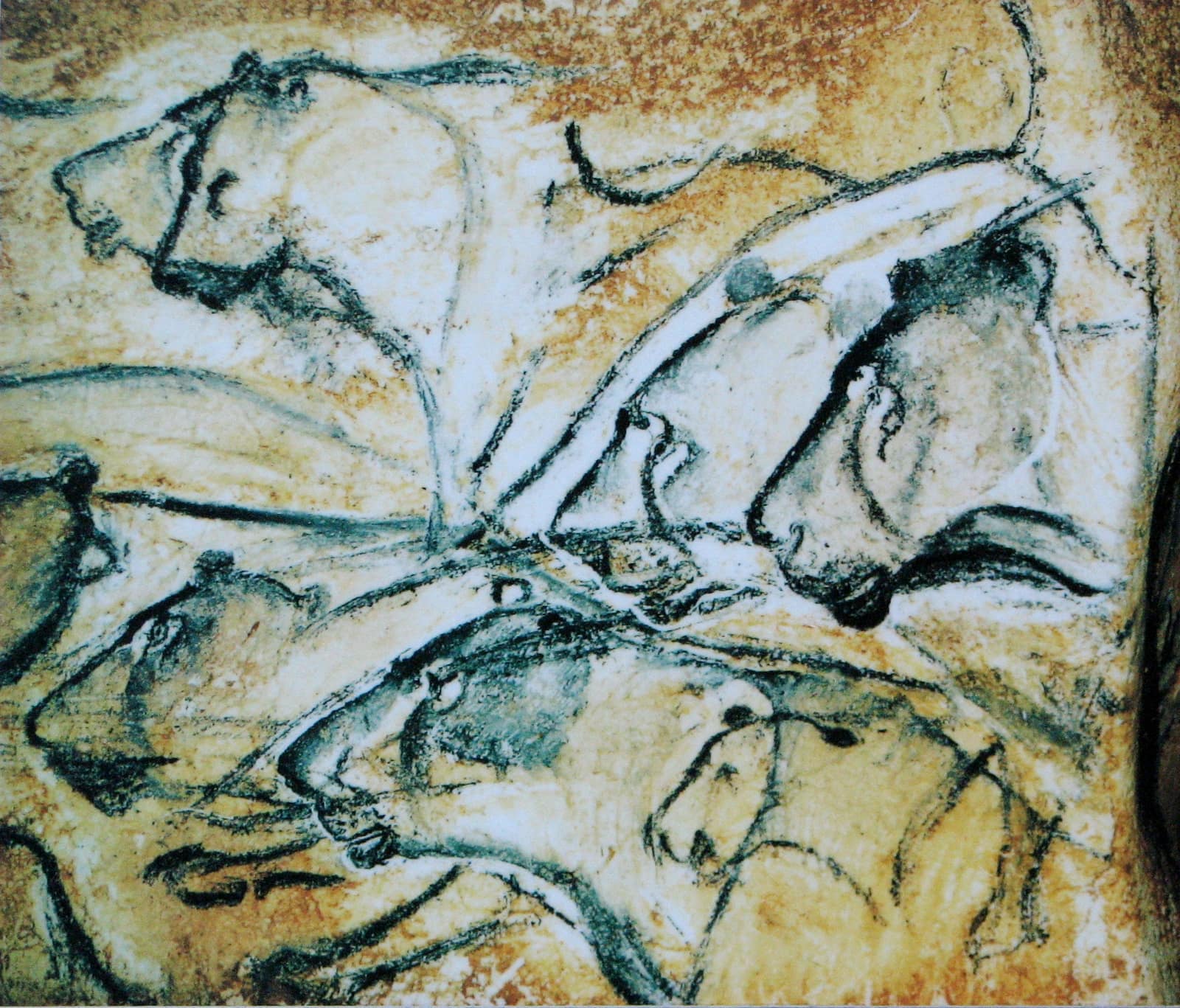
This civilization went into the dark to draw. At the back of a cave above the Ardèche, by the light of torches and small fires, people scraped the limestone clean, then laid down charcoal and red ochre in long, sure lines.
What they drew were the animals they feared as much as hunted. Lions without manes, pressed together, heads lowered. Rhinoceroses with heavy horns. Horses whose muzzles open as if they were breathing. Sometimes a drawing was shaded with the fingers, sometimes the bulge of the rock gave an animal its shoulder.
Most of the black drawings were made some 36,000 years ago. Later visitors came, left the prints of their hands and the ashes of their torches, and a fall of rock finally closed the entrance. For thousands of years nothing moved inside but bears, whose bones and scratches remain on the floor.
When three explorers crept in on a December evening in 1994, the charcoal looked fresh. The cave was sealed again soon after, to keep its air unchanged. Almost no one will ever stand there; the rest of us walk through a copy.
Established
- The cave was discovered on 18 December 1994 by Jean-Marie Chauvet, Éliette Brunel and Christian Hillaire, above the Pont d'Arc in the Ardèche gorges (UNESCO).
- A model built on more than 250 radiocarbon dates identifies two phases of human presence: an Aurignacian one from about 37,000 to 33,500 years ago, when most of the black drawings were made, and a Gravettian one from about 31,000 to 28,000 years ago (Quiles et al. 2016).
- The walls show more than 1,000 images, many of them dangerous animals rarely painted elsewhere: cave lions, woolly rhinoceroses, mammoths and bears (UNESCO).
- The cave was inscribed on the UNESCO World Heritage List in 2014; it is closed to the public, and a full-scale replica opened nearby in 2015 (UNESCO).
Interpretation
Why these people painted, and for whom, is not known: readings range from hunting magic to shamanic ritual to storytelling, and none can be tested. The early dates themselves were challenged for years by specialists who judged the style too accomplished for the Aurignacian; the 2016 chronology answered most of these doubts, though some still dispute how individual images are tied to the dates.
In 10,000 years
In 10,000 years, will anyone still enter a cave to look at what others left on its walls?
Sources (3)
- Quiles, A., Valladas, H., Bocherens, H., et al. A high-precision chronological model for the decorated Upper Paleolithic cave of Chauvet-Pont d'Arc, Ardèche, France. Proceedings of the National Academy of Sciences 113 (17), 2016, p. 4670-4675. · doi.org
- UNESCO World Heritage Centre. Decorated Cave of Pont d'Arc, known as Grotte Chauvet-Pont d'Arc, Ardèche (property 1426), inscribed 2014. · whc.unesco.org
- Clottes, J. (dir.). La Grotte Chauvet : l'art des origines. Paris, Éditions du Seuil, 2001 (réédition 2010).
Related fragments
8700 to 6500 BCE
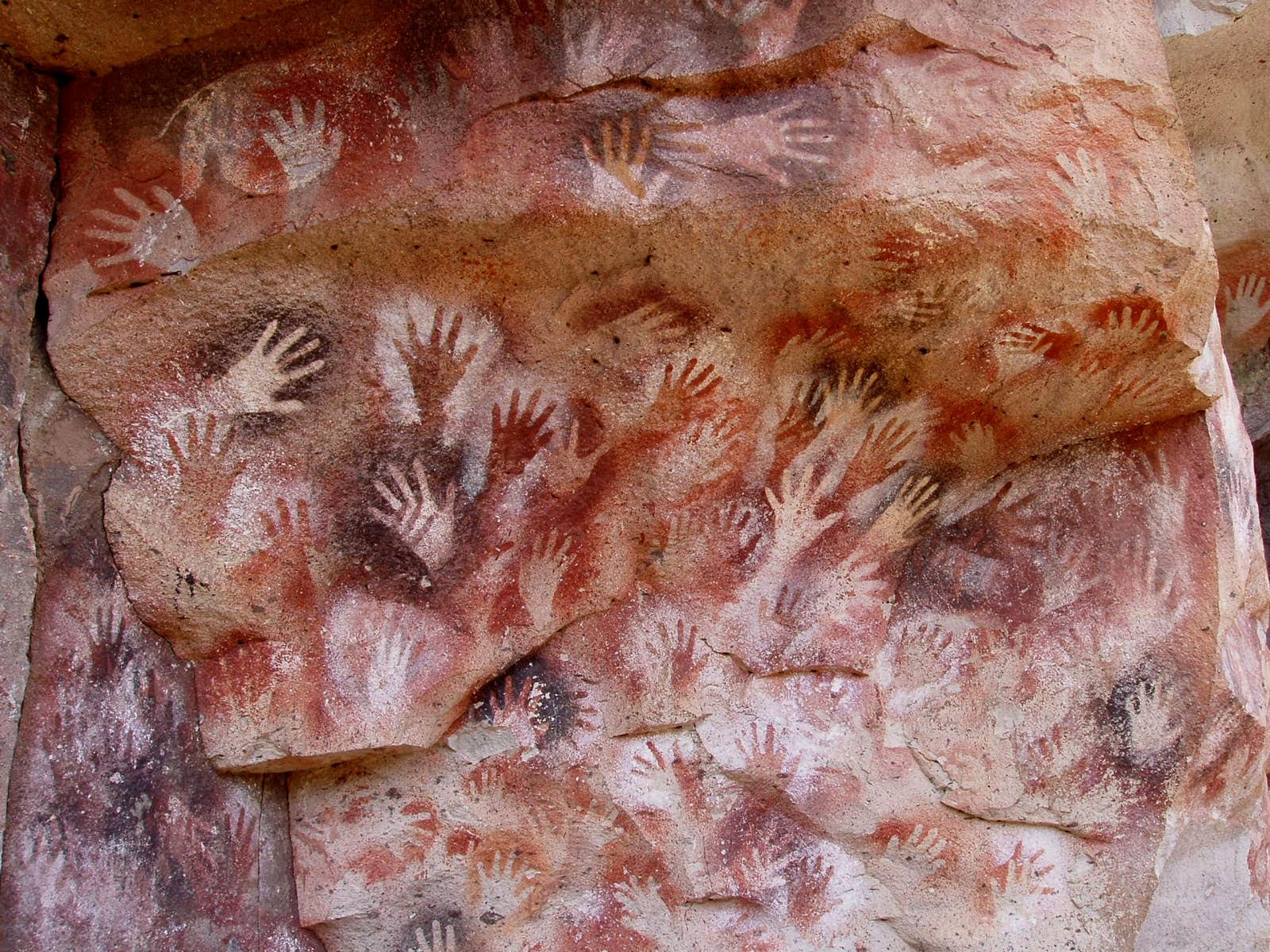
The Cave of the Hands
Cueva de las Manos, Pinturas River canyon, Santa Cruz Province, Argentina · Americas
c. 43,000 years ago
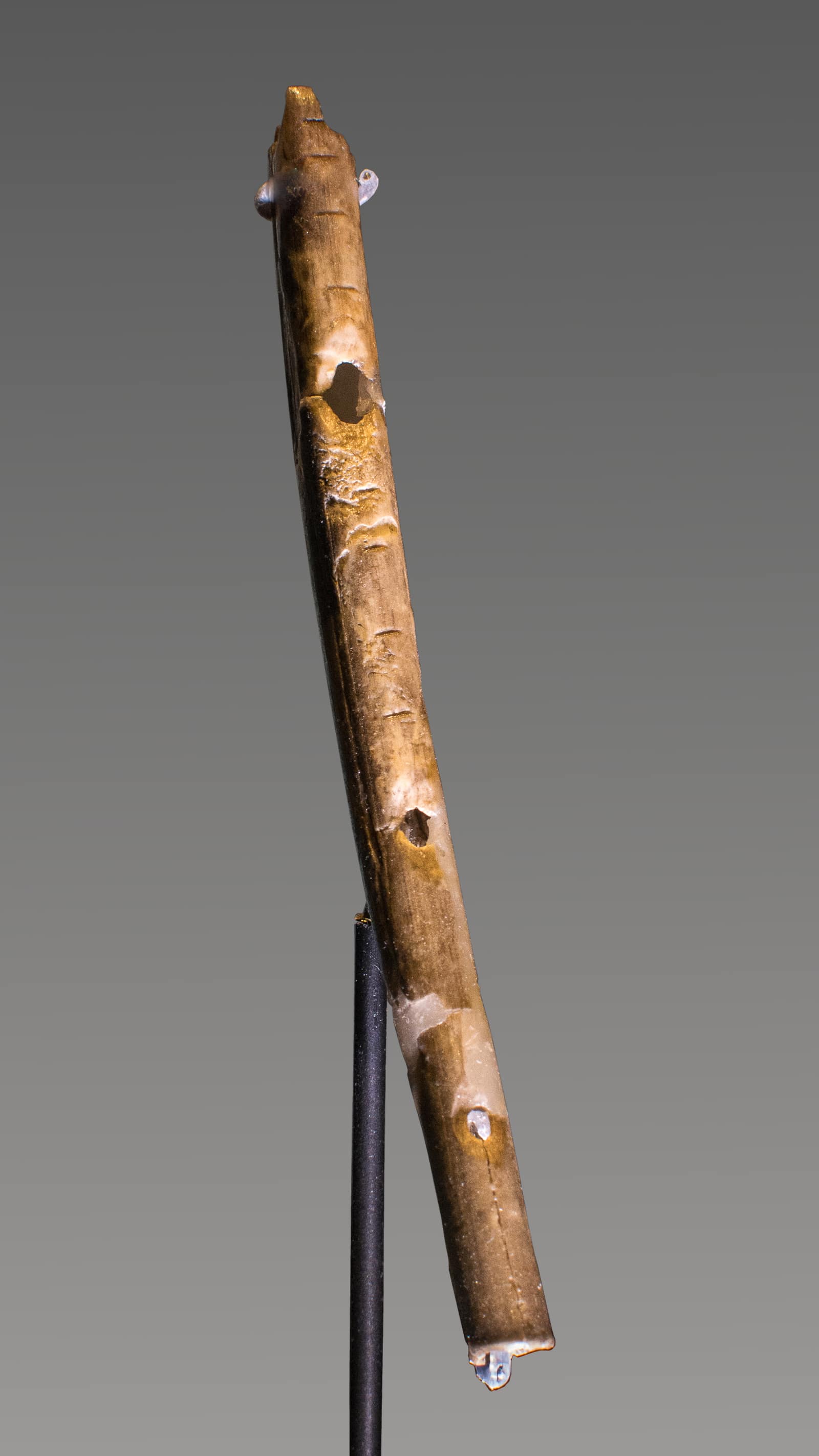
The bone flute of Geißenklösterle
Near Blaubeuren, Baden-Württemberg, Germany · Europe
c. 29,000 years ago
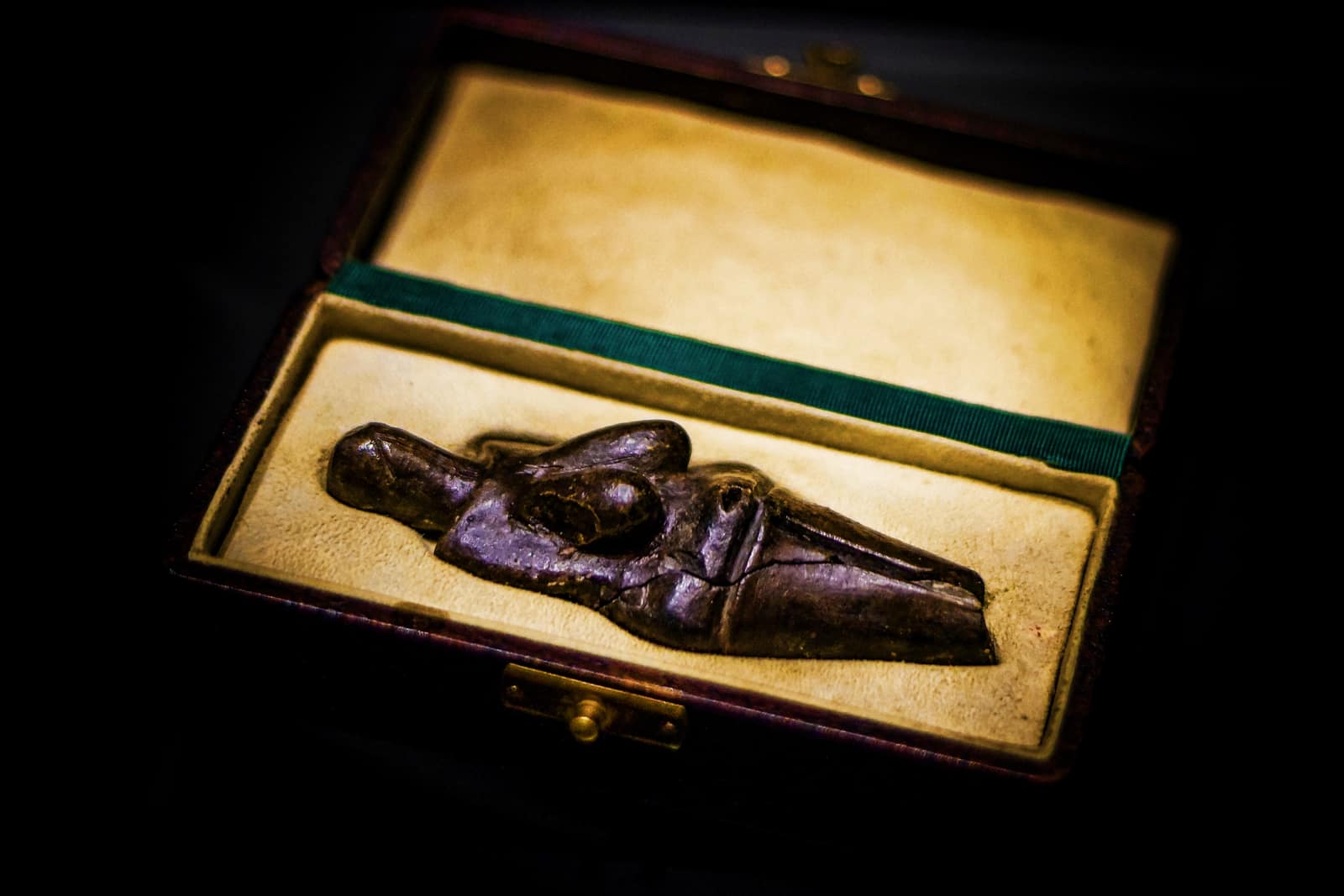
The fired figure of Dolní Věstonice
Dolní Věstonice, South Moravia, Czech Republic · Europe