The fired figure of Dolní Věstonice
- Dated
- Place
- Dolní Věstonice, South Moravia, Czech Republic · Gravettian (Pavlovian) hunter-gatherers of the Moravian plain
- Coordinates
- 48° 53′ N · 16° 39′ E (approximate)
- Remains
- Intact
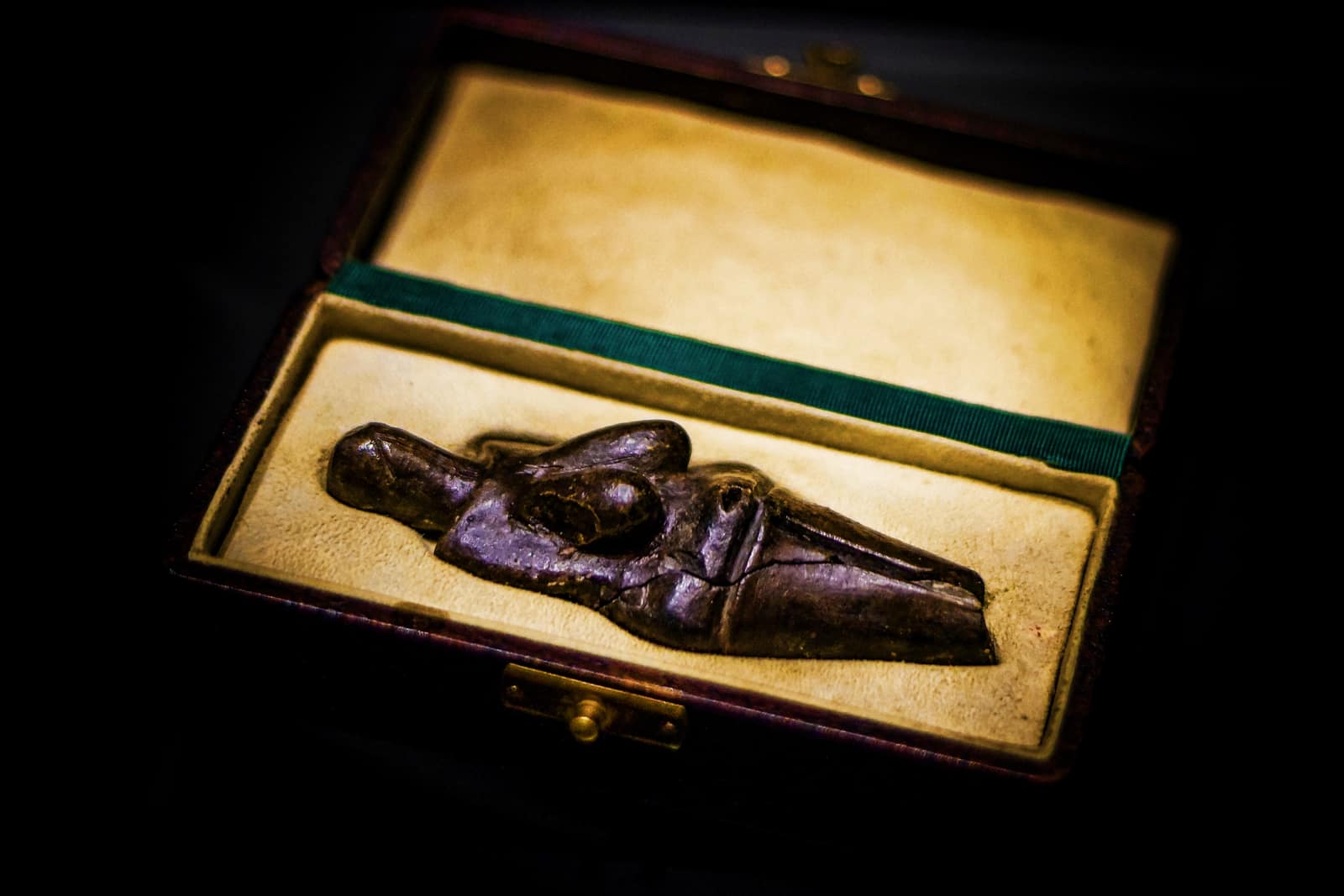

Miroslav Zachoval, CC BY 2.0, via Wikimedia CommonsCC-BY-2.0Original record
Data saver is on. Images load only when you ask. You can change this in Settings at any time.
From the archivist
Before this civilization baked bread or shaped a pot, it put clay into fire to see what would happen.
On a slope above the Moravian plain, mammoth hunters camped around hearths. Someone took the fine yellow earth of the place, wet it, and pinched out a woman small enough to close in a hand: heavy breasts, wide hips, a head with no face but two slanting marks where eyes would be. Then it was set in the embers, and the fire turned it hard and dark.
It was not alone. Around the hearths lay thousands of fired fragments, bears and lions and horses, many of them split apart by the heat. Perhaps that was a failure. Perhaps it was the point.
When it was lifted from the ash in July 1925, a fingerprint was still there on its back, pressed in by whoever held the clay, some 26,000 to 29,000 years ago. Of all the hands in this archive, that one has left the most exact trace.
Established
- The figure was found on 13 July 1925 at Dolní Věstonice, in South Moravia, during excavations led by Karel Absolon for the Moravian Museum in Brno, where it is kept (Pitt Rivers Museum).
- It is about 11 cm tall and made of fired clay; with the other figurines from the site, it is among the oldest known ceramic objects, made roughly 26,000 to 29,000 years ago, long before the first pottery vessels.
- The site yielded thousands of fragments of fired clay, many of animals, found near kilns; a large share had cracked or burst in the fire (Vandiver et al. 1989).
- A fingerprint left in the clay before firing was identified on the back of the figure (Králík et al. 2002).
Interpretation
Published age ranges vary with the dated layers and the calibration used, from about 25,000 to 31,000 years. Vandiver and colleagues suggested that the figurines may have been burst on purpose, wet clay thrown into the fire as a kind of ritual; others see ordinary firing failures. The fingerprint was first attributed to a child, a reading later judged uncertain. The meaning of the female figure itself, goddess, portrait or charm, is unknown; older reports that the clay was mixed with powdered bone are not confirmed by later analyses.
In 10,000 years
In 10,000 years, will a print of our fingers pressed into something we made still say who touched it?
Sources (3)
- Vandiver, P. B., Soffer, O., Klíma, B., Svoboda, J. The origins of ceramic technology at Dolní Věstonice, Czechoslovakia. Science 246 (4933), 1989, p. 1002-1008. · doi.org
- Králík, M., Novotný, V., Oliva, M. Fingerprint on the Venus of Dolní Věstonice I. Anthropologie 40 (2), 2002, p. 107-113.
- Pitt Rivers Museum, University of Oxford. The Venus of Věstonice (cast donated by Karel Absolon, 1931). · www.prm.ox.ac.uk
Related fragments
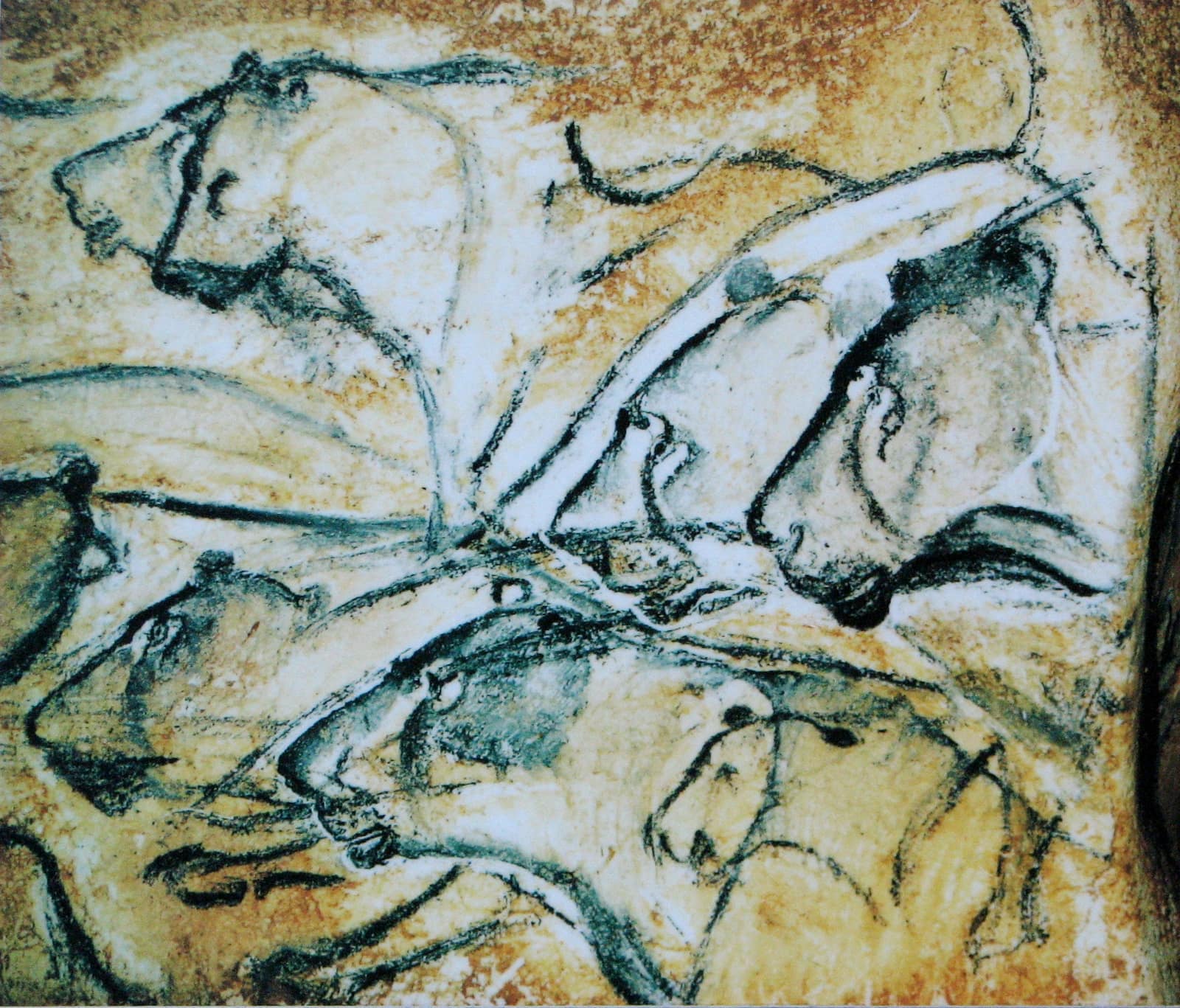
c. 37,000 years ago
The paintings of Chauvet Cave
Vallon-Pont-d'Arc, Ardèche, France · Europe
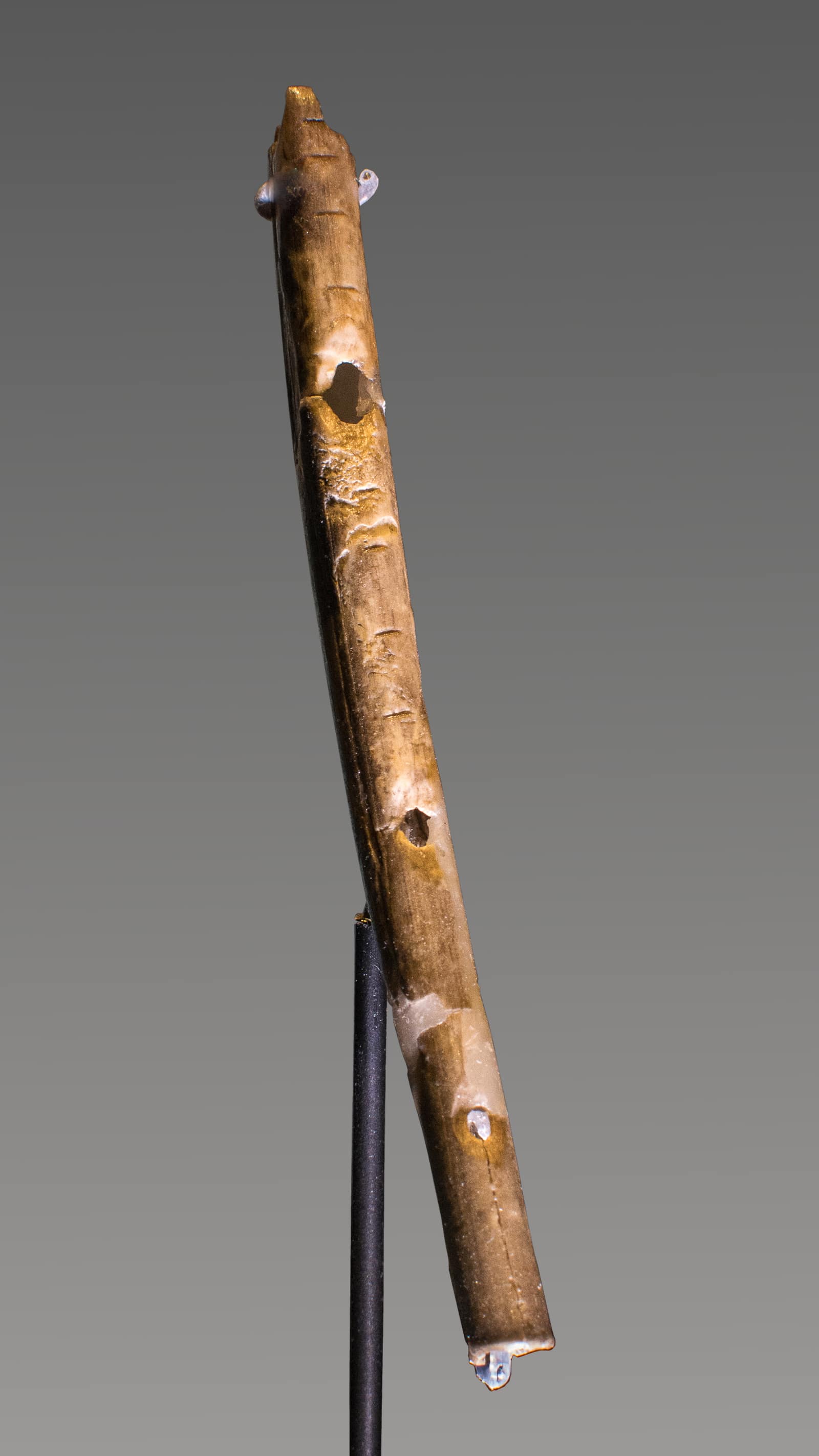
c. 43,000 years ago
The bone flute of Geißenklösterle
Near Blaubeuren, Baden-Württemberg, Germany · Europe
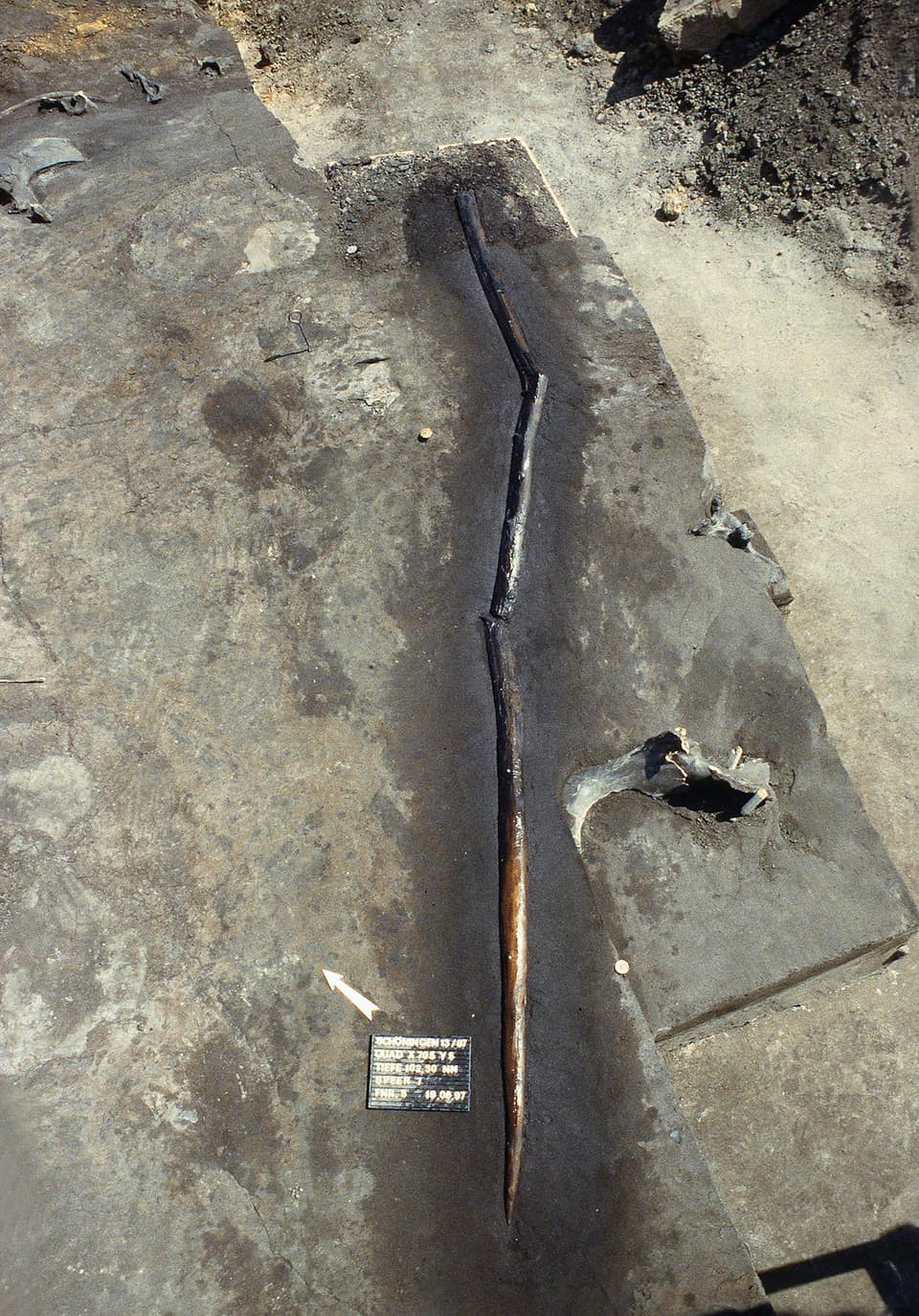
c. 300,000 years ago
The Schöningen spears
Schöningen, Lower Saxony, Germany · Europe