The bone flute of Geißenklösterle
- Dated
- Place
- Near Blaubeuren, Baden-Württemberg, Germany · Aurignacian hunter-gatherers of the Swabian Jura, among the first modern humans in Europe
- Coordinates
- 48° 24′ N · 9° 46′ E (approximate)
- Remains
- Reconstructed
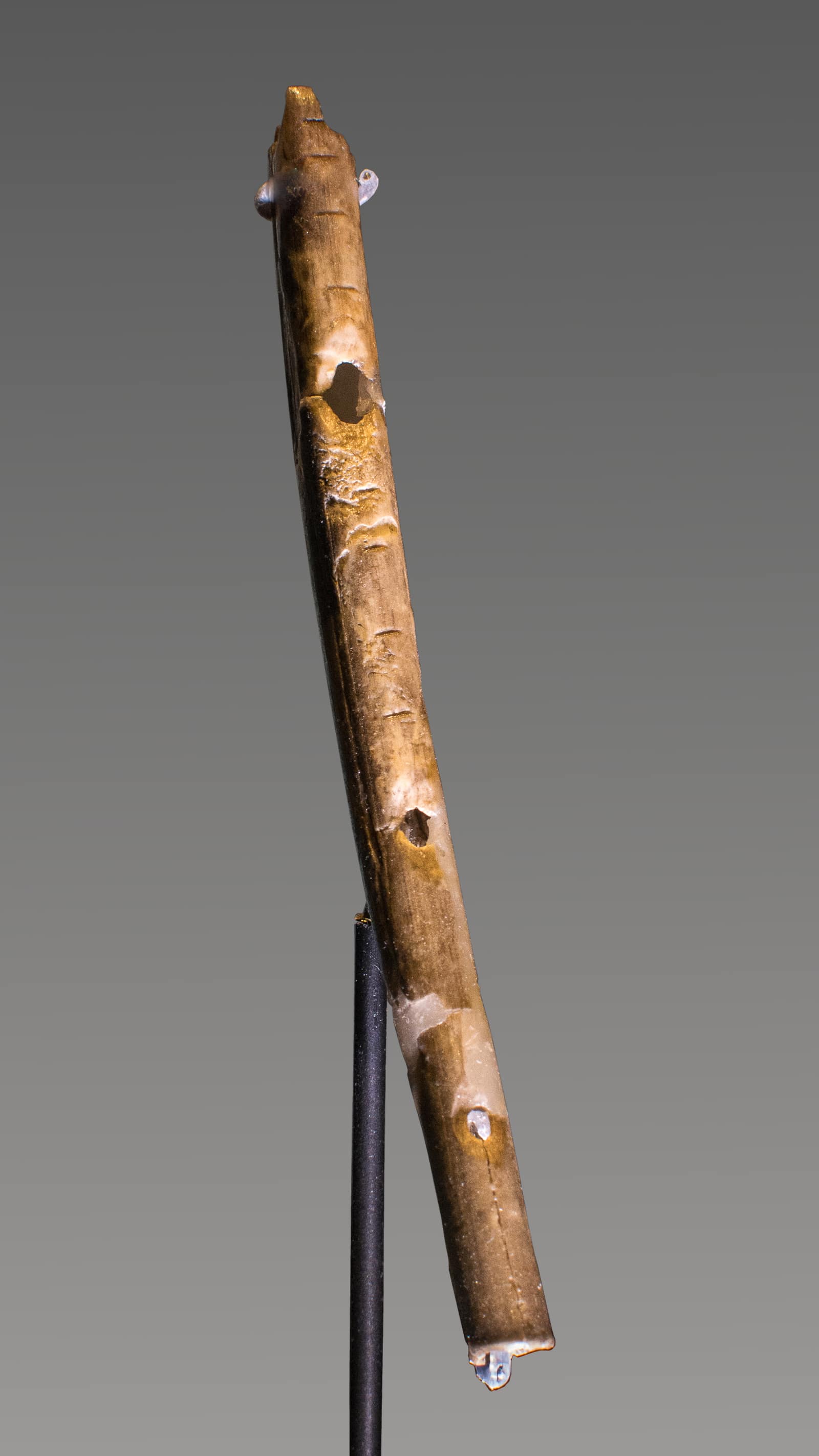

Thilo Parg, CC BY-SA 3.0, via Wikimedia CommonsCC-BY-SA-3.0Original record
Data saver is on. Images load only when you ask. You can change this in Settings at any time.
From the archivist
Someone in this civilization picked up the wing bone of a swan and heard something in it.
The bone was already hollow. It needed only to be cleaned, cut at both ends, notched at the top for the breath, and pierced along its length with small holes, carefully placed, so that the fingers could close and open them. Then it could sing.
That was in a rock shelter above a valley in the Swabian Jura, more than 40,000 years ago, among people who had only recently reached Europe. In the same shelter they carved small animals of ivory and made another flute, of mammoth tusk, which had to be split in two, hollowed out and bound together again so that no air would leak.
The flute broke into more than twenty pieces in the ground. It was found in fragments, some in the 1970s, others recognised years later among animal bones, and put back together. We do not know a single note that it played. We know that someone wanted to play.
Established
- Radiocarbon dating of the Aurignacian layers at Geißenklösterle, in southwestern Germany, places the beginning of the occupation that produced the flutes at about 42,000 to 43,000 years ago (Higham et al. 2012).
- The flute was made from the wing bone of a swan; reassembled from more than twenty fragments, it measures about 12.6 cm and has three finger holes (Urgeschichtliches Museum Blaubeuren).
- The same site yielded fragments of a second swan bone flute and a flute of mammoth ivory, which had to be split, hollowed and joined together again (Higham et al. 2012).
- Geißenklösterle is one of six caves inscribed in 2017 on the UNESCO World Heritage List as Caves and Ice Age Art in the Swabian Jura (UNESCO).
Interpretation
Whether these are the oldest musical instruments known depends on dates that carry uncertainties of several thousand years, and on the rival flutes from nearby Hohle Fels; the dates apply to the layers, not to the bone itself. What the flutes played, and whether music served ritual, signalling or pleasure, cannot be known; the mouthpiece is missing, and modern replicas can only suggest a sound.
In 10,000 years
In 10,000 years, will anyone still make music with the breath, from something that once lived?
Sources (4)
- Higham, T., Basell, L., Jacobi, R., Wood, R., Bronk Ramsey, C., Conard, N. J. Testing models for the beginnings of the Aurignacian and the advent of figurative art and music: the radiocarbon chronology of Geißenklösterle. Journal of Human Evolution 62 (6), 2012, p. 664-676. · doi.org
- Museum für Urgeschichte und Eiszeitkunst (Urgeschichtliches Museum Blaubeuren). Schwanenflöte, Geißenklösterle, digital collection. · www.urmu.de
- UNESCO World Heritage Centre. Caves and Ice Age Art in the Swabian Jura (property 1527), inscribed 2017. · whc.unesco.org
- Conard, N. J., Malina, M., Münzel, S. C. New flutes document the earliest musical tradition in southwestern Germany. Nature 460, 2009, p. 737-740. · doi.org
Related fragments
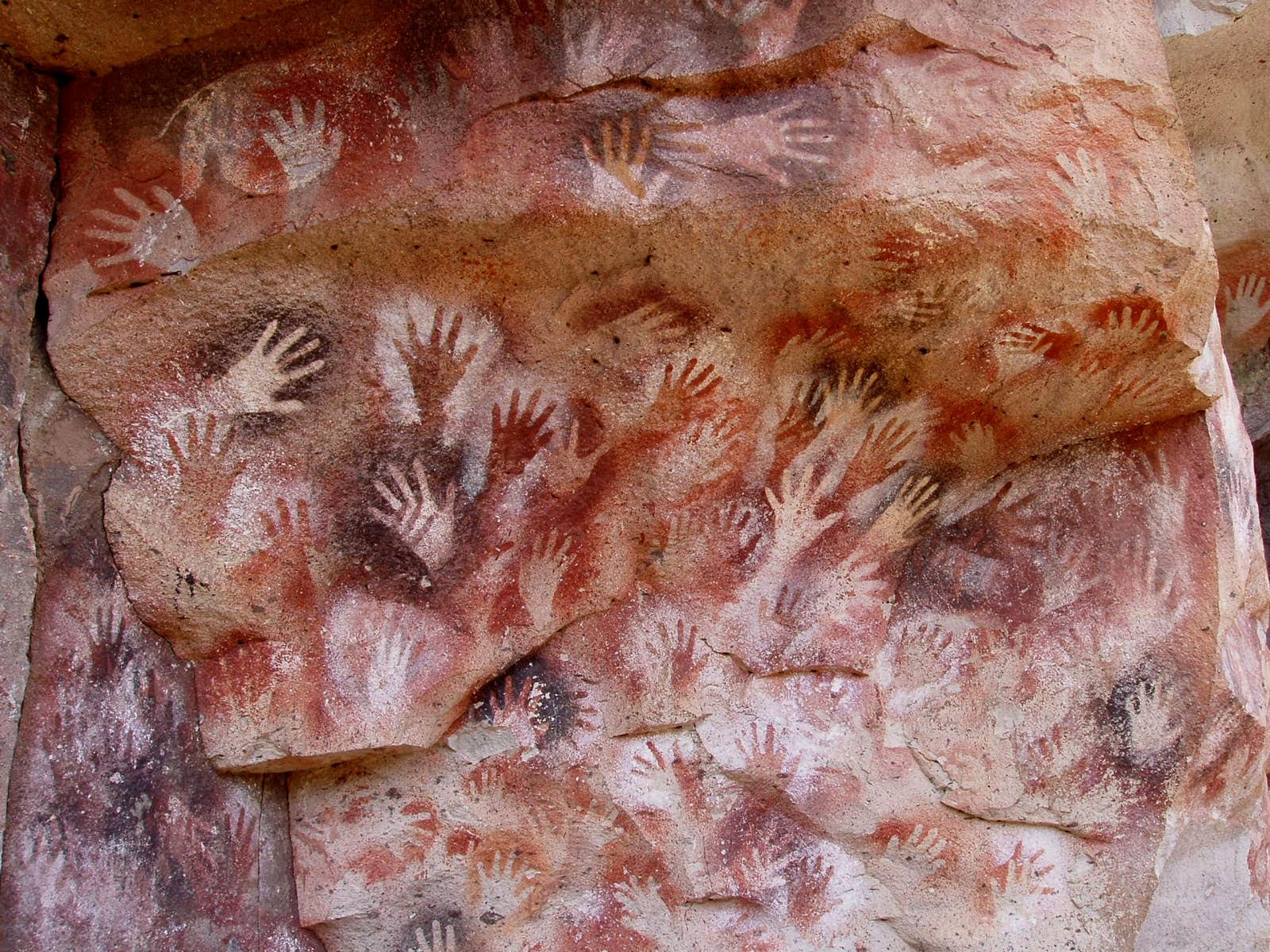
8700 to 6500 BCE
The Cave of the Hands
Cueva de las Manos, Pinturas River canyon, Santa Cruz Province, Argentina · Americas
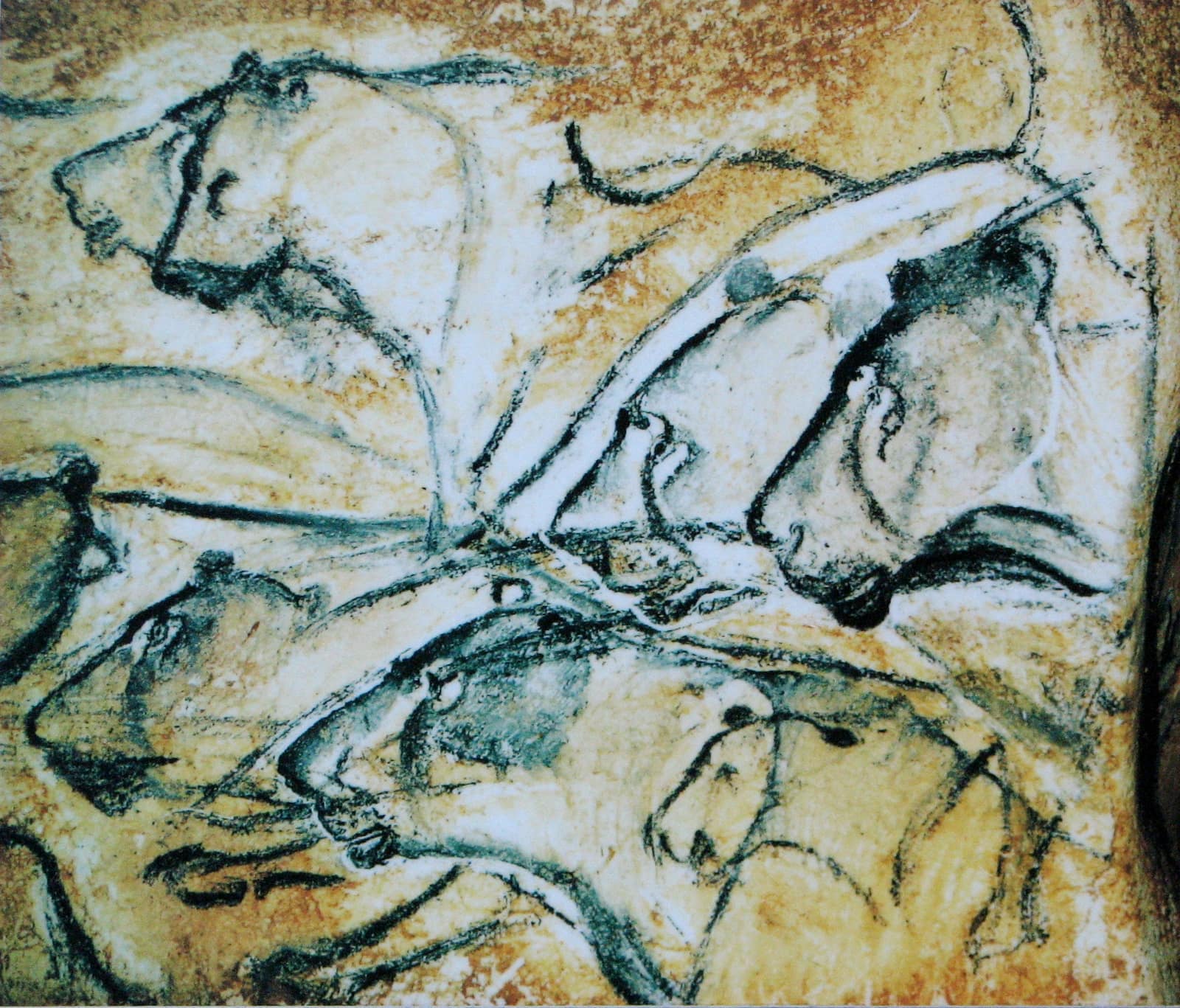
c. 37,000 years ago
The paintings of Chauvet Cave
Vallon-Pont-d'Arc, Ardèche, France · Europe
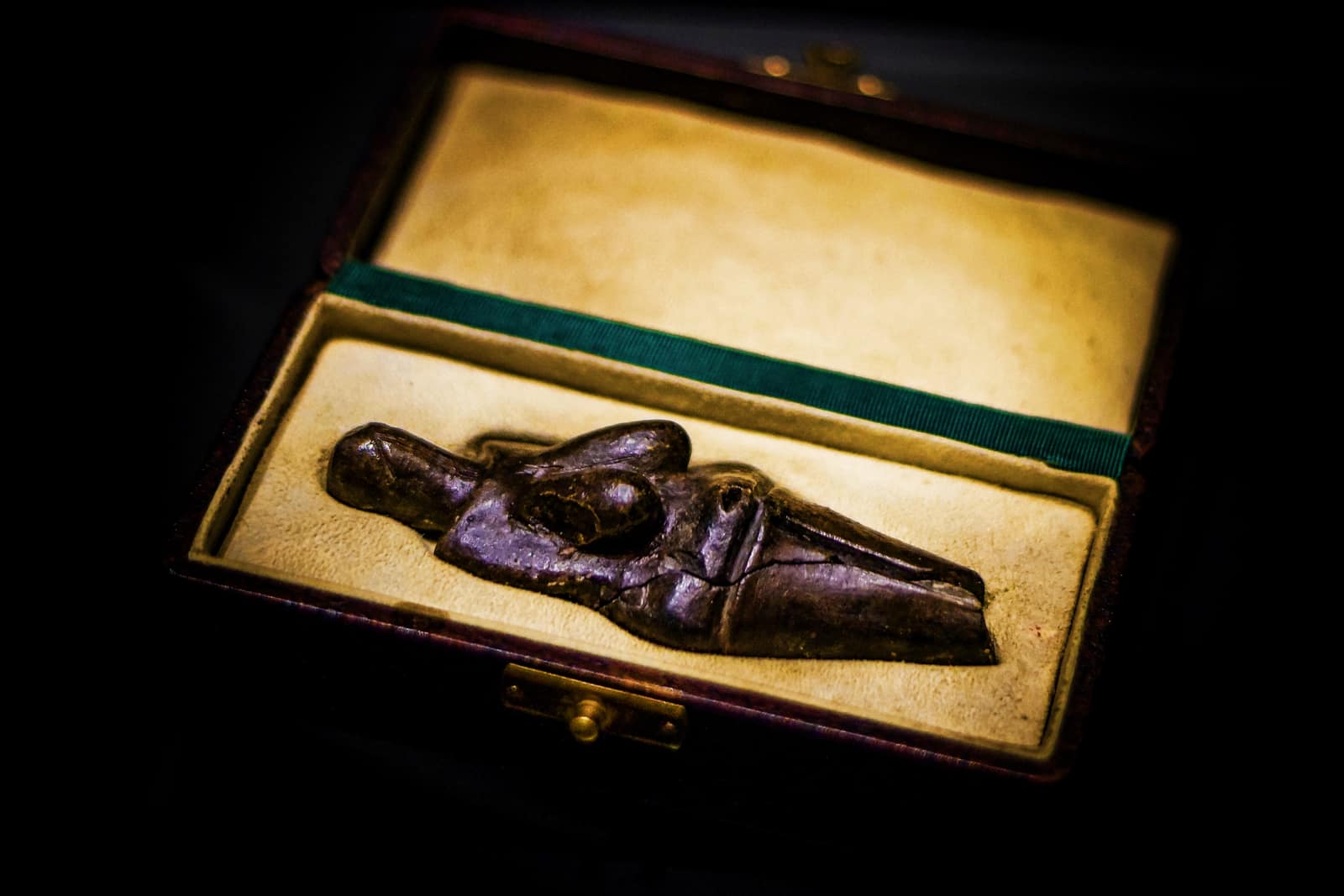
c. 29,000 years ago
The fired figure of Dolní Věstonice
Dolní Věstonice, South Moravia, Czech Republic · Europe