The Schöningen spears
- Dated
- Place
- Schöningen, Lower Saxony, Germany · Archaic humans of northern Europe, probably early Neanderthals
- Coordinates
- 52° 08′ N · 10° 59′ E (approximate)
- Remains
- Fragmentary
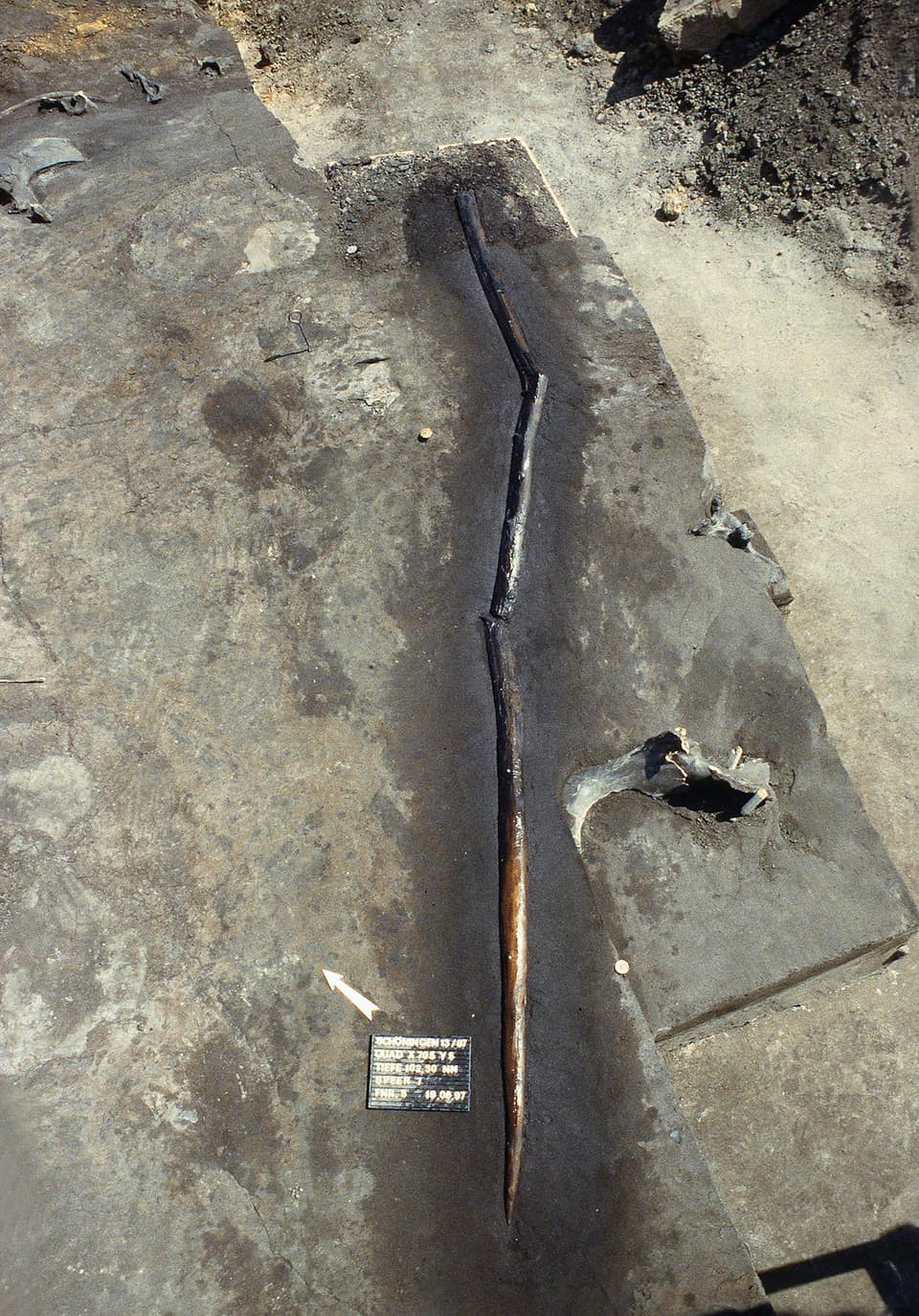

P. Pfarr, NLD, CC BY-SA 3.0 DE, via Wikimedia CommonsCC-BY-SA-3.0Original record
Data saver is on. Images load only when you ask. You can change this in Settings at any time.
From the archivist
The wood should not have lasted. It lasted because the shore of a lake became mud, and the mud closed over it without air.
Someone in this civilization chose a young spruce, cut it, stripped the bark and branches, and carved it down to a shaft about two metres long, thickest a third of the way from the tip, like a modern javelin. The point was cut from the hardest wood, near the root. It took patience, a stone blade and knowledge of how a thrown thing flies.
Near these spears lay the bones of horses, with the marks of cutting and breaking still on them. More than fifty animals died at this lakeshore. Their hunters left the spears among the remains, perhaps as tools no longer needed.
For decades the spears were said to be 400,000 years old, then 300,000. In 2025 a new measurement, taken from the very layer that held them, made them about 200,000 years old. The wood did not change. Only our reckoning of it did.
Established
- Between 1994 and 1998, excavations led by Hartmut Thieme in the lignite mine at Schöningen, Germany, uncovered several wooden spears alongside the butchered remains of horses (Thieme 1997).
- The spears are made of spruce, and one of pine, shaped from thin trunks with the point cut from the hardest wood near the base of the tree (Thieme 1997).
- When first published they were estimated at about 400,000 years old; the age of the site was later put at about 300,000 years, the figure used by Conard and colleagues in 2020.
- In 2025, amino acid dating of snail shell lids from the spear layer itself gave an age of about 200,000 years, which places the spears in the time of early Neanderthals (Hutson et al. 2025).
- The remains of more than 50 horses were found at the site (Johannes Gutenberg University Mainz 2025).
Interpretation
The 2025 age is the most direct measurement yet, but it rests on one method and may still be discussed; the earlier estimates relied on the layers above and below. Whether the spears were thrown or thrust, and whether the horses were killed in one ambush or over many seasons, are still debated; the 2025 study argues for repeated, well organised group hunts.
In 10,000 years
In 10,000 years, will any of the tools we have made be found lying where we dropped them?
Sources (4)
- Thieme, H. Lower Palaeolithic hunting spears from Germany. Nature 385, 1997, p. 807-810. · doi.org
- Conard, N. J., Serangeli, J., Bigga, G., Rots, V. A 300,000-year-old throwing stick from Schöningen, northern Germany, documents the evolution of human hunting. Nature Ecology & Evolution 4, 2020, p. 690-693. · doi.org
- Hutson, J. M., et al. Revised age for Schöningen hunting spears indicates intensification of Neanderthal cooperative behavior around 200,000 years ago. Science Advances 11 (19), 2025, eadv0752. · doi.org
- Johannes Gutenberg University Mainz. Age of Schöningen spears revised to 200,000 years, press release, May 2025. · press.uni-mainz.de
Related fragments
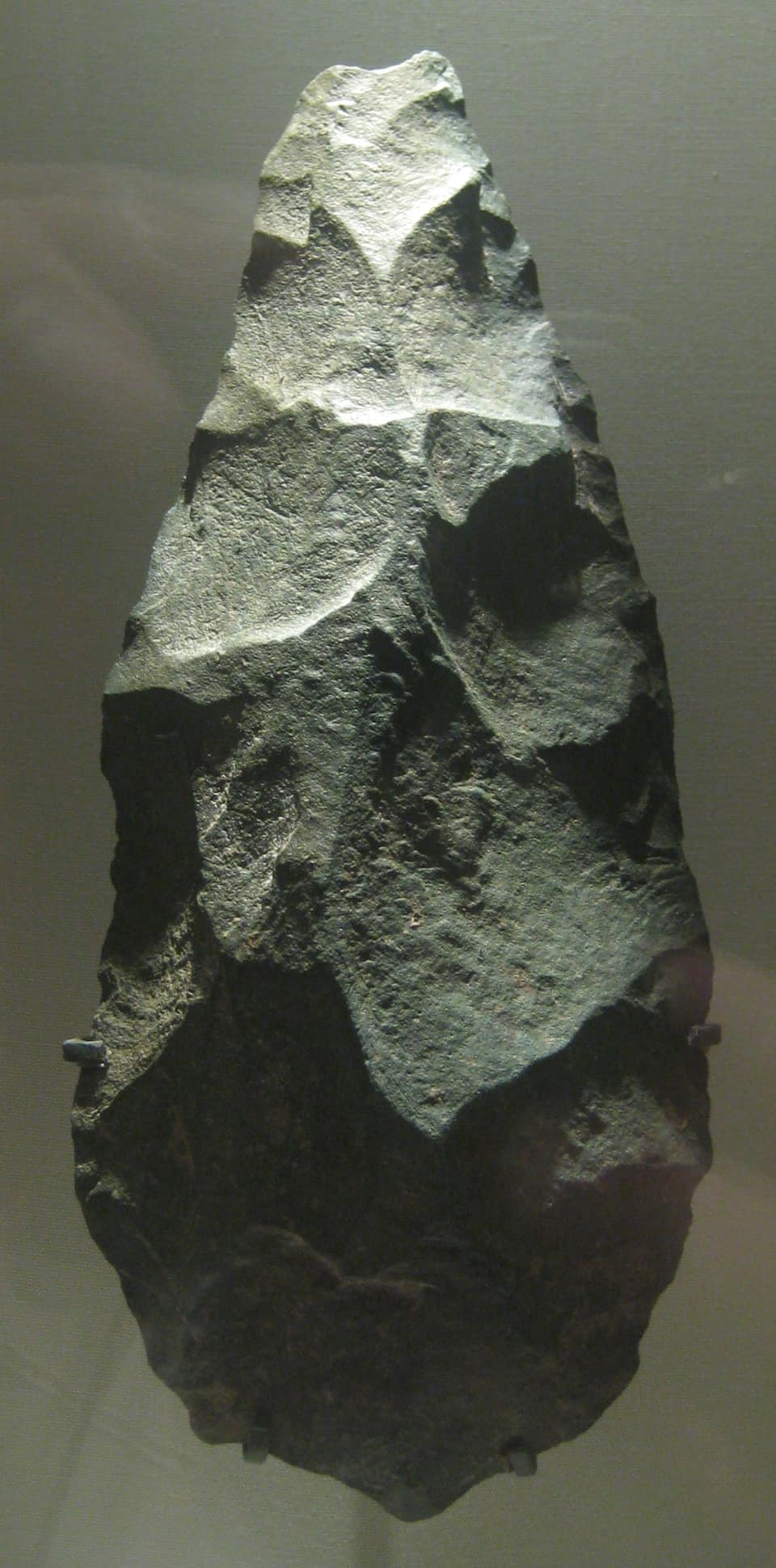
c. 1.4 million years ago
A handaxe from Olduvai Gorge
Olduvai Gorge, Ngorongoro Conservation Area, Tanzania · Africa
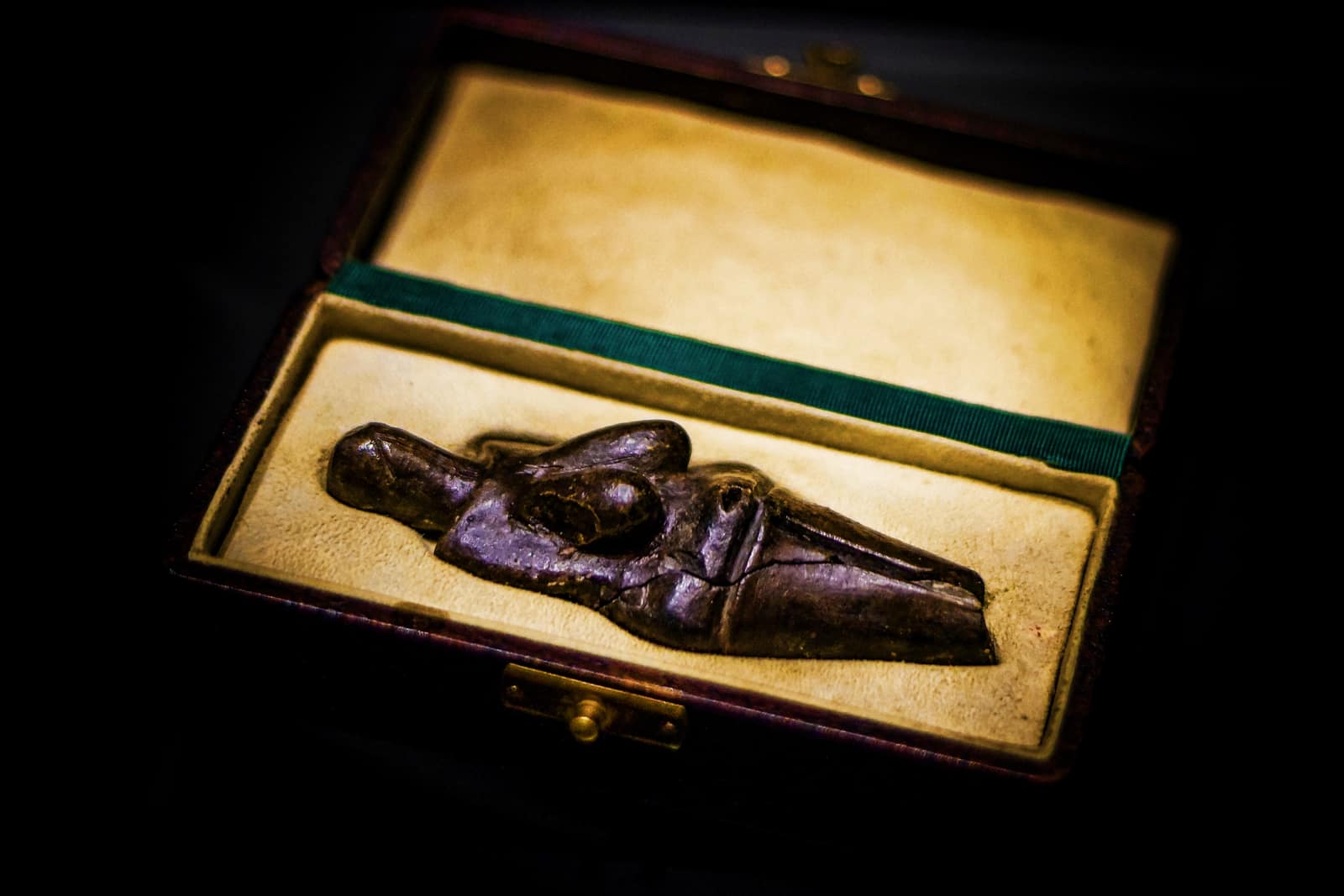
c. 29,000 years ago
The fired figure of Dolní Věstonice
Dolní Věstonice, South Moravia, Czech Republic · Europe