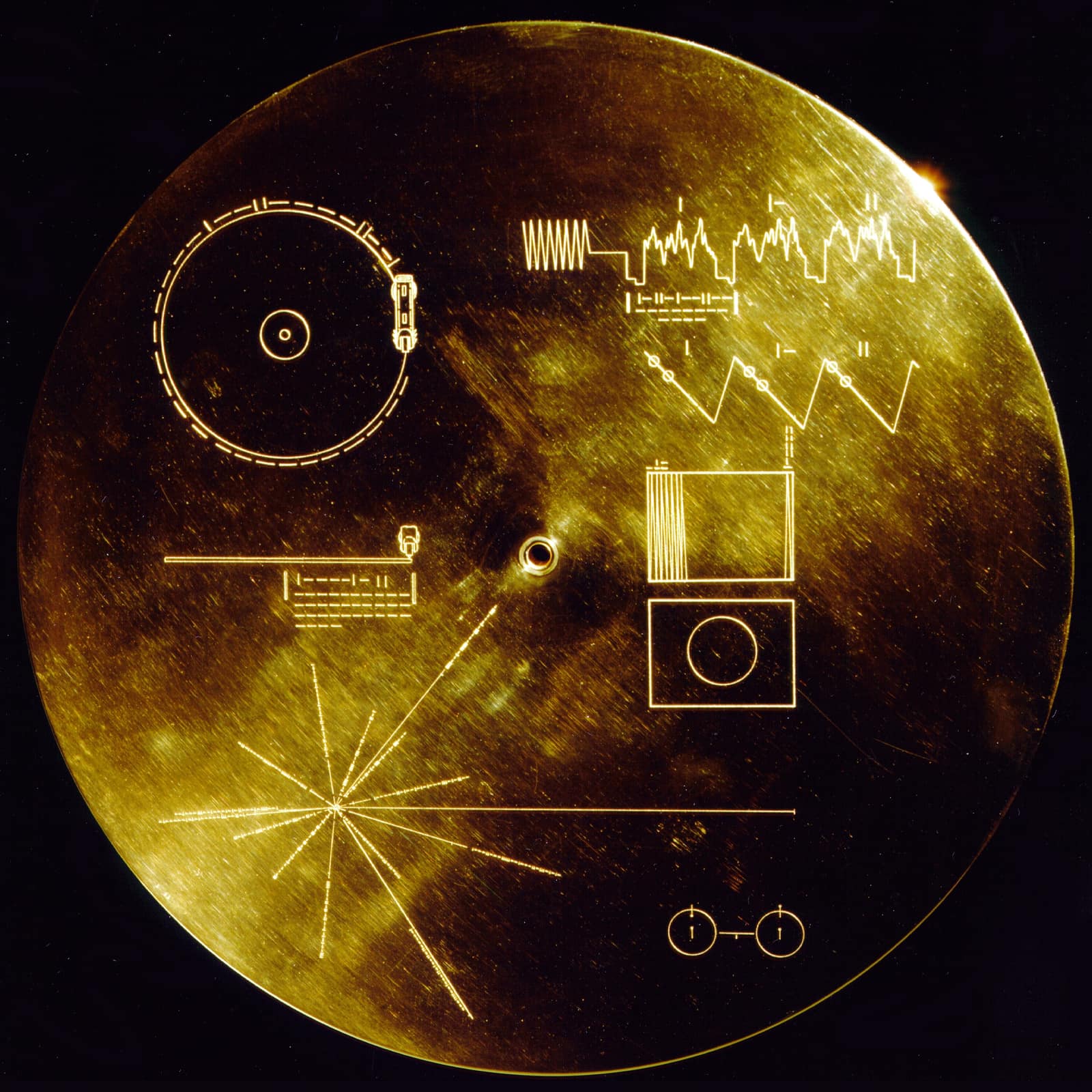
The first footprints on the Moon
- Dated
- Place
- Tranquility Base, Sea of Tranquility, the Moon · The Apollo 11 crew and the hundreds of thousands of people of NASA's Apollo programme
- Remains
- Intact
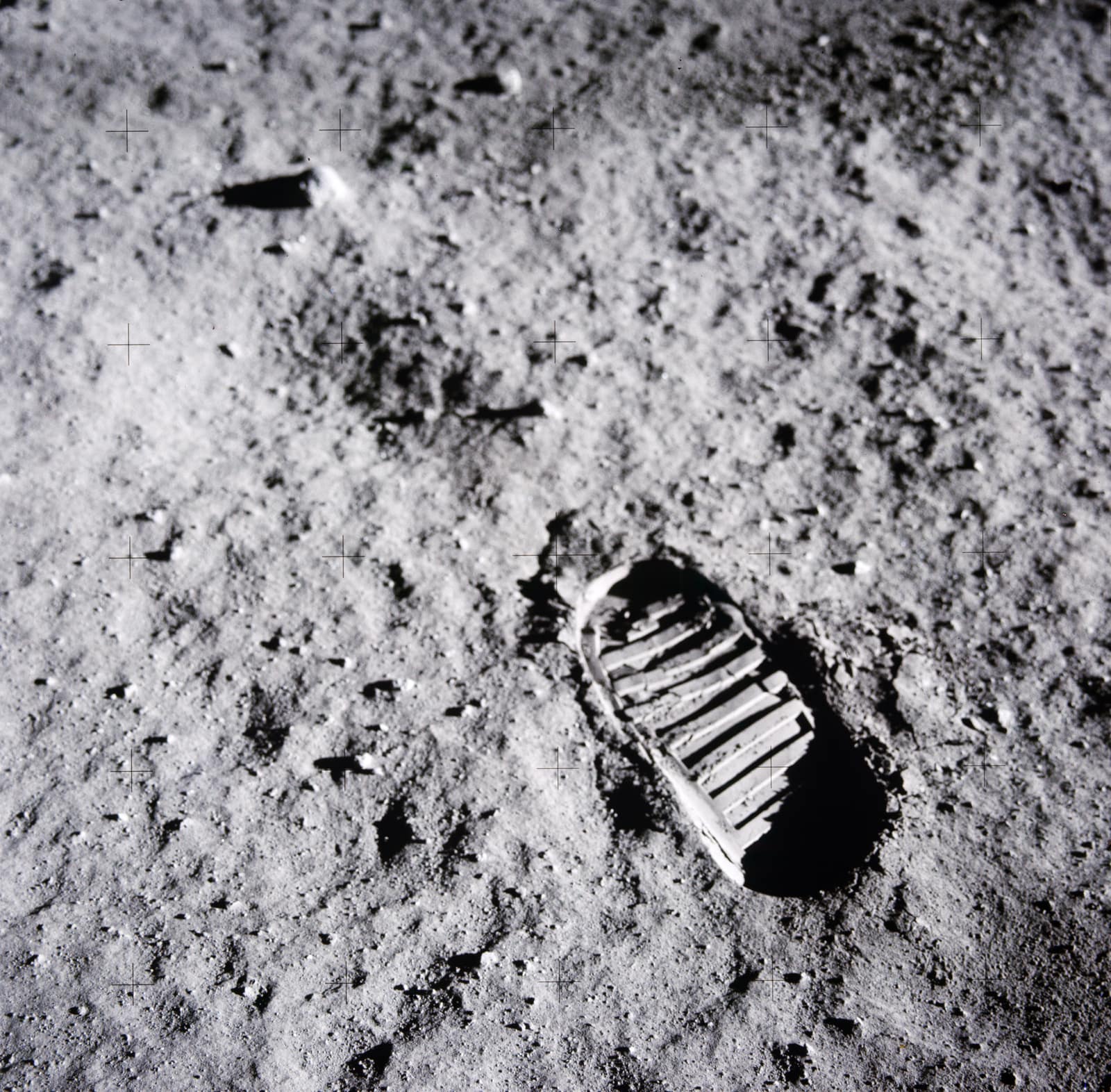
NASA / Buzz AldrinPDMOriginal record
Data saver is on. Images load only when you ask. You can change this in Settings at any time.
From the archivist
There is no wind here, and no rain. What falls stays where it falls.
On 20 July 1969, a small craft came down on a grey plain the astronomers called the Sea of Tranquility. Two men climbed out; a third waited above, circling. The ground was a fine powder that took the shape of anything pressed into it. One of them, following a checklist, stepped onto untouched soil, lifted his boot away and photographed the print, so that scientists on Earth could judge how firm the Moon was.
They stayed a few hours. Before leaving they set down a plaque, written in English and signed by four men: we came in peace for all mankind. Beside it they left a disc no larger than a coin, etched with messages from seventy-three nations, a cloth patch for three astronauts burned in a fire on the ground, two medals for two cosmonauts who had died, and a small golden olive branch.
Then they left, and the plain grew still again. The prints are still there, sharp at the edges, waiting.
Established
- The Apollo 11 lunar module landed in the Sea of Tranquility on 20 July 1969; Neil Armstrong and Buzz Aldrin walked on the surface while Michael Collins remained in lunar orbit (NASA).
- The photograph AS11-40-5878 shows a bootprint made and photographed by Aldrin for studies of the lunar soil (NASA).
- A plaque on a leg of the descent stage reads: 'Here men from the planet Earth first set foot upon the Moon, July 1969 A.D. We came in peace for all mankind', with the signatures of the three astronauts and of President Richard Nixon (NASA).
- The crew also left a small silicon disc carrying statements from four US presidents and goodwill messages from leaders of 73 countries (NASA).
- They left objects honouring those who had died: a patch of Apollo 1 and two Soviet medals for Yuri Gagarin and Vladimir Komarov, with a small gold olive branch (Nixon 1969; NASA).
Interpretation
It is often said that the footprints will last for millions of years in the airless calm; in fact micrometeorites slowly churn the lunar surface, and the flag was probably blown over by the engine exhaust at lift off. How long the prints will stay legible is uncertain; the plaque and hardware will last far longer.
In 10,000 years
In 10,000 years, will anyone else have walked here, and will they step around our footprints?
Sources (4)
- NASA Image and Video Library. Close-up view of astronaut's footprint in lunar soil (AS11-40-5878), 20 July 1969. · images.nasa.gov
- NASA. We came in peace for all mankind (Apollo 11 lunar module plaque). · www.nasa.gov
- NASA. Release 69-83F: Apollo 11 goodwill messages, 1969. · www.nasa.gov
- The American Presidency Project. Richard Nixon, Statement about honoring American and Russian space heroes during the Apollo 11 mission, 1969. · www.presidency.ucsb.edu