“This place is not a place of honor”
With it, a state set out, by regulation, to write a warning meant to be understood for ten thousand years by people who might share none of its languages.
- Dated
- Place
- Waste Isolation Pilot Plant, near Carlsbad, New Mexico, United States · The Marker Development Panel convened by Sandia National Laboratories for the United States Department of Energy
- Coordinates
- 32° 22′ N · 103° 47′ W (approximate)
- Remains
- Intact
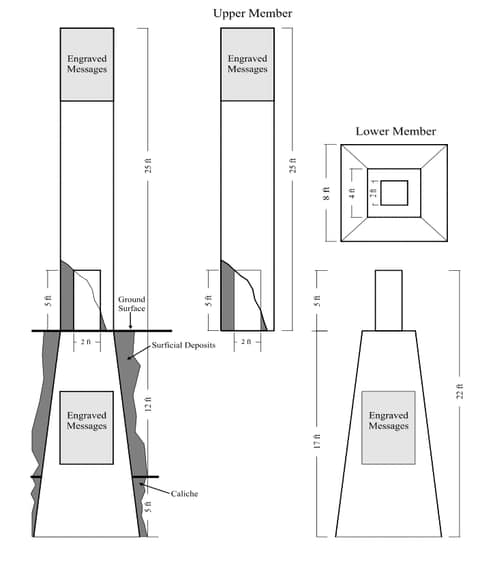

US Department of EnergyPDMOriginal record
Data saver is on. Images load only when you ask. You can change this in Settings at any time.
From the archivist
Read this slowly. It was written for you, and we did not know what language you would speak.
In the desert of New Mexico this civilization dug rooms in ancient beds of salt, deep below the ground, and filled them with waste left over from making its nuclear weapons. Its law required that people be warned away for ten thousand years, longer than any writing it knew had lasted.
So a laboratory gathered linguists, anthropologists, an architect, an astronomer, an artist and a specialist of materials, and asked them how to speak across such a distance. They answered with earthworks, standing stones, faces twisted by pain, and words in many languages, each saying the same thing more simply or more fully.
One team tried to put into words what the whole place should say without them:
“This place is a message... and part of a system of messages... This place is not a place of honor... no highly esteemed deed is commemorated here... nothing valued is here. What is here was dangerous and repulsive to us.”
The report was printed in November 1993. The stones have not been raised. The words have travelled without them.
Established
- The Waste Isolation Pilot Plant, about 42 km east of Carlsbad, New Mexico, disposes of transuranic radioactive waste from United States defence programmes in salt beds deep underground; it received its first shipment on 26 March 1999 (Sandia National Laboratories).
- Federal regulations (40 CFR 191) require the site to be marked to deter inadvertent human intrusion, over a regulatory period of 10,000 years (Sandia report).
- Sandia's Marker Development Panel had two teams; its members included the astronomer Frank Drake and the artist Jon Lomberg, who had both worked on the Voyager record, as well as linguists, anthropologists, an architect and a materials scientist (Sandia report).
- The panel's principles included marking the site, making messages truthful, using several means of communication and levels of complexity, and building with materials of little value for reuse (Sandia report).
- One team wrote that the whole site should convey, without words, a message it put into words as: 'This place is a message... and part of a system of messages... This place is not a place of honor... no highly esteemed deed is commemorated here... nothing valued is here. What is here was dangerous and repulsive to us.' (Sandia report, appendix F).
- The Department of Energy's conceptual design includes an earthen berm, granite monuments, buried markers, an information centre, buried storage rooms and archives around the world, to be put in place when the repository closes (Department of Energy).
Interpretation
The famous sentences are a paraphrase written by one team of the panel to express what the design of the site itself should say; they are not an official inscription, and the final wording of the markers has not been fixed. Specialists still debate whether any sign can stay understood for ten thousand years, and whether marking a site might attract the curious rather than keep them away.
In 10,000 years
In 10,000 years, will anyone heed our warning, or will they dig to see what we were so afraid of?
Sources (4)
- Trauth, K. M., Hora, S. C., Guzowski, R. V. Expert Judgment on Markers to Deter Inadvertent Human Intrusion into the Waste Isolation Pilot Plant. SAND92-1382, Sandia National Laboratories, November 1993. · www.osti.gov
- United States Department of Energy, Waste Isolation Pilot Plant. Closure and institutional control. · wipp.energy.gov
- United States Department of Energy. Permanent Markers Implementation Plan, DOE/WIPP 04-3302, 19 August 2004. · wipp.energy.gov
- Sandia Lab News. First shipment to WIPP marks end of a 25-year era, and a new beginning, for Sandia, 9 April 1999. · www.sandia.gov
Related fragments
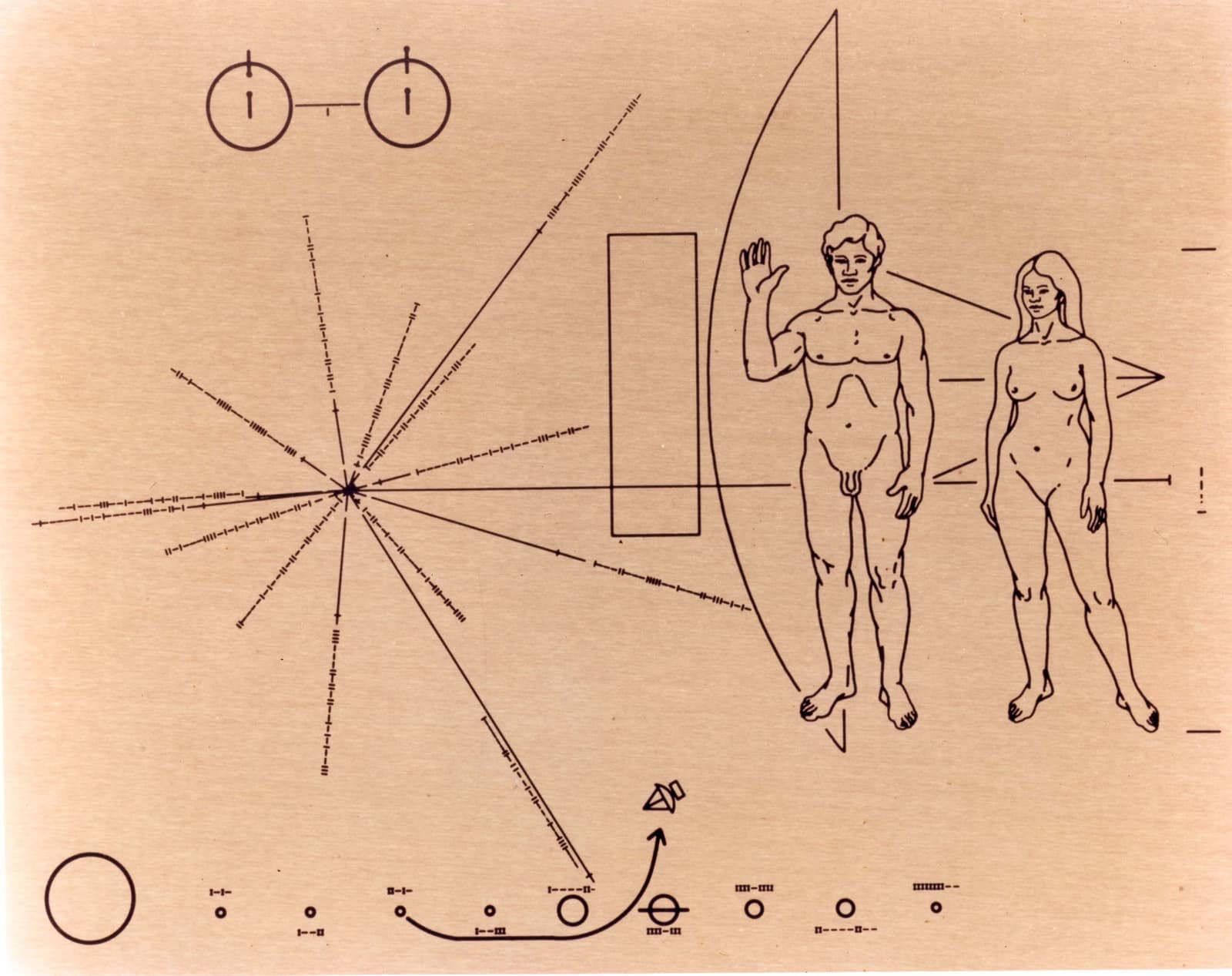
1972 to 1973
The Pioneer plaque
Pioneer 10 · Pioneer 11 · Americas
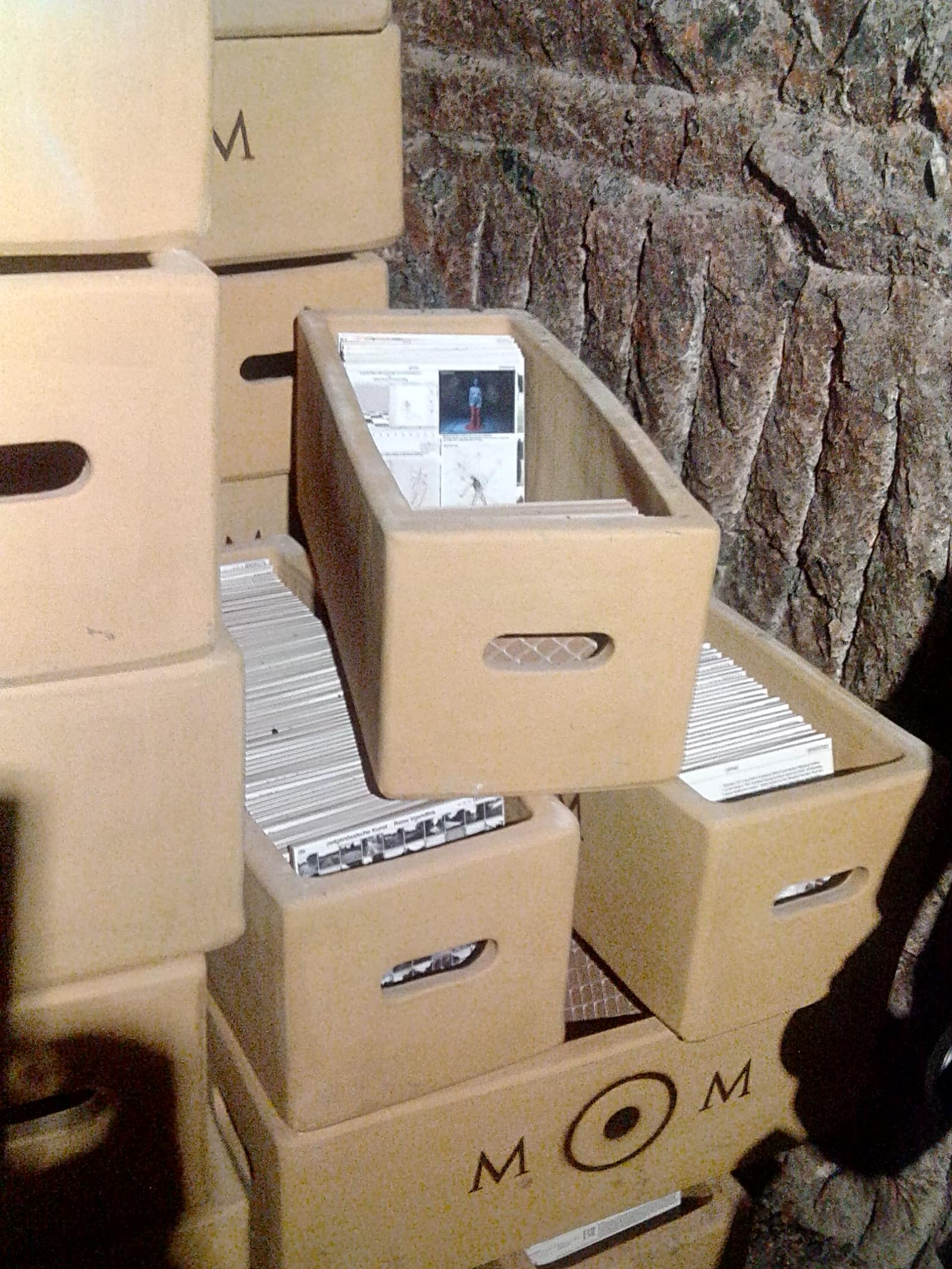
after 2012
Memory of Mankind
Hallstatt, Upper Austria, Austria · Europe
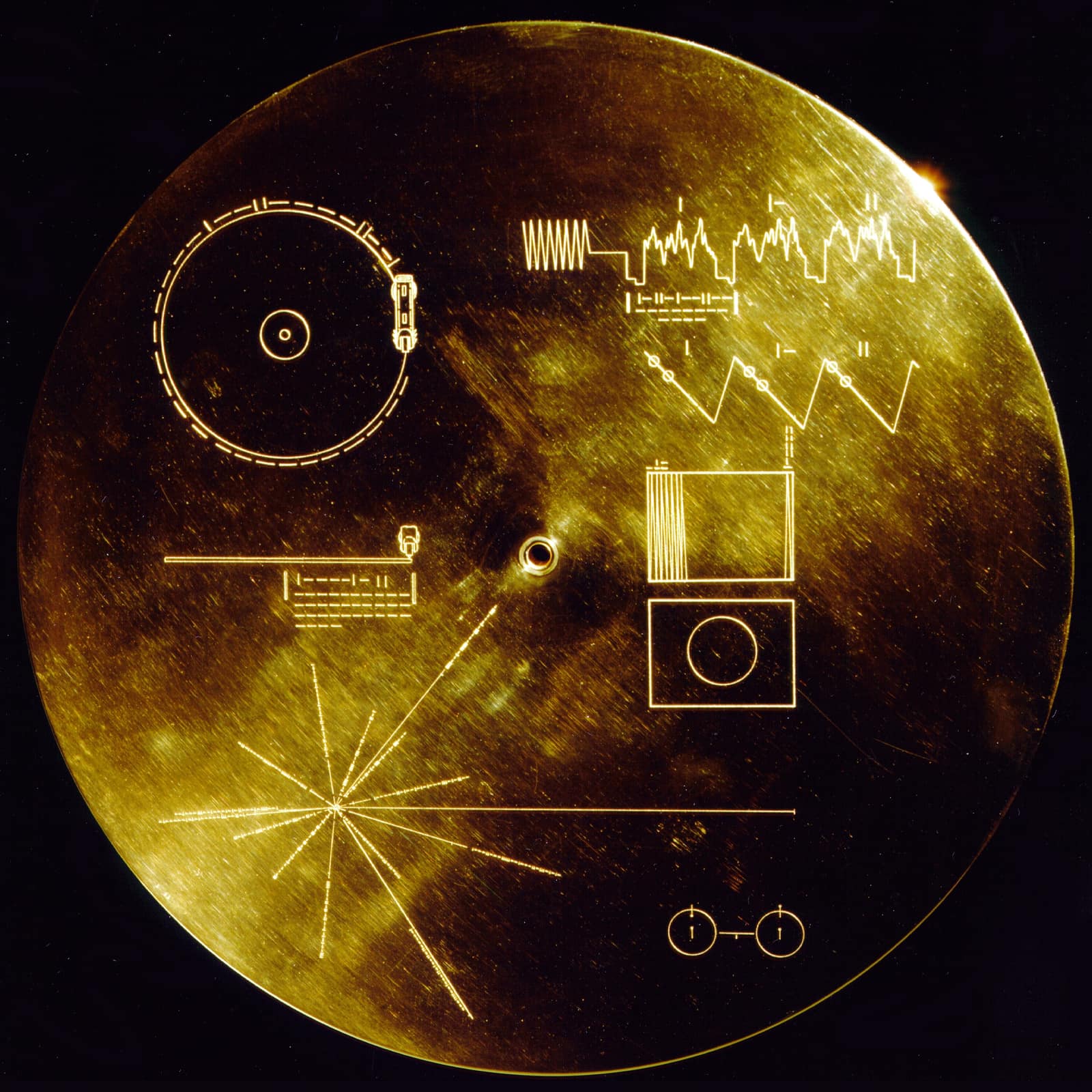
1977
The Golden Record
Voyager 1 · Voyager 2 · Americas