The qanats of Persia: water carried through the dark
- Dated
- Place
- Gonabad, Razavi Khorasan Province, Iran · Villages and towns of the Iranian plateau, and their qanat diggers (muqanni)
- Coordinates
- 34° 17′ N · 58° 39′ E (approximate)
- Remains
- Intact
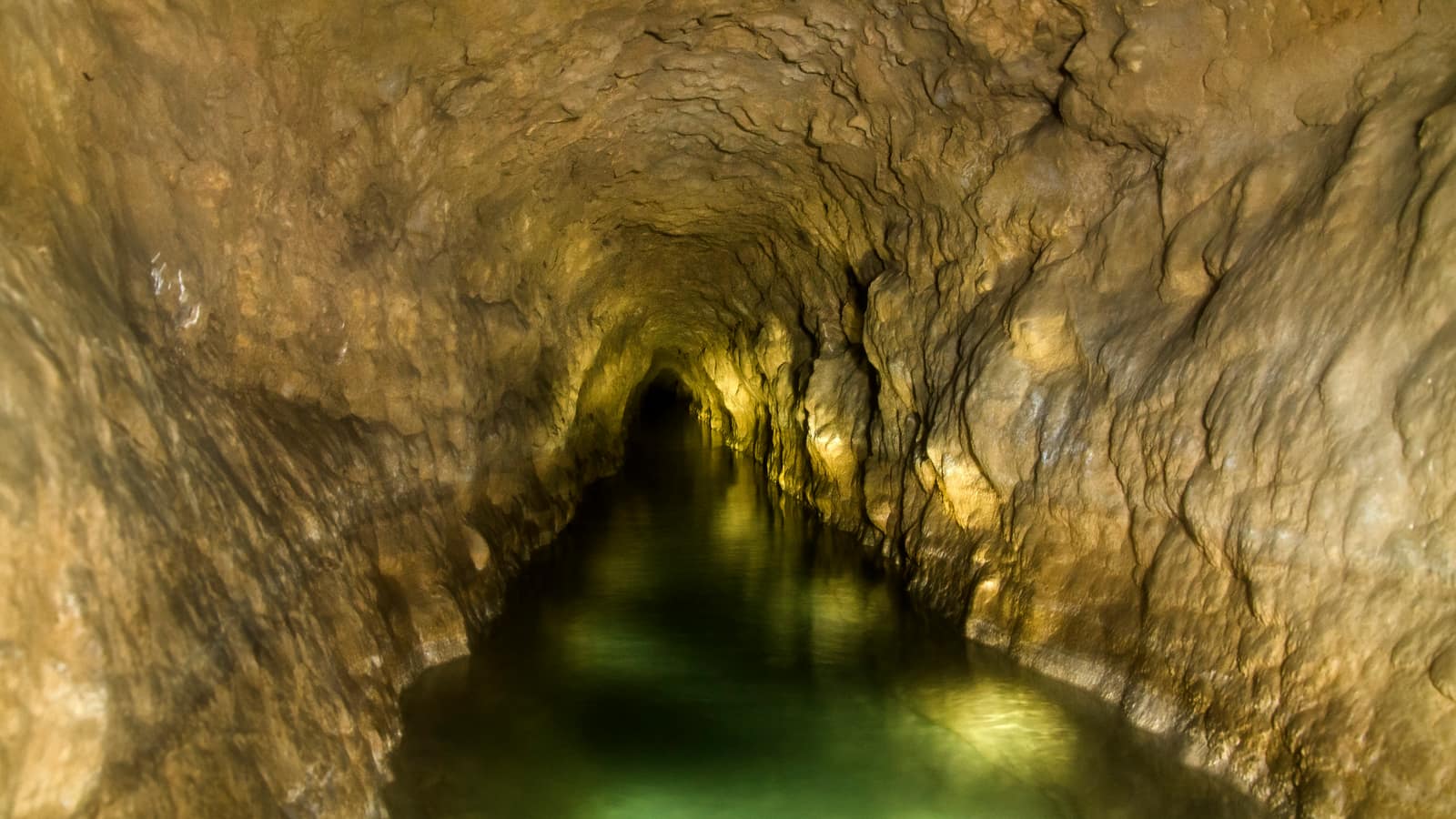
Tavasoli mohsen, CC BY-SA 4.0, via Wikimedia CommonsCC-BY-SA-4.0Original record
Data saver is on. Images load only when you ask. You can change this in Settings at any time.
From the archivist
The man went down the shaft with a lamp. At the bottom the air was close and damp, and water ran around his ankles. He cut the earth with a short pick, filled a bucket, and someone up at the top hauled it into the light. Then he moved a few steps further on, in the dark, towards a village he could not see.
That was the work of the muqanni, the qanat digger, in the dry country of Iran. He knew where water slept under the slope of a fan of gravel, how deep the mother well must go, how gently the tunnel had to fall so that the water would walk and not run. It was not learned from books. It was handed down, from the older men to the younger, generation after generation.
Above ground, all anyone saw was a line of craters crossing the desert, each one a well where a man had gone down. At the end of the line the water came out into the sun, and there was a garden, a mill, a bathhouse, a village that could stay.
Some of these tunnels have carried water for centuries. Year after year, someone has gone down again to clear what the earth let fall.
Established
- A qanat is an almost horizontal tunnel that collects groundwater from an alluvial fan, where a mother well is sunk to the level of the aquifer, and carries it by gravity, often over many kilometres, to the fields; shafts sunk at intervals let out the spoil and let in air, and from above they look like a line of craters (UNESCO).
- The Persian Qanat, eleven qanats still carrying water, was inscribed on the World Heritage List in 2016; the property includes rest areas for the qanat workers, reservoirs, bathhouses and watermills (UNESCO).
- The levels, gradient and length of a qanat were calculated by traditional methods, handed down over centuries among experienced qanat workers; qanat councils still share the water among the shareholders (UNESCO).
- The moqannis, or qanat diggers, were commissioned by communities, governors and landlords, guided the digging and maintained the structures; in Khorasan they sat on qanat councils, and for major repairs hundreds of men from the surrounding villages came to help (Salek 2019).
- Qanats had spread across the Iranian plateau by the first millennium BCE; the historian Polybius, in the second century BCE, records Persian rulers granting land for five generations to those who brought water to dry districts by underground channels (Salek 2019).
- The muqanni worked with water running around him, in poor air and under a constant risk of collapse, with a broad pick, a shovel and a small oil lamp (English 1968).
- Mother wells are often close to 100 metres deep; the deepest recorded reaches about 300 metres (World History Encyclopedia).
Interpretation
When and where the qanat was first invented is debated: some authors place its beginnings on the central plateau as early as the third millennium BCE, others in the early first millennium BCE, and the ages claimed for particular qanats, including the Qasabeh qanat of Gonabad, are hard to test. English (1968) held that the professional diggers of Iran descended from the slaves and captives once set to this work by Achaemenid and Sasanian kings; that lineage is a hypothesis rather than a record. Spellings of the diggers' title vary: muqanni, moqanni.
Looking ahead
A century from now the water may still be running in these tunnels, if the pumps around them have not drunk it first. What are we digging today that our great-grandchildren will still have to keep clear?
Sources (4)
- UNESCO World Heritage Centre. The Persian Qanat, property 1506, inscribed 2016, criteria (iii) and (iv): description and statement of outstanding universal value (consulted through the Internet Archive copy of 2024). · whc.unesco.org
- Salek, A. Rediscovering community participation in Persian qanats: an actor-network framework. European Journal of Creative Practices in Cities and Landscapes 2 (1), 2019, p. 153-172 (peer reviewed), doi 10.6092/issn.2612-0496/8674. · cpcl.unibo.it
- English, P. W. The origin and spread of qanats in the Old World. Proceedings of the American Philosophical Society 112 (3), 1968, p. 170-181.
- Vaughan, C. S. Qanat. World History Encyclopedia, 8 February 2021. · www.worldhistory.org
Related fragments
c. 1250 BCE
The absence register of Deir el-Medina
Deir el-Medina, west bank of Luxor, Egypt · Africa
before 4600 BCE
The eel traps of Budj Bim
Tae Rak (Lake Condah), Kurtonitj and Tyrendarra, south-western Victoria, Australia · Oceania
1420 to 1532
Machu Picchu, the mountain estate of an Inca ruler
Historic Sanctuary of Machu Picchu, Urubamba province, Cusco region, Peru · Americas