The Clarke Plato
- Dated
- Place
- Istanbul, Türkiye · Byzantine (Eastern Roman) scholars of Constantinople, copying the works of the Athenian philosopher Plato
- Coordinates
- 41° 01′ N · 28° 59′ E (approximate)
- Remains
- Intact
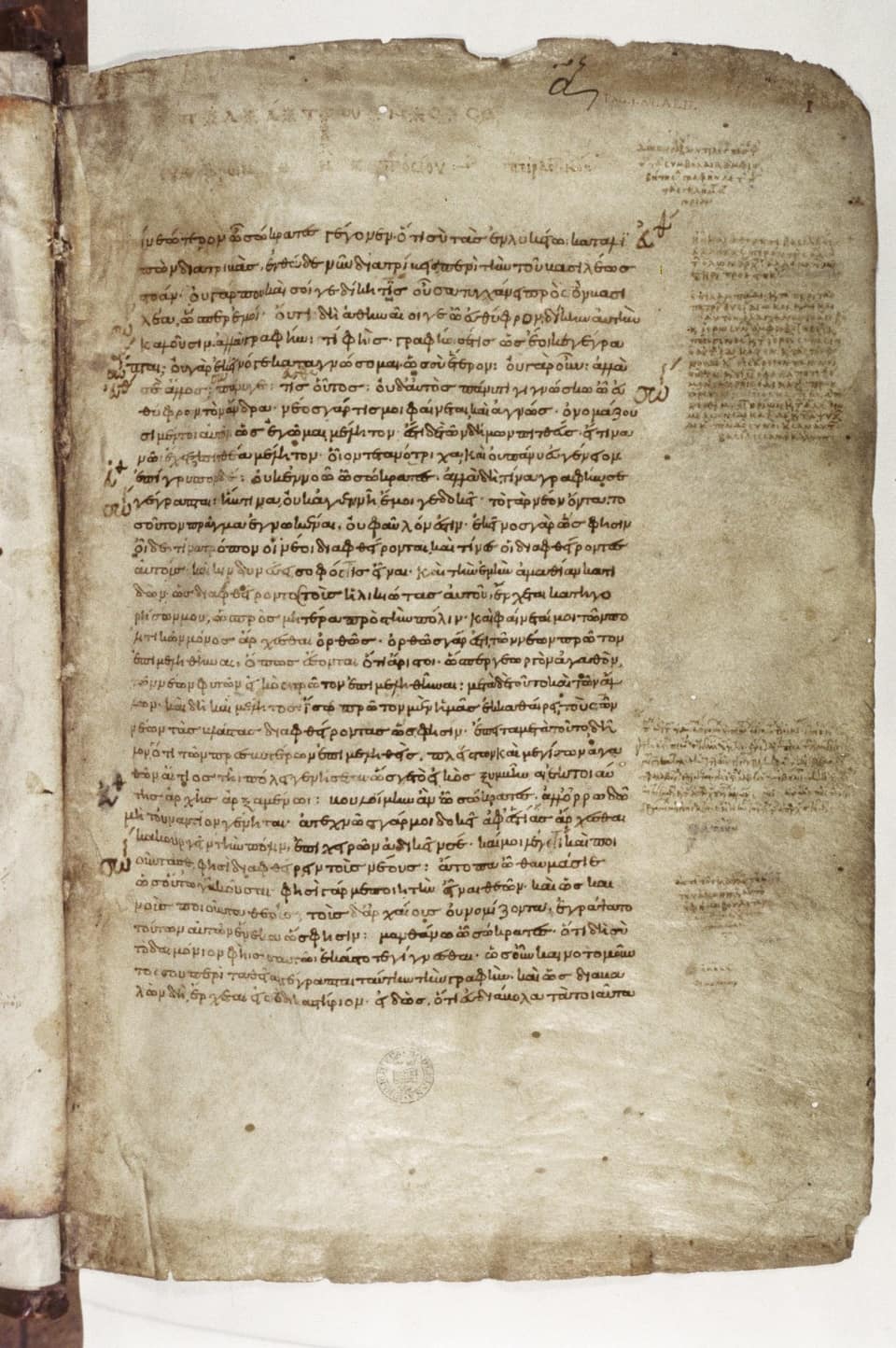

Bodleian Library, University of Oxford, MS. E. D. Clarke 39, public domain, via Wikimedia CommonsPDMOriginal record
Data saver is on. Images load only when you ask. You can change this in Settings at any time.
From the archivist
Some ideas crossed more than twelve centuries on a single thread. This is one of the knots in that thread.
Plato wrote in Athens in the fourth century before our era. His dialogues were copied and recopied, on papyrus, then on parchment, and most of those copies rotted or burned. In Constantinople, the great city on the strait that we now call Istanbul, the Greek speaking empire that still called itself Roman kept its libraries. There, in November 895, a scribe named John finished a book for a scholar named Arethas.
He wrote in the small, quick letters that had just replaced the old capitals, and he wrote well. Arethas paid twenty one gold coins and filled the margins with his own notes. Inside are Socrates on trial, Socrates in prison, Socrates asking what love is.
The book went on to a monastery on the island of Patmos, where an English traveller found it in 1801. For many of these dialogues, every modern edition goes back to its pages.
Established
- The manuscript was completed in November 895 by a scribe named John the Calligrapher for Arethas, later archbishop of Caesarea in Cappadocia; a note records its price, 21 gold coins for the copying and the parchment (Bodleian Library).
- It contains the first six of the nine tetralogies in which Plato's dialogues were arranged in antiquity, 24 works from the Euthyphro to the Meno, with notes added in the margins (Pinakes).
- For many of these dialogues it is the oldest surviving manuscript, apart from fragments on papyrus (Bodleian Library).
- Constantinople, founded on the site of ancient Byzantium and today Istanbul, was then the capital of the Eastern Roman Empire, which historians call Byzantine; its scholars copied ancient Greek texts from the older capital letters into the new minuscule script.
- Edward Daniel Clarke acquired the manuscript on Patmos in 1801; it is now in the Bodleian Library, Oxford, as MS. E. D. Clarke 39 (Bodleian Library).
Interpretation
That the copy was made in Constantinople is the accepted view, drawn from what is known of Arethas and his circle rather than from an explicit statement in the book. It is thought to have been the first volume of a two volume Plato whose companion is lost. How much of Plato survived only because of such ninth century copies, rather than through other lines of transmission, is still studied by editors of the text.
In 10,000 years
In 10,000 years, which of our thoughts will still be copied by hand because someone could not bear to lose them?
Sources (3)
- Bodleian Library, University of Oxford. MS. E. D. Clarke 39, Medieval Manuscripts in Oxford Libraries catalogue. · medieval.bodleian.ox.ac.uk
- Institut de recherche et d'histoire des textes (CNRS). Pinakes, notice Oxford, Bodleian Library, Clarke 39. · pinakes.irht.cnrs.fr
- Allen, T. W. (ed.). Codex Oxoniensis Clarkianus 39 phototypice editus. Leiden, A. W. Sijthoff, 1898-1899.
Related fragments
c. 1455 CE
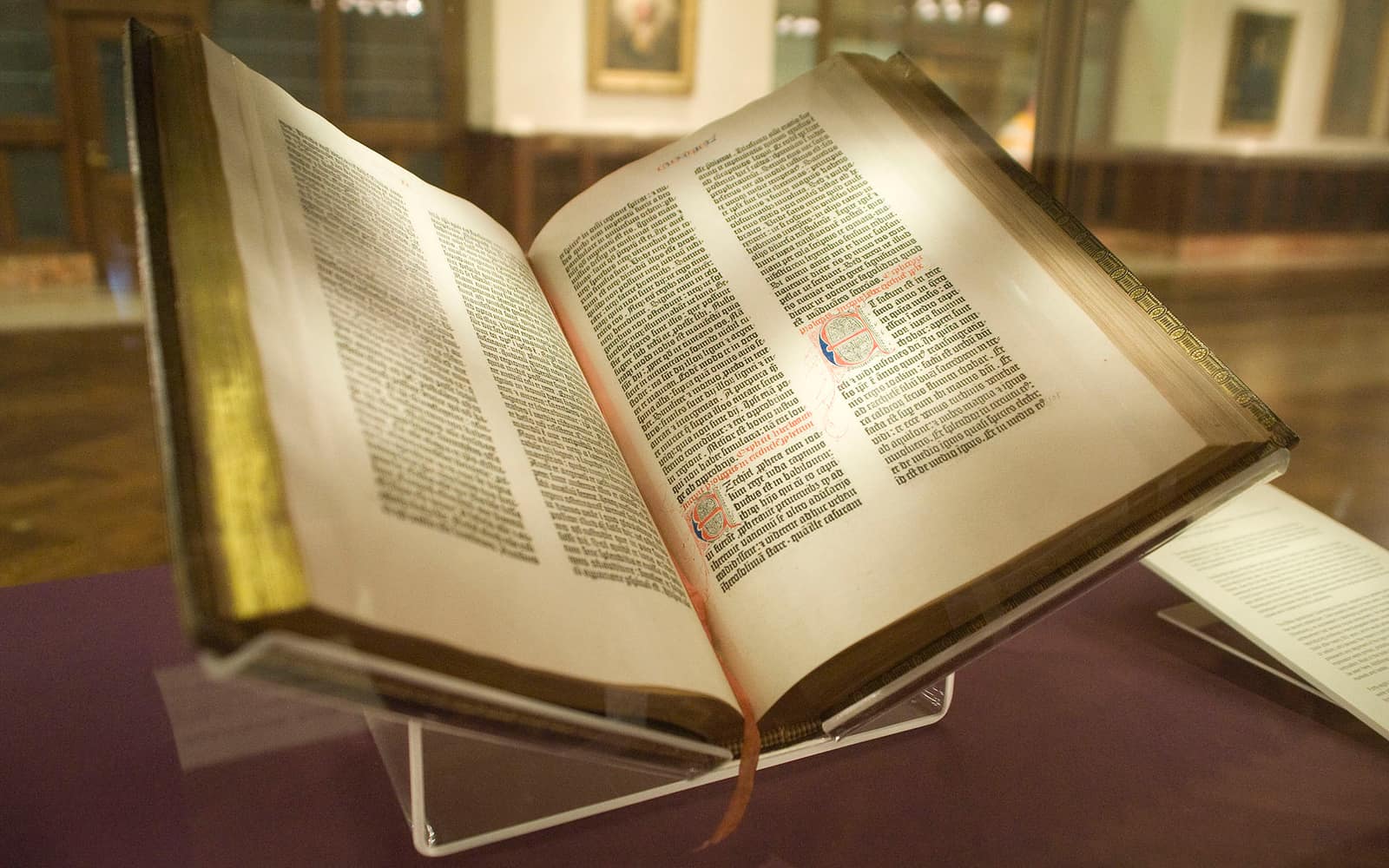
The Gutenberg Bible
Mainz, Rhineland-Palatinate, Germany · Europe
868 CE
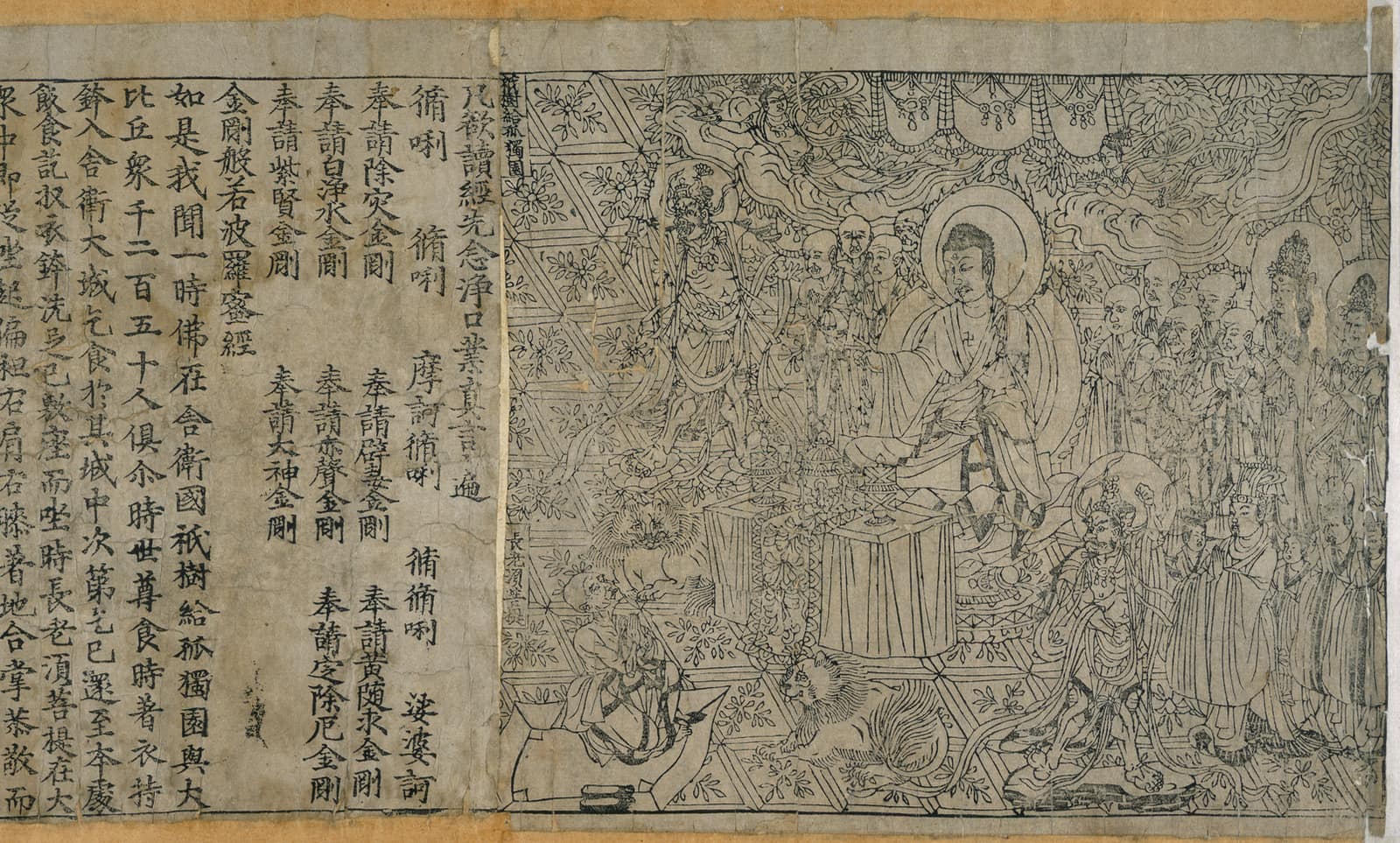
The Diamond Sutra of 868
Mogao Caves, Dunhuang, Gansu, China · Asia
after 1200 CE
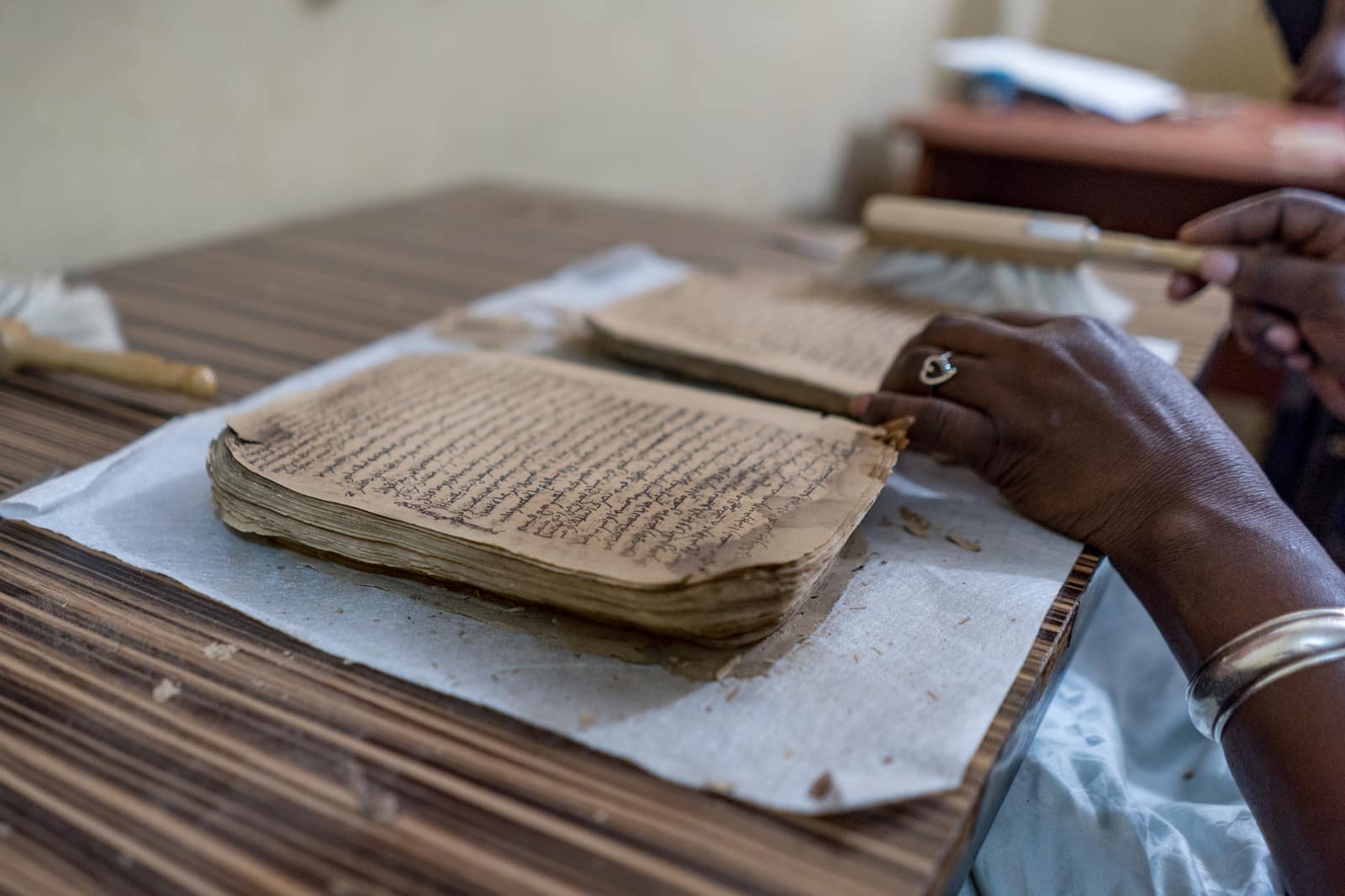
The Timbuktu manuscripts
Timbuktu, Mali · Africa