Deep Blue and Kasparov
- Dated
- Place
- Equitable Center, 787 Seventh Avenue, New York, United States · IBM Research and the world of competitive chess
- Coordinates
- 40° 46′ N · 73° 59′ W (approximate)
- Remains
- Fragmentary
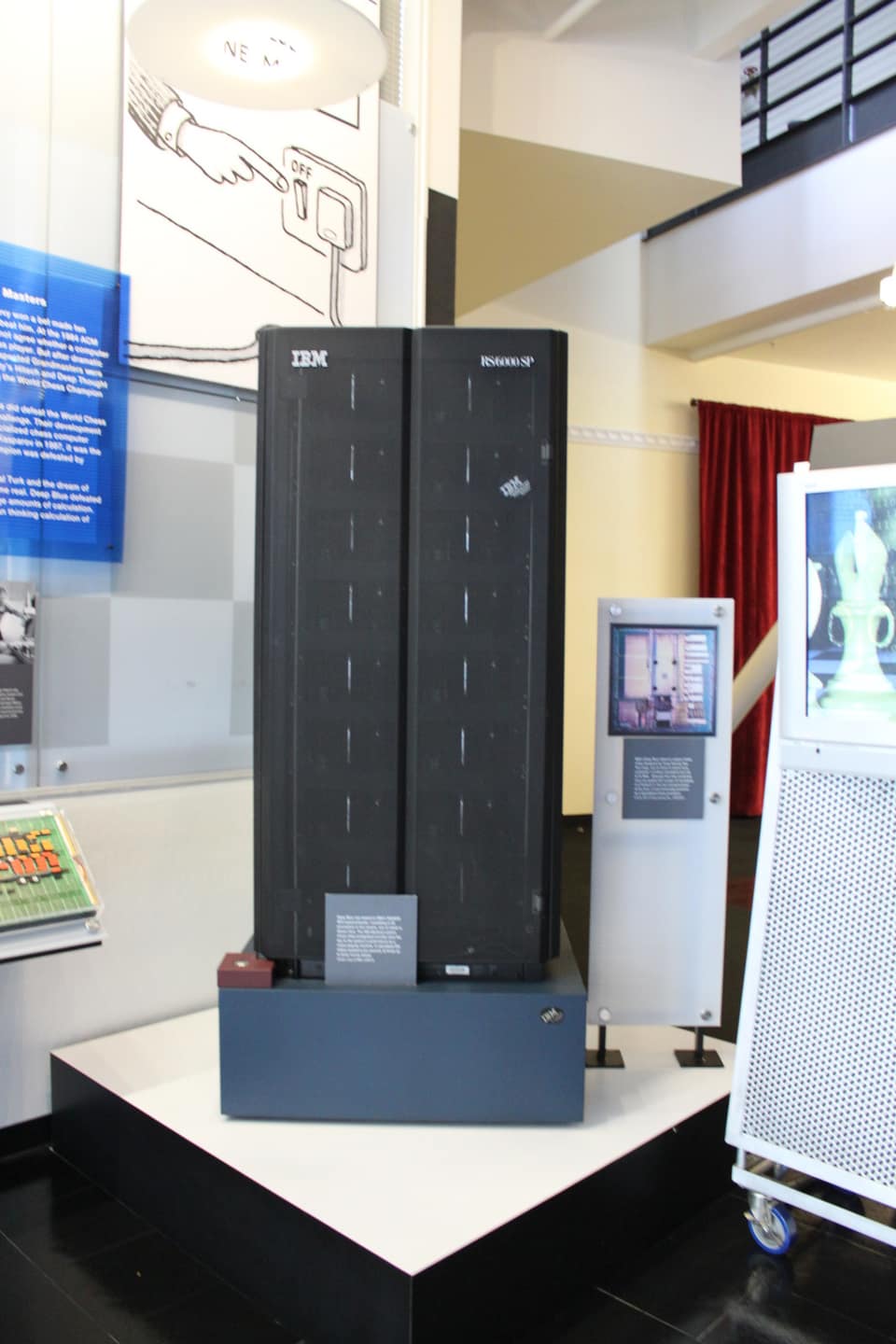
.jpg)
Anton Chiang from Cupertino, CA, USA, CC BY 2.0, via Wikimedia CommonsCC-BY-2.0Original record
Data saver is on. Images load only when you ask. You can change this in Settings at any time.
From the archivist
For centuries this civilization held chess to be a mirror of the mind. Sixty-four squares, thirty-two pieces, rules a child can learn and positions no one could count. To play it well was to be thought wise.
In May 1997, in a room high above a New York avenue, the world champion sat down across from a screen and an operator who moved the pieces for his opponent. The opponent was a machine built by a company better known for business computers: two black cabinets humming in another room, examining some two hundred million positions every second. The year before, the champion had beaten it. This time, over six games, the machine won two, lost one and drew three.
On the last afternoon he resigned after nineteen moves and walked away from the board. Newspapers asked whether the thinking machine had arrived. Its builders answered more quietly that it had searched very fast and very well, and could do nothing else.
One of the cabinets now stands in a museum, switched off.
Established
- In February 1996 in Philadelphia, Deep Blue won the first game against the world champion Garry Kasparov, but Kasparov won the match 4 to 2 (IBM).
- In a rematch at the Equitable Center in New York in May 1997, Deep Blue won by 3.5 to 2.5, the first time a computer defeated a reigning world champion in a match under standard tournament time controls (IBM).
- The final game was played on 11 May 1997; over the match Deep Blue won two games, Kasparov one, and three were drawn (Computer History Museum).
- The 1997 system was a 30 node IBM RS/6000 SP computer with 480 special purpose chess chips, capable of examining about 200 million positions per second (Campbell, Hoane and Hsu 2002; IBM).
- The machine was built by an IBM Research team including Feng-hsiung Hsu, Murray Campbell and Joseph Hoane, with the grandmaster Joel Benjamin as adviser (Computer History Museum).
Interpretation
Whether Deep Blue showed intelligence or only fast, specialised search was argued at the time and still is; its makers described it as a massively parallel search system built for one game. Kasparov questioned the fairness of the conditions and asked for a rematch that IBM declined.
In 10,000 years
In 10,000 years, will anyone remember that people once feared losing to a machine at a game?
Sources (3)
- IBM. Deep Blue, IBM History. · www.ibm.com
- Computer History Museum. IBM Deep Blue team (Joe Hoane, Joel Benjamin, Jerry Brody, Feng-hsiung Hsu, C. J. Tan and Murray Campbell), Revolution: artificial intelligence and robotics. · www.computerhistory.org
- Campbell, M., Hoane, A. J., Hsu, F. Deep Blue. Artificial Intelligence 134 (1-2), 2002, p. 57-83. · doi.org
Related fragments
1969 to 1990
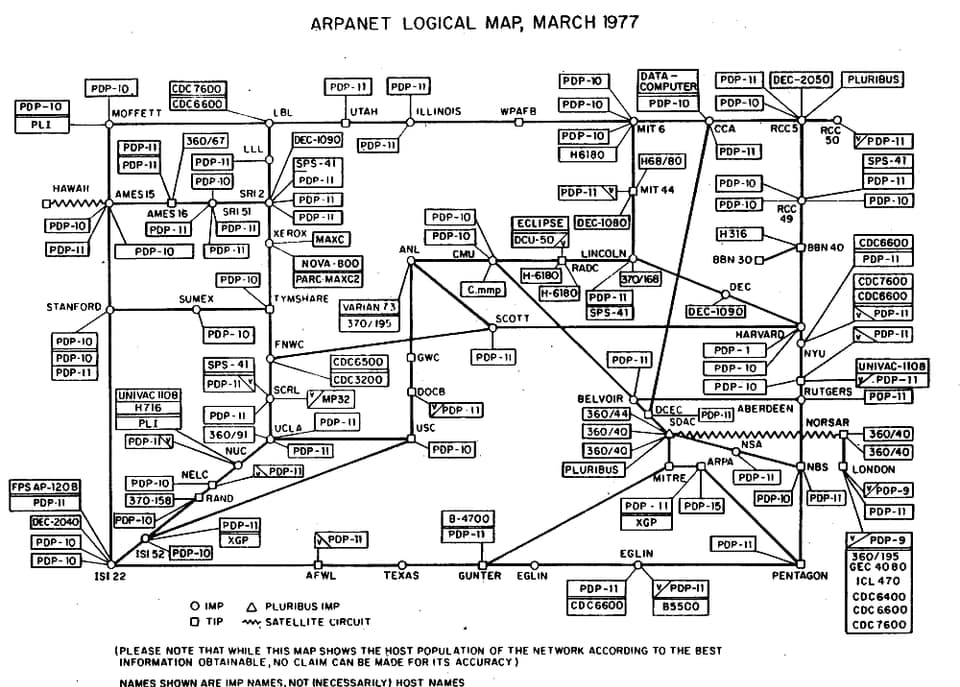
A map of a new network: ARPANET
Los Angeles, California, United States · Americas
205 to 60 BCE
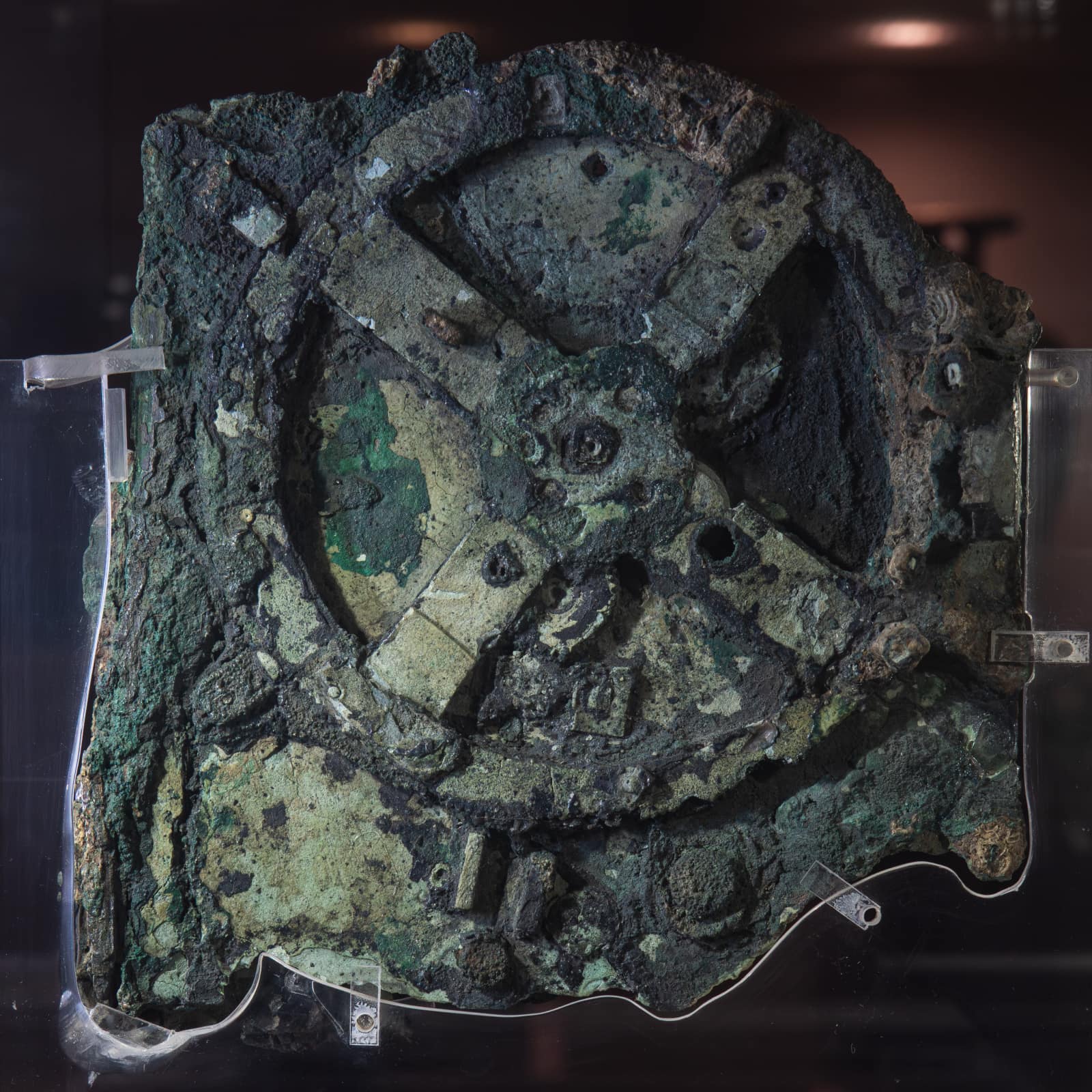
The Antikythera mechanism
Antikythera, Greece (find spot); National Archaeological Museum, Athens · Europe