Caral: thirty-two flutes laid away in the sand
- Dated
- Place
- Sacred City of Caral, Supe Valley, Barranca Province, Peru · The Caral civilization (Late Archaic, Norte Chico) of the Supe Valley, Peru
- Coordinates
- 10° 54′ S · 77° 31′ W (approximate)
- Remains
- Fragmentary
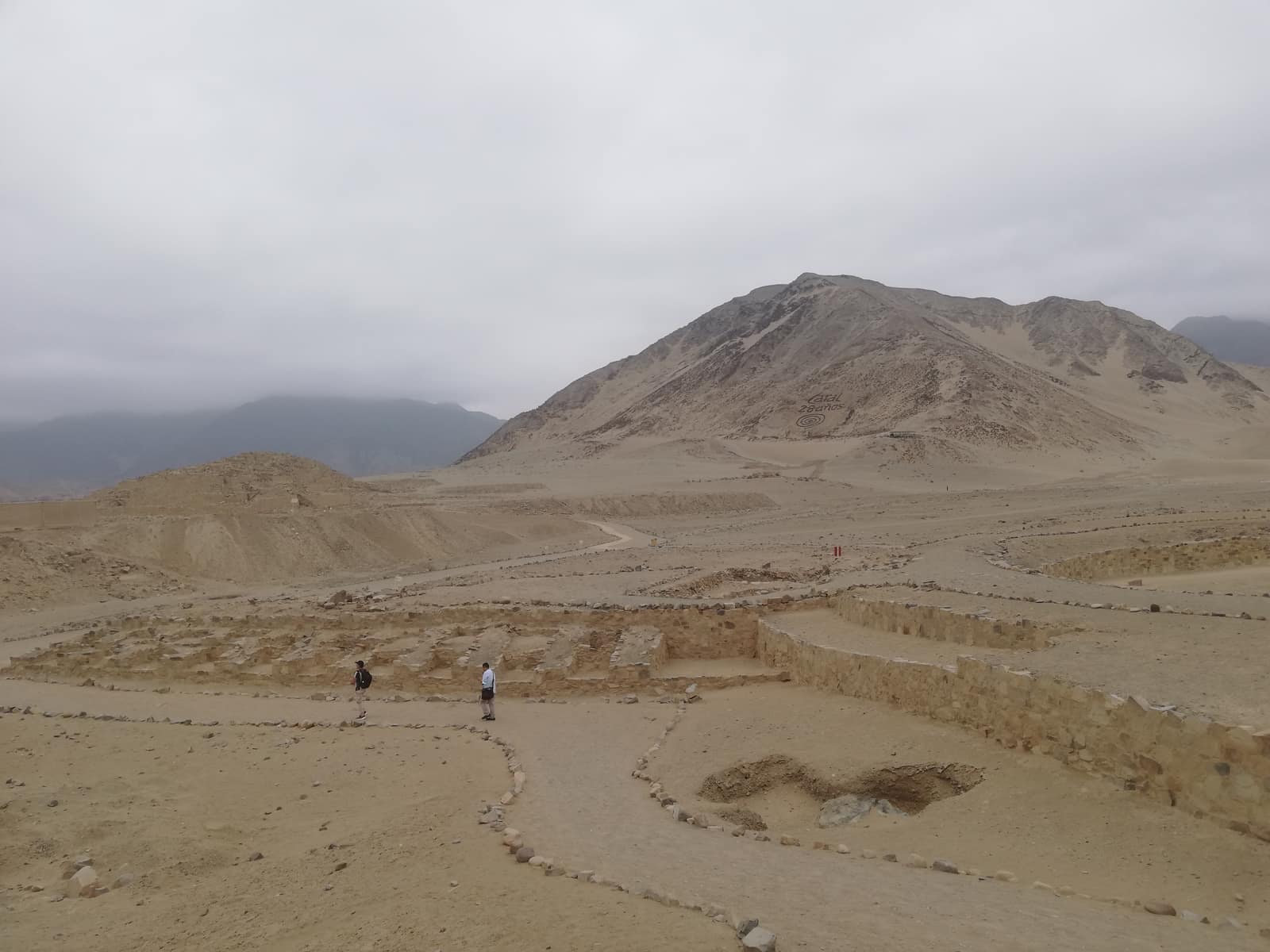
Sheyla F. Crovetto, CC BY-SA 4.0, via Wikimedia CommonsCC-BY-SA-4.0Original record
Data saver is on. Images load only when you ask. You can change this in Settings at any time.
From the archivist
Someone covered them with sand. Thirty-two flutes cut from the wing bones of pelicans, laid on a dressed stone at the edge of a sunken round plaza, in a small space marked off with stones, river cobbles and a little faceless figure modelled in clay.
They had been put down in order. On top lay the flutes carved with monkeys and with human faces, beneath them the ones with birds, and at the bottom the plain ones, as one stacks things one means to find again.
Each had been made with patience. The maker cut the bone to the length that gave the wanted note, opened a mouth-hole near the middle, and pressed a small wedge of wet clay inside to shape the breath. Two of the flutes, set side by side, complete a single carved face. They were buried together, still touching.
The people who played them lived in a city of stone platforms in the Supe Valley, among the oldest in the Americas, where no defensive wall has been found. We do not know their songs, nor what was celebrated in that plaza.
What reaches us is the gesture of the burial: music put away carefully, as if someone meant to come back for it.
Established
- Radiocarbon dates show that monumental architecture, urban settlement and irrigation farming were under way at Caral by about 2627 cal BCE and continued to about 1977 cal BCE; the central zone of monumental and residential architecture covers 65 hectares, 23 km from the Pacific coast (Shady Solis, Haas and Creamer 2001).
- Caral is one of 18 large preceramic sites in the Supe Valley; it had no pottery (Shady Solis, Haas and Creamer 2001).
- A set of 32 transverse flutes was found in the south-west corner of the amphitheatre, a sunken circular plaza, covered with sand and laid on a dressed stone, in a space marked off with dressed stones, river cobbles and a faceless human figure modelled in clay (Shady Solís et al. 2000).
- The flutes were laid down in order: first those incised with monkeys and human faces, then those with birds, and last the plain ones (Shady Solís et al. 2000).
- They are made from the wing bones of pelicans (Pelecanus thagus), 15 humeri, 9 ulnas and 8 radii, from at least eight young, well-fed birds; each has a mouth-hole near its middle and, inside, a small wedge of unfired clay pressed against the bone (Shady Solís et al. 2000).
- Two of the flutes, placed side by side, complete one face in profile caught in a kind of net; they were buried together in that position (Shady Solís et al. 2000).
- In 2000, acoustic researchers in Lima measured the sound spectra of fifteen of the original flutes (Shady Solís et al. 2000).
- According to the work of Ruth Shady Solís, Caral had no defensive walls, and no remains of weapons were found in the excavations (BBC News Mundo 2025).
Interpretation
The age of the flutes rests on that of the amphitheatre complex, which the study that described them places at about 2500 BCE; the date of the deposit itself is less certain. Several popular accounts say the flutes are of condor and pelican bone; the published study names only pelican. The reading of Caral as a peaceful society, without war, rests on the absence of fortifications, weapons and signs of violence in the areas excavated so far; it is an argument from absence, which further excavation could change. Calling Caral the first city of the Americas is also a matter of debate: it is one of more than twenty large early sites in four neighbouring valleys of the Norte Chico, where radiocarbon dates place the rise of this whole complex between 3000 and 1800 cal BCE (Haas, Creamer and Ruiz 2004).
Looking ahead
If someone found our instruments buried four thousand years from now, would they guess which songs we played on them, or only that we put them away with care?
Sources (5)
- Shady Solis, R., Haas, J., Creamer, W. Dating Caral, a preceramic site in the Supe Valley on the central coast of Peru. Science 292 (5517), 2001, p. 723-726. · doi.org
- Shady Solís, R., Prado Ramírez, M., Leyva Arroyo, C., Moreno Ruiz, J., Jiménez Dianderas, C., Llimpe Quintanilla, C. Las flautas de Caral-Supe: aproximaciones al estudio acústico-arqueológico del conjunto de flautas más antiguo de América. Boletín del Museo de Arqueología y Antropología, Universidad Nacional Mayor de San Marcos, 2000 (paper presented at the II Congreso Iberoamericano de Acústica, Madrid, October 2000). · beta.acuedi.org
- Haas, J., Creamer, W., Ruiz, A. Dating the Late Archaic occupation of the Norte Chico region in Peru. Nature 432 (7020), 2004, p. 1020-1023. · doi.org
- Unidad Ejecutora 003, Zona Arqueológica Caral, Ministerio de Cultura del Perú. Institutional presentation and visitor information for the Sacred City of Caral (World Heritage). · www.gob.pe
- BBC News Mundo. Cómo era Peñico, la ciudad desértica recién descubierta en el desierto peruano, y qué se sabe de la antigua civilización caral que la habitó, 2025 (republished by Acento). · acento.com.do
Related fragments
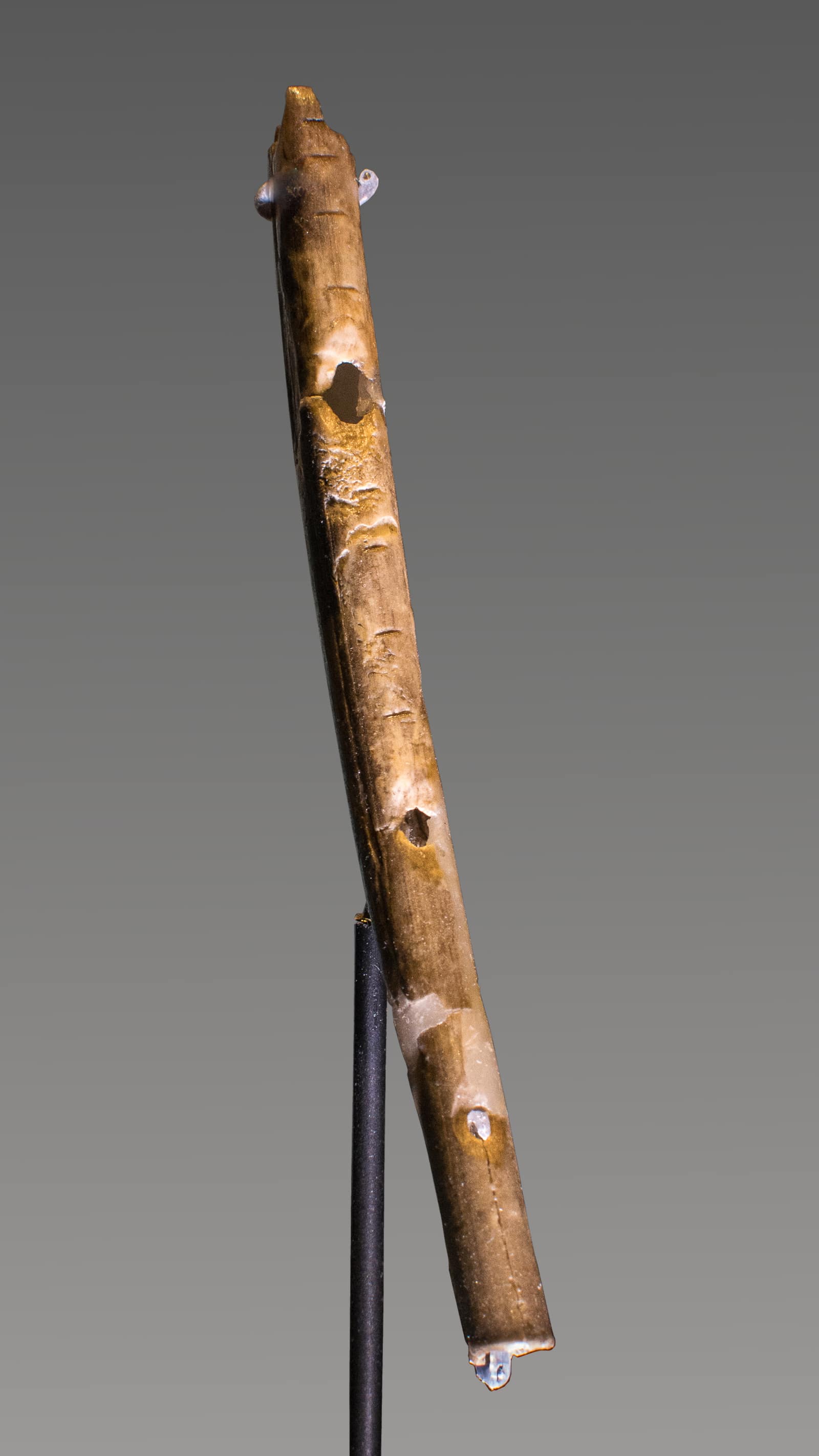
c. 43,000 years ago
The bone flute of Geißenklösterle
Near Blaubeuren, Baden-Württemberg, Germany · Europe
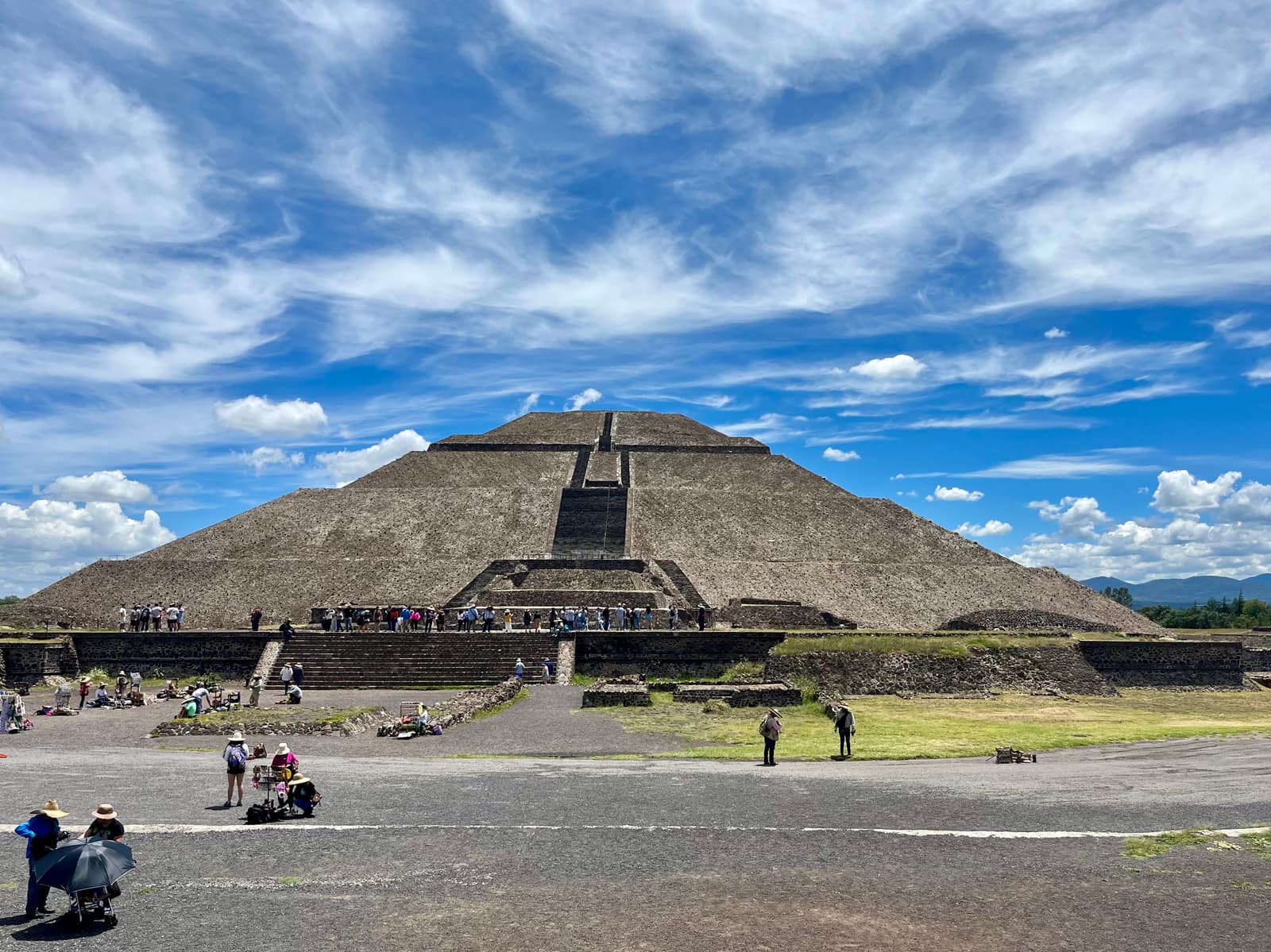
170 to 310 CE
The Pyramid of the Sun, Teotihuacan
San Juan Teotihuacán, State of Mexico, Mexico · Americas
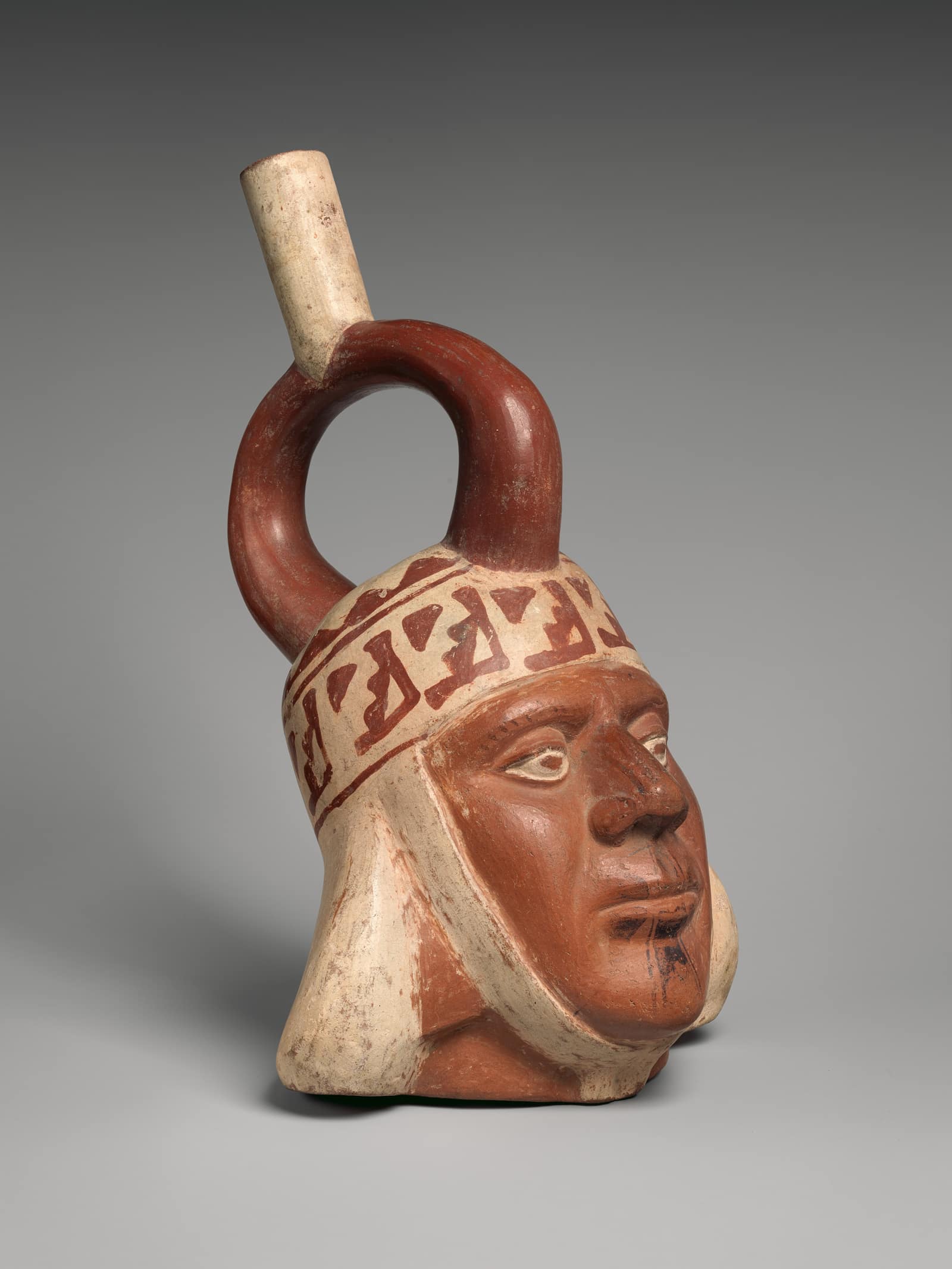
100 to 800 CE
The Moche portrait vessels
North coast of Peru (exact findspot of the vessel shown unknown) · Americas