"Computing Machinery and Intelligence" (Turing, 1950)
- Dated
- Place
- Manchester, United Kingdom · Alan Turing, British mathematician at the University of Manchester
- Coordinates
- 53° 28′ N · 2° 14′ W (approximate)
- Remains
- Intact
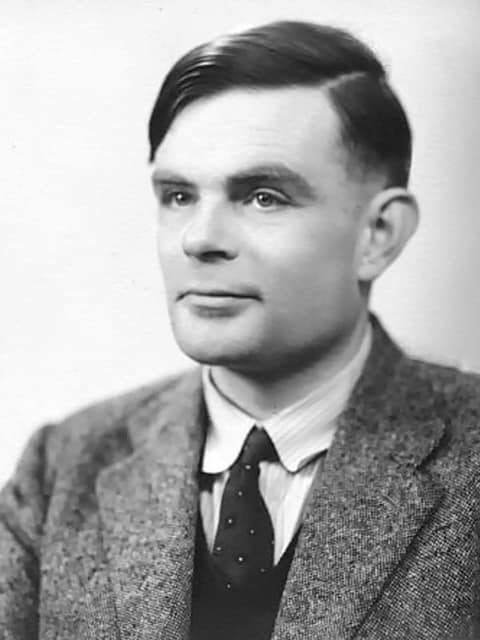
.jpg)
Elliott & Fry, 1951, public domain, via Wikimedia CommonsPDMOriginal record
Data saver is on. Images load only when you ask. You can change this in Settings at any time.
From the archivist
In 1950 a mathematician in Manchester asked a question that this civilization would not be able to put down.
Alan Turing had already imagined, in 1936, a machine that could carry out any calculation that could be written as rules. During the war he had helped break enemy codes. Now he worked beside one of the first computers that kept its program in memory, a room of valves and wires, and he wondered what it might become.
Can machines think? He judged the question too vague and replaced it with a game. A person asks questions in writing; two unseen parties answer; one is a machine. If the questioner cannot tell which, what grounds remain to deny that the machine thinks? He listed the objections one by one and answered each, and he suggested that a machine might be taught, like a child, rather than built already knowing.
He predicted that by the end of the century the game would be played well. Four years after the article, prosecuted for his homosexuality, he was dead. The question he left grew larger than the machines of his time.
Established
- The article appeared in the philosophical journal Mind in October 1950 (vol. 59, no. 236, p. 433-460) and opens with the words: I propose to consider the question, Can machines think? (Turing 1950).
- Turing replaced that question with a test he called the imitation game, in which an interrogator, communicating only in writing, must tell a machine from a human being (Turing 1950).
- He predicted that in about fifty years computers with a storage capacity of about 10 to the power of 9 would play the game so well that an average interrogator would have no more than a 70 per cent chance of making the right identification after five minutes of questioning (Turing 1950).
- He answered nine objections to thinking machines, among them the theological objection, the argument from consciousness and Lady Lovelace's objection that a machine can only do what it is told, and proposed building a child machine that would learn (Turing 1950).
- Turing was then working at the University of Manchester, on the programming of one of the first stored program electronic computers (Hodges 1983).
Interpretation
Whether passing the imitation game would show that a machine thinks, or only that it imitates, has been argued since 1950, notably in John Searle's Chinese room argument of 1980; Turing himself treated the original question as too meaningless to deserve discussion. Whether systems of the early twenty-first century have passed the test depends on how strictly it is run and is still disputed.
In 10,000 years
In 10,000 years, who will be asking whether we could think?
Sources (3)
- Turing, A. M. Computing Machinery and Intelligence. Mind 59 (236), October 1950, p. 433-460. · doi.org
- Oppy, G., Dowe, D. The Turing Test. Stanford Encyclopedia of Philosophy, 2003, revised 2021. · plato.stanford.edu
- Hodges, A. Alan Turing: The Enigma. London, Burnett Books, 1983.
Related fragments
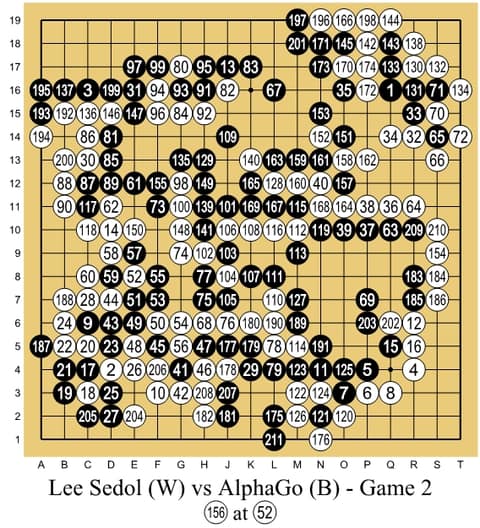
2016
AlphaGo and Lee Sedol
Seoul, Republic of Korea · Asia
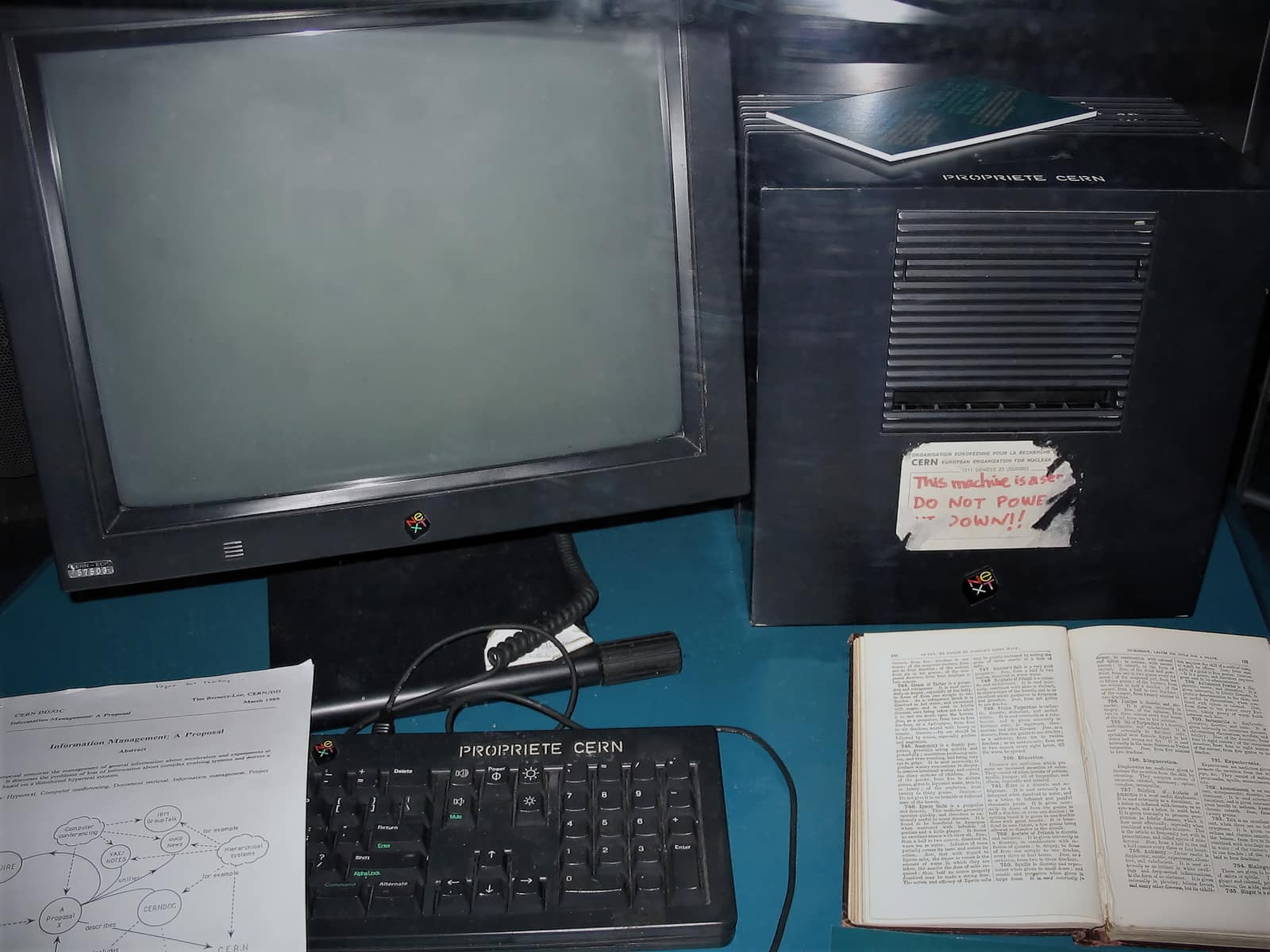
1990 to 1993
The first web server
Meyrin, Canton of Geneva, Switzerland · Europe
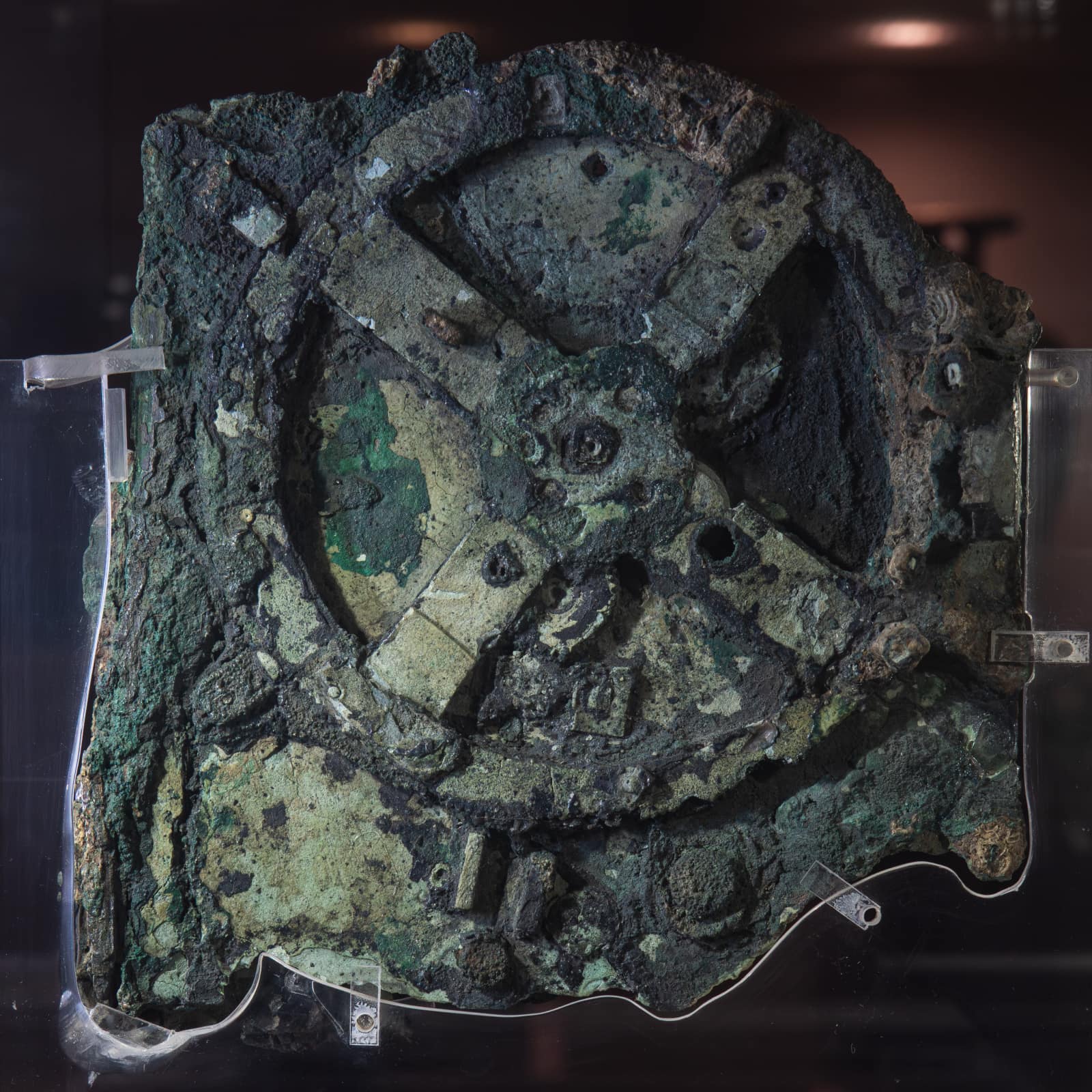
205 to 60 BCE
The Antikythera mechanism
Antikythera, Greece (find spot); National Archaeological Museum, Athens · Europe