The first writing: proto-cuneiform tablets of Uruk
Before these tablets, what people knew and owed lived only in memory and speech; after them, it could be stored outside the body, checked by others and read long after the writer had died.
- Dated
- Place
- Warka, Al-Muthanna Governorate, Iraq · Scribes and administrators of Uruk and southern Mesopotamia, late fourth millennium BCE
- Coordinates
- 31° 19′ N · 45° 38′ E (approximate)
- Remains
- Fragmentary

The Metropolitan Museum of Art, CC0 (Open Access), via Wikimedia CommonsCC0-1.0Original record
Data saver is on. Images load only when you ask. You can change this in Settings at any time.
From the archivist
The first thing this civilization chose to write down was not a poem, a prayer or the name of a king. It was barley.
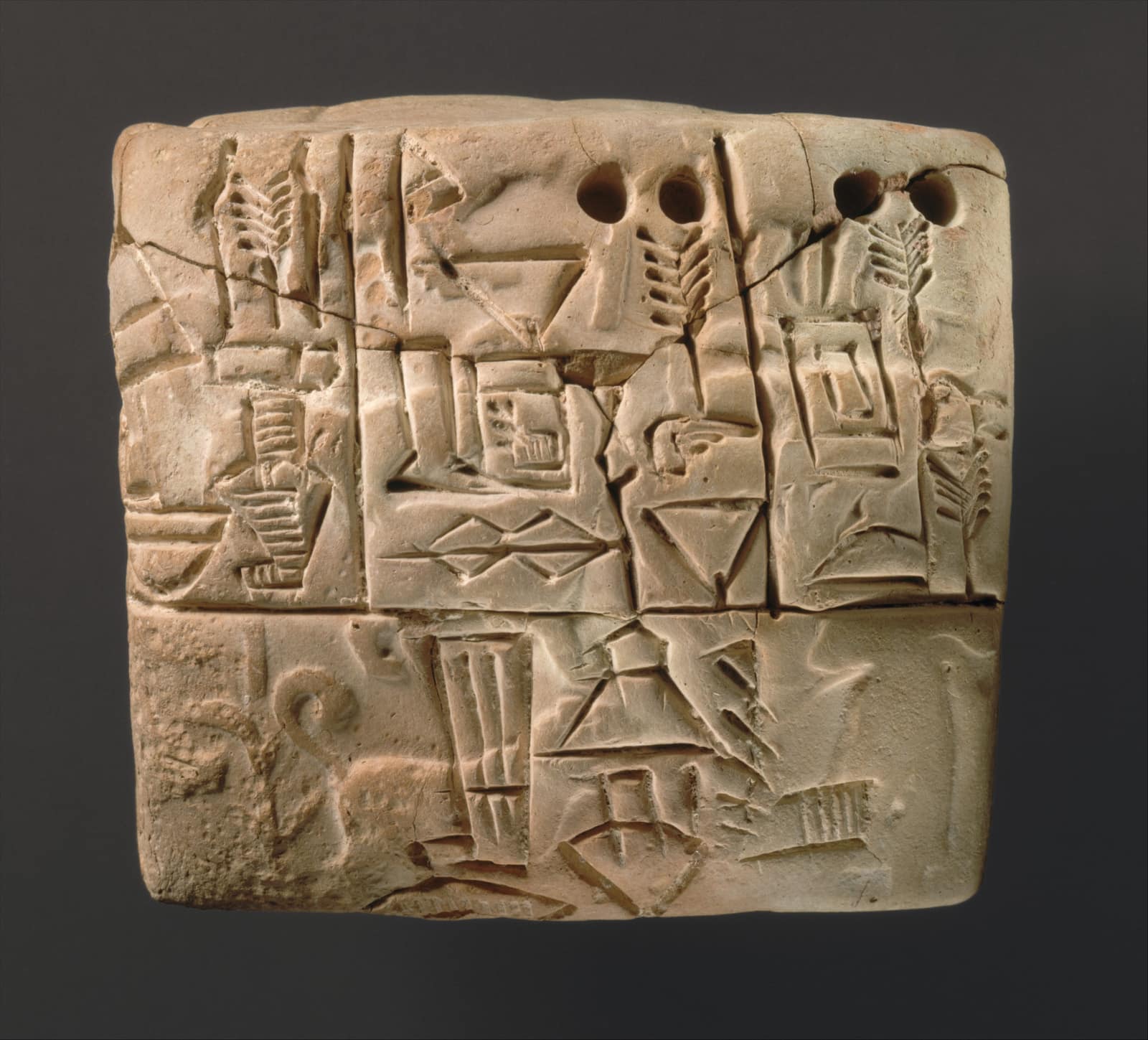
In the temple storehouses of Uruk, officials had to know who had received how much grain, how many sheep had gone out, how much beer was owed to whom. Memory was not enough. So they pressed a reed into a pad of damp clay: round holes and notches for the numbers, small drawings for the things counted, an ear of grain, a jar, a head. Then they rolled a seal across it, a little carved scene of a hunter and his dogs, to show who answered for the account.
The tablets were thrown away when they had served, and used to fill the ground under new buildings. Nobody meant them to last.
Among them were lists of signs that pupils copied again and again, so that the next scribe would write as the last had. With that, knowledge no longer had to die with the one who held it.
Established
- Writing appeared in southern Mesopotamia in the late fourth millennium BCE; the earliest known tablets come from Uruk, where they had been thrown away and used as fill to level a temple area, not found where they were written or archived (Woods 2010).
- About 5,000 proto-cuneiform tablets and fragments were recovered at Uruk by German excavations between 1928 and 1976 (CDLI; Englund 1998).
- About 85 per cent of the early Uruk texts are administrative accounts of grain, livestock, textiles and labour; about 15 per cent are lexical lists of words and signs, used to train scribes (Englund 1998; Woods 2010).
- The tablet pictured, 5.4 by 6 cm, records a distribution of barley and bears the impression of a cylinder seal showing a man, hunting dogs and boars; it dates to about 3100 to 2900 BCE and probably comes from Uruk (Metropolitan Museum of Art).
- Writing was invented independently at least three more times: in Egypt in the late fourth millennium BCE, in China in the second millennium BCE and in Mesoamerica in the mid first millennium BCE (Woods 2010).
Interpretation
How writing grew out of earlier counting tools, such as the clay tokens and sealed envelopes of the Near East, is debated. Whether the earliest tablets already recorded the Sumerian language, or only goods, numbers and names, is also discussed. Egypt and Mesopotamia produced writing at about the same time, and which came first cannot be decided from present evidence; most scholars think each invented its own.
In 10,000 years
In 10,000 years, will anyone still be able to read what we write today, or will our words wait, like these, to be deciphered?
Sources (4)
- Englund, R. K. Texts from the Late Uruk Period. In Attinger, P., Wäfler, M. (eds), Mesopotamien: Späturuk-Zeit und Frühdynastische Zeit. Orbis Biblicus et Orientalis 160/1. Fribourg and Göttingen, 1998, p. 15-233.
- Woods, C., with Teeter, E., Emberling, G. (eds) Visible Language: Inventions of Writing in the Ancient Middle East and Beyond. Oriental Institute Museum Publications 32. Chicago, The Oriental Institute of the University of Chicago, 2010. · isac.uchicago.edu
- Cuneiform Digital Library Initiative. Proto-cuneiform (CDLI Wiki). · cdli.ox.ac.uk
- The Metropolitan Museum of Art. Proto-Cuneiform tablet with seal impressions: administrative account of barley distribution, ca. 3100 to 2900 BCE, accession number 1988.433.1. · www.metmuseum.org
Related fragments
1792 to 1750 BCE
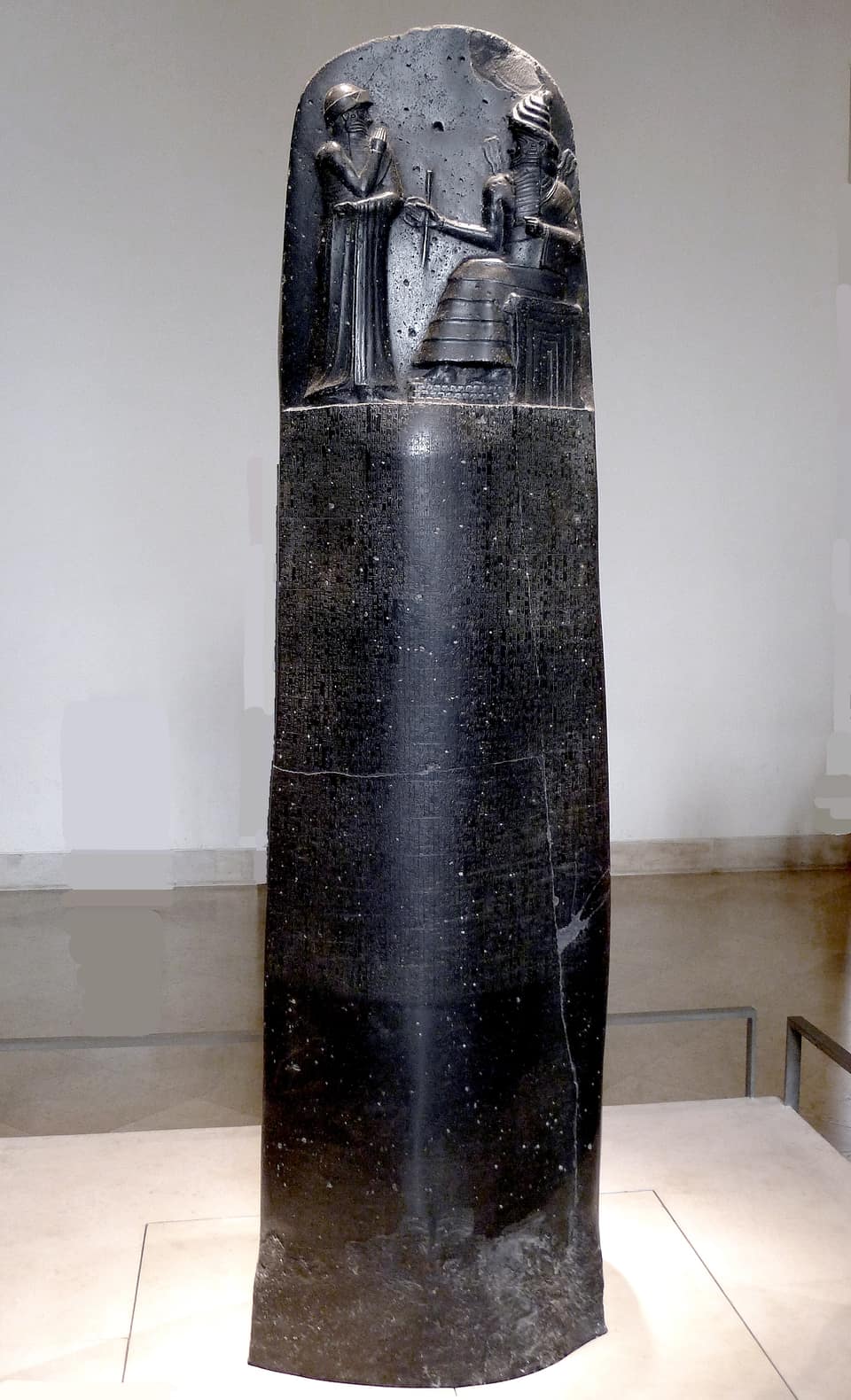
The Code of Hammurabi
Made in present-day Iraq; found at Susa (Shush), Iran; now in the Louvre, Paris · Asia
c. 650 BCE
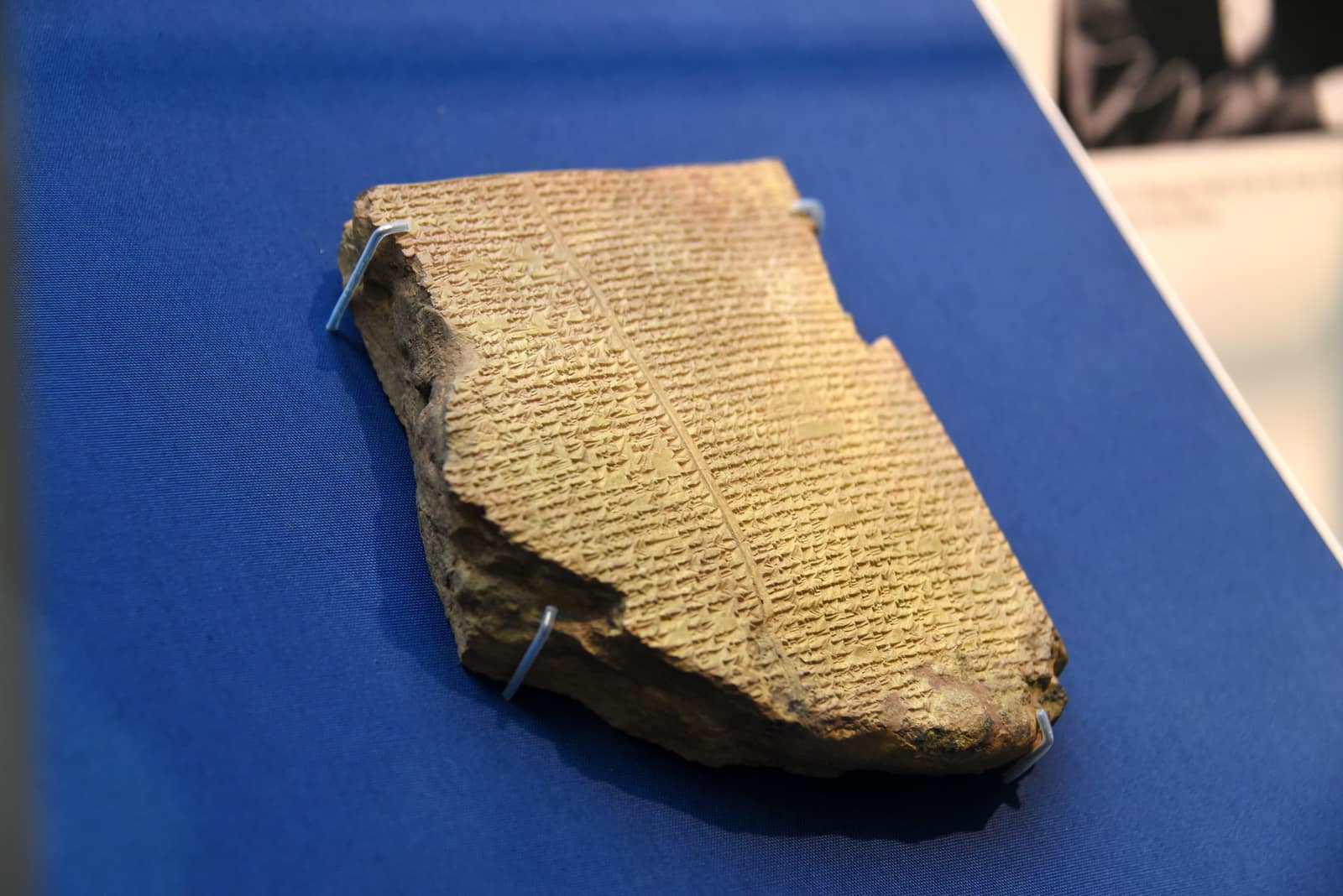
The Epic of Gilgamesh (Flood Tablet)
Mosul, Iraq · Asia
196 BCE
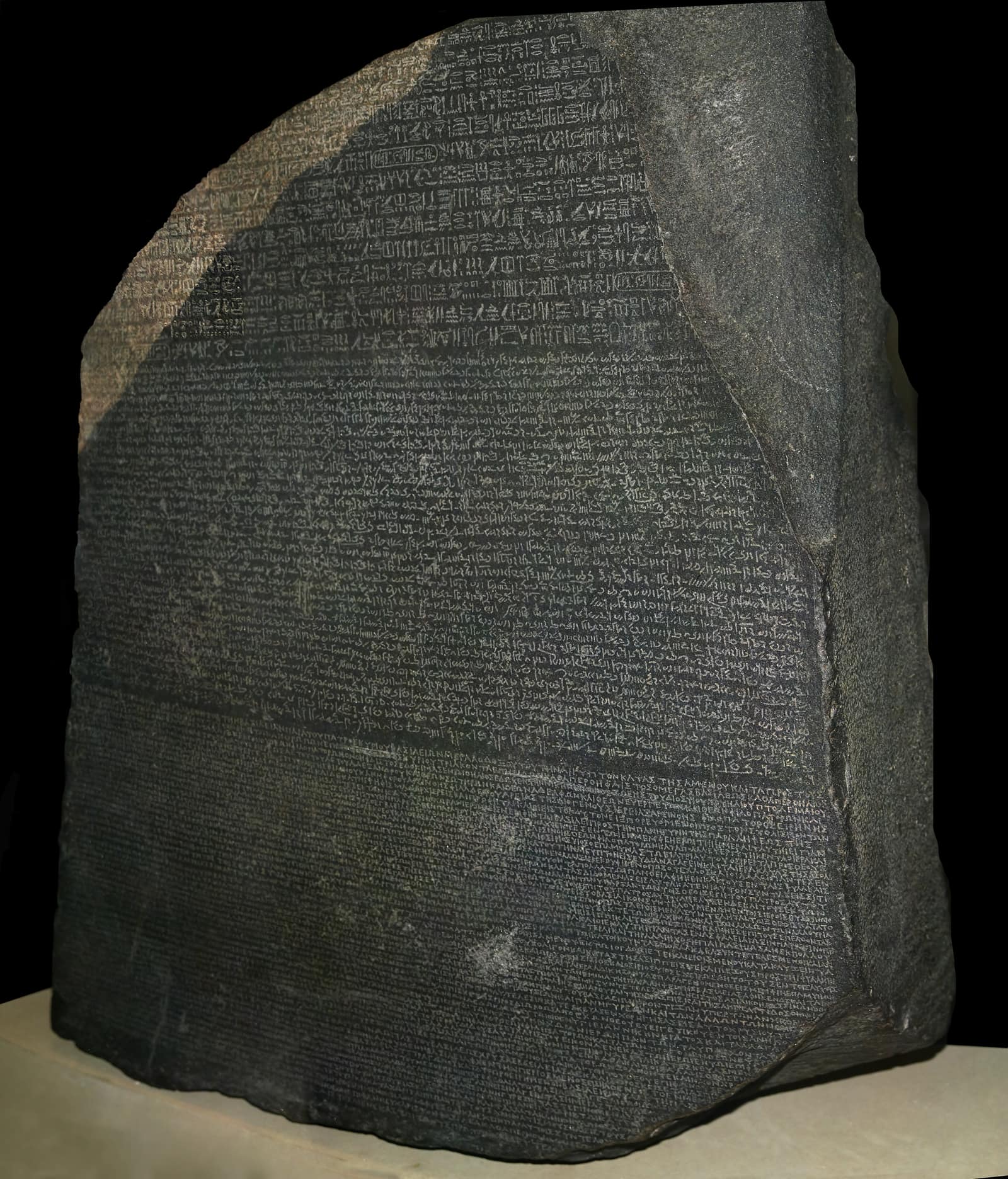
The Rosetta Stone
Rashid, Beheira, Egypt; now in London, United Kingdom · Africa
1400 to 1800
The khipu
Peru · Americas