Earthrise
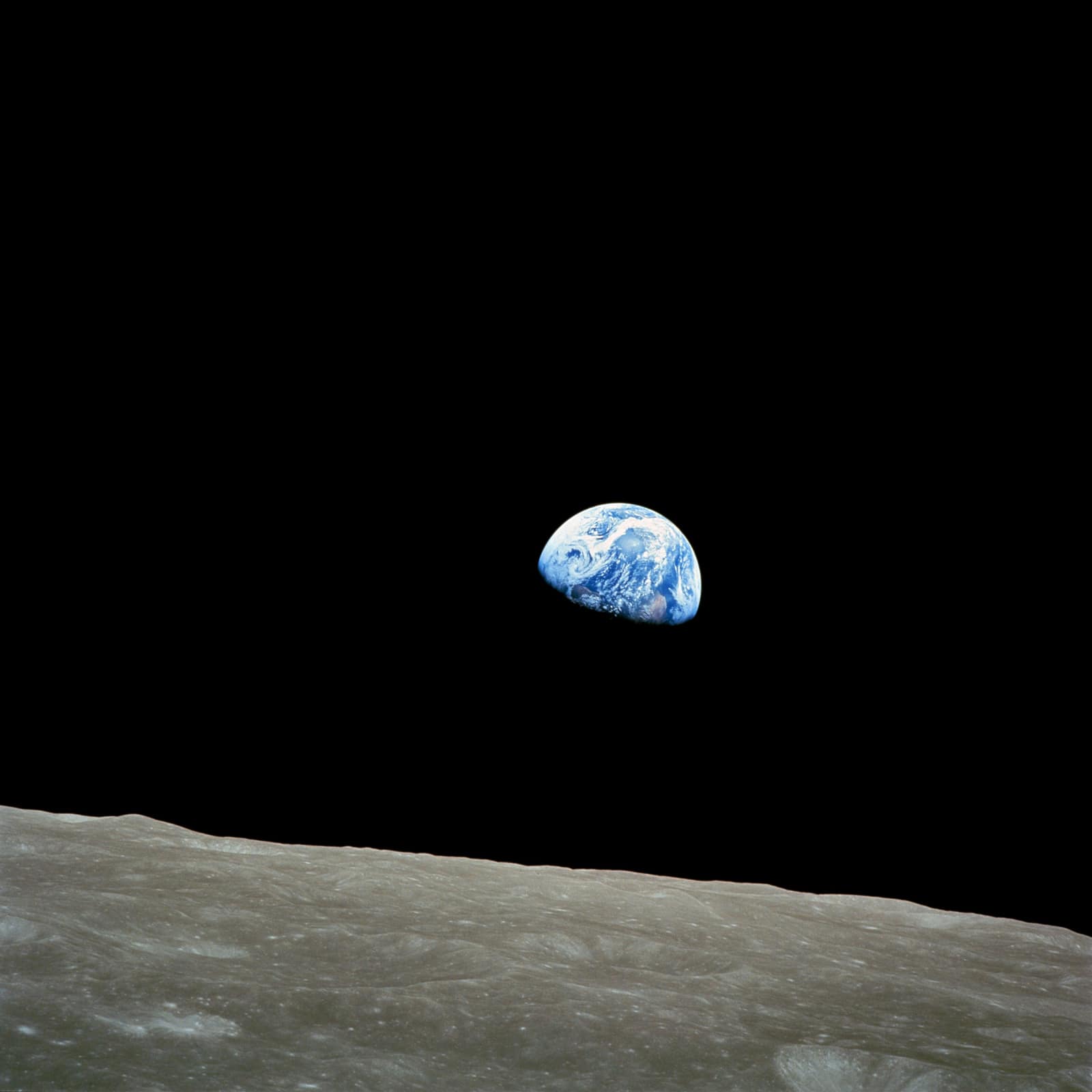
Before December 1968 no human being had seen the whole Earth from far away; after it, a photograph showed everyone the planet as a single small world alone in the dark, an image that became one of the most reproduced of the century.
- Dated
- Place
- Lunar orbit, above the eastern limb of the Moon's far side · The crew of Apollo 8, Frank Borman, James Lovell and William Anders, and NASA's Apollo programme
- Remains
- Intact

NASA / Bill AndersPDMOriginal record
Data saver is on. Images load only when you ask. You can change this in Settings at any time.
From the archivist
They had gone to look at the Moon. For three orbits they photographed its craters, its grey plains, the places where others would one day land. The Earth was behind them, out of sight.
On Christmas Eve 1968, as the craft turned, one of the three saw something over the horizon and called out. It was the Earth, rising. There was a scramble for colour film. He took a picture, then another.
The frame kept here shows the dead ground of the Moon in the foreground, and above it, alone in black, the planet on which every person who had ever lived had been born, loved and buried. Half of it is in night. There are no borders on it.
That evening the crew read aloud to the Earth the opening verses of an ancient book about the making of the world.
This civilization had sent three men to see another world. What they brought back, above all, was a portrait of their own.
Established
- Apollo 8, crewed by Frank Borman, James Lovell and William Anders, was the first crewed spacecraft to travel around the Moon (NASA).
- On 24 December 1968, at about 16:40 UTC, on their fourth orbit, a roll of the spacecraft brought the Earth into view above the lunar horizon; Anders took a black and white frame, then the colour photographs AS08-14-2383 and 2384 (NASA SVS; Chaikin 2018).
- The colour image was made with a Hasselblad camera, a 250 mm telephoto lens and Ektachrome colour film (Chaikin 2018).
- For years Borman recalled having taken the picture himself; the onboard voice recording and NASA's reconstruction of 2013 show that Anders took all the Earthrise frames (Chaikin 2018; NASA SVS).
- In 2018 the International Astronomical Union named two craters visible in the photograph Anders' Earthrise and 8 Homeward (IAU).
Interpretation
The photograph is often credited with starting the modern environmental movement; the first Earth Day followed in April 1970, but a single cause is hard to prove, and several currents were already under way. Anders later said that the crew had come all this way to explore the Moon and had discovered the Earth. It is placed in the hall of what we imagined because its force lay in the image, in what it made people feel about their home, rather than in any measurement; it could as well stand among the changes.
In 10,000 years
In 10,000 years, if anyone looks back at the Earth from elsewhere, will this be the first picture they remember?
Sources (4)
- NASA. Apollo 8: Earthrise (AS08-14-2383), image article. · www.nasa.gov
- NASA Scientific Visualization Studio, Ernie Wright. Earthrise: the 45th anniversary (visualisation 4129), 2013. · svs.gsfc.nasa.gov
- Chaikin, A. Who took the legendary Earthrise photo from Apollo 8? Smithsonian Magazine, January 2018. · www.smithsonianmag.com
- International Astronomical Union. Lunar craters named in honour of Apollo 8 (press release iau1811), 2018. · iauarchive.eso.org
Related fragments
1969
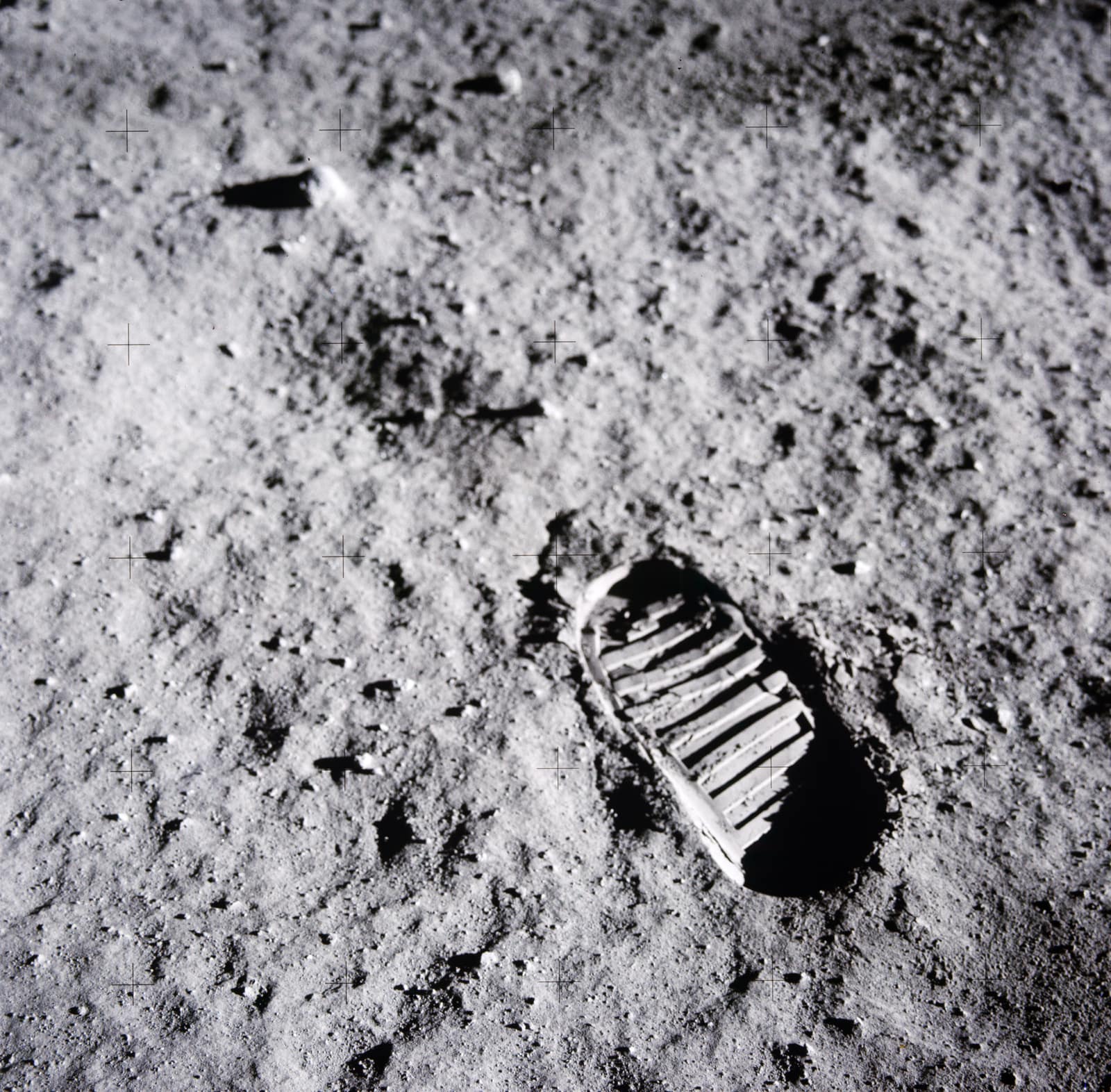
The first footprints on the Moon
Tranquility Base, Sea of Tranquility, the Moon · Americas
1977
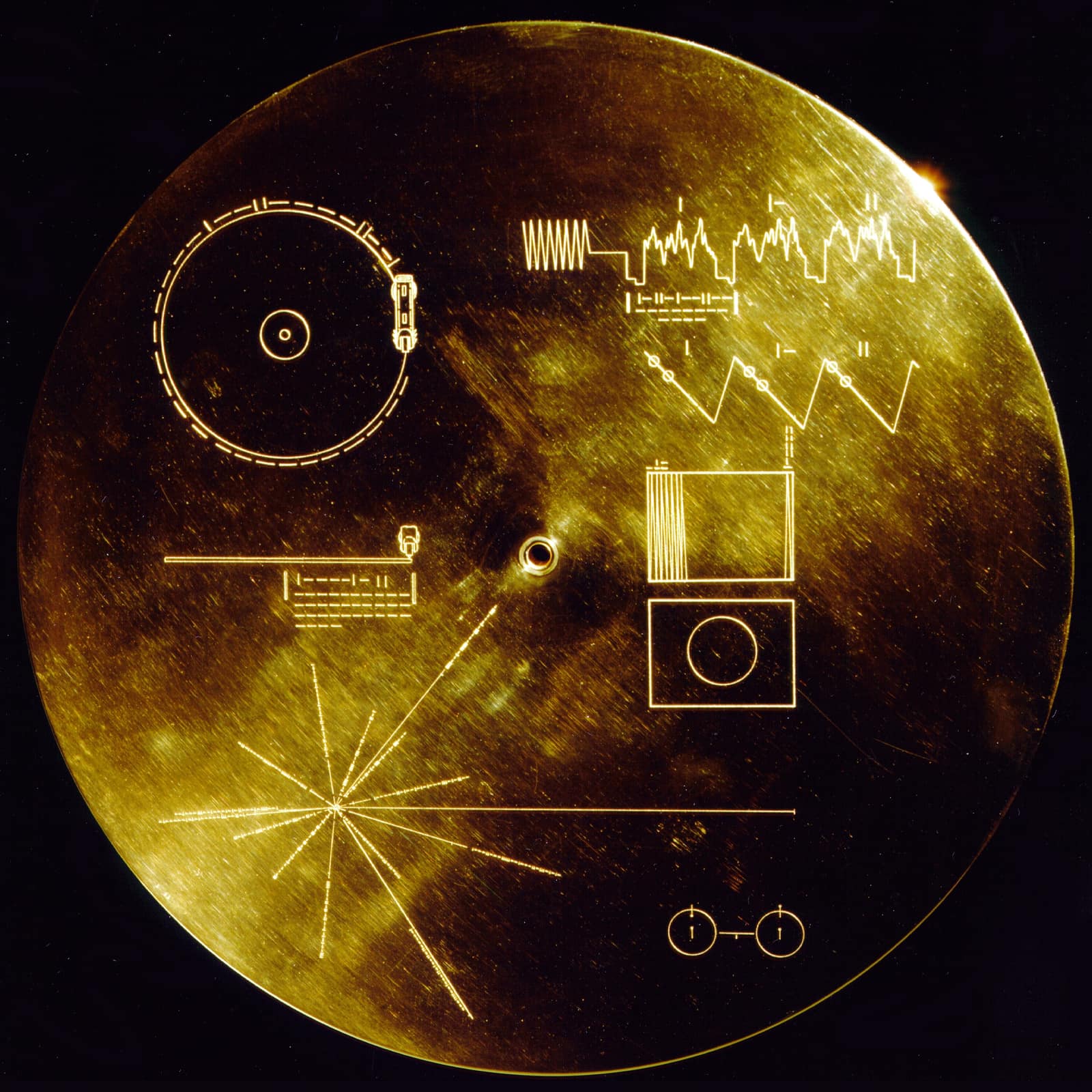
The Golden Record
Voyager 1 · Voyager 2 · Americas
1957
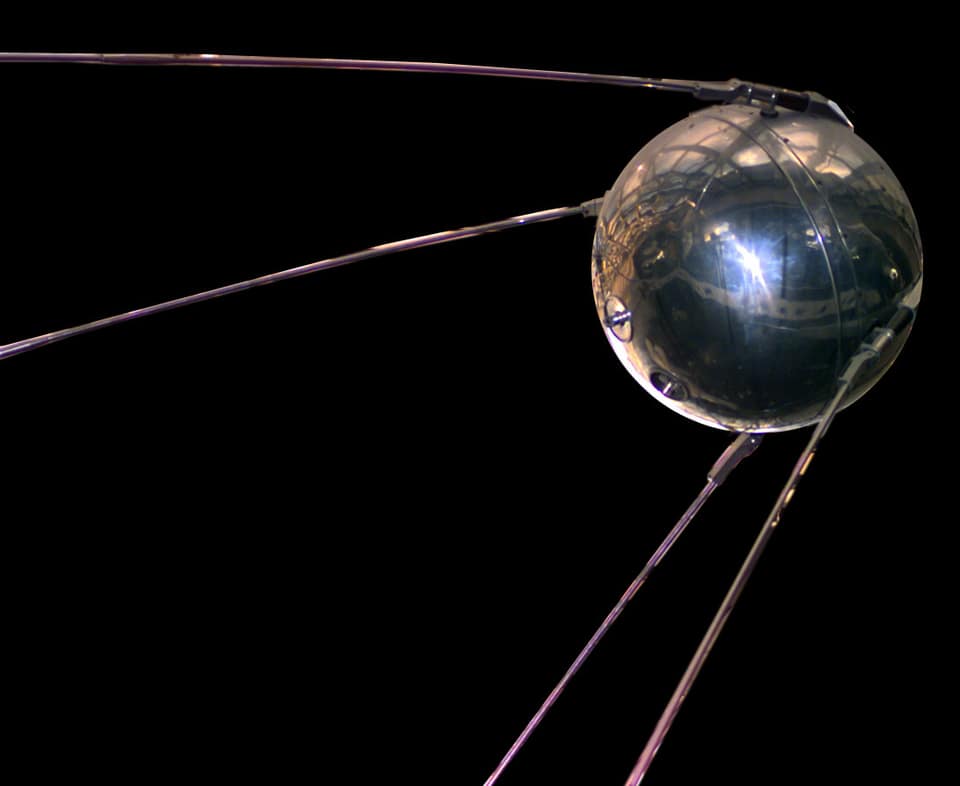
Sputnik 1, the first artificial satellite
Baikonur Cosmodrome, Kazakhstan · Asia
1969
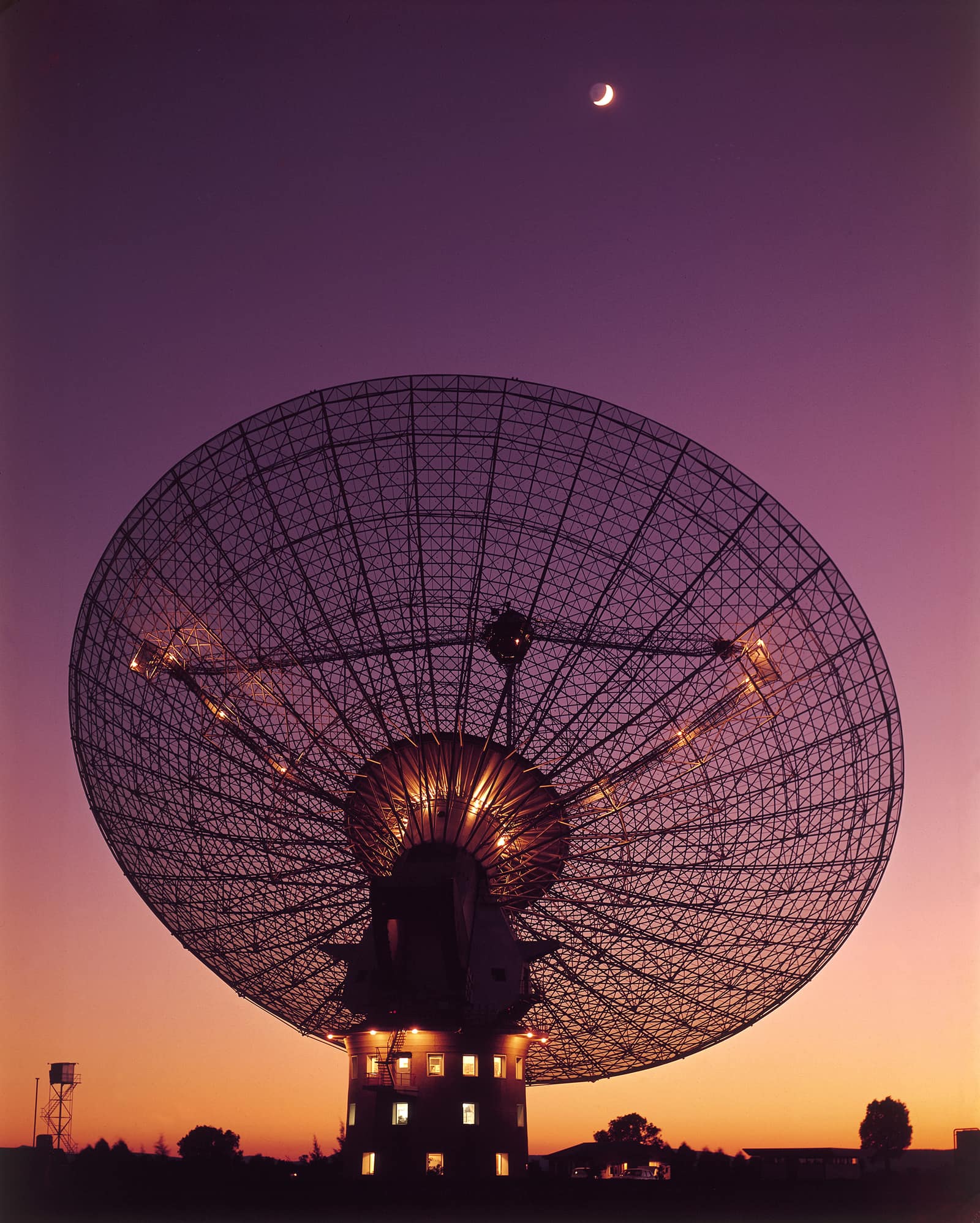
The Parkes dish and the Moon walk seen by the world
Parkes Observatory, New South Wales, Australia · Oceania