Fire made to work: from Newcomen's engine to Watt's condenser
Before these engines, work was done by muscle, wind and falling water; after them, the heat of burning coal could be turned into steady motion wherever an engine could be built, and by the nineteenth century steam was driving mines, mills, ships and railways.
- Dated
- Place
- Coneygree, Tipton, near Dudley, West Midlands, United Kingdom · Thomas Newcomen, ironmonger of Dartmouth, and the coal masters of the Black Country; James Watt, instrument maker to the University of Glasgow, later in partnership with Matthew Boulton in Birmingham
- Coordinates
- 52° 31′ N · 2° 05′ W (approximate)
- Remains
- Fragmentary
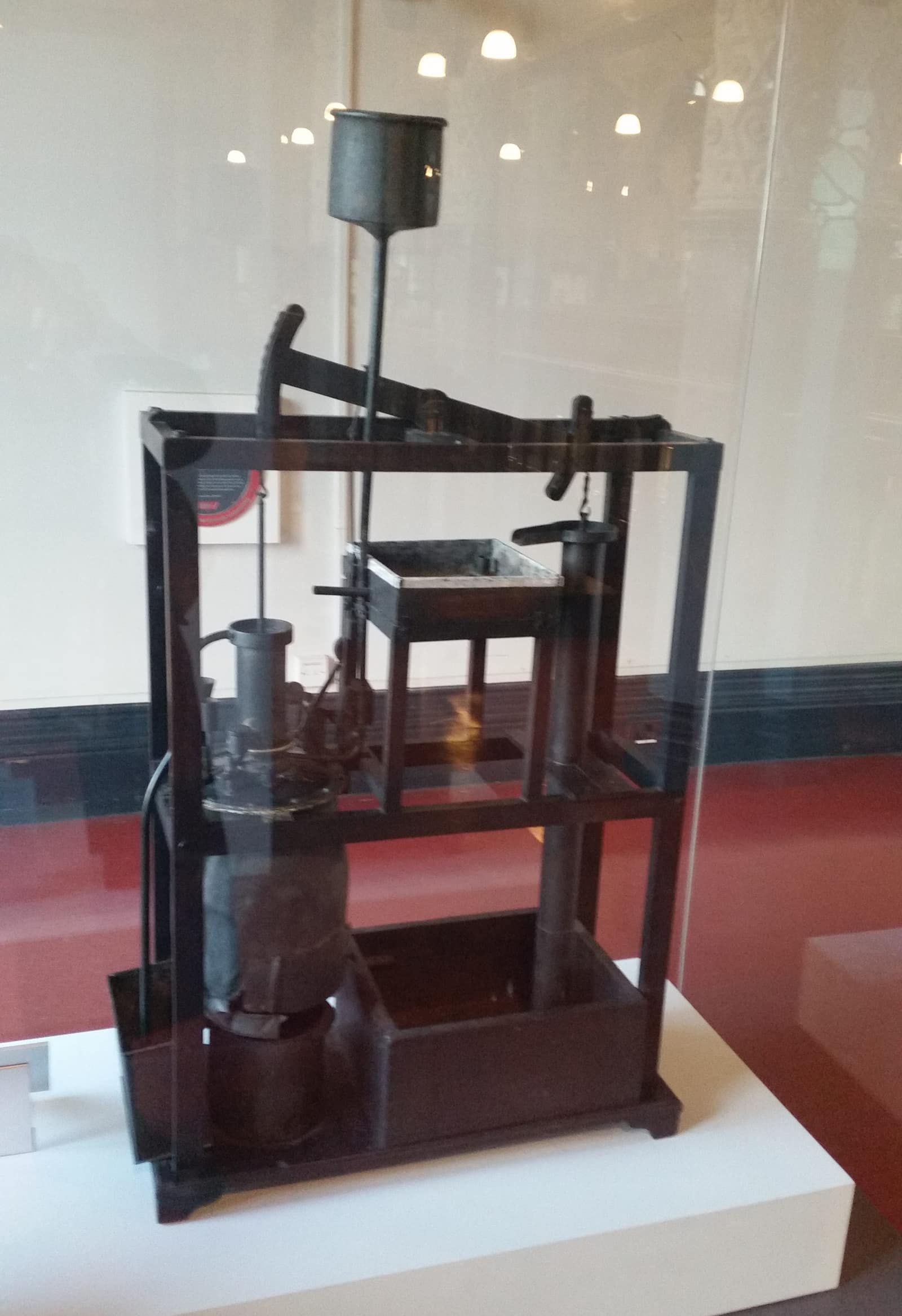
.jpg)
Andy Dingley, CC BY-SA 4.0, via Wikimedia CommonsCC-BY-SA-4.0Original record
Data saver is on. Images load only when you ask. You can change this in Settings at any time.
From the archivist
In the coal country of the English Midlands, at the beginning of the eighteenth century, the deeper the miners dug, the more water rose to drown the seams. Horses turned pumps in endless circles, and it was not enough.
In 1712, near the walls of Dudley Castle, a new kind of machine was set to work. A fire boiled water in a boiler; the steam filled a tall cylinder; a spurt of cold water collapsed it, and the weight of the sky itself drove a piston down. A great wooden beam rocked above the pit, and water came up. The engine's maker, Thomas Newcomen, sold iron tools in a harbour town in Devon.
Half a century later, in Glasgow, a young instrument maker was asked to mend the small model kept here. James Watt watched how much fuel it wasted, heating and cooling its cylinder at every stroke, and took the cooling somewhere else: a separate vessel, a condenser. His patent was granted in January 1769.
From these two engines, coal no longer only warmed rooms and forges. It began to move things.
Established
- In 1712 an engine designed by Thomas Newcomen, an ironmonger of Dartmouth in Devon, began pumping water from the Coneygree coal works, within sight of Dudley Castle; it is the first Newcomen engine whose place and date are securely recorded (Andrew and Allen 2009).
- Newcomen's engine was atmospheric: steam filled a cylinder beneath a piston, a jet of cold water condensed it, and the weight of the air pushed the piston down, rocking a great beam that worked the pumps in the pit; it was built in answer to the water that flooded mines (National Museums Scotland).
- Because Thomas Savery held a broad patent of 1698 for raising water by fire, Newcomen's quite different engine was built and sold under Savery's patent for more than twenty years (Greener 2025).
- In the winter of 1763 to 1764 James Watt, instrument maker to the University of Glasgow, was asked to repair the university's model Newcomen engine; seeing how much steam and fuel it wasted by cooling and reheating its cylinder at every stroke, he devised a condenser separate from the cylinder (University of Glasgow 2019).
- Watt's patent, 'A new method of lessening the consumption of steam and fuel in fire-engines', was granted on 5 January 1769; engines with his condenser burned about two thirds less coal (Science Museum 2019).
- In 2021 the Intergovernmental Panel on Climate Change stated that the observed increases in well-mixed greenhouse gas concentrations since around 1750 are unequivocally caused by human activities (IPCC 2021).
Interpretation
Newcomen did not invent the steam engine from nothing: Savery and others had worked with steam and vacuum before him, and recent research by James Greener suggests that Newcomen's engine may have existed in early forms in the 1690s, well before Dudley. The exact site of the 1712 engine has itself been disputed; in 2009 Andrew and Allen published a confirmation that it stood at Coneygree. How much steam itself drove the industrial revolution is debated: the economic historian Nicholas Crafts estimated in 2004 that steam contributed little to British growth before 1830 and had its peak effect only after 1850, with high-pressure engines. Coal was already burned in quantity for heat before these engines; what they began was the turning of that heat into mechanical work on a growing scale, one strand of the fossil-fuel age whose emissions the IPCC dates from around 1750.
In 10,000 years
In 10,000 years, will the layer of soot and carbon left in the ice and the seabed be read as the signature of the century when this civilization first made fire lift water?
Sources (8)
- Andrew, J. H., Allen, J. S. A Confirmation of the Location of the 1712 'Dudley Castle' Newcomen Engine at Coneygree, Tipton. The International Journal for the History of Engineering and Technology 79 (2), 2009, p. 174-182. · doi.org
- Allen, J. S. The 'Dudley Castle', 1712, Newcomen Engine Replica, Black Country Museum, Dudley, West Midlands. Transactions of the Newcomen Society 69 (1), 1997, p. 283-298. · doi.org
- Greener, J. The Impellent Force of fire: Newcomen's engine and Savery's patent. The International Journal for the History of Engineering and Technology 96 (1), 2025, p. 72-106. · doi.org
- National Museums Scotland. The Newcomen engine and its role in Britain's industrial revolution. · www.nms.ac.uk
- University of Glasgow. Model steam engine which inspired James Watt receives Engineering Heritage Award, August 2019. · www.gla.ac.uk
- Russell, B. James Watt and the separate condenser. Science Museum Blog, 5 January 2019. · blog.sciencemuseum.org.uk
- Crafts, N. Steam as a General Purpose Technology: A Growth Accounting Perspective. The Economic Journal 114 (495), 2004, p. 338-351. · doi.org
- IPCC. Summary for Policymakers, in Climate Change 2021: The Physical Science Basis. Contribution of Working Group I to the Sixth Assessment Report, statement A.1.1. · www.ipcc.ch
Related fragments
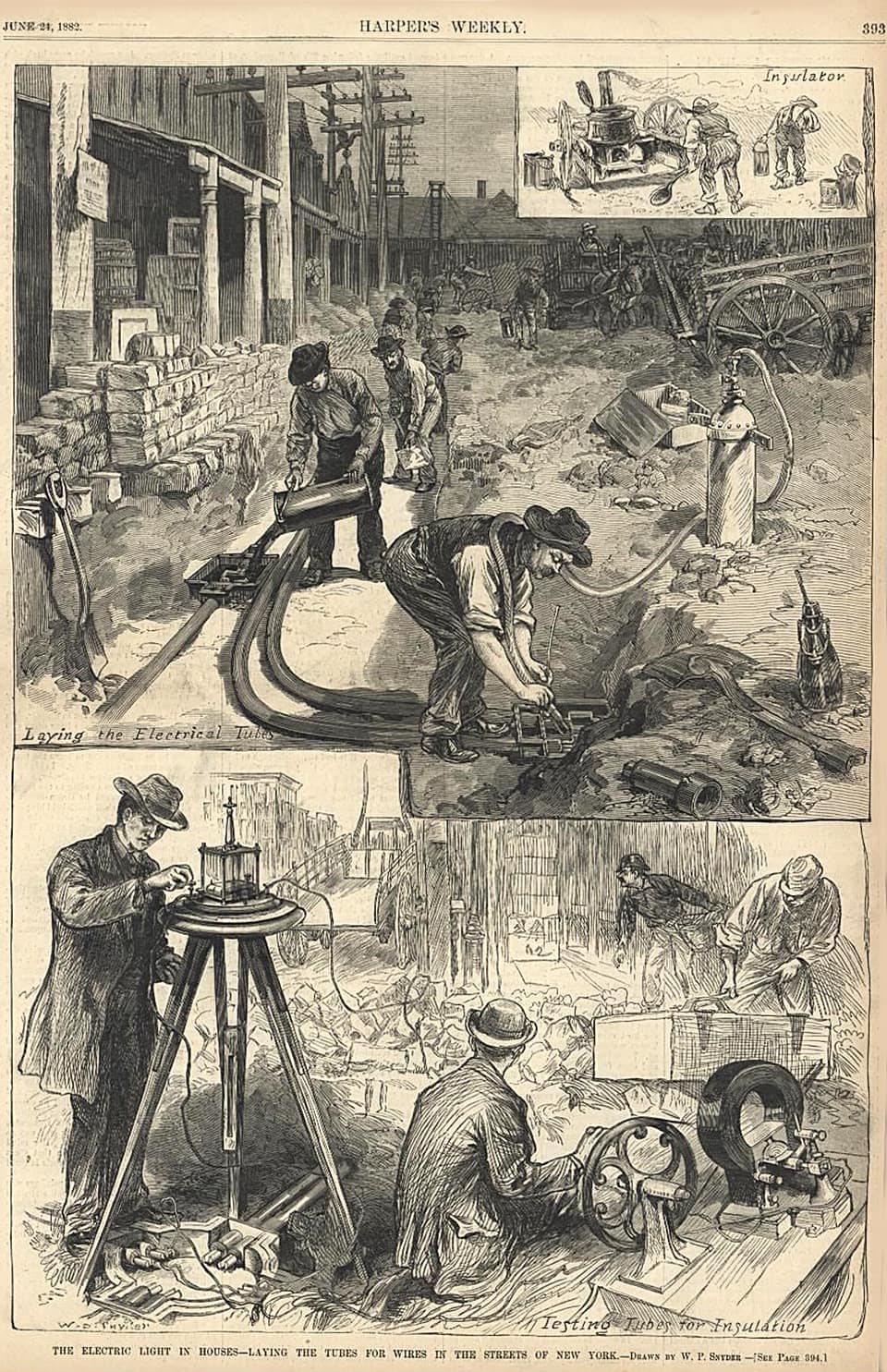
1882
Pearl Street Station, the first central power network in New York
Lower Manhattan, New York, United States · Americas
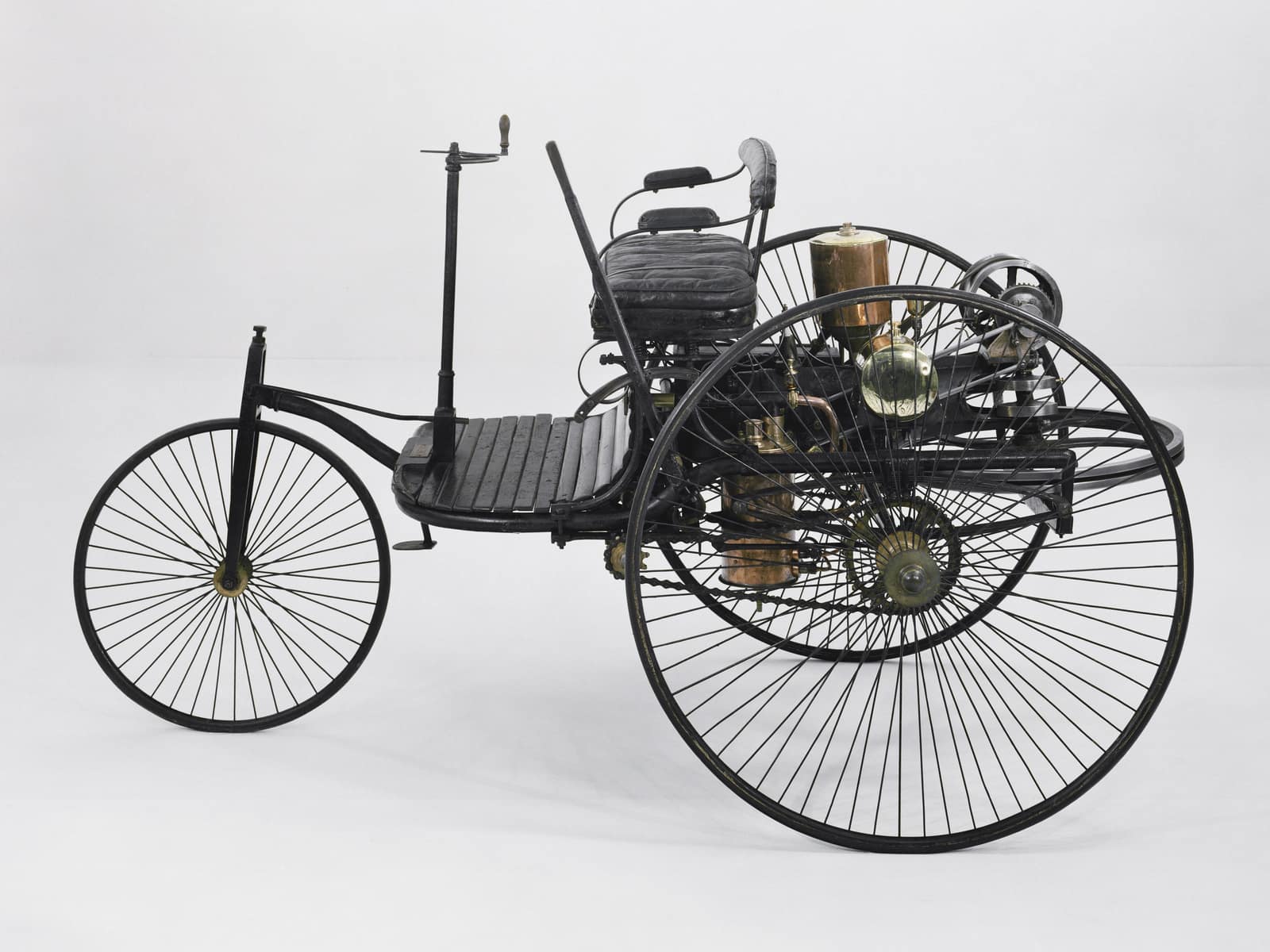
1886 to 1888
Three wheels and a petrol engine: the Benz Patent-Motorwagen
Mannheim, Baden-Württemberg, Germany · Europe
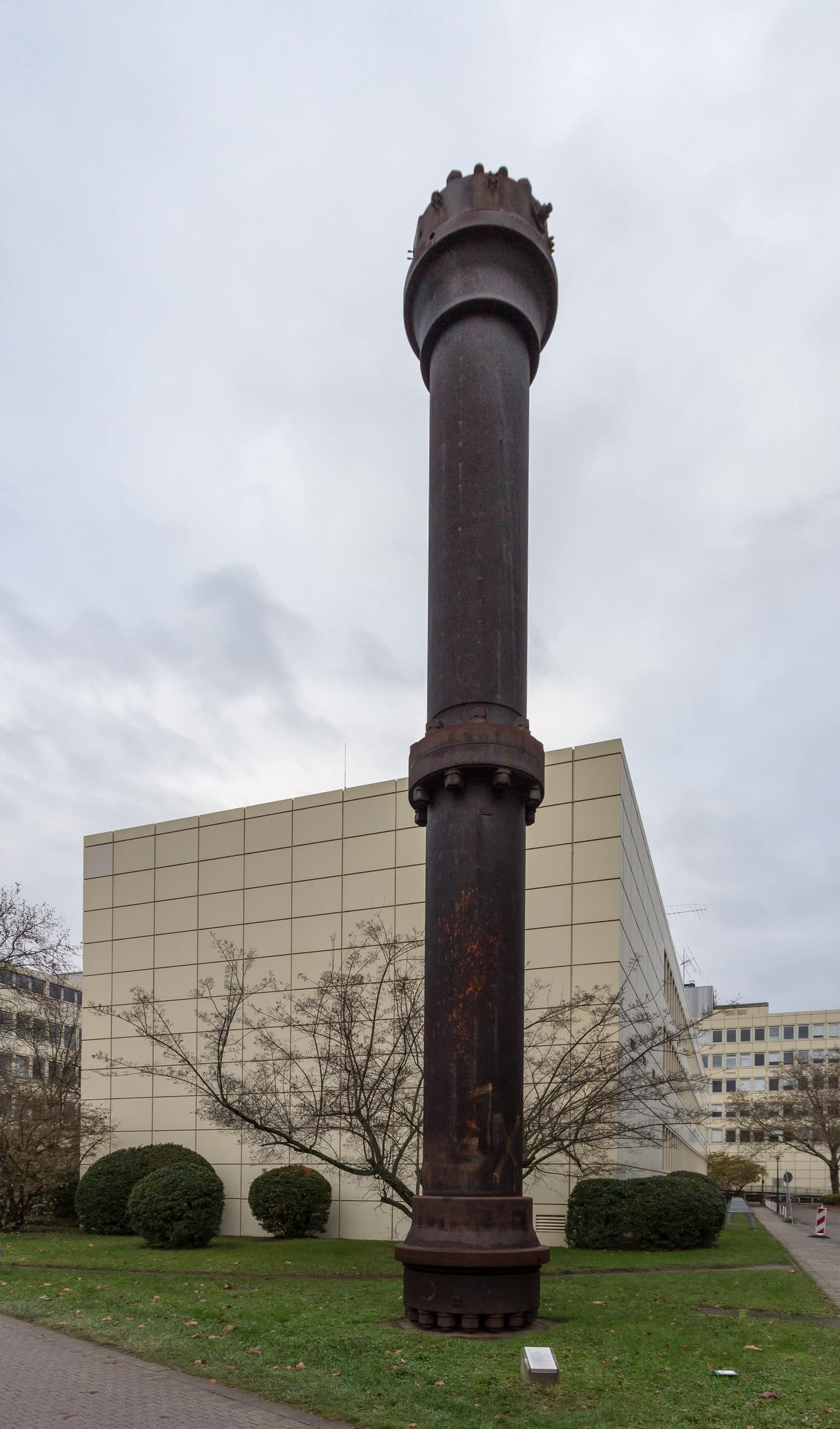
1909 to 1913
Bread from the air: the Haber-Bosch synthesis of ammonia
Karlsruhe Institute of Technology, Karlsruhe, Germany · Europe

1990 to 1999
The ice at Vostok: 420,000 years of air
Vostok Station, East Antarctica · Antarctica