The telephone: a patent and a sentence
Before it, a message sent by wire had to be turned into code by an operator; after it, the human voice itself could travel along a wire and be recognised at the other end.
- Dated
- Place
- Boston, Massachusetts, United States · Alexander Graham Bell, a Scottish born teacher of the deaf in Boston, and his assistant Thomas A. Watson; with rival inventors Elisha Gray and Antonio Meucci
- Coordinates
- 42° 21′ N · 71° 04′ W (approximate)
- Remains
- Intact
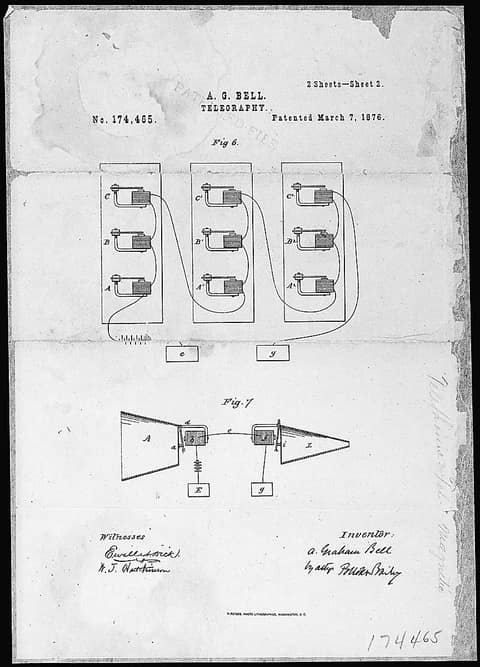
.jpg)
U.S. National Archives and Records Administration, via Wikimedia CommonsPDMOriginal record
Data saver is on. Images load only when you ask. You can change this in Settings at any time.
From the archivist
The first sentence was an ordinary one: a man calling another into the room.
On 10 March 1876, in rooms in Boston, Alexander Graham Bell, a teacher of the deaf, leaned over an instrument in which a fine needle touched water made sharp with acid. His assistant, Thomas Watson, waited in another room at the end of a wire. Bell spoke, and his notebook entry for that day records the words: Mr. Watson, come here, I want to see you. Watson came. He had heard and understood.
Three days earlier, the government of the United States had granted Bell a patent, drawn on the sheet kept here, for sending the human voice by telegraph. On the day he had filed it, another inventor, Elisha Gray, had filed a notice for a similar idea; years before, an immigrant in New York, Antonio Meucci, had described one and could not afford to keep his claim alive.
The courts decided for Bell. This civilization would go on arguing about the name, and speaking to each other across any distance.
Established
- Bell's application was filed at the United States Patent Office on 14 February 1876; on the same day Elisha Gray filed a caveat, a notice of intent to patent, for a similar device (Library of Congress).
- United States Patent No. 174,465, Improvement in Telegraphy, was granted to Bell on 7 March 1876; it claimed a method of transmitting vocal or other sounds telegraphically (Library of Congress).
- On 10 March 1876 Bell recorded in his laboratory notebook that he had said into the instrument, Mr. Watson, come here, I want to see you, and that Watson came and declared he had heard and understood (Library of Congress).
- The instrument that carried that sentence used a liquid transmitter, a needle moving in acidulated water, rather than the magnetic design drawn in the patent (Library of Congress).
- In 1888 the United States Supreme Court upheld Bell's patent against rival claims (Library of Congress).
- On 11 June 2002 the United States House of Representatives agreed to Resolution 269, stating that Antonio Meucci, who had filed a caveat for a telephone device on 28 December 1871 and could not pay to renew it after 1874, should have his work in the invention of the telephone acknowledged (Congress.gov).
Interpretation
Who invented the telephone remains disputed. Gray's supporters argue that Bell's application and his liquid transmitter drew on Gray's caveat; Meucci's supporters point to his earlier work in Havana and on Staten Island. The House resolution of 2002 is a statement of opinion, not a legal ruling on priority, and courts in the nineteenth century decided for Bell. It is fairer to say that several people were close at the same time, and that Bell secured the patent.
In 10,000 years
In 10,000 years, will a voice heard from far away still seem like a small miracle, or will no one remember that it once was?
Sources (4)
- Library of Congress. Alexander Graham Bell Family Papers: collection highlights (laboratory notebook, 10 March 1876). · www.loc.gov
- Library of Congress. Invention of the Telephone: Topics in Chronicling America. · guides.loc.gov
- United States House of Representatives. H. Res. 269, 107th Congress, honoring Antonio Meucci, agreed to 11 June 2002. · www.congress.gov
- Bell, A. G. Improvement in Telegraphy. United States Patent No. 174,465, granted 7 March 1876. · patents.google.com
Related fragments
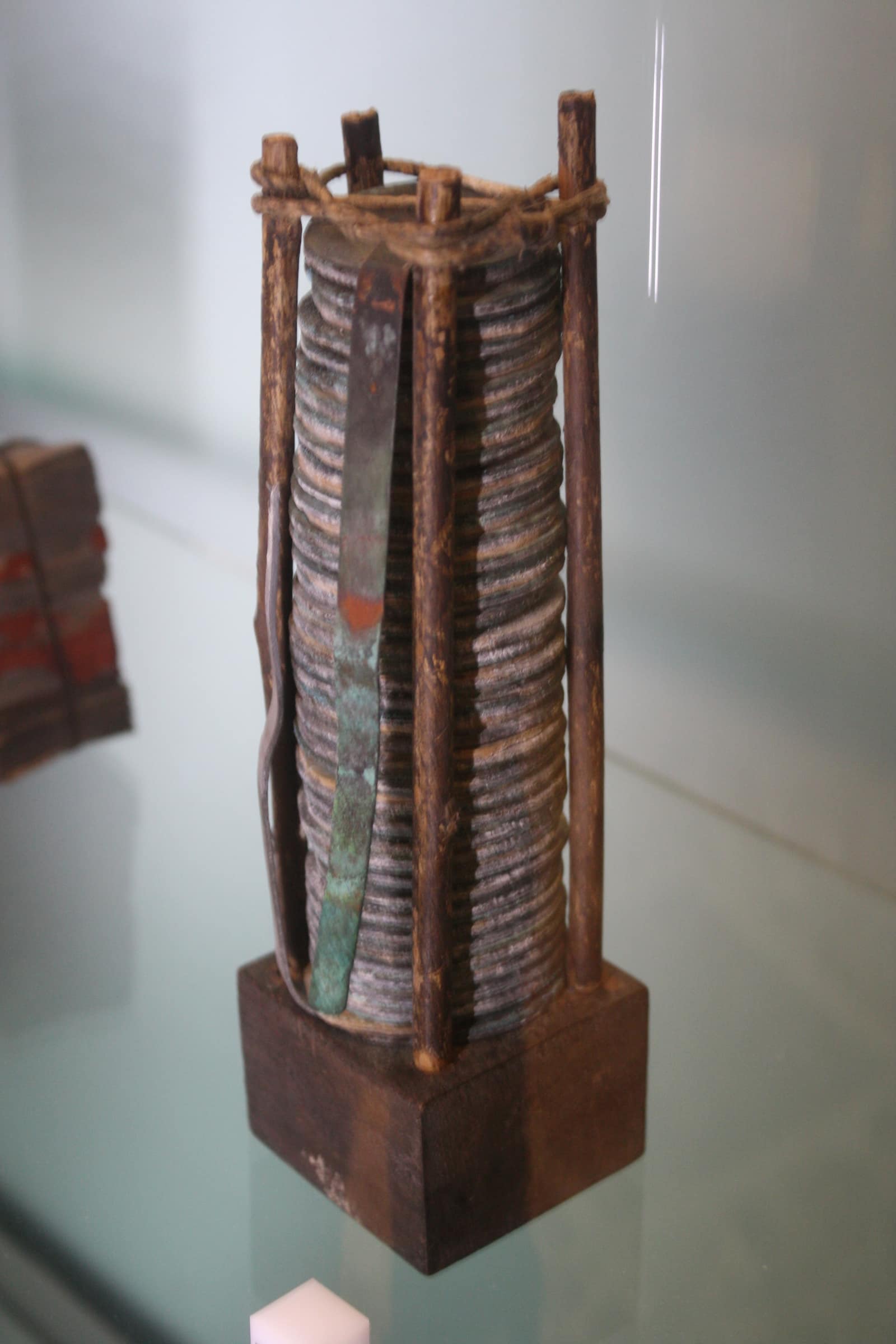
1800
Volta's pile, the first electric battery
Como, Lombardy, Italy · Europe
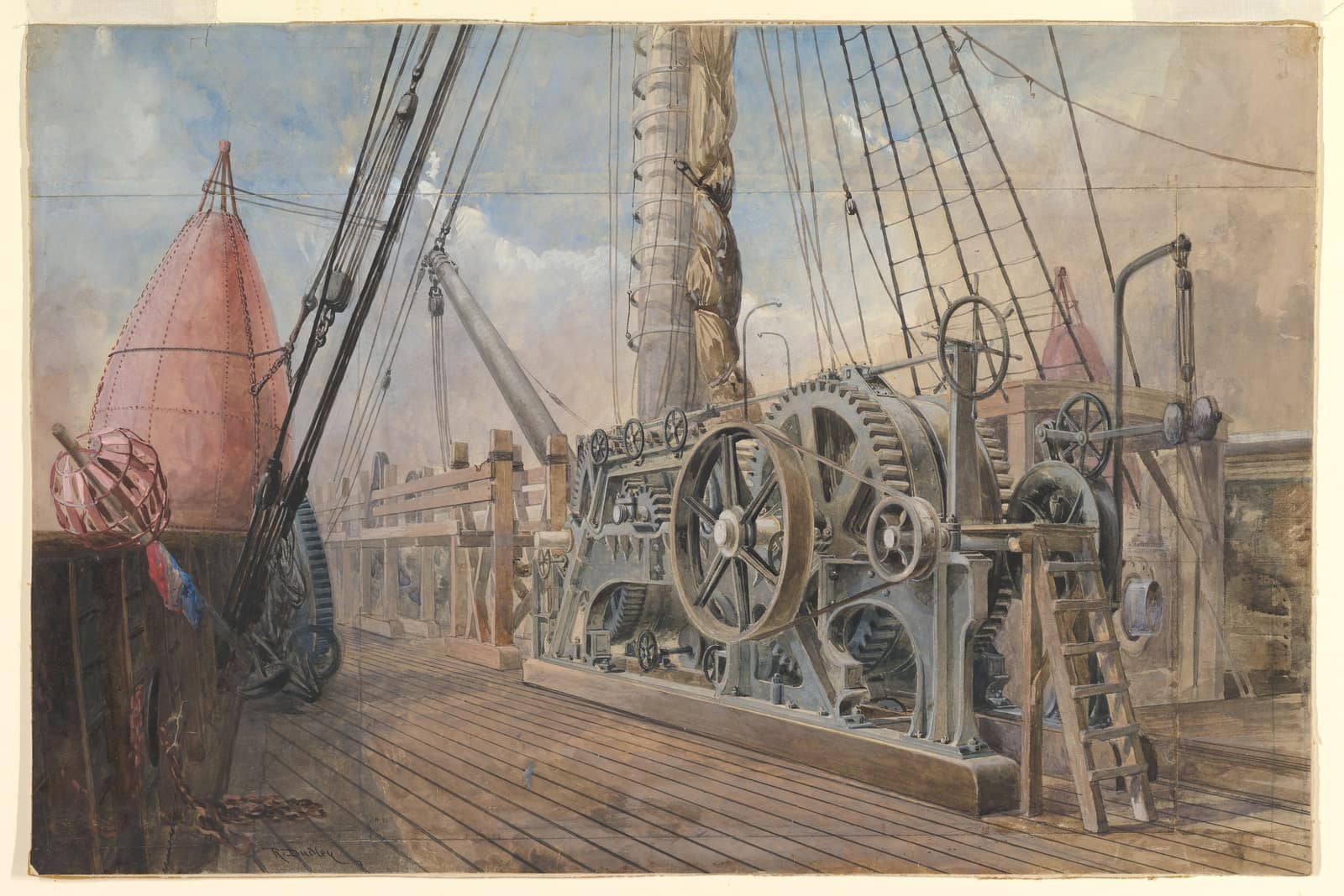
1858 to 1866
The cable under the Atlantic
Valentia Island, County Kerry, Ireland; and Heart's Content, Newfoundland and Labrador, Canada · Europe
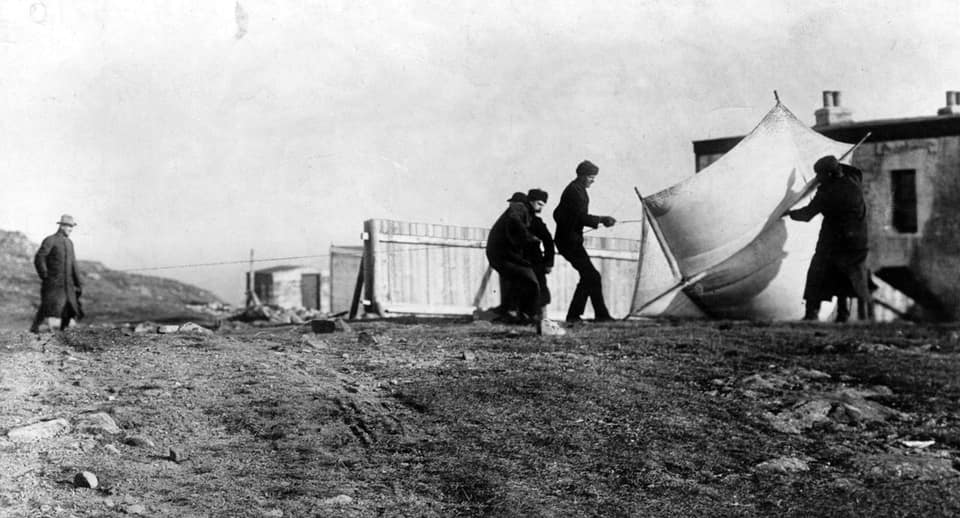
1901
The letter S across the Atlantic
St. John's, Newfoundland and Labrador, Canada · Americas
1973
A telephone call from the street
New York City, New York, United States · Americas
1969 to 1990
A map of a new network: ARPANET
Los Angeles, California, United States · Americas