Journey · 7 of 7
The traces we leave
Eight fragments on the marks this civilization leaves behind, some by accident and some on purpose: in the air, in the rock, in orbit and in the permafrost.
- Duration
- About 25 minutes
- Steps
- 8 fragments · 4 continents
- Audience
- For everyone
- Languages
- English and French
No sign-in and nothing to fill in: a journey collects nothing from students.
The steps
8 steps
- 1The ice at Vostok: 420,000 years of airVostok Station, East Antarctica · Antarctica · 1990 to 1999
- 2Fire made to work: from Newcomen's engine to Watt's condenserConeygree, Tipton, near Dudley, West Midlands, United Kingdom · Europe · 1712 to 1769
- 3Three wheels and a petrol engine: the Benz Patent-MotorwagenMannheim, Baden-Württemberg, Germany · Europe · 1886 to 1888
- 4Bread from the air: the Haber-Bosch synthesis of ammoniaKarlsruhe Institute of Technology, Karlsruhe, Germany · Europe · 1909 to 1913
- 5Plastiglomerate from Kamilo Beach: a stone of our own makingKamilo Beach, Hawai'i Island, Hawaii, United States · Oceania · before 2014
- 6The International Space Station, a wreck to comeBaikonur Cosmodrome, Kazakhstan · Asia · after 1998
- 7The Svalbard Global Seed VaultLongyearbyen, Svalbard, Norway · Europe · 2008
- 8The Arctic Code VaultLongyearbyen, Svalbard, Norway · Europe · 2020
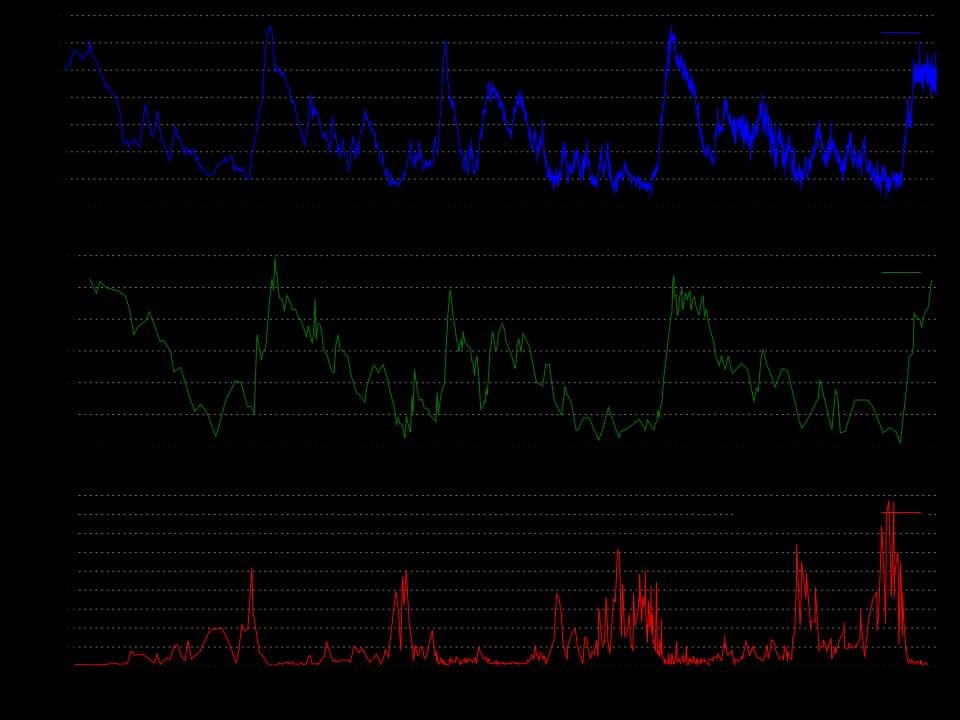
Autopilot, based on NOAA data (Petit et al. 1999), CC BY-SA 3.0, via Wikimedia CommonsCC-BY-SA-3.0Original record
1 Antarctica · 1990 to 1999
The ice at Vostok: 420,000 years of air
- Dated
- 1990 to 1999
- Place
- Vostok Station, East Antarctica
- Remains
- Fragmentary
Snow that fell on the high plateau of East Antarctica never melted. Year after year it was pressed into ice, and each layer closed over a little of the air above it, in bubbles too small to see.
At Vostok, one of the coldest places on the planet, a drill went down into that ice through the 1990s: Soviet then Russian drillers, French and American scientists, a thin cylinder brought up metre by metre, cut, labelled, flown away in cold boxes. In January 1998 the drill stopped at 3,623 metres, a little above a lake sealed beneath the ice.
On the way to step 2
The ice kept the air of four ice ages, with carbon dioxide between about 180 and 300 parts per million. From the eighteenth century, engines began to burn coal on the scale of nations.
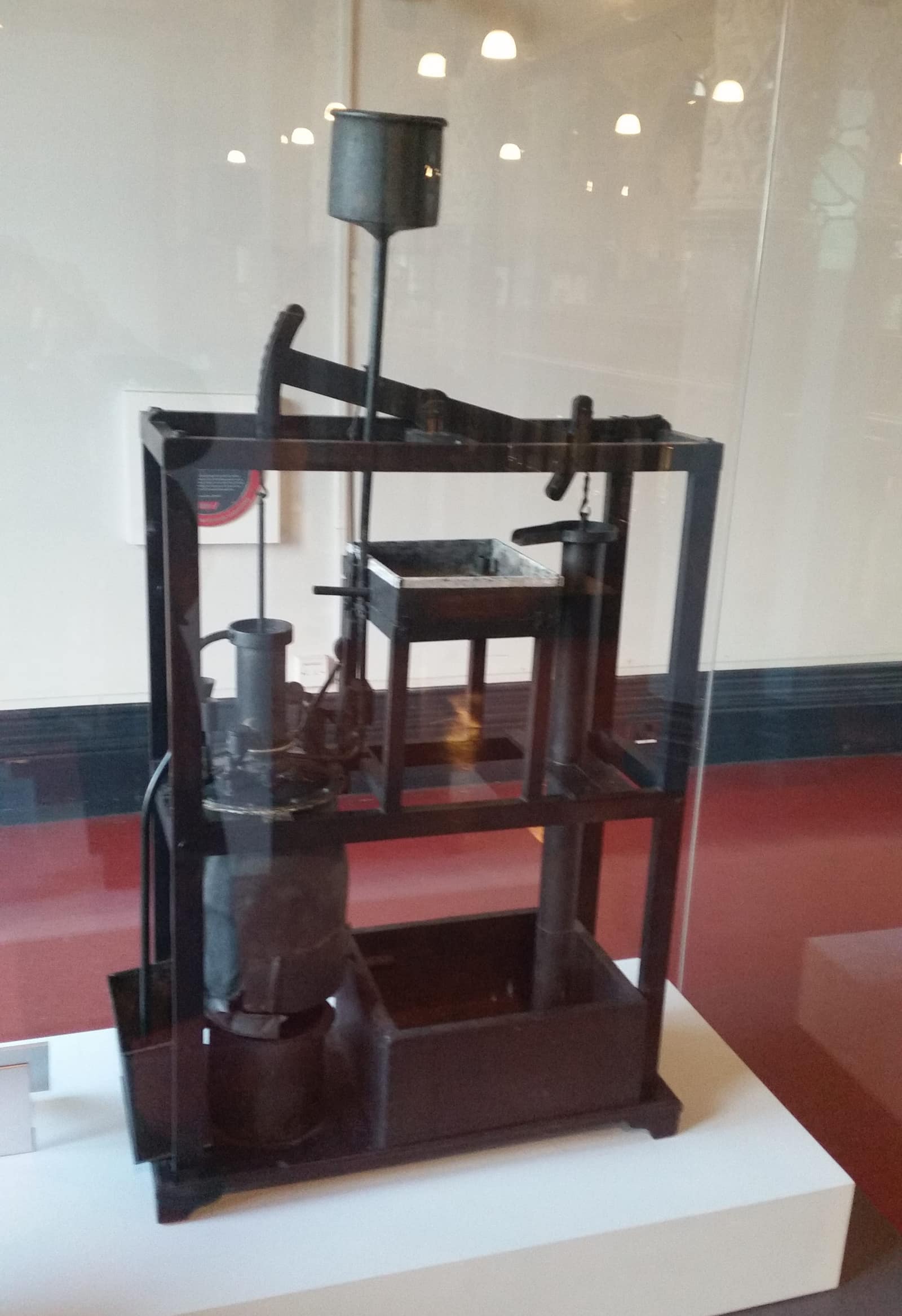
Andy Dingley, CC BY-SA 4.0, via Wikimedia CommonsCC-BY-SA-4.0Original record
2 Europe · 1712 to 1769
Fire made to work: from Newcomen's engine to Watt's condenser
- Dated
- 1712 to 1769
- Place
- Coneygree, Tipton, near Dudley, West Midlands, United Kingdom
- Remains
- Fragmentary
In the coal country of the English Midlands, at the beginning of the eighteenth century, the deeper the miners dug, the more water rose to drown the seams. Horses turned pumps in endless circles, and it was not enough.
In 1712, near the walls of Dudley Castle, a new kind of machine was set to work. A fire boiled water in a boiler; the steam filled a tall cylinder; a spurt of cold water collapsed it, and the weight of the sky itself drove a piston down. A great wooden beam rocked above the pit, and water came up. The engine's maker, Thomas Newcomen, sold iron tools in a harbour town in Devon.
On the way to step 3
Coal drove mines, mills and railways. In 1886 an engine small enough for a carriage began to burn petrol on the road.
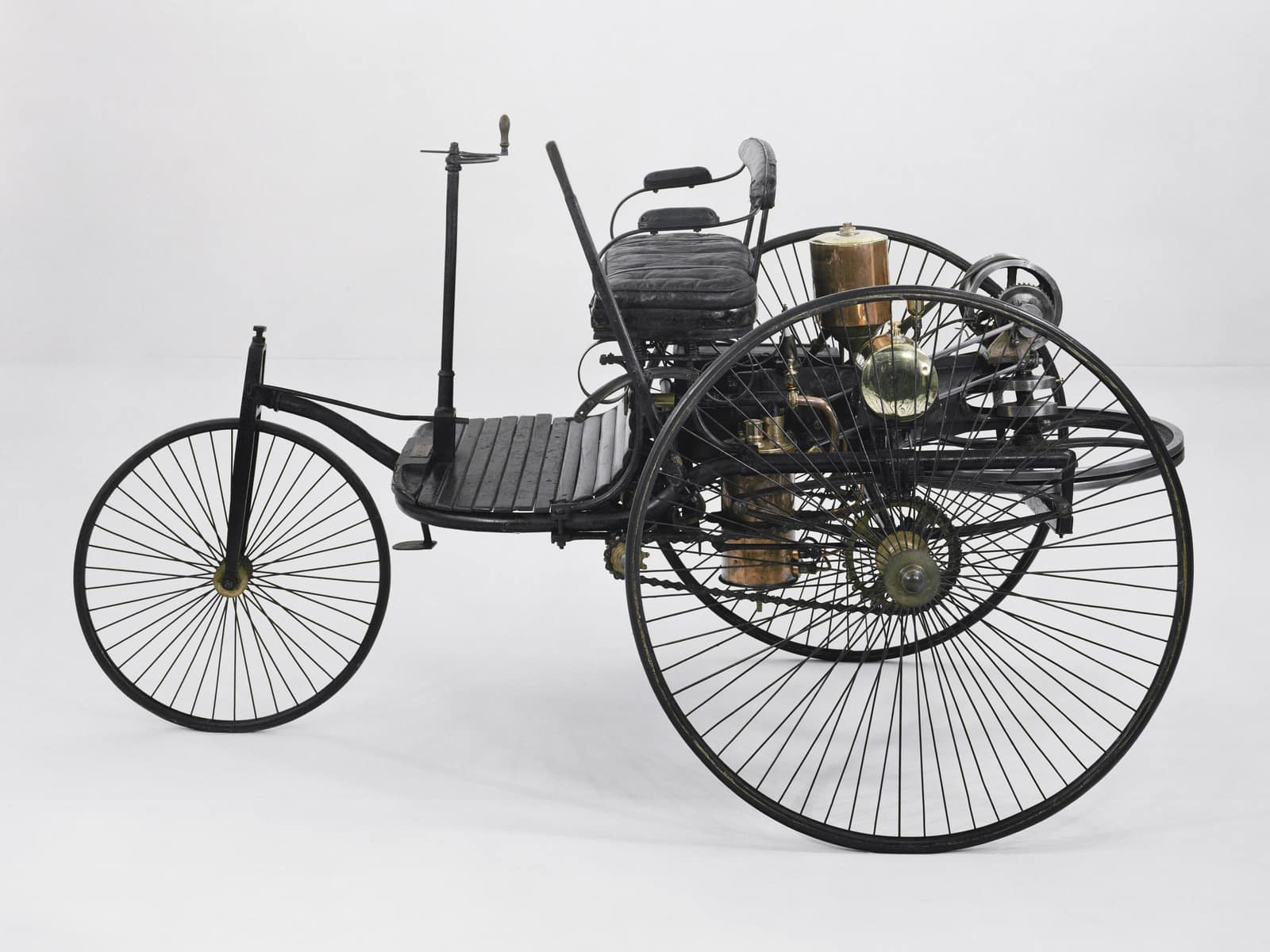
Deutsches Museum, Munich, CC BY-SA 4.0, via Wikimedia CommonsCC-BY-SA-4.0Original record
3 Europe · 1886 to 1888
Three wheels and a petrol engine: the Benz Patent-Motorwagen
- Dated
- 1886 to 1888
- Place
- Mannheim, Baden-Württemberg, Germany
- Remains
- Intact
It looks like a large tricycle that has lost its rider. Two tall wheels at the back, a small one in front, a bench, a steering rod with a little handle. Behind the seat, a single cylinder, a flywheel lying flat, a few vessels of brass and copper.
In the winter of 1886 its maker, Carl Benz, registered it at the patent office as a vehicle driven by a gas engine. The engine was his; it burned light petrol bought at a pharmacy and gave less than the strength of one horse.
On the way to step 4
Engines changed the air. Industry changed the soil as well: from 1913, nitrogen fixed from the air fed the world's crops, and its excess ran into rivers and seas.
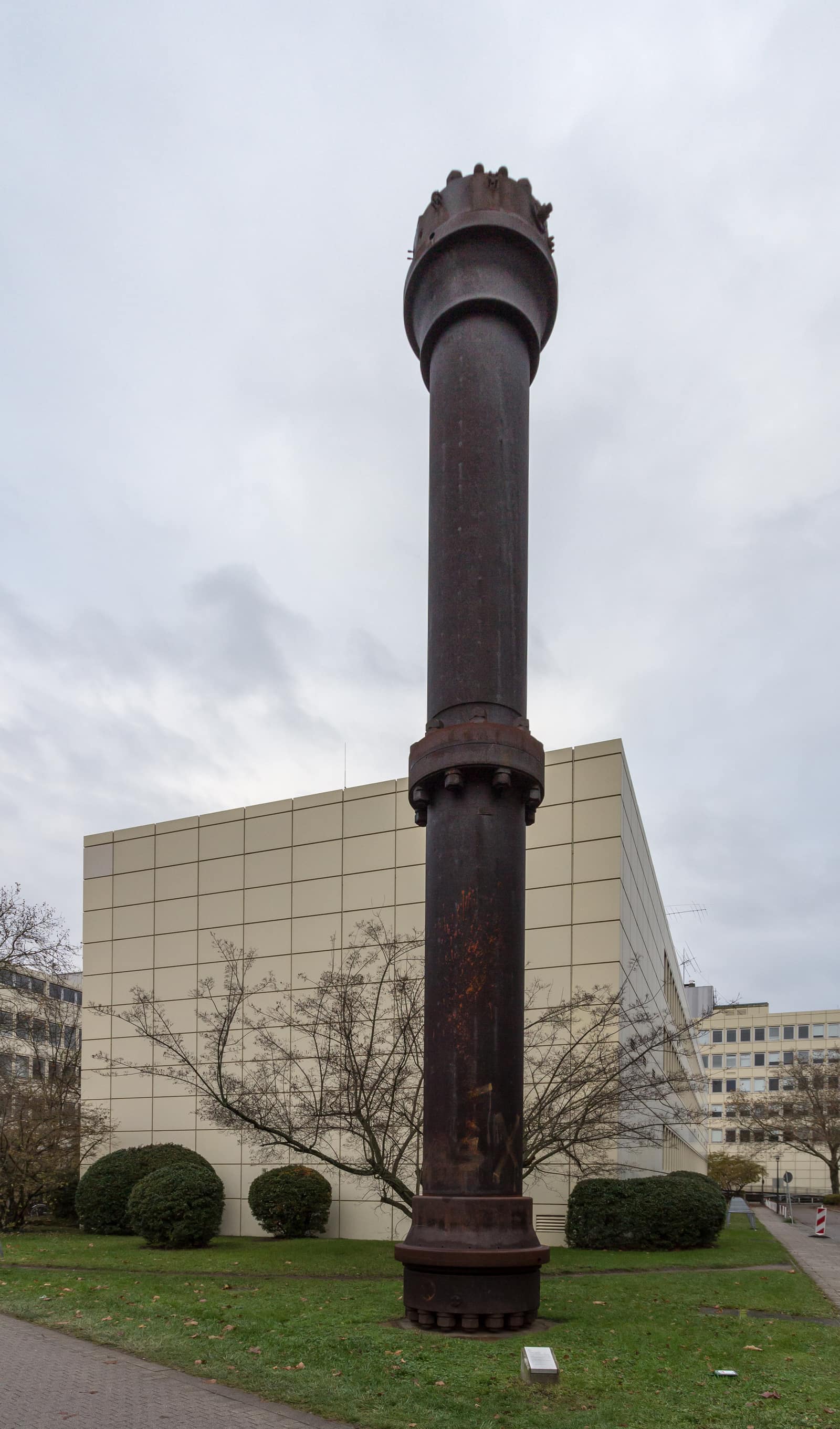
Dietmar Rabich, CC BY-SA 4.0, via Wikimedia CommonsCC-BY-SA-4.0Original record
4 Europe · 1909 to 1913
Bread from the air: the Haber-Bosch synthesis of ammonia
- Dated
- 1909 to 1913
- Place
- Karlsruhe Institute of Technology, Karlsruhe, Germany
- Remains
- Intact
Nitrogen is most of the air this civilization breathed, and yet its fields went hungry for it. The gas would not combine with anything. For centuries, farmers returned it to the soil with manure and beans; later, ships carried seabird droppings from Peru and saltpetre from the Chilean desert.
In a laboratory in Karlsruhe, on 2 July 1909, a chemist named Fritz Haber and his young assistant showed visitors from a dye company a small steel apparatus. Gas went in under great pressure; from a narrow tube, clear drops of liquid ammonia fell, one after another. The assistant kept two sealed tubes of them.
On the way to step 5
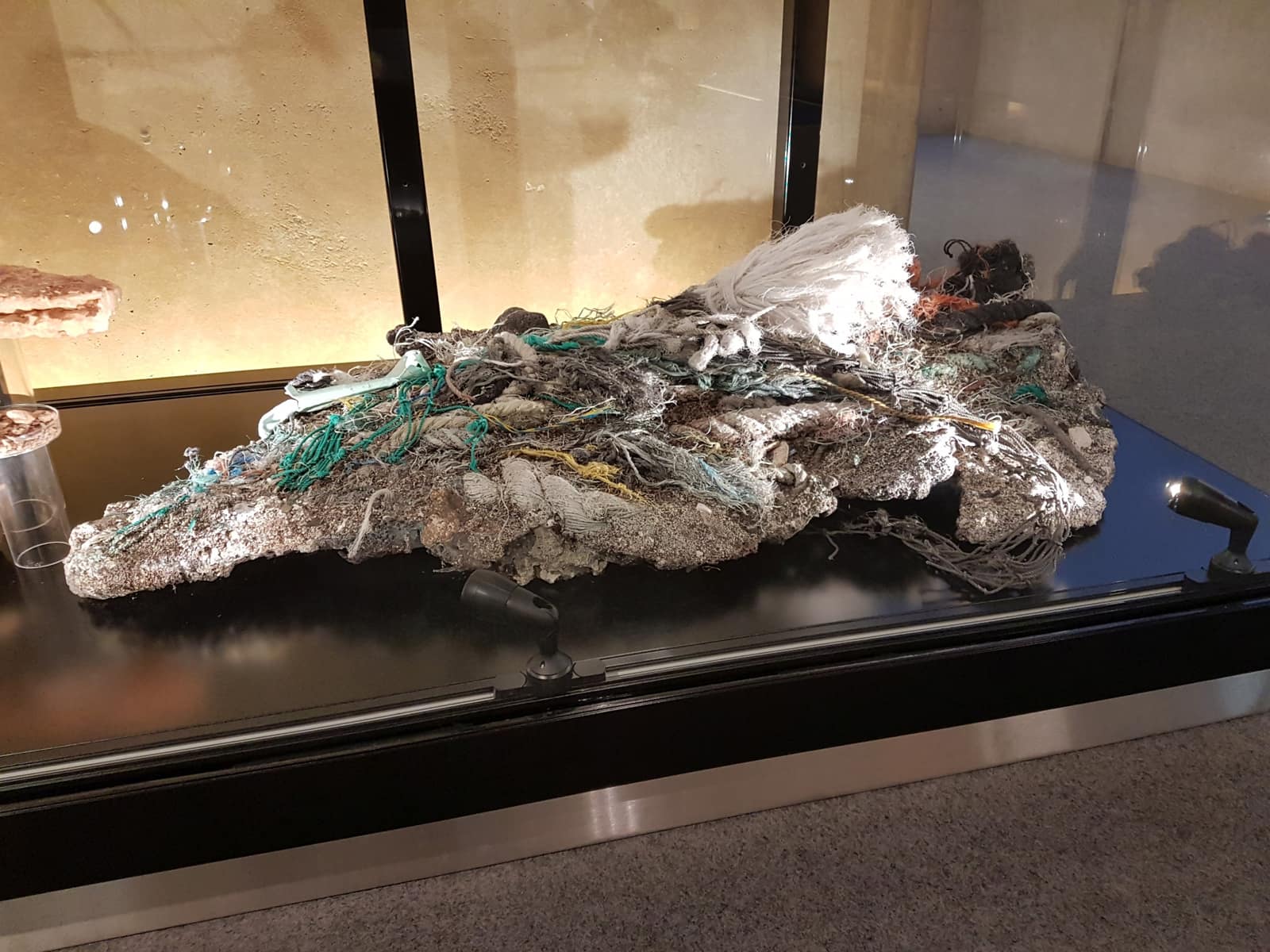
Some of what we make does not go away. On a beach in Hawai'i, melted plastic has fused with sand, basalt and coral into a new kind of stone.
Aaikevanoord, CC BY-SA 4.0, via Wikimedia CommonsCC-BY-SA-4.0Original record
5 Oceania · before 2014
Plastiglomerate from Kamilo Beach: a stone of our own making
- Dated
- before 2014
- Place
- Kamilo Beach, Hawai'i Island, Hawaii, United States
- Remains
- Intact
It looks, at first, like a stone that has been badly cleaned. Then the eye finds the threads: green, blue, yellow, the fibres of rope and fishing net, sealed into a crust of sand and black volcanic grit.
Nobody made it. The plastic crossed the Pacific on its own, carried by the great slow turn of the currents, and came ashore on a remote beach at the southern end of Hawai'i with everything else the ocean had gathered. People camped there and lit fires. The plastic softened, flowed around the sand, the basalt, the shells and the coral, and set hard.
On the way to step 6
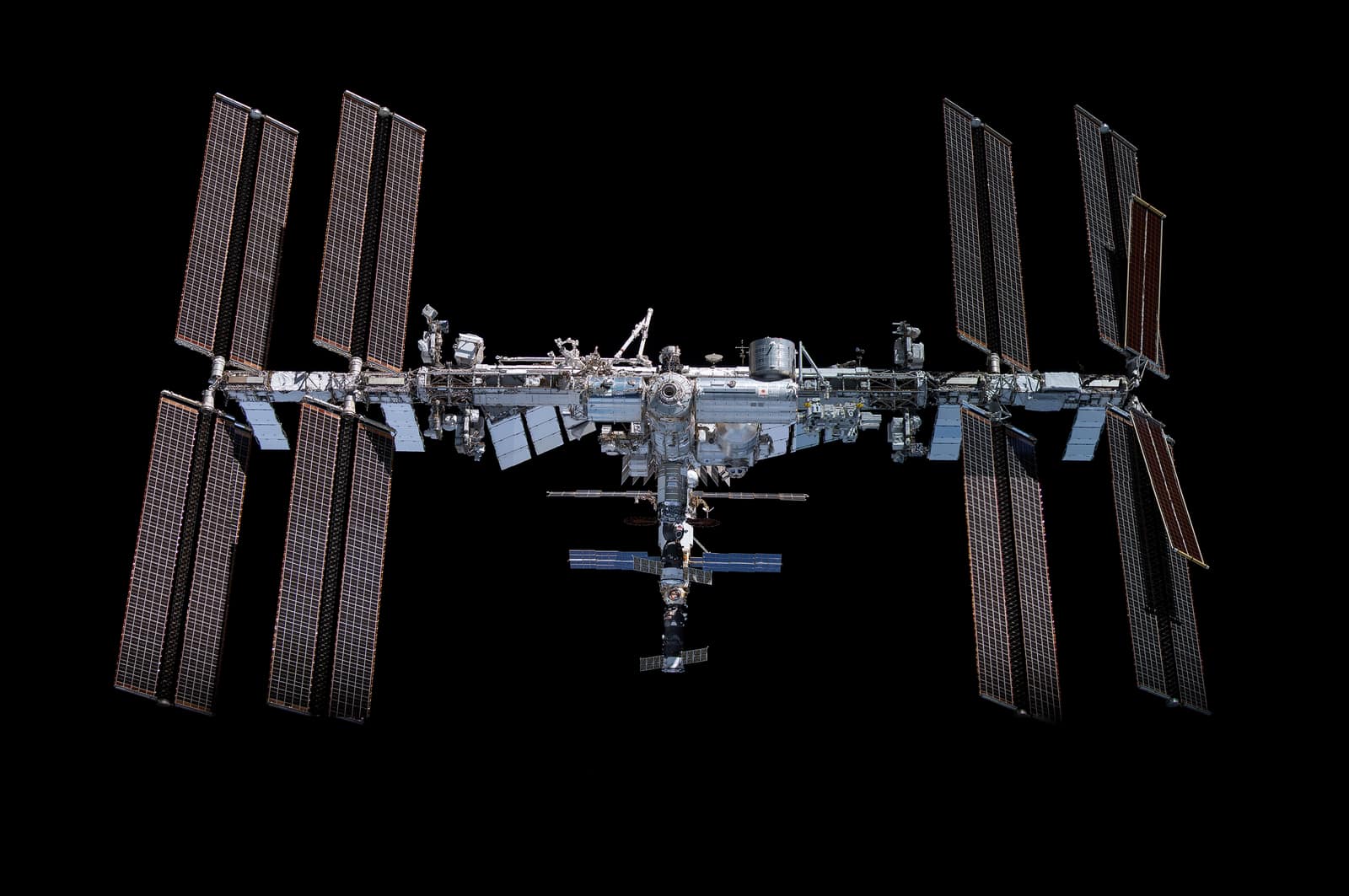
Our traces reach the sky as well. Above us, a station that has held people without a break since 2000 is meant, one day, to be brought down into the Pacific.
NASAPDMOriginal record
6 Asia · after 1998
The International Space Station, a wreck to come
- Dated
- after 1998
- Place
- Baikonur Cosmodrome, Kazakhstan
- Remains
- Intact
In the last weeks of 1998 a single cylinder rose from the steppe of Kazakhstan on a Russian rocket. Its name, Zarya, means dawn. Others followed, American, Russian, European, Japanese, with a Canadian arm to join them together, until a structure almost as long as a football field hung above the clouds.
Since November 2000 there have always been people inside it. They slept strapped to walls, grew plants, repaired leaks, looked down at the planet sixteen times a day. For a whole generation, not every human being was on the Earth.
On the way to step 7
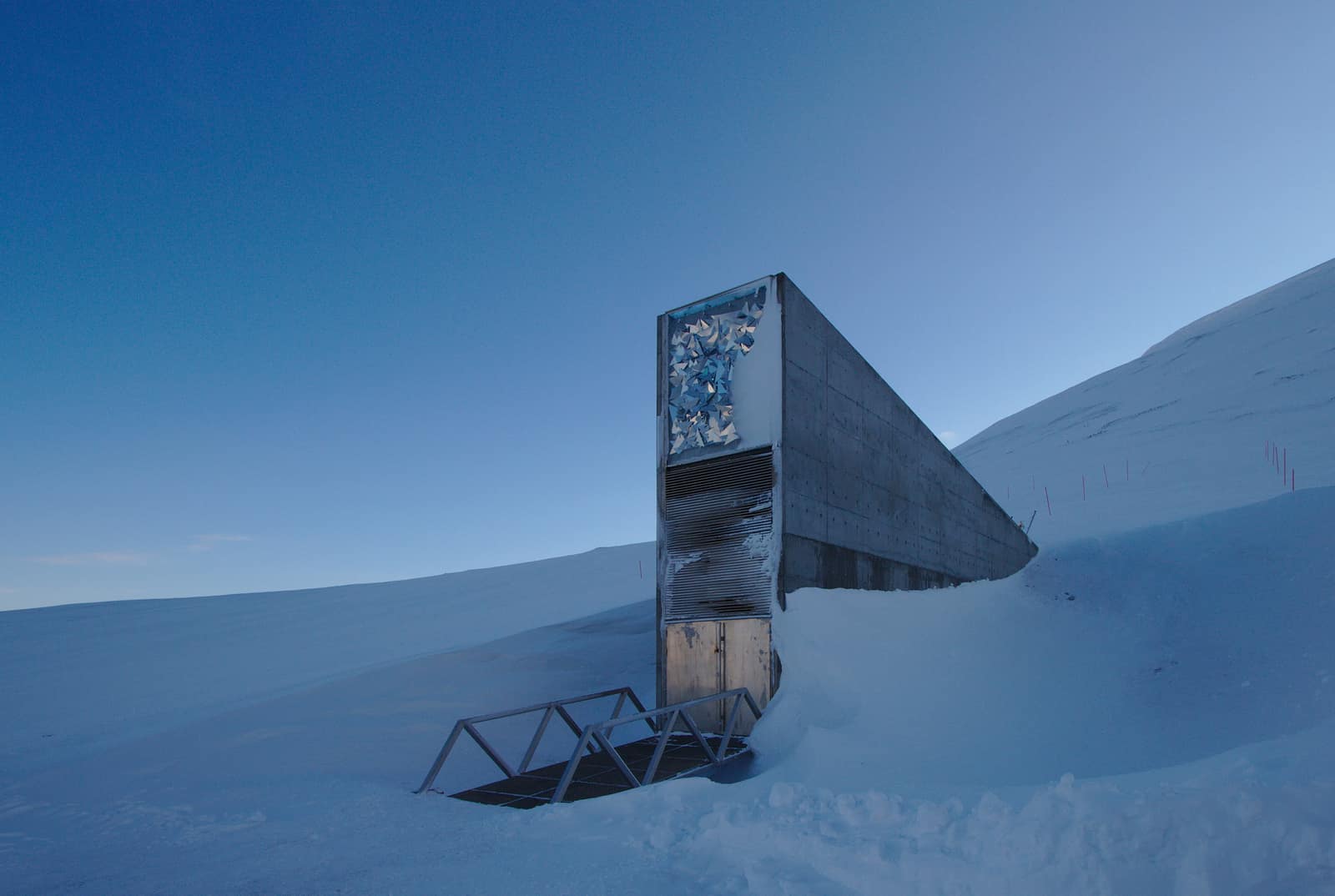
Not every trace is an accident. In the permafrost of Svalbard, the world's genebanks keep copies of their seeds.
Einar Jørgen Haraldseid, CC BY-SA 2.0, via Wikimedia CommonsCC-BY-SA-2.0Original record
7 Europe · 2008
The Svalbard Global Seed Vault
- Dated
- 2008
- Place
- Longyearbyen, Svalbard, Norway
- Remains
- Intact
Do not look for treasure here. Behind the door in the mountain there are only seeds, in plain boxes on metal shelves.
This civilization lived on plants its farmers had shaped over some ten thousand years, and it kept their varieties in genebanks scattered across the world. Genebanks burn, flood, run out of money, fall into wars. So in 2008 Norway opened a vault in the frozen mountain above Longyearbyen, far north on Svalbard, where any genebank could send a copy of its seeds for free and take it back whenever it needed.
On the way to step 8
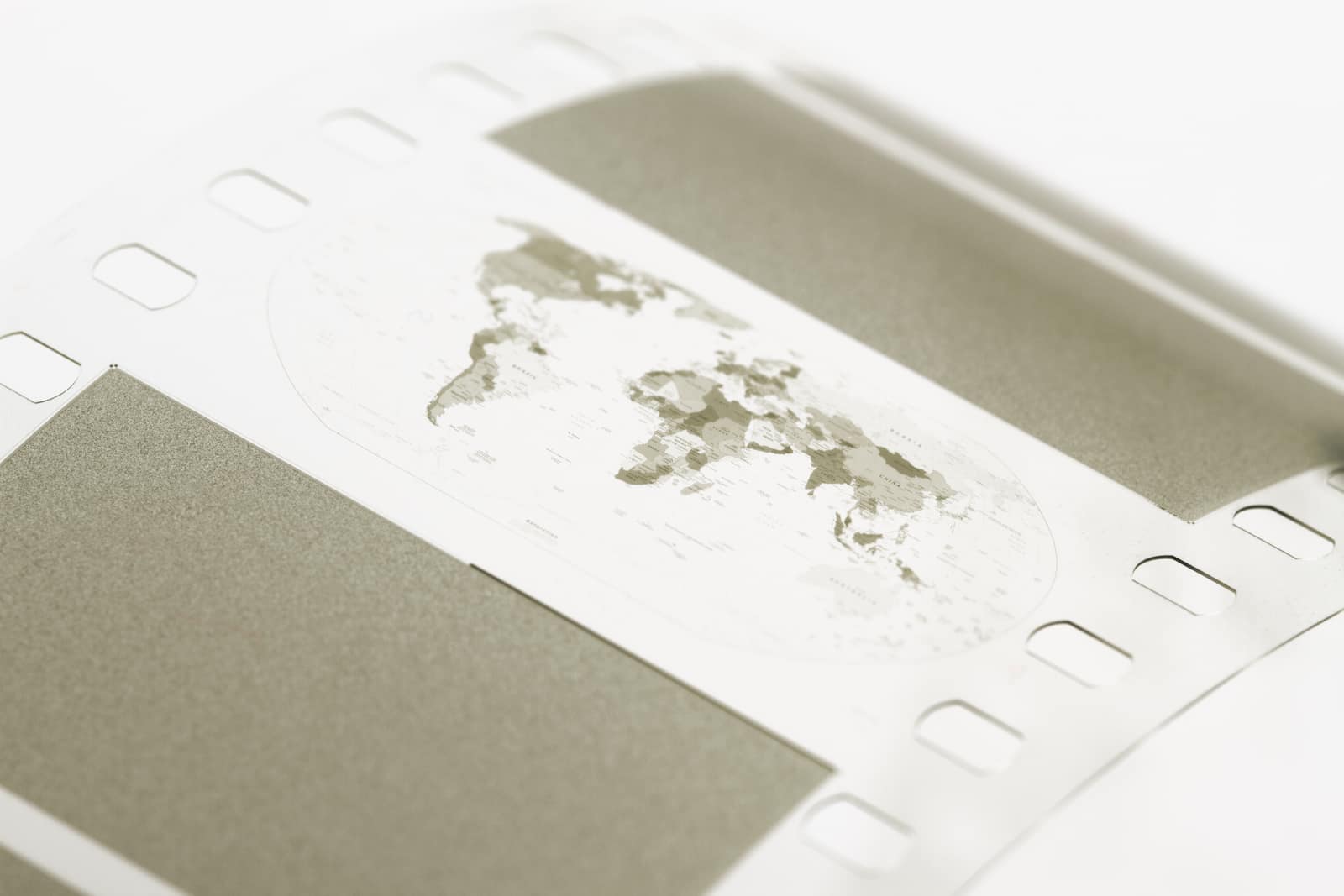
Beside the seeds, in a disused mine on the same archipelago, reels of film keep the public code of 2020.
PiqlAS, CC BY-SA 4.0, via Wikimedia CommonsCC-BY-SA-4.0Original record
8 Europe · 2020
The Arctic Code Vault
- Dated
- 2020
- Place
- Longyearbyen, Svalbard, Norway
- Remains
- Intact
This is a message this civilization knew it was sending.
On 2 February 2020 a company that hosted the code of millions of programmers froze a picture of all the active public projects in its care: operating systems and games, tools for scientists, the programs that ran websites and phones, the small experiments of students. Then it wrote them, not onto disks, but onto film.
End of the journey
Air in the ice, plastic in the rock, seeds and code in the permafrost: some of our traces we chose, others we did not. Which will speak for us in 10,000 years?