Journey · 1 of 7
What we were
Fourteen fragments on what it was to be human: to carry a child, to play, to invite a friend, to lose one's temper, to fall ill, to be cared for, to love, to grieve, and to know that one is only passing through. Five continents, one life.
- Duration
- About 35 minutes
- Steps
- 14 fragments · 5 continents
- Audience
- For everyone
- Languages
- English and French
No sign-in and nothing to fill in: a journey collects nothing from students.
The steps
14 steps
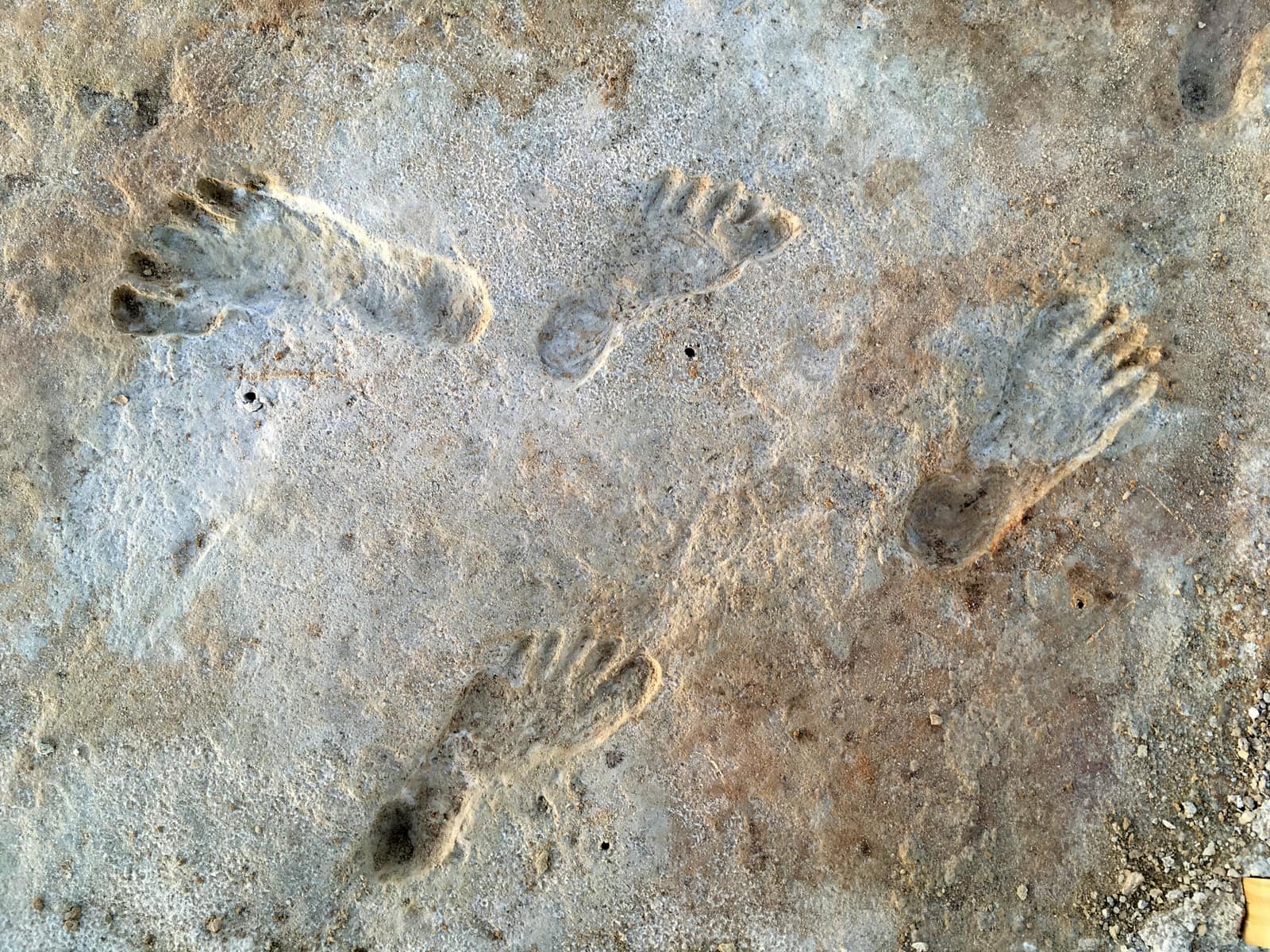
- 1The footprints of White Sands: a child carried across the mudWhite Sands National Park, New Mexico, United States · Americas · before 8000 BCE
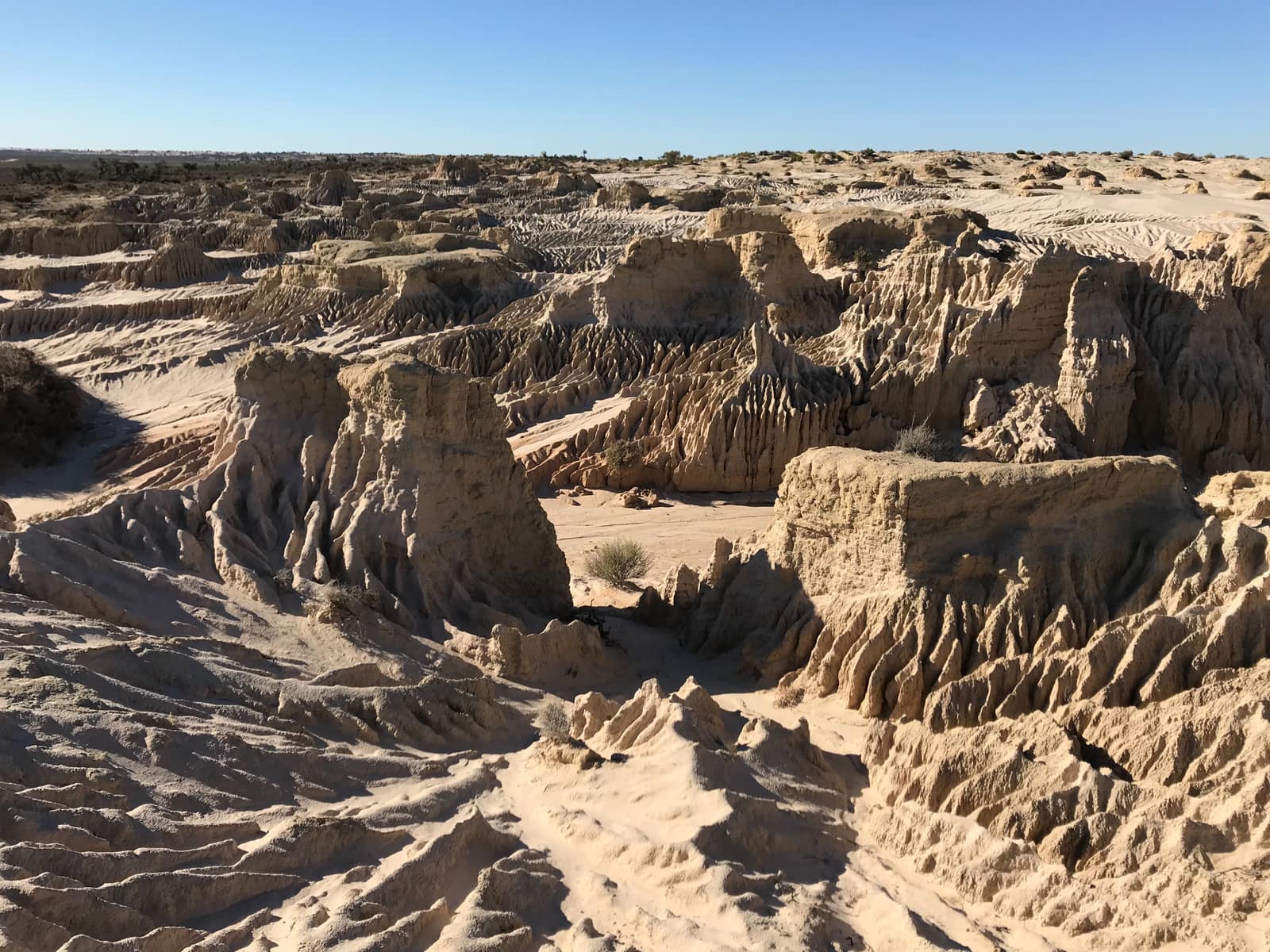
- 2The footprints of the Willandra LakesWillandra Lakes Region World Heritage Area, New South Wales, Australia (exact site not disclosed) · Oceania · c. 23,000 years ago
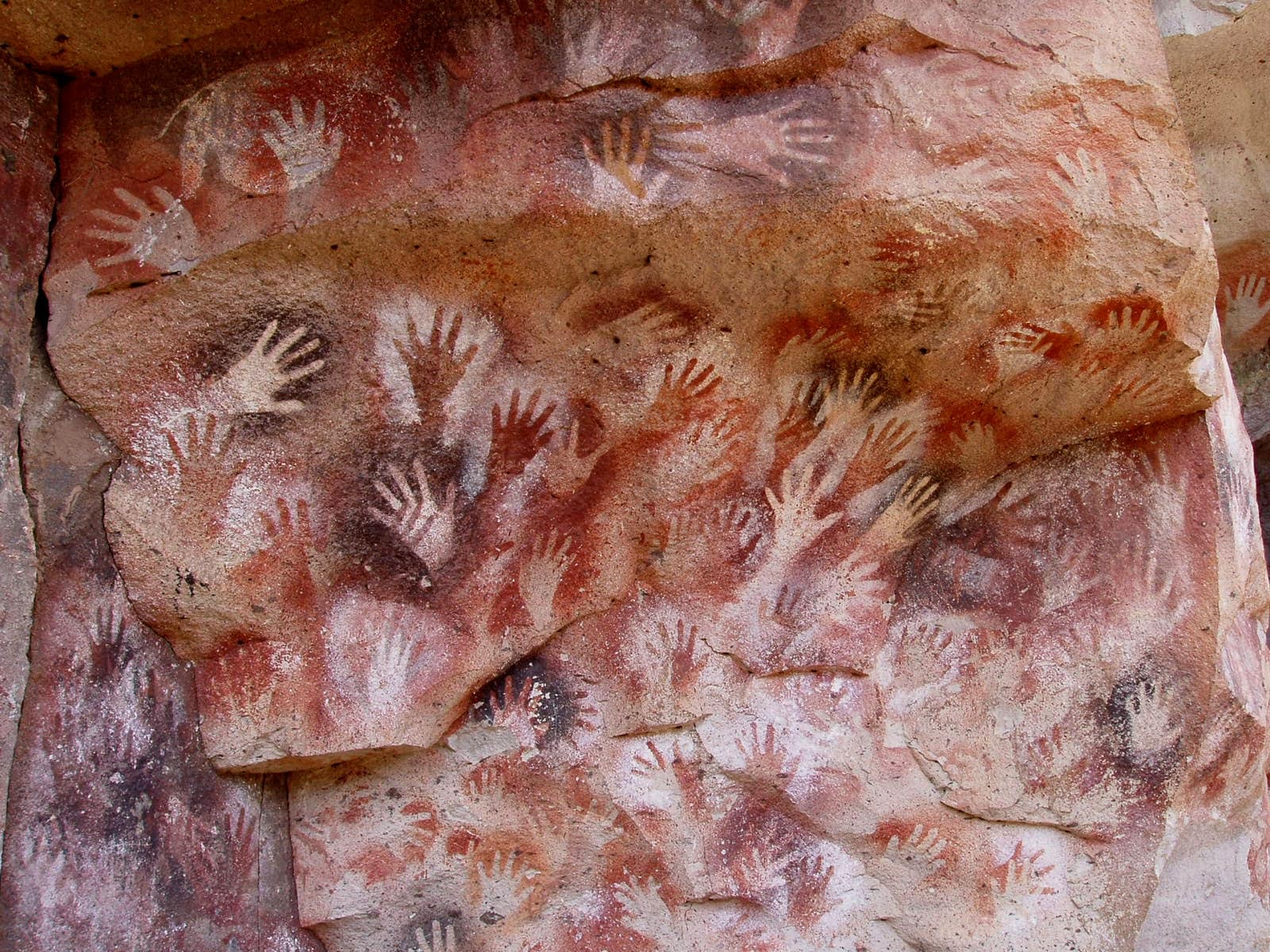
- 3The Cave of the HandsCueva de las Manos, Pinturas River canyon, Santa Cruz Province, Argentina · Americas · 8700 to 6500 BCE
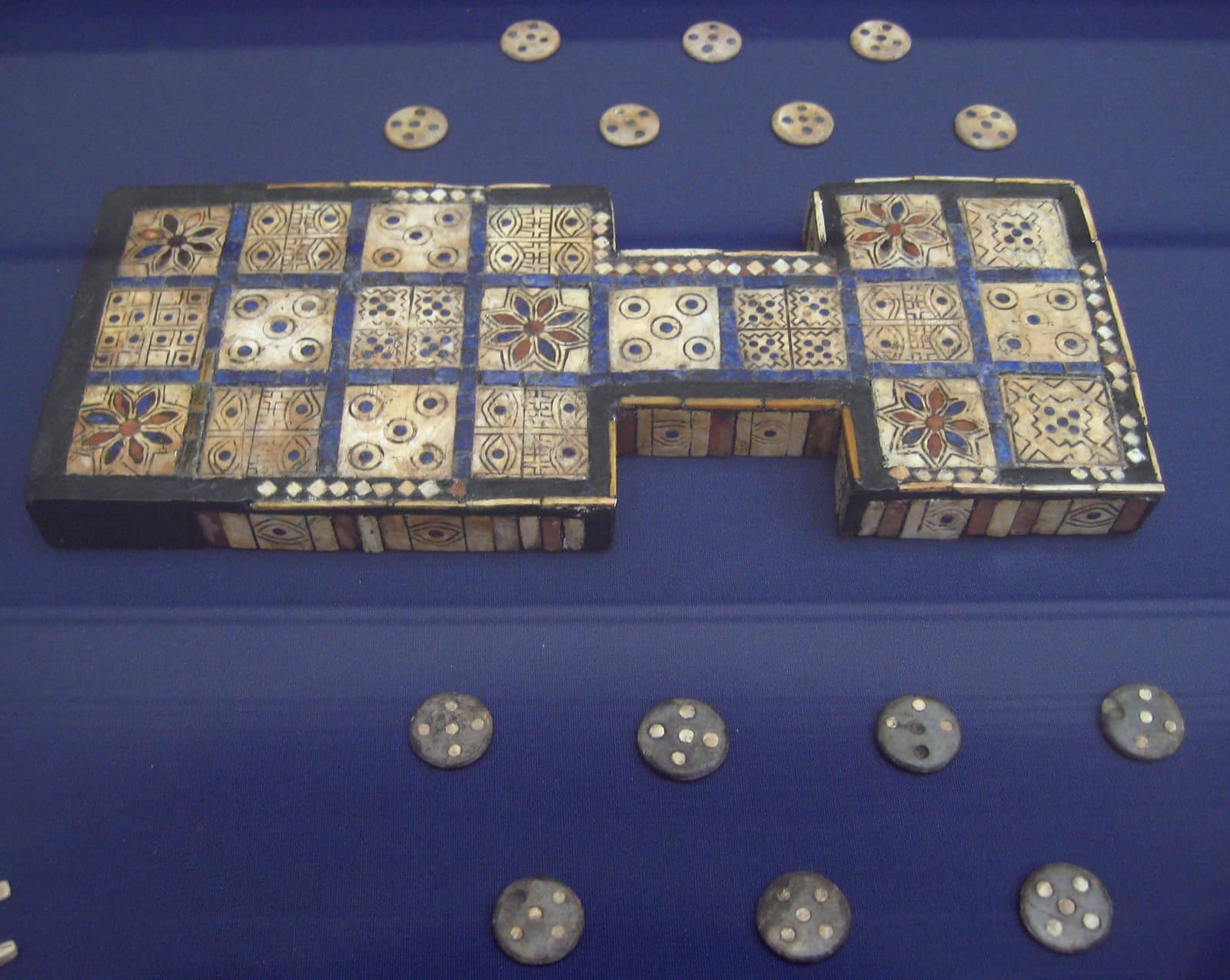
- 4The Royal Game of Ur, and the guards who played itTell al-Muqayyar, Dhi Qar Governorate, Iraq · Asia · 2600 to 2400 BCE
- 5Come to my birthday: Claudia Severa's letter to LepidinaChesterholm, near Bardon Mill, Northumberland, England, United Kingdom · Europe · 97 to 105 CE
- 6Nanni's complaint to Ea-nasirTell al-Muqayyar, near Nasiriyah, Dhi Qar Governorate, Iraq · Asia · c. 1749 BCE
- 7The absence register of Deir el-MedinaDeir el-Medina, west bank of Luxor, Egypt · Africa · c. 1250 BCE
- 8Shanidar 1, a Neanderthal who lived on with his woundsShanidar Cave, Erbil Governorate, Kurdistan Region, Iraq · Asia · c. 70,000 years ago
- 9The Moche portrait vesselsNorth coast of Peru (exact findspot of the vessel shown unknown) · Americas · 100 to 800 CE
- 10Won-i's mother: a letter to a husband in his graveJeongsang-dong, Andong, North Gyeongsang Province, South Korea · Asia · 1586
- 11Ère ìbejì: a figure for a twin who diedSouthwestern Nigeria · Africa · 1875 to 1925
- 12Mtoto, the child of Panga ya SaidiPanga ya Saidi, Kilifi County, Kenya · Africa · c. 78,000 years ago
- 13Only a little while here: the songs of NezahualcóyotlTexcoco, State of Mexico, Mexico · Americas · 1431 to 1582
- 14Tevfik Esenç, the last voice of UbykhHacıosman, Manyas, Balıkesir Province, Turkey · Asia · 1992
National Park Service / U.S. Geological Survey, domaine public, via Wikimedia CommonsPDMOriginal record
1 Americas · before 8000 BCE
The footprints of White Sands: a child carried across the mud
- Dated
- before 8000 BCE
- Place
- White Sands National Park, New Mexico, United States
- Remains
- Fragmentary
Someone crossed the mud here with a child in their arms. The prints are those of a small woman, or perhaps an adolescent, walking fast and straight across the wet flats of a lake that no longer exists. Where the weight shifted from one arm to the other, the feet slipped and splayed. Now and then, beside the adult's steps, much smaller feet appear: a child under three, set down for a moment, then lifted again.
We do not know what this civilization called itself, or what language was spoken on that shore. The place now lies in the United States; the people who walked it lived thousands of years before any nation. What the prints keep is simpler: the weight of a child, and the ache in the arms that makes you stop, put them down, and pick them up once more.
On the way to step 2
Begin with a walk. Across a muddy lakeshore in what is now New Mexico, someone carried a small child, set it down for a moment, and picked it up again.
Rueparadis, CC BY-SA 4.0, via Wikimedia CommonsCC-BY-SA-4.0Original record
2 Oceania · c. 23,000 years ago
The footprints of the Willandra Lakes
- Dated
- c. 23,000 years ago
- Place
- Willandra Lakes Region World Heritage Area, New South Wales, Australia (exact site not disclosed)
- Remains
- Fragmentary
At the edge of a shallow soak, some twenty thousand years ago, a group of people walked across wet clay. The water has long gone. What stays is the shape of their passing.
Adults crossed in both directions. Several men ran side by side, fast, perhaps after an animal. Children walked among them, one no older than four or five. In one place, two small wavy lines curl through the clay: a child's fingers, trailed through the mud for no reason at all.
On the way to step 3
On the other side of the world, near the height of the last ice age, children ran through the soft clay of a wetland, and the clay kept their steps.
Mariano, CC BY-SA 3.0, via Wikimedia CommonsCC-BY-SA-3.0Original record
3 Americas · 8700 to 6500 BCE
The Cave of the Hands
- Dated
- 8700 to 6500 BCE
- Place
- Cueva de las Manos, Pinturas River canyon, Santa Cruz Province, Argentina
- Remains
- Intact
Above a river that had cut a deep canyon into the Patagonian plateau, the people of this civilization came back, again and again, to the same wall. They ground pigment, red, yellow, white and black, pressed a hand flat against the rock, and blew the colour around it. When the hand came away, its absence stayed.
Hundreds of these absences now crowd the stone. They overlap, small and large, the hands of people of different ages set side by side as if each answered the one before. Around them run guanacos, the animals these hunters followed across the steppe, and scenes in which many small figures close in on a herd together.
On the way to step 4
Feet leave traces by accident. Hands can leave them on purpose: pressed to the rock, outlined in blown pigment, hundreds of them, side by side.
BabelStone, CC0, via Wikimedia CommonsCC0-1.0Original record
4 Asia · 2600 to 2400 BCE
The Royal Game of Ur, and the guards who played it
- Dated
- 2600 to 2400 BCE
- Place
- Tell al-Muqayyar, Dhi Qar Governorate, Iraq
- Remains
- Fragmentary
This civilization played. In a grave at Ur, around 2600 BCE, someone was laid to rest with a board of twenty squares, its shell faces set with rosettes and eyes, a hollow box that held the pieces and the dice. The archaeologist who found it poured hot wax over it square by square, so that nothing would slide.
The game outlived the city's kings. Nineteen centuries later, at the gate of an Assyrian citadel, a stone bull taller than two men guarded the passage against evil. Between its hooves, someone scratched the same grid into the gypsum, rough and uneven, the way one draws a board when there is nothing else to do and a long watch ahead.
On the way to step 5
People did not only survive. They played. In the city of Ur, a board of shell and lapis held a game, and its squares were scratched much later into stone, perhaps by guards with time to kill.
Fæ, CC BY-SA 3.0, via Wikimedia CommonsCC-BY-SA-3.0Original record
5 Europe · 97 to 105 CE
Come to my birthday: Claudia Severa's letter to Lepidina
- Dated
- 97 to 105 CE
- Place
- Chesterholm, near Bardon Mill, Northumberland, England, United Kingdom
- Remains
- Fragmentary
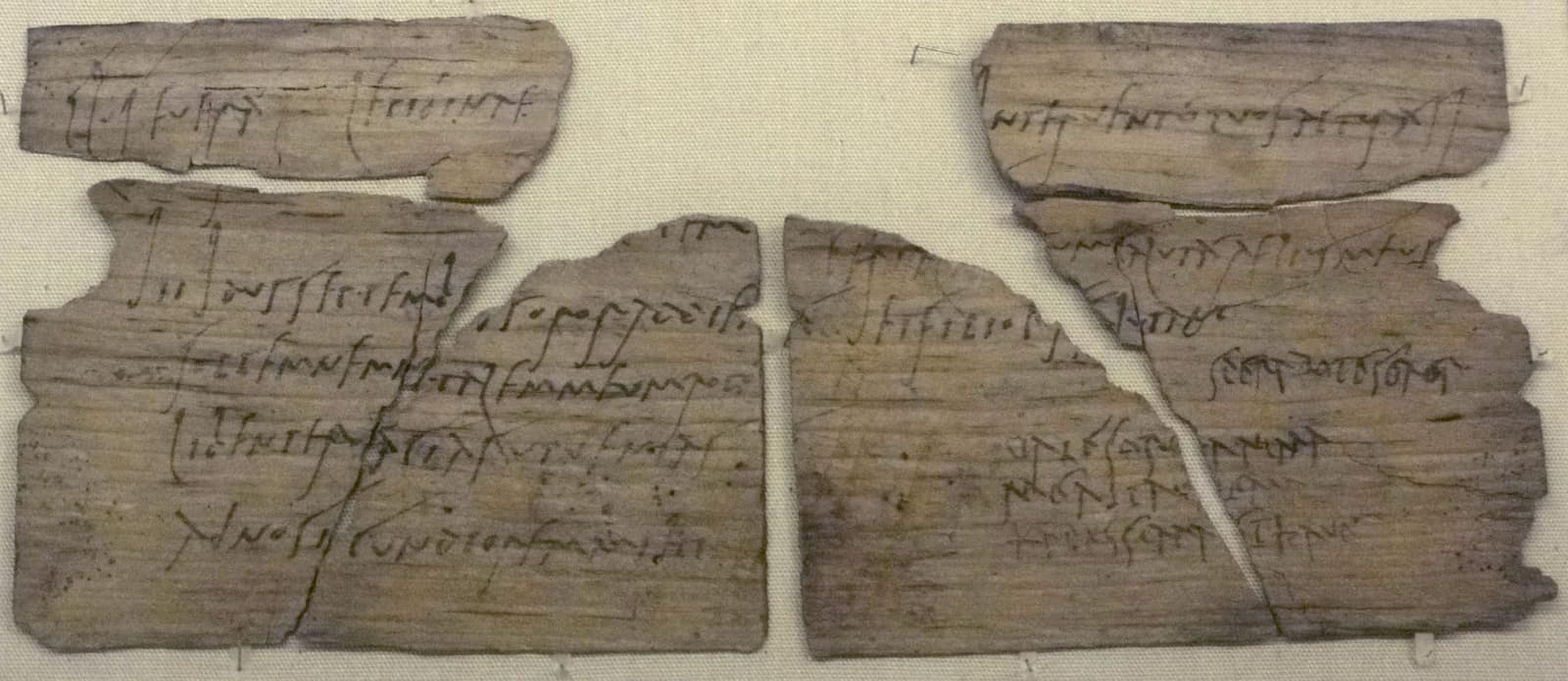
On a thin leaf of wood, a scribe first wrote out the invitation in a neat, practised hand. Claudia Severa, wife of Aelius Brocchus, asked her friend Sulpicia Lepidina to come to her on 11 September, for her birthday: her arrival, she said, would make the day more enjoyable. Greetings to Lepidina's husband; greetings from her own husband and her little son.
Then Severa took the pen herself. The letters change. They lean, they crowd together, they are less sure of themselves. "I shall expect you, sister. Farewell, sister, my dearest soul, as I hope to prosper, and hail." As far as anyone knows, the two women were not sisters. This civilization gave that name to a friend it could not do without.
On the way to step 6
They also wanted each other's company. At the northern edge of the Roman world, one woman wrote to another: come to my birthday.
Joel Bellviure, CC BY 4.0, via Wikimedia CommonsCC-BY-4.0Original record
6 Asia · c. 1749 BCE
Nanni's complaint to Ea-nasir
- Dated
- c. 1749 BCE
- Place
- Tell al-Muqayyar, near Nasiriyah, Dhi Qar Governorate, Iraq
- Remains
- Intact
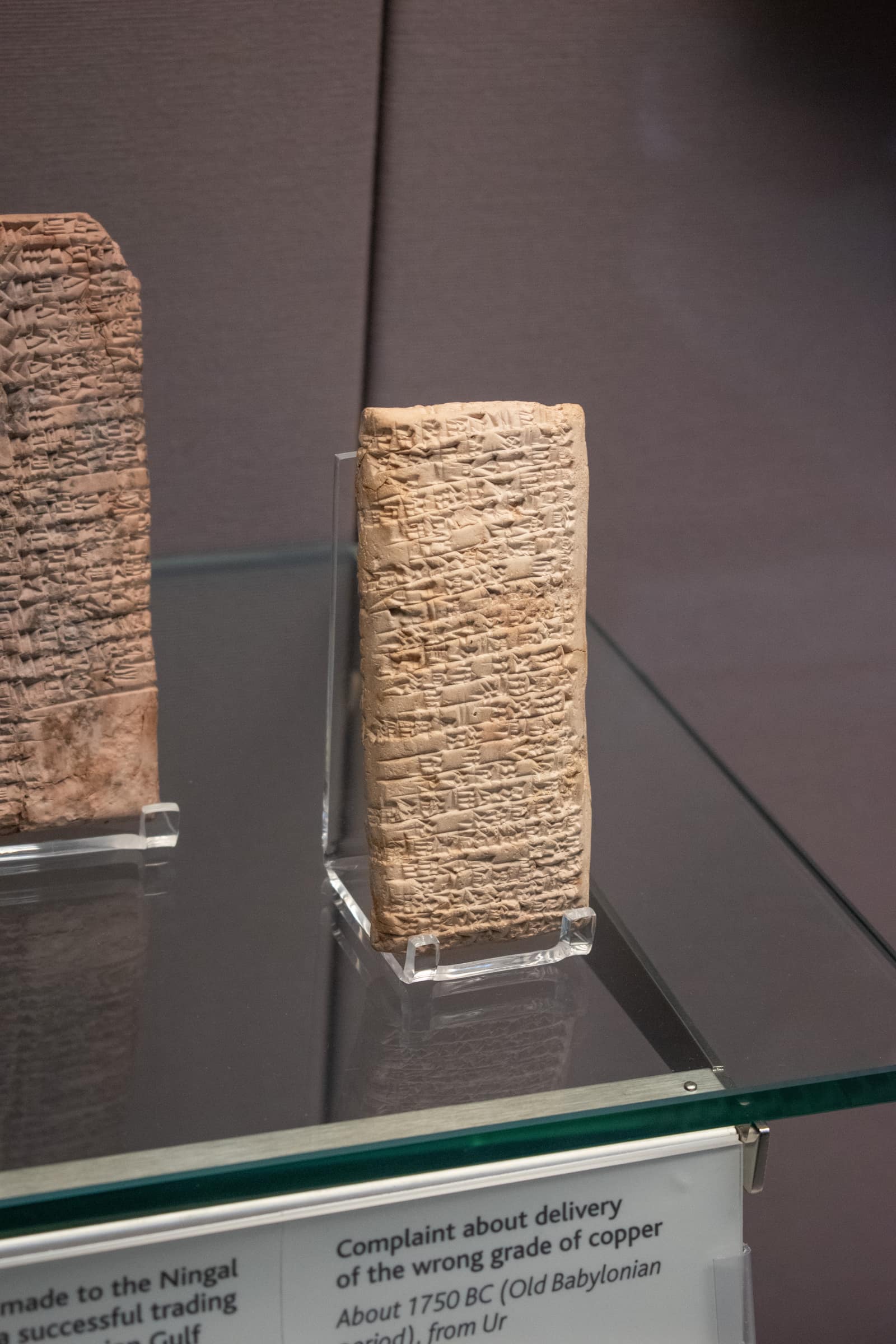
Nanni was angry, and he wanted it in writing. His words were pressed into a tablet of clay no longer than a hand, and they have not cooled.
He had been promised fine copper by Ea-nasir, a merchant of Ur who traded with Dilmun, across the Gulf. When his messenger came to collect it, Ea-nasir set out poor ingots and said: take them if you want them; if not, go away. "What do you take me for," Nanni answered, "that you treat somebody like me with such contempt?" His men had been sent back empty-handed, again and again, through enemy country. From now on, he warned, he would choose each ingot himself, in his own yard.
On the way to step 7
Not every letter was kind. In Ur, about 1750 BCE, a man named Nanni pressed his anger into clay over a shipment of copper he found unworthy.
Gildas Guionnet, CC BY-SA 4.0, via Wikimedia CommonsCC-BY-SA-4.0Original record
7 Africa · c. 1250 BCE
The absence register of Deir el-Medina
- Dated
- c. 1250 BCE
- Place
- Deir el-Medina, west bank of Luxor, Egypt
- Remains
- Intact
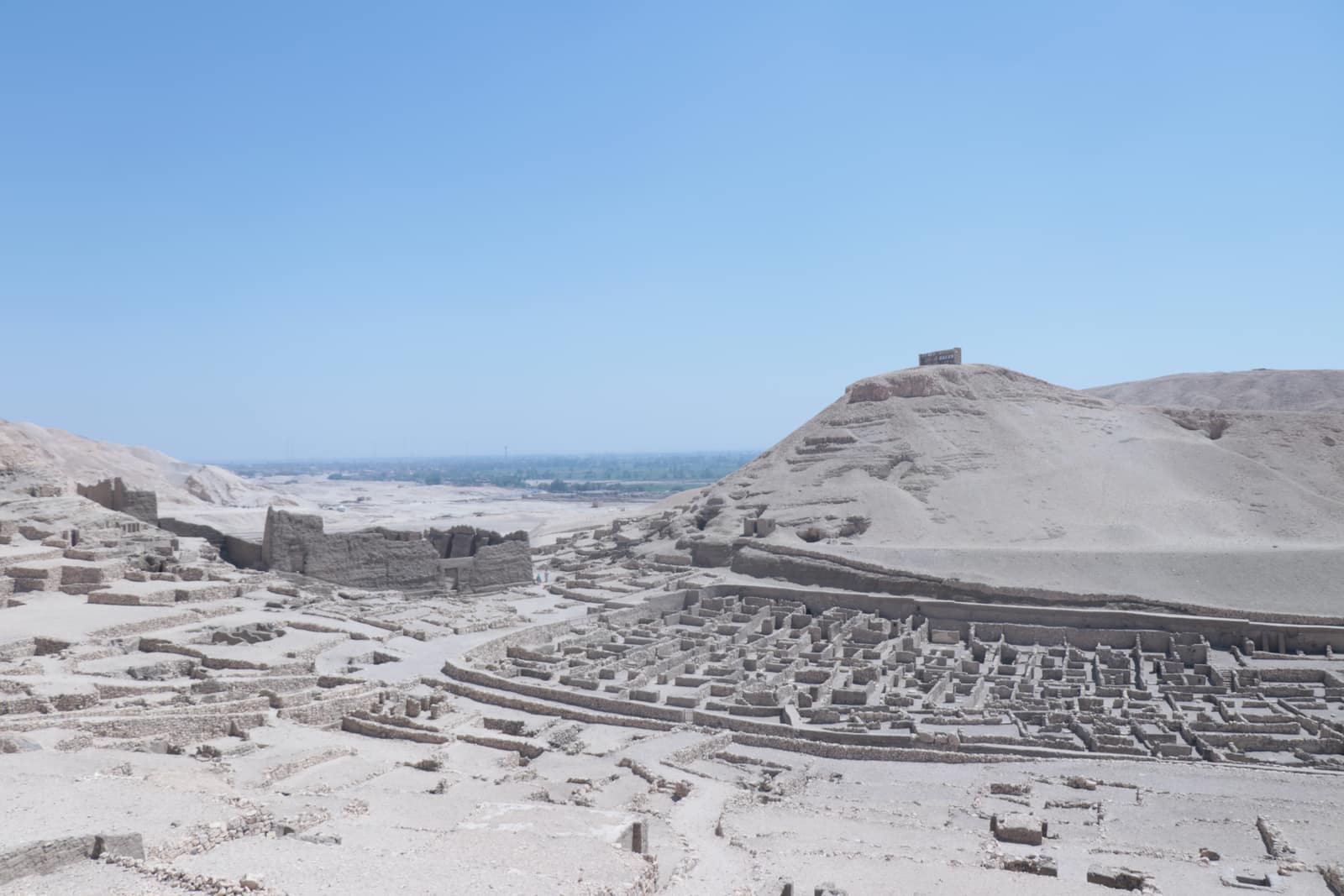
In the village of the men who cut the royal tombs, someone kept count of who did not come to work. Through a long year of Ramesses II's reign, a scribe took a flat flake of pale limestone, the size of a large book, and wrote forty names down its edge in black ink. Beside each name he set the days missed, and above the dates, in red, the reason.
The reasons are the life of the village. A man was ill; two had bad eyes; one had been stung by a scorpion. Men stayed home to brew, to make ready for a festival, to embalm and mourn their dead. Paherypedjet, who seems to have been the one who healed, was forever away, preparing remedies or sitting with the sick. Ten men were away because a wife or a daughter was bleeding. Others were building their own houses, or carrying stones for the scribe himself. Two men missed nothing at all.
On the way to step 8
Most days were ordinary. In the village of the tomb builders of Egypt, a scribe noted why men stayed home: an eye disease, a scorpion sting, a festival, a death in the family.
Osama Shukir Muhammed Amin FRCP(Glasg), CC BY-SA 4.0, via Wikimedia CommonsCC-BY-SA-4.0Original record
8 Asia · c. 70,000 years ago
Shanidar 1, a Neanderthal who lived on with his wounds
- Dated
- c. 70,000 years ago
- Place
- Shanidar Cave, Erbil Governorate, Kurdistan Region, Iraq
- Remains
- Fragmentary
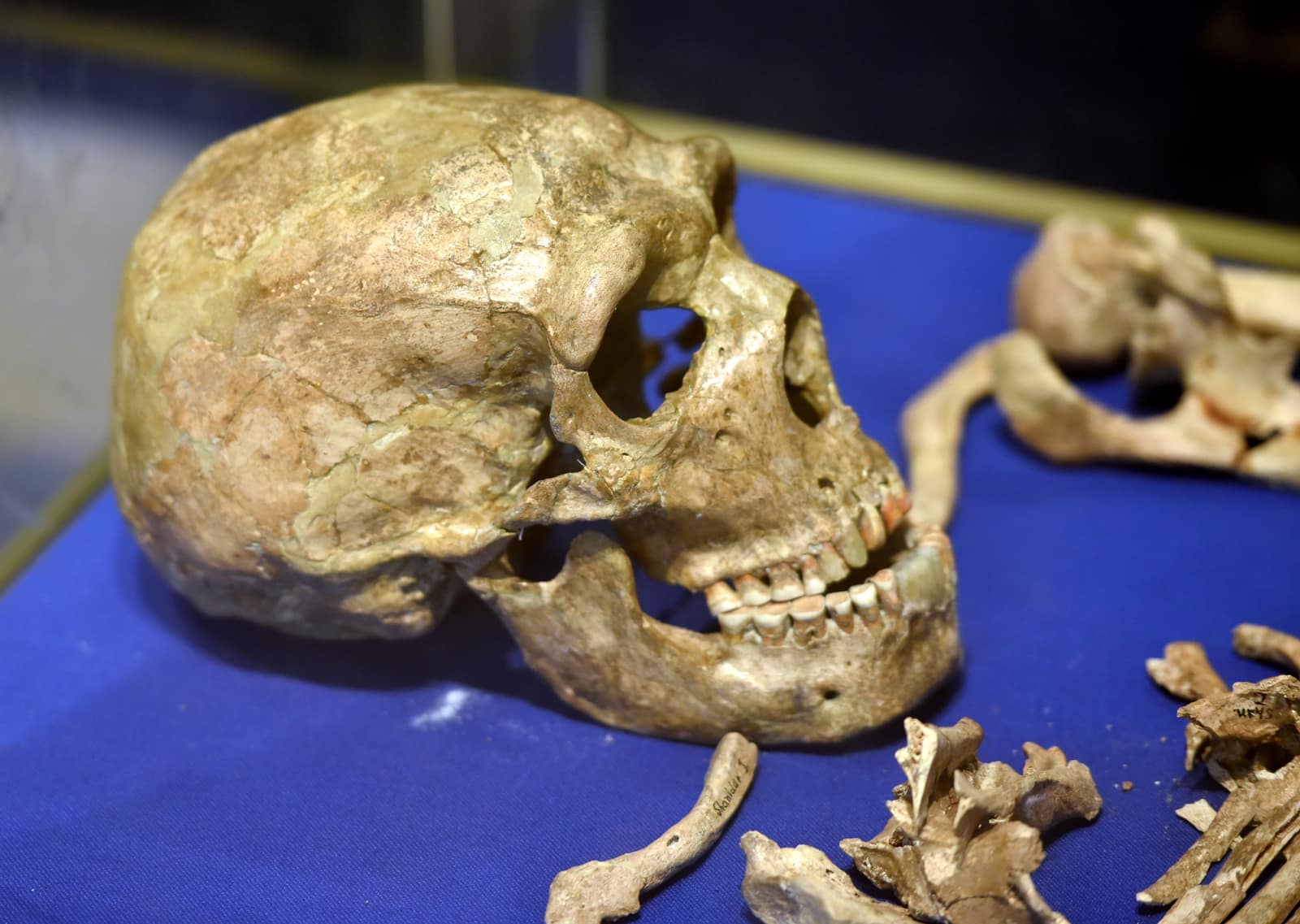
He was not one of us, and he was very close to us. The Neanderthals were another humanity, with whom our ancestors met and had children, and whose traces some of us still carry.
This man lived in the mountains of what is now Iraqi Kurdistan. At some point in his life a blow crushed the bone around his left eye. His right arm withered after a break, and he lost the hand. His legs were injured and he walked with a limp. Bone had grown over his ear canals until he could hardly hear.
On the way to step 9
When someone could no longer manage alone, others stayed. A Neanderthal man lived on for years with injuries he could not have survived by himself.
The Metropolitan Museum of Art, Gift of Henry G. Marquand, 1882 (82.1.28), Open Access, CC0CC0-1.0Original record
9 Americas · 100 to 800 CE
The Moche portrait vessels
- Dated
- 100 to 800 CE
- Place
- North coast of Peru (exact findspot of the vessel shown unknown)
- Remains
- Intact
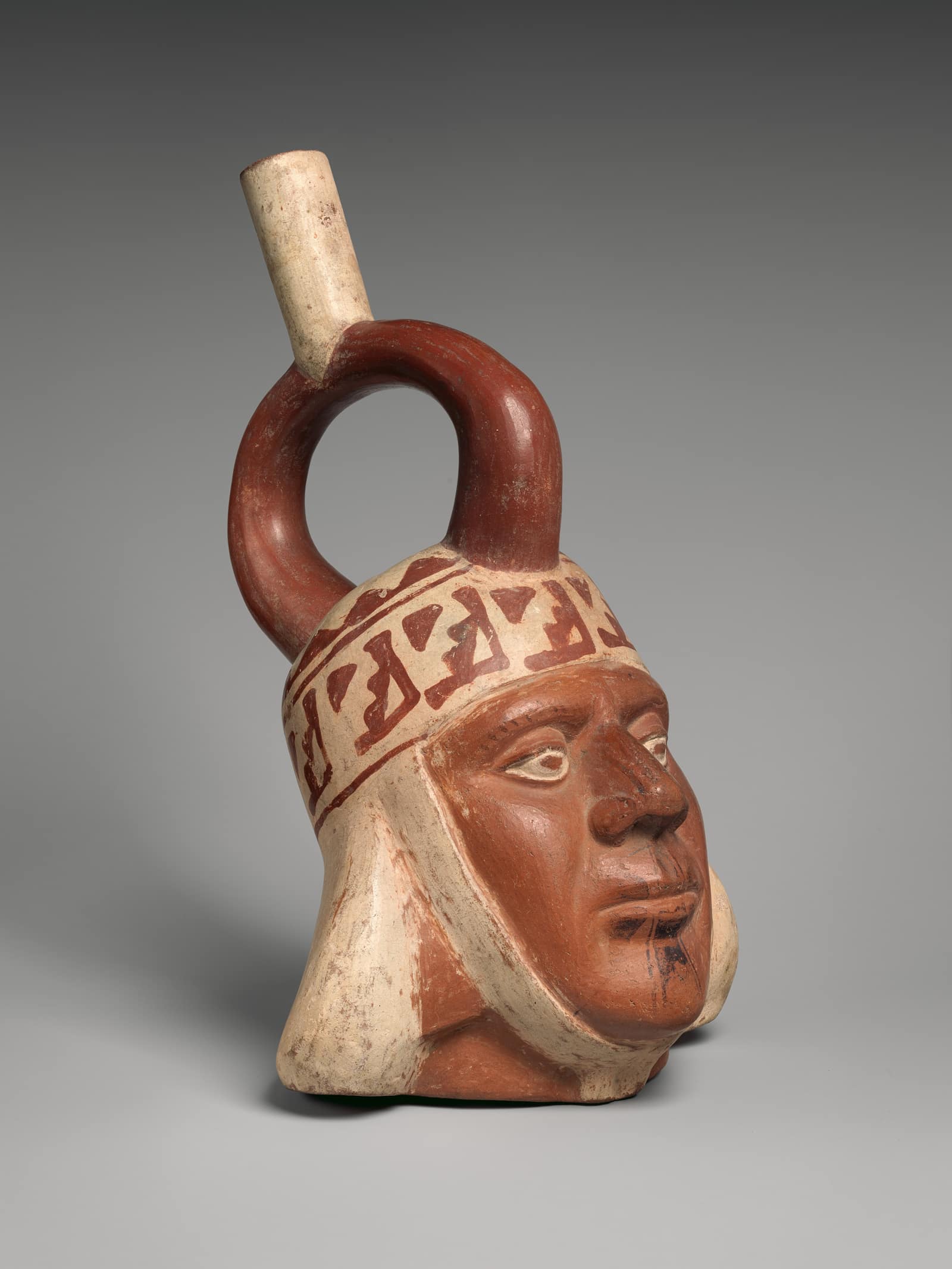
A potter pressed clay around a face and a person came out of it: heavy jaw, full lips a little apart, eyes that seem about to turn. Not a god, not a type. Someone.
The Moche of Peru's north coast made hundreds of such heads between about 100 and 800 CE, many of them as bottles with a looped spout on top. Some of the faces can be followed from one vessel to another. One man appears as a boy with soft cheeks, then as a young man with red paint on his face, then in his thirties with ear ornaments, the small scar on his upper lip always in the same place. Archaeologists call him Cut Lip. His own name is lost.
On the way to step 10
Each of them had a face that others knew. On the north coast of Peru, potters modelled the faces of living people, and sometimes the same man at different ages.
Letter of Won-i's mother to Yi Eung-tae, 1586, public domain, via Wikimedia CommonsPDMOriginal record
10 Asia · 1586
Won-i's mother: a letter to a husband in his grave
- Dated
- 1586
- Place
- Jeongsang-dong, Andong, North Gyeongsang Province, South Korea
- Remains
- Intact
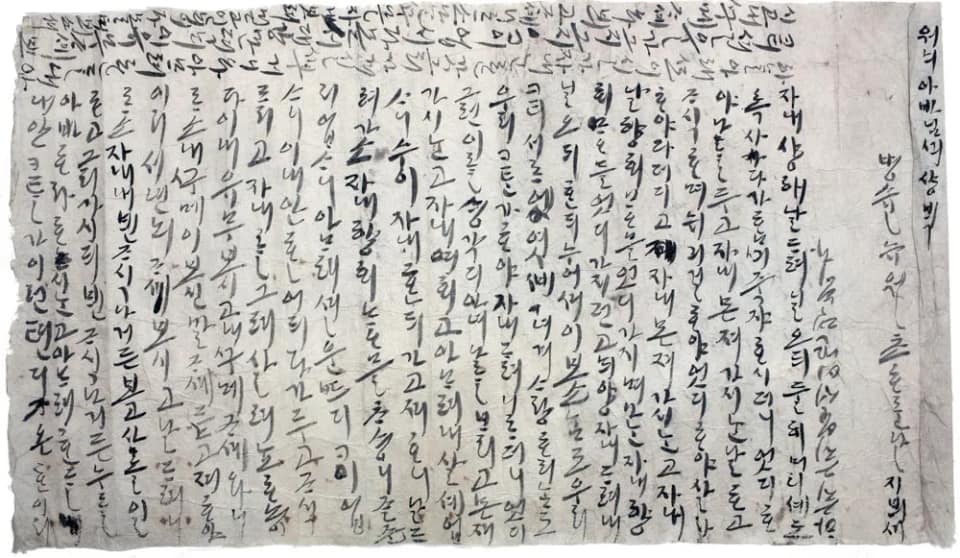
She wrote to him after he had died. Her name was not kept; we know her only as the mother of Won-i, their child. Her husband, Yi Eung-tae, had died at thirty-one, in Andong, in 1586, and she was expecting another child.
She did not write in the classical Chinese of learned men, but in hangeul, the alphabet of ordinary Korean speech, the words she would have said aloud. You always told me, she writes, that we would live until our hair turned white and die together. How could you go first?
On the way to step 11
Faces were loved, and lost. In Korea, in 1586, a widow wrote to her husband after his death and laid the letter in his grave.
The Cleveland Museum of Art, Gift of Kim Sherwin, 2016.9, CC0CC0-1.0Original record
11 Africa · 1875 to 1925
Ère ìbejì: a figure for a twin who died
- Dated
- 1875 to 1925
- Place
- Southwestern Nigeria
- Remains
- Intact
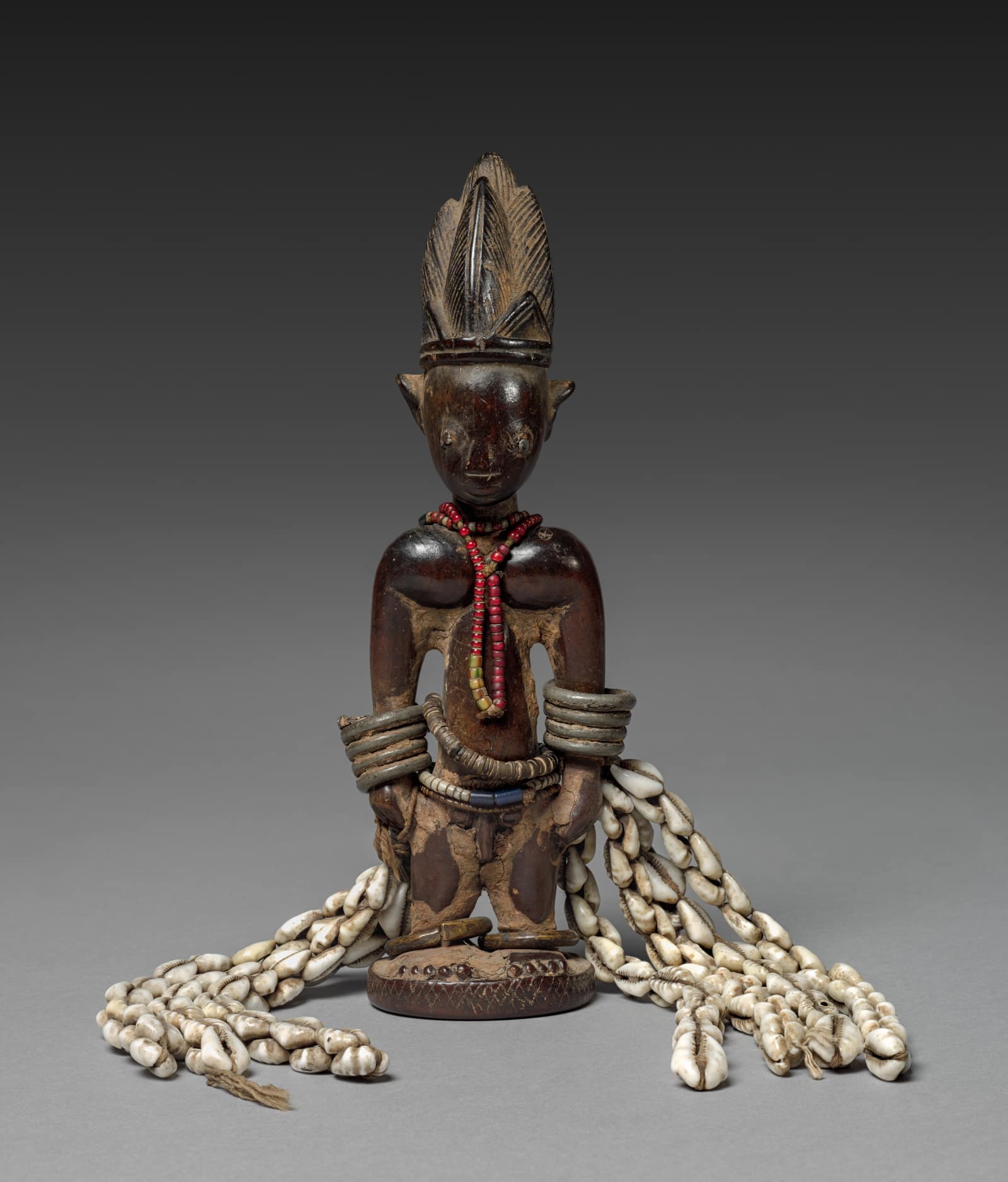
When a twin died, among the Yorùbá, the family consulted a diviner, and a carver was asked for a figure small enough to hold in the palm. He did not carve an infant. He carved an adult, upright, with a high crest of hair, a person in the fullness of a life the child would not have.
For those who asked for it, the figure was not a portrait and not a toy. Twins were thought to share a single soul, and a twin left alone was in danger. The figure stood in for the one who had gone. So the mother took it home and cared for it as for a baby. She washed it, rubbed it with red camwood, touched food to its mouth, dressed it in beads and cowries. On feast days she danced with it in her hands or tucked into the cloth at her waist.
On the way to step 12
Grief found its own forms. Among the Yorùbá, when a twin died, a small figure was carved, and the mother cared for it as for the child.
Ceri Shipton, CC BY-SA 4.0, via Wikimedia CommonsCC-BY-SA-4.0Original record
12 Africa · c. 78,000 years ago
Mtoto, the child of Panga ya Saidi
- Dated
- c. 78,000 years ago
- Place
- Panga ya Saidi, Kilifi County, Kenya
- Remains
- Fragmentary
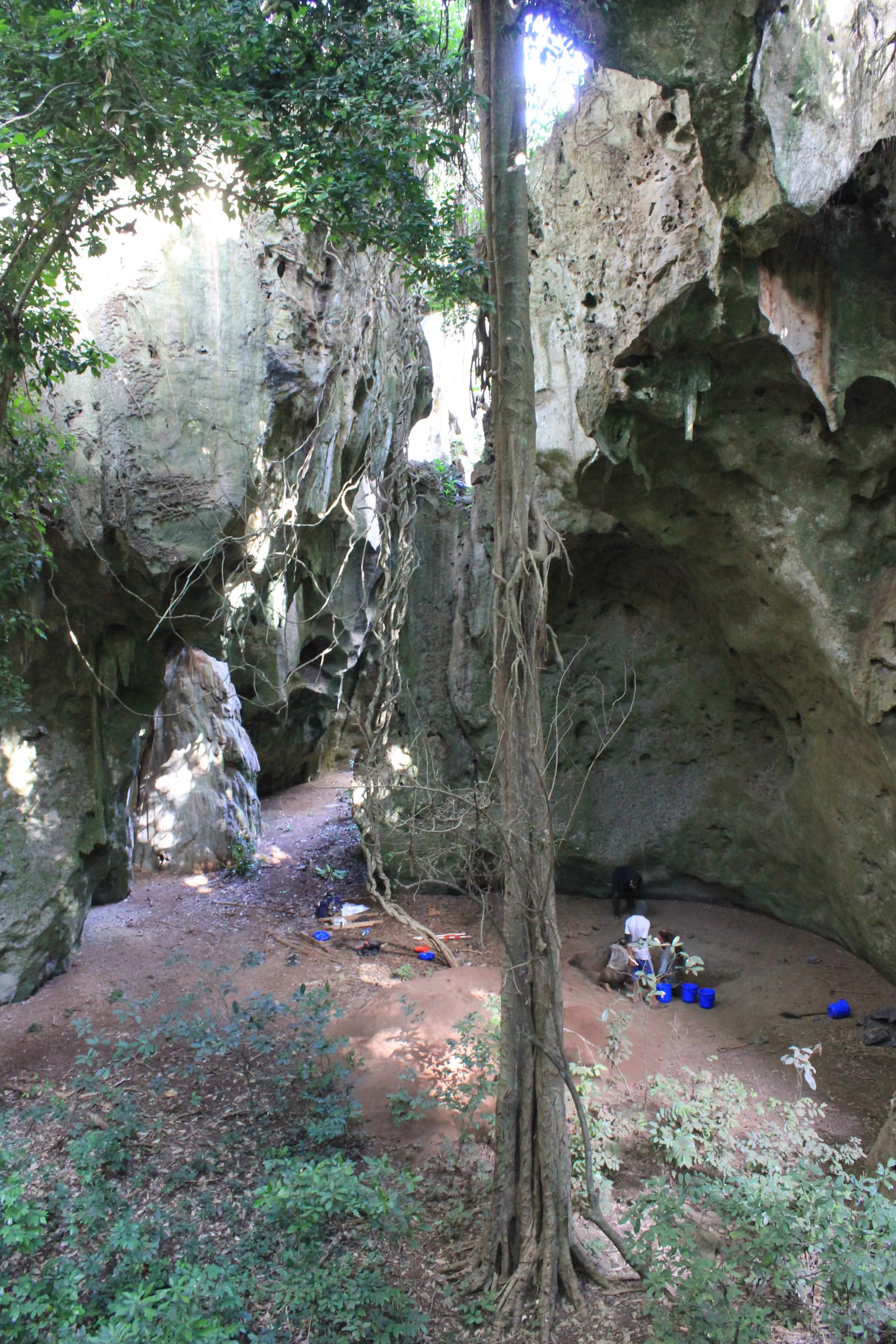
Under the overhang of a cave in the green hills behind the Kenyan coast, someone dug a small pit in the floor. It was shallow, just long enough for a child of two or three, who was laid on the right side with the knees drawn up to the chest, the way children sleep.
The body was probably wrapped close, perhaps in a hide; nothing of the wrapping is left, only the way the small bones lie tight together. The head had been set on something soft, and when that rotted, the head sank a little. Then earth was pushed back over the child, and nothing moved again. No bead, no tool was placed alongside. What was given was the care itself.
On the way to step 13
It is very old, this care for the dead. On the coast of Kenya, some 78,000 years ago, a small child was laid on its side in a grave, knees drawn up, as if asleep.
Codex Ixtlilxochitl, folio 106r, Bibliothèque nationale de France (Mexicain 65-71), domaine public, via Wikimedia CommonsPDMOriginal record
13 Americas · 1431 to 1582
Only a little while here: the songs of Nezahualcóyotl
- Dated
- 1431 to 1582
- Place
- Texcoco, State of Mexico, Mexico
- Remains
- Fragmentary
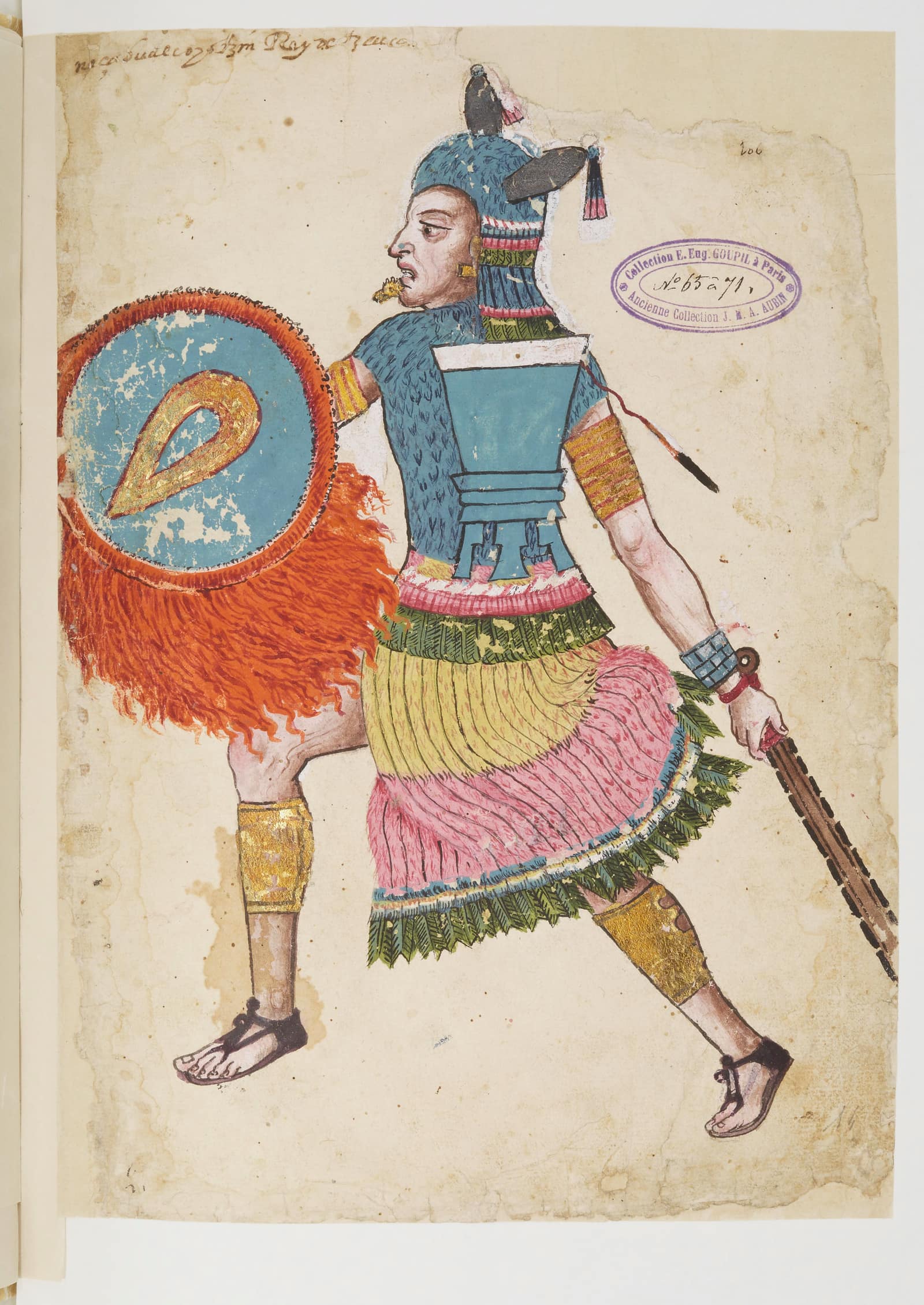
A lord of Texcoco, in the fifteenth century, is remembered less for his wars than for a question. Nezahualcóyotl, whose name speaks of a fasting coyote, ruled the city on the eastern shore of the lake of Mexico from 1431 until 1472. Around his name, songs were sung to the beat of drums, and some of them outlived the fall of his world.
One of them asks whether it is true that one lives on earth, and answers: "Not forever on earth, only a little while here." Then it counts what does not last. Jade cracks. Gold breaks. The long green feathers of the quetzal tear.
On the way to step 14
Some knew they were only passing through. A poet king of Texcoco sang that no one stays on the earth for ever, only a little while here.
Rhona Fenwick, CC0, via Wikimedia CommonsCC0-1.0Original record
14 Asia · 1992
Tevfik Esenç, the last voice of Ubykh
- Dated
- 1992
- Place
- Hacıosman, Manyas, Balıkesir Province, Turkey
- Remains
- Digital
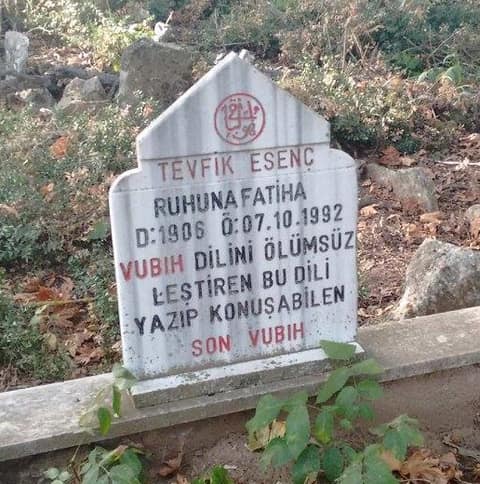
In the village cemetery of Hacıosman, in the north-west of Turkey, a small white stone stands among the weeds. Its words are in Turkish. They say that the man beneath it was the last Ubykh who could write and speak the Ubykh language, and that he made it immortal. He chose those words himself.
Tevfik Esenç was born in that village some forty years after his people had been driven from the mountains above the Black Sea, near Sochi, in 1864. His grandparents raised him and spoke to him in Ubykh, a language so crowded with consonants, around eighty of them, that it became a legend among linguists. He went to them. In Paris and in Oslo he sat for long hours with Georges Dumézil and Hans Vogt, repeating words, correcting them, telling stories onto magnetic tape. One of the stories he recorded in 1968 is the story of the exile.
End of the journey
A whole way of speaking can pass too. In 1992, in Turkey, the last man who spoke Ubykh as his mother tongue died, and the language went quiet with him.