Journey · 6 of 7
Healing the body
Eight fragments on how people learned to treat wounds, prevent disease, spare pain and replace a failing heart, from an Egyptian papyrus to the end of smallpox.
- Duration
- About 25 minutes
- Steps
- 8 fragments · 4 continents
- Audience
- For everyone
- Languages
- English and French
No sign-in and nothing to fill in: a journey collects nothing from students.
The steps
8 steps
- 1The Edwin Smith PapyrusLuxor, Egypt (place of purchase); now in New York, United States · Africa · c. 1600 BCE
- 2The Sushruta SamhitaVaranasi, India; manuscript in Kathmandu, Nepal · Asia · before 500 CE
- 3From variolation to vaccination: Jenner and the cowpoxBerkeley, Gloucestershire, England, United Kingdom · Europe · 1796
- 4Ether Day: the first public operation under anaesthesiaEther Dome, Massachusetts General Hospital, Boston, Massachusetts, United States · Americas · 1846
- 5The discovery of penicillinSt Mary's Hospital, Paddington, London, United Kingdom · Europe · 1928 to 1945
- 6The double helix: the structure of DNACambridge, United Kingdom · Europe · 1953
- 7The first human heart transplantGroote Schuur Hospital, Observatory, Cape Town, South Africa · Africa · 1967
- 8The end of smallpoxBerkeley, Gloucestershire, United Kingdom · Europe · 1796 to 1980
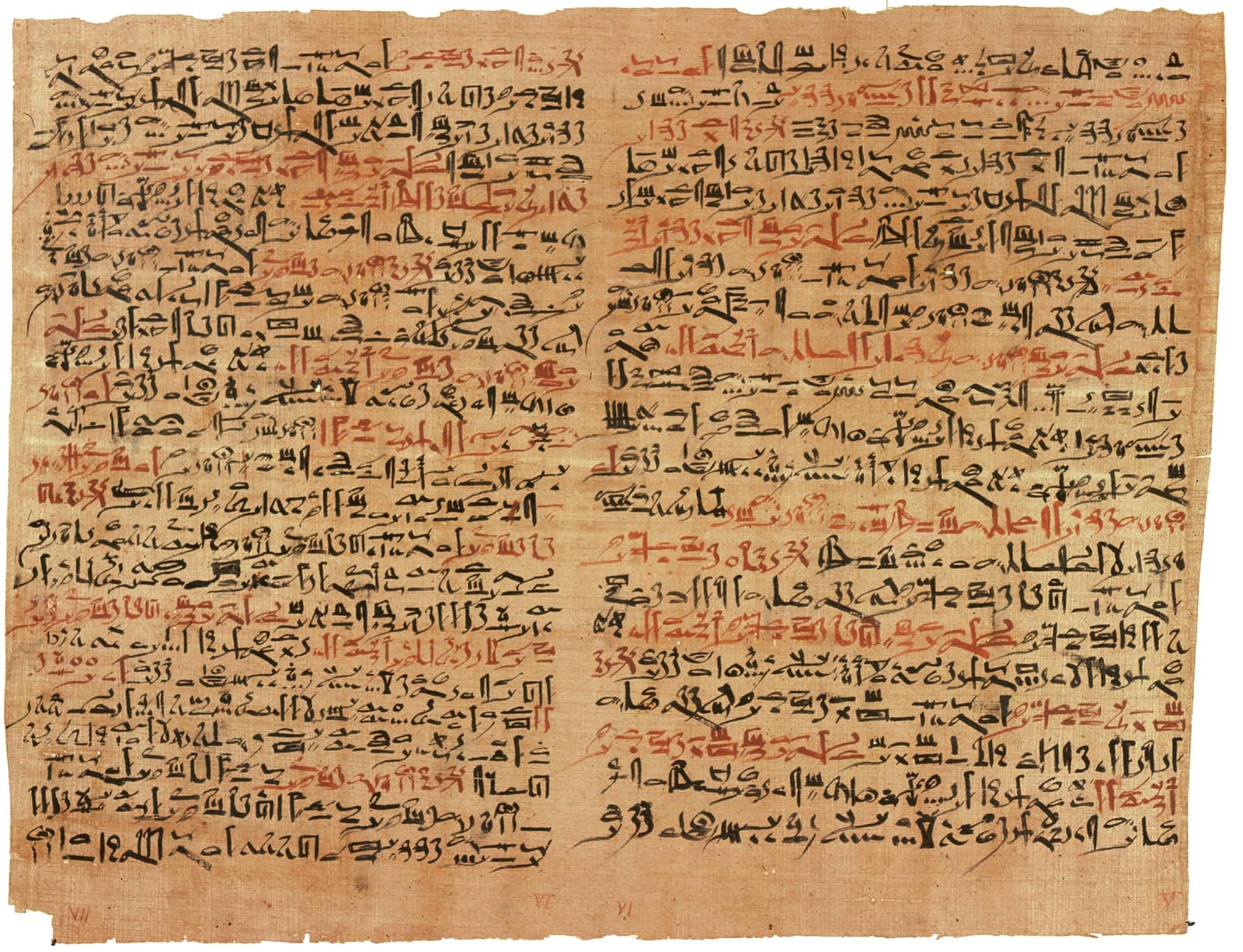
Edwin Smith Papyrus, recto columns 6 and 7, public domain, via Wikimedia CommonsPDMOriginal record
1 Africa · c. 1600 BCE
The Edwin Smith Papyrus
- Dated
- c. 1600 BCE
- Place
- Luxor, Egypt (place of purchase); now in New York, United States
- Remains
- Intact
Someone in Egypt, about three thousand six hundred years ago, sat with a reed pen and two inks, black and red, and copied a manual for treating wounds. It begins at the top of the head and works downward: the skull, the face, the nose, the jaw, the throat, the collarbone, the shoulder, the spine.
Each case follows the same steps. If you examine a man with a gaping wound in his head, feel it with your fingers; look at what you find; say what it is. Then comes a judgement in three forms: an ailment I will treat, an ailment I will contend with, or an ailment not to be treated. The writer was not afraid to admit what could not be healed.
On the way to step 2
In Egypt, wounds were examined, judged and treated case by case. In South Asia, a Sanskrit treatise gave surgery a central place in the art of healing.
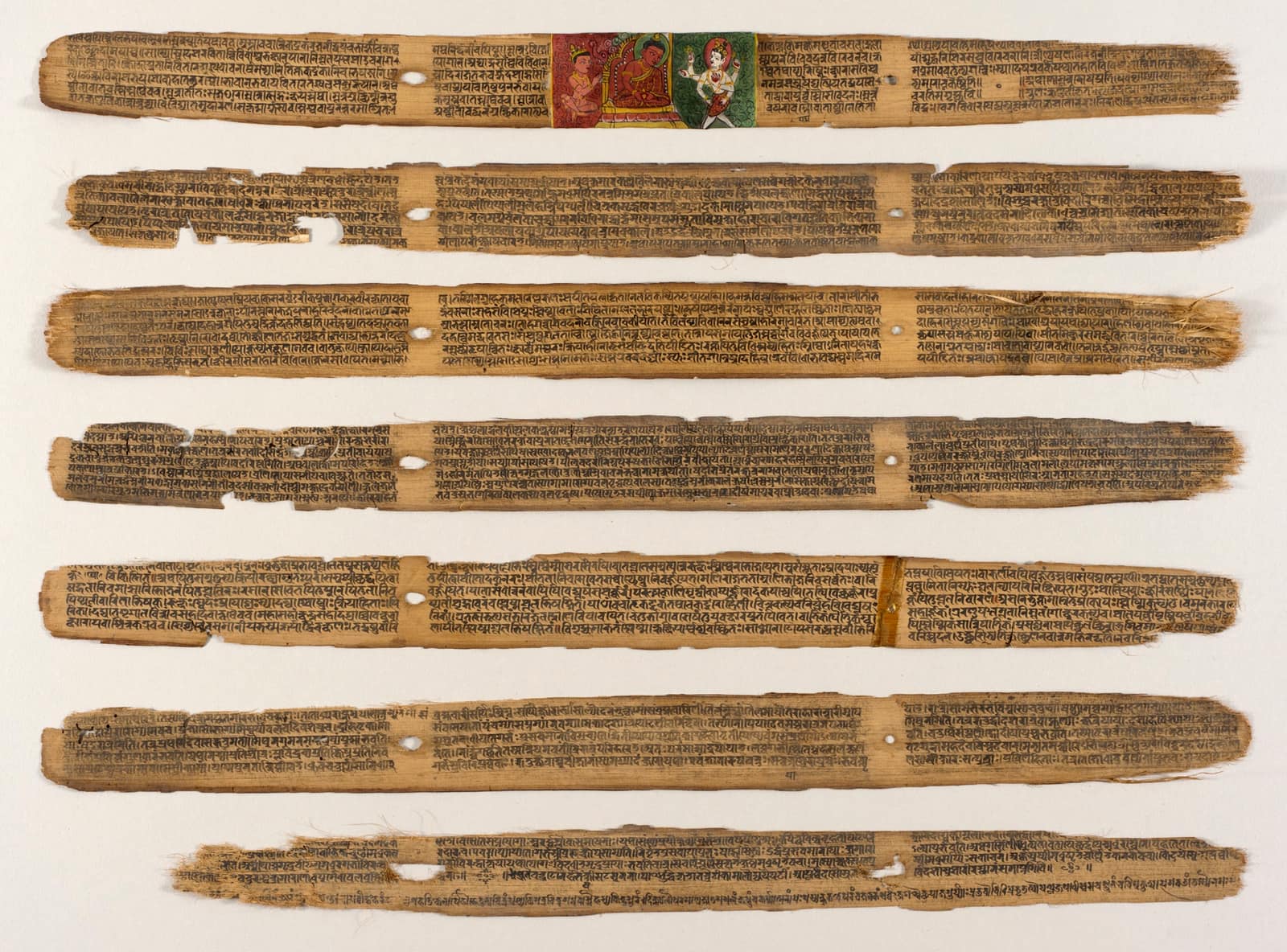
Los Angeles County Museum of Art (M.87.271a-g), domaine public, via Wikimedia CommonsPDMOriginal record
2 Asia · before 500 CE
The Sushruta Samhita
- Dated
- before 500 CE
- Place
- Varanasi, India; manuscript in Kathmandu, Nepal
- Remains
- Intact
To learn to cut, the text says, the student should first practise on things that are not alive: on gourds and cucumbers, on a leather bag filled with water, on the hide of an animal with its hair still on, on the stems of lotus flowers. Only then should the knife touch a patient.
This civilization gathered its knowledge of the body into verse and prose in Sanskrit. The compendium names instruments, sharp and blunt; it tells how to set bones, draw out arrows, drain a wound, stitch skin, and, when a nose has been cut off, how to shape a new one from a flap of the cheek.
On the way to step 3
For centuries, knowledge of the body was copied by hand. Against smallpox, people in China, India, Africa and the Ottoman world learned to inoculate; in 1796, an English doctor tried cowpox instead.
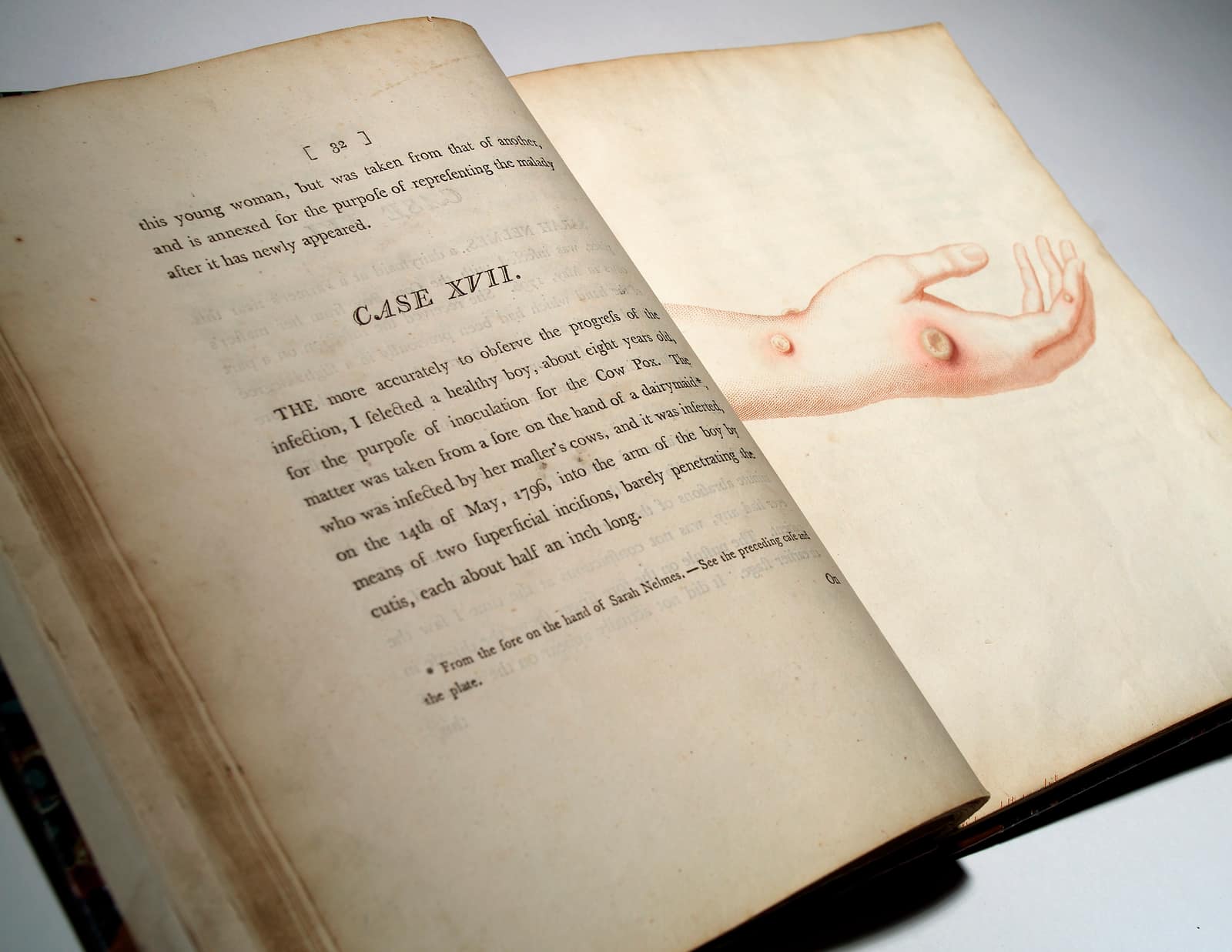
Wellcome Collection, CC BY 4.0, via Wikimedia CommonsCC-BY-4.0Original record
3 Europe · 1796
From variolation to vaccination: Jenner and the cowpox
- Dated
- 1796
- Place
- Berkeley, Gloucestershire, England, United Kingdom
- Remains
- Intact
Long before the word vaccine, people had learned to fight smallpox with smallpox. In China a little powdered scab was blown into the nose; in Bengal travelling inoculators scratched the skin; in West Africa and in Ottoman towns, a blade or a needle carried the matter of a mild case into a healthy arm. Those treated usually had a light illness and were safe for life. Some died of it.
The knowledge travelled. An English ambassador's wife watched it in Adrianople and had her children treated. In Boston, a man named Onesimus, held in slavery by a minister, explained how it had been done to him in Africa; in the terrible summer of 1721 a doctor tried it on his own son.
On the way to step 4
Vaccination protected before illness struck. Fifty years later, in Boston, ether let a patient sleep through the knife.
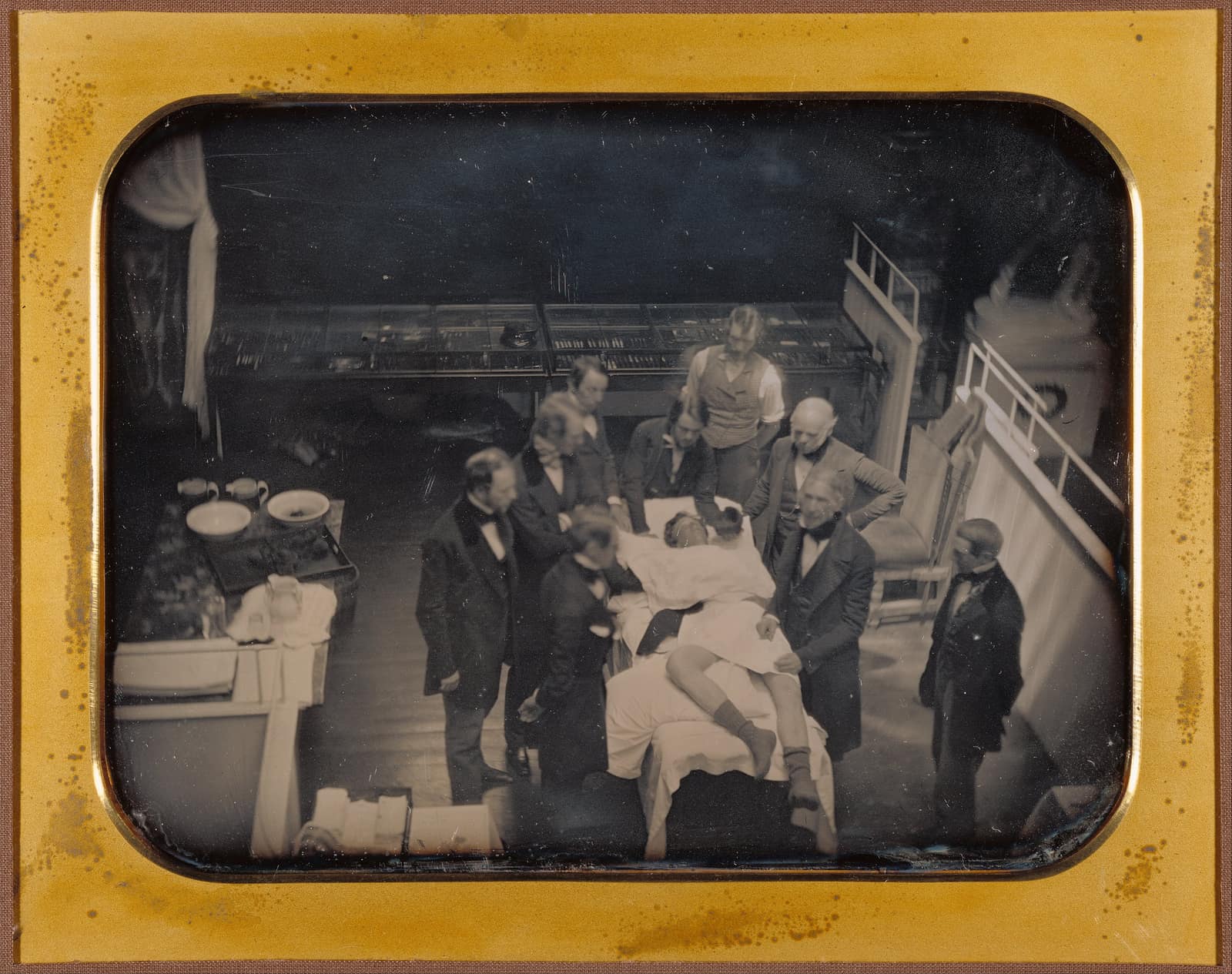
Southworth & Hawes, 1847, The J. Paul Getty Museum, domaine public, via Wikimedia CommonsPDMOriginal record
4 Americas · 1846
Ether Day: the first public operation under anaesthesia
- Dated
- 1846
- Place
- Ether Dome, Massachusetts General Hospital, Boston, Massachusetts, United States
- Remains
- Intact
Before this morning, the best a surgeon could offer was speed. Patients were held down, given alcohol or opium, and cut while they were awake; the fastest operators were the most admired.
On 16 October 1846, under the dome of a hospital in Boston, a young man named Gilbert Abbott sat in the operating chair with a tumour on his neck. A dentist, William Morton, arrived late with a glass flask. Abbott breathed from it and fell into a heavy sleep. The surgeon, John Collins Warren, made his incision. When he woke he said, by one account, that it had felt as if his neck had been scratched.
On the way to step 5
Surgery without pain still faced infection. In 1928, a mould on a dish in London pointed to a way of stopping bacteria.
Science Museum London / Science and Society Picture Library, CC BY-SA 4.0, via Wikimedia CommonsCC-BY-SA-4.0Original record
5 Europe · 1928 to 1945
The discovery of penicillin
- Dated
- 1928 to 1945
- Place
- St Mary's Hospital, Paddington, London, United Kingdom
- Remains
- Intact
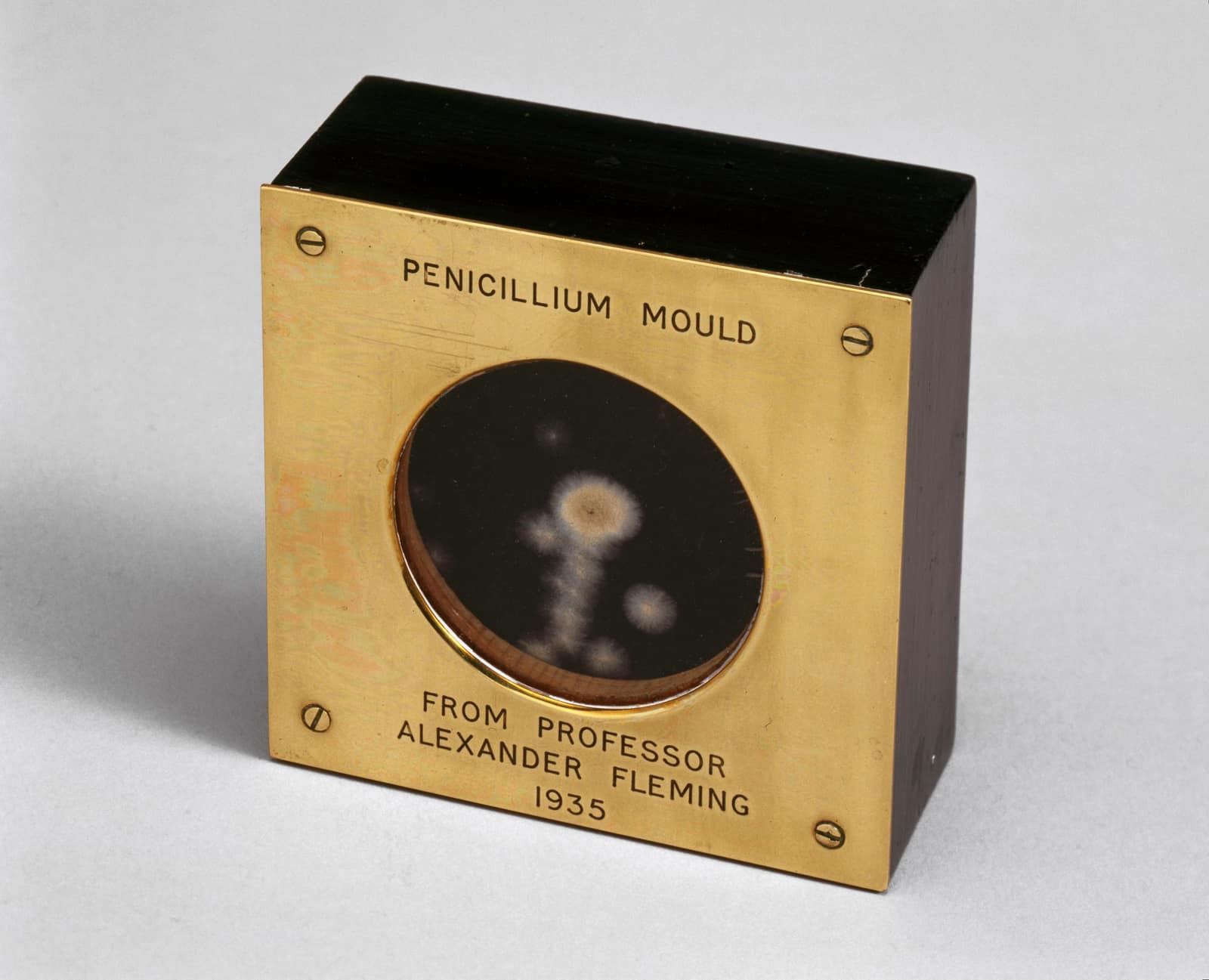
It began, as many things in this archive do, with something that went wrong. A dish of bacteria left on a bench in a London hospital during a summer holiday grew a patch of mould. Around the mould, the bacteria had died.
Alexander Fleming noticed it, kept the mould, gave its juice a name and wrote it up. Then, for ten years, little happened. The substance was fragile and hard to collect.
On the way to step 6
Antibiotics fought the invaders. In 1953, a model of a molecule showed how living things copy the instructions they are made from.
Alkivar, domaine public, via Wikimedia CommonsPDMOriginal record
6 Europe · 1953
The double helix: the structure of DNA
- Dated
- 1953
- Place
- Cambridge, United Kingdom
- Remains
- Reconstructed
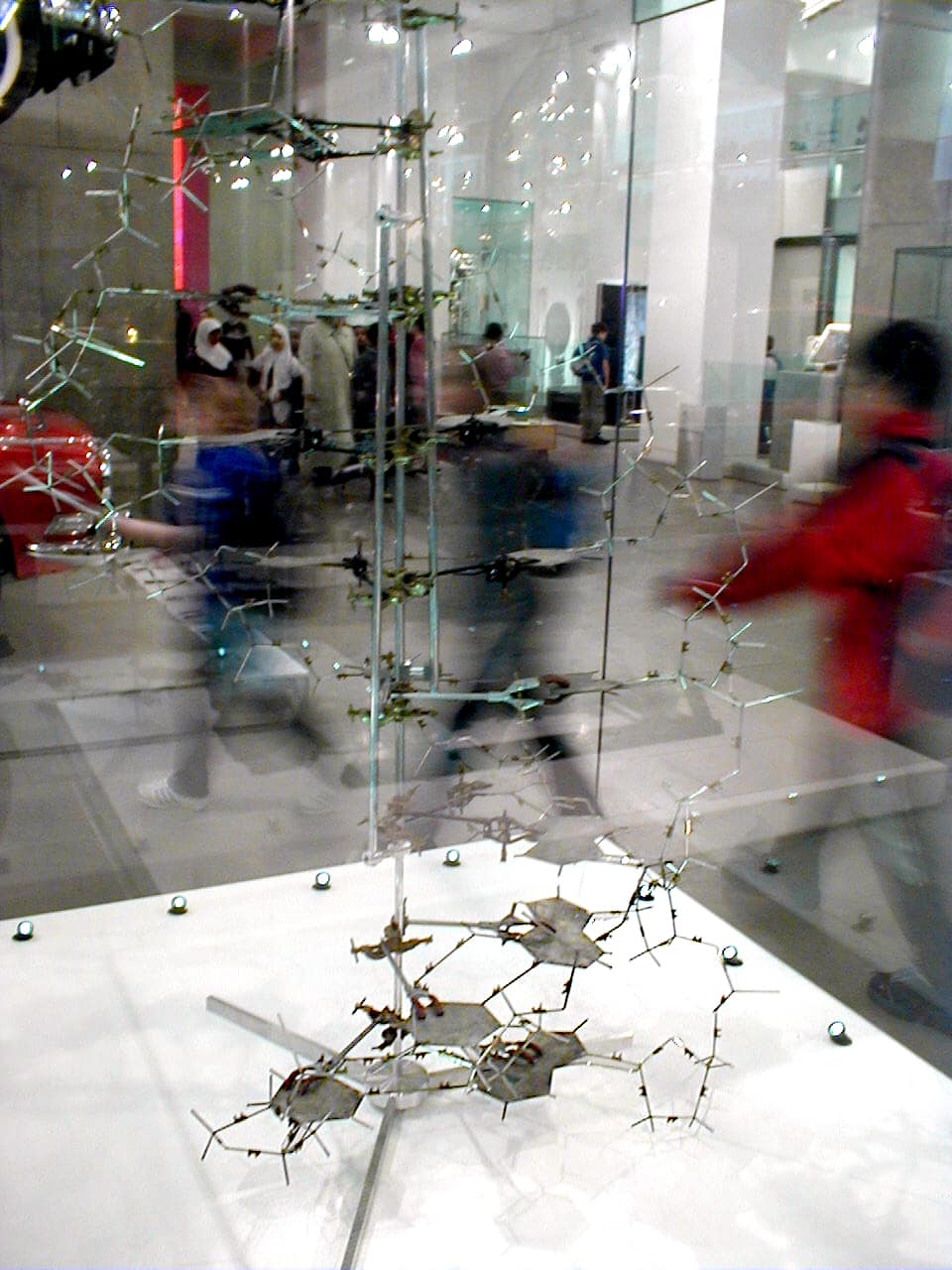
Four letters, A, T, G and C, and a rule: A faces T, G faces C. That is the whole alphabet.
In the spring of 1953, in a laboratory in Cambridge, two men took plates of metal cut in the workshop, one for each base, and clamped them on rods around a central pole, turning each rung a little on the one below, until the whole thing twisted upward like a spiral staircase and every piece fitted.
On the way to step 7
Knowing how life is written changed medicine slowly. In 1967, in Cape Town, a surgical team made one person's heart beat in another person's body.
Danie van der Merwe, CC BY 2.0, via Wikimedia CommonsCC-BY-2.0Original record
7 Africa · 1967
The first human heart transplant
- Dated
- 1967
- Place
- Groote Schuur Hospital, Observatory, Cape Town, South Africa
- Remains
- Intact
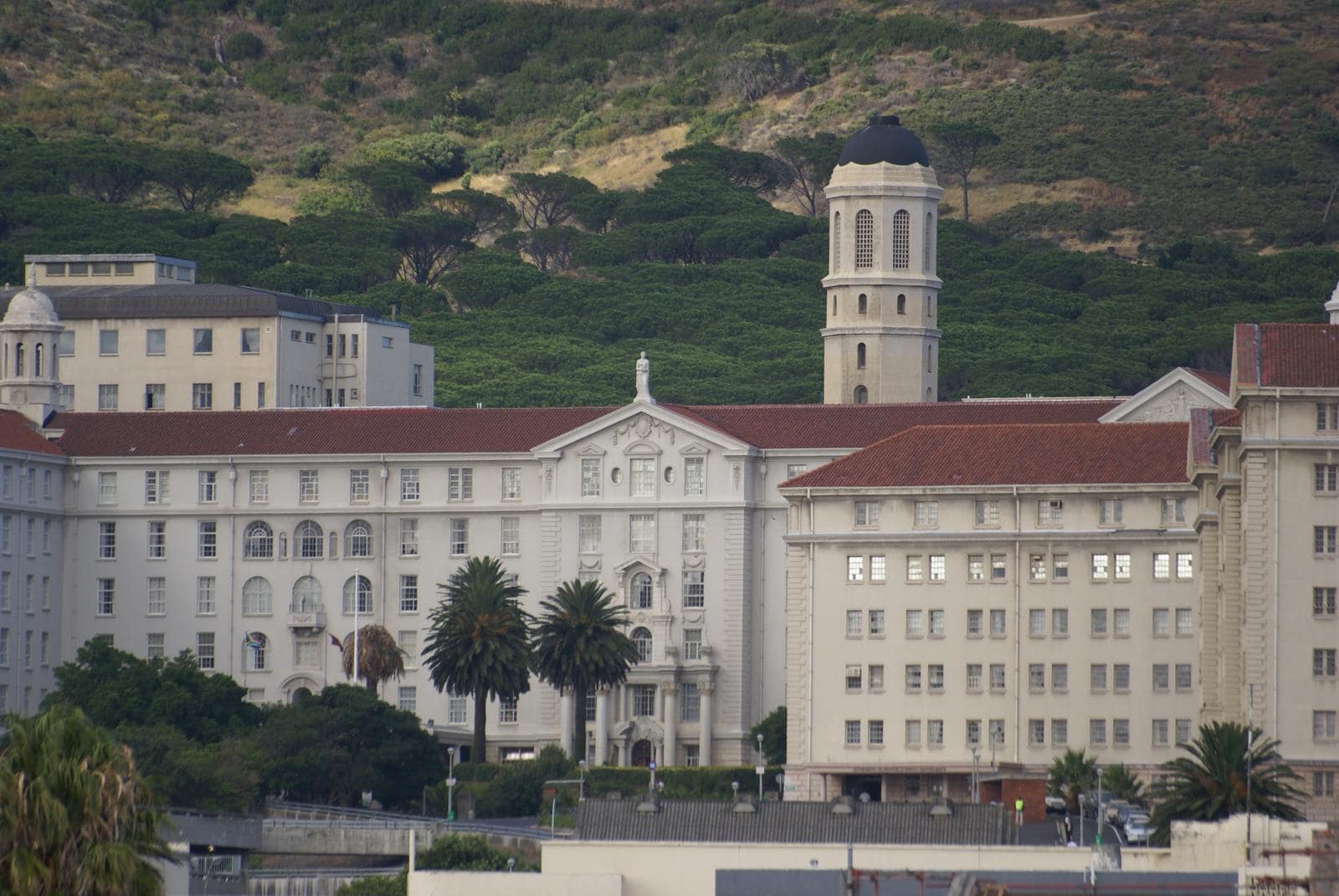
On a Saturday afternoon in December, a young woman and her mother crossed a road in Cape Town after stopping at a bakery. A car struck them both. The mother died on the road. The daughter, Denise Darvall, was twenty five, and by evening the doctors at the hospital on the hill knew she would not wake.
In the same hospital lay a man whose heart was failing, Louis Washkansky. Her father was asked. He thought about his daughter for a few minutes and said yes.
On the way to step 8
One patient at a time, or all of humanity at once: in 1980, the world declared smallpox eradicated, the first human disease ever to be.
Wellcome Collection, CC BY 4.0, via Wikimedia CommonsCC-BY-4.0Original record
8 Europe · 1796 to 1980
The end of smallpox
- Dated
- 1796 to 1980
- Place
- Berkeley, Gloucestershire, United Kingdom
- Remains
- Intact
For three thousand years at least, this civilization lived with a disease that covered the body in blisters, killed about a third of those it struck in its worst form, and left survivors scarred or blind.
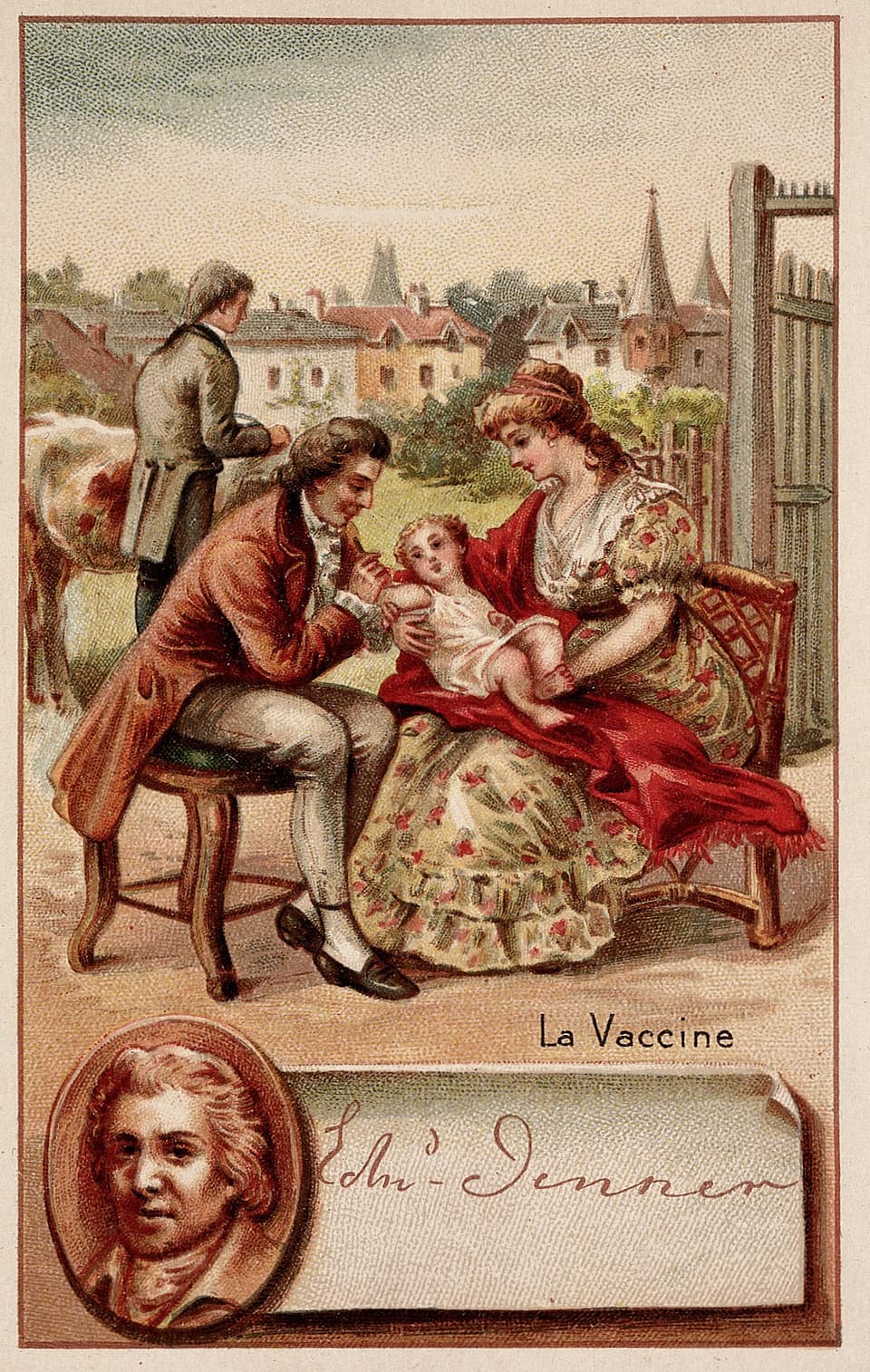
In the spring of 1796, a country doctor in Gloucestershire took matter from a sore on a milkmaid's hand, a sore of cowpox, a mild disease of cattle, and scratched it into the arm of a boy of eight. Weeks later he exposed the boy to smallpox. Nothing happened. From the Latin word for cow came a new word, vaccine.
End of the journey
From a papyrus of wounds to a disease that no longer exists. Which of our illnesses will people in 10,000 years know only from archives like this one?