Journey · 5 of 7
Voices across the wire
How a current in a stack of metal discs became a network that joins most of humanity: eight fragments from 1800 to the web.
- Duration
- About 25 minutes
- Steps
- 9 fragments · 2 continents
- Audience
- For everyone
- Languages
- English and French
No sign-in and nothing to fill in: a journey collects nothing from students.
The steps
9 steps
- 1Volta's pile, the first electric batteryComo, Lombardy, Italy · Europe · 1800
- 2The cable under the AtlanticValentia Island, County Kerry, Ireland; and Heart's Content, Newfoundland and Labrador, Canada · Europe · 1858 to 1866
- 3The telephone: a patent and a sentenceBoston, Massachusetts, United States · Americas · 1876
- 4Pearl Street Station, the first central power network in New YorkLower Manhattan, New York, United States · Americas · 1882
- 5The letter S across the AtlanticSt. John's, Newfoundland and Labrador, Canada · Americas · 1901
- 6The transistorNew Providence, New Jersey, United States · Americas · 1947
- 7A telephone call from the streetNew York City, New York, United States · Americas · 1973
- 8The network of networks: the switch to TCP/IPMarina del Rey, California, United States · Americas · 1983
- 9The first web serverMeyrin, Canton of Geneva, Switzerland · Europe · 1990 to 1993
Dario Crespi, CC BY-SA 4.0, via Wikimedia CommonsCC-BY-SA-4.0Original record
1 Europe · 1800
Volta's pile, the first electric battery
- Dated
- 1800
- Place
- Como, Lombardy, Italy
- Remains
- Fragmentary
Until the spring of 1800, this civilization knew electricity only as a spark: a crack from a glass jar, a flash from the sky, gone as soon as it came.
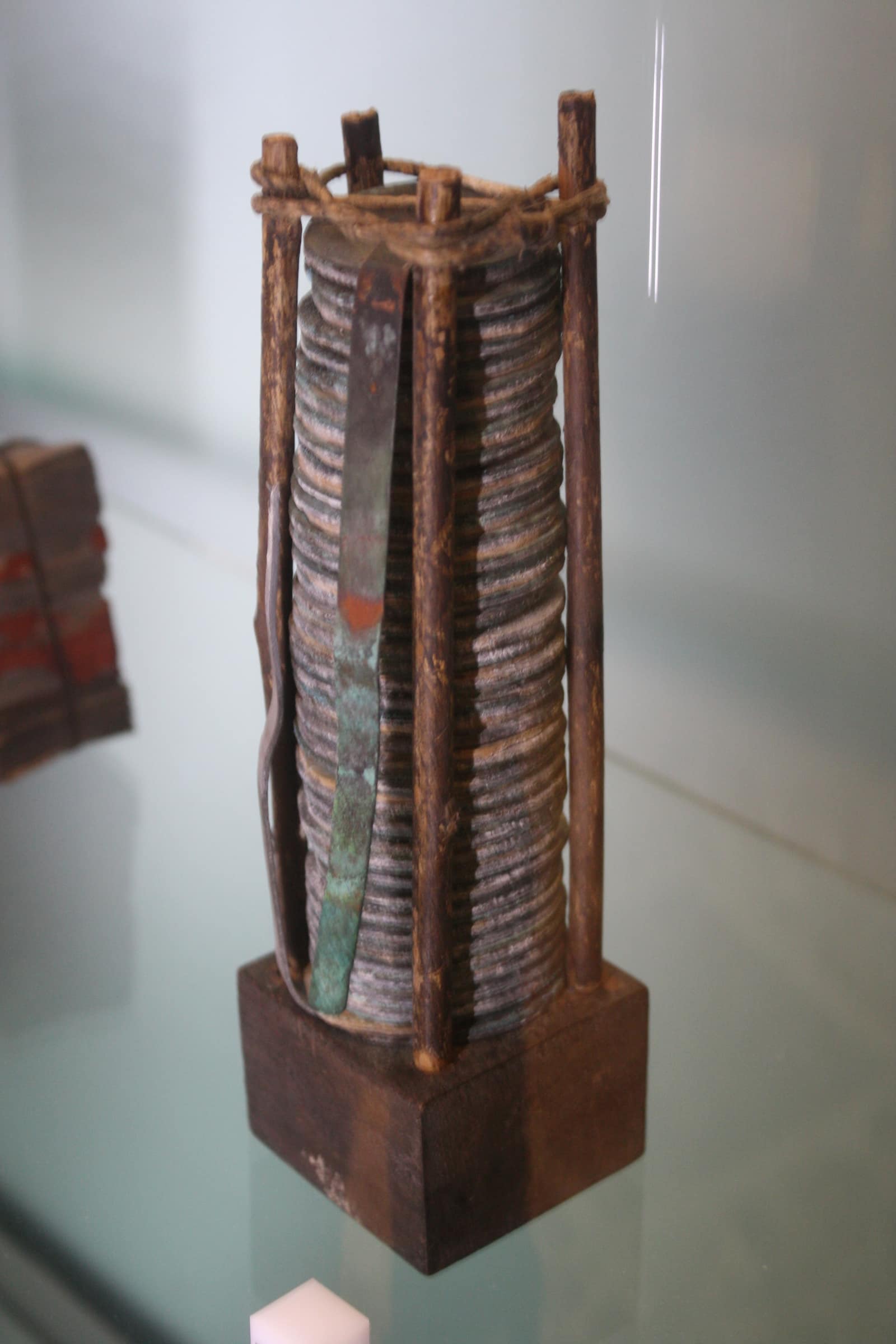
In Como, on the shore of a lake in Lombardy, a professor named Alessandro Volta piled small discs one on another. A disc of silver, a disc of zinc, a round of cardboard wetted with salt water; then silver, zinc, cardboard again, twenty, forty, sixty times. When he touched the two ends of the column with wet fingers he felt a small, repeated shock, and it did not run out.
On the way to step 2
A steady current could now be made at will. Within decades it ran through wires on the sea floor.
Robert Charles Dudley, The Metropolitan Museum of Art, CC0, via Wikimedia CommonsCC0-1.0Original record
2 Europe · 1858 to 1866
The cable under the Atlantic
- Dated
- 1858 to 1866
- Place
- Valentia Island, County Kerry, Ireland; and Heart's Content, Newfoundland and Labrador, Canada
- Remains
- Fragmentary
In August 1858, a thin rope of copper wrapped in gutta percha and iron lay across the floor of the Atlantic, from an island off the coast of Ireland to a bay in Newfoundland. A greeting from a queen to a president took almost sixteen hours to cross it, letter by letter. Crowds in New York celebrated with fireworks. Within weeks the cable fell silent.
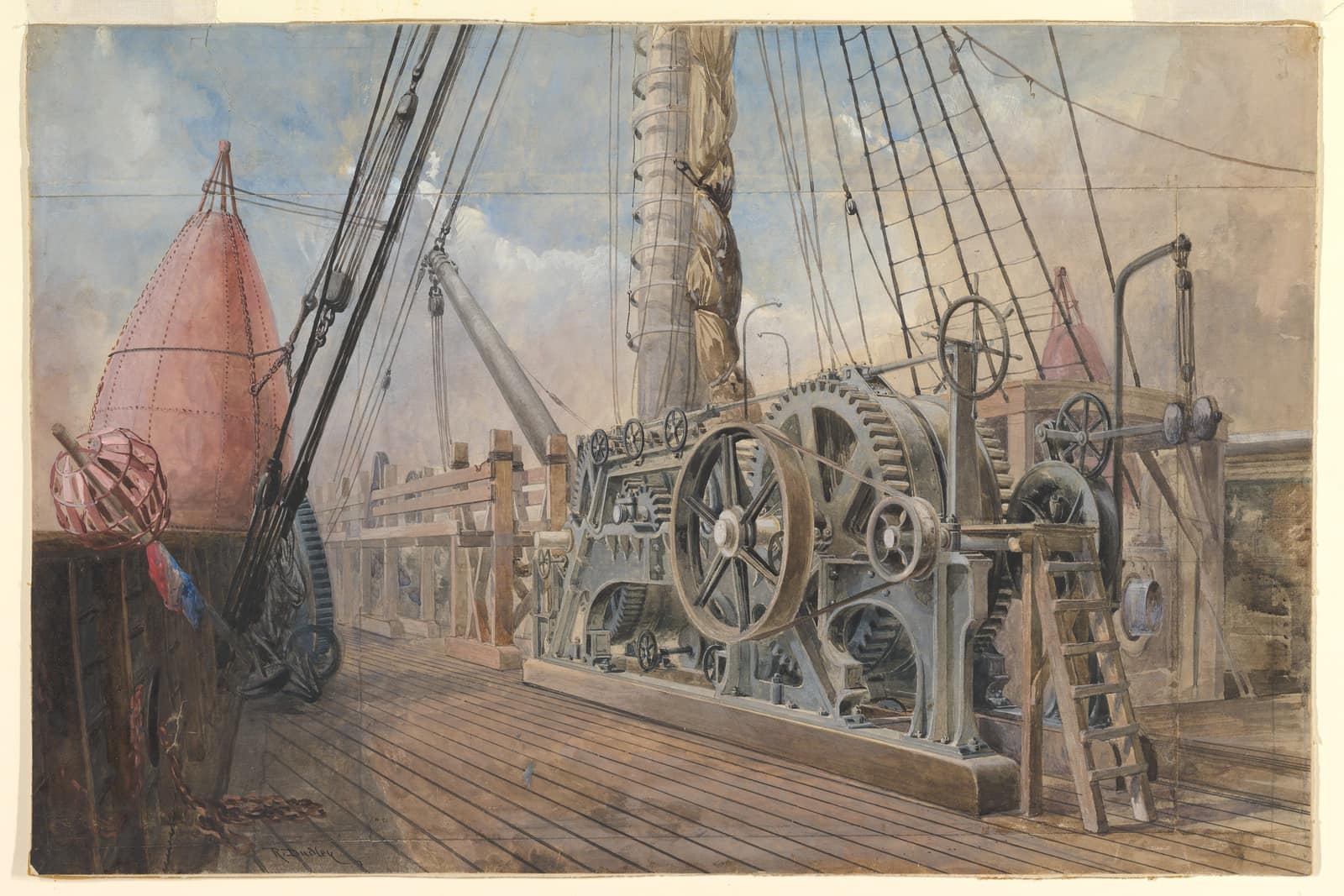
Seven years later the largest ship of its time, the Great Eastern, set out from Ireland with a new cable coiled in her tanks and iron machinery on her deck, like that painted here, to pay it out and haul it back. Some six hundred miles short of Newfoundland, the line snapped and sank.
On the way to step 3
The cable carried coded dots and dashes. Ten years later, a wire in Boston carried a sentence spoken aloud.
U.S. National Archives and Records Administration, via Wikimedia CommonsPDMOriginal record
3 Americas · 1876
The telephone: a patent and a sentence
- Dated
- 1876
- Place
- Boston, Massachusetts, United States
- Remains
- Intact
The first sentence was an ordinary one: a man calling another into the room.
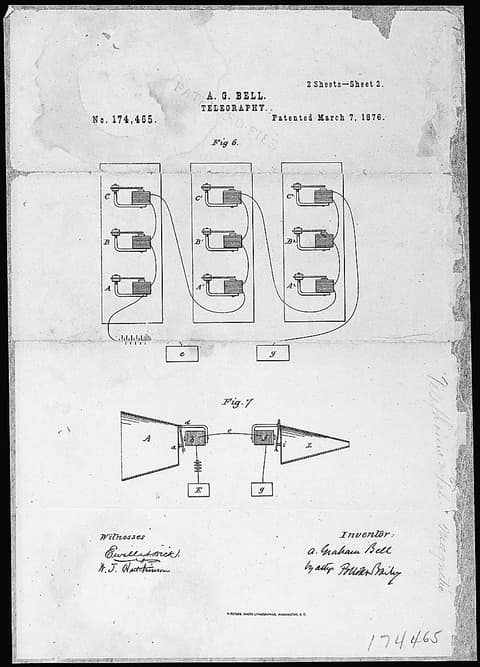
On 10 March 1876, in rooms in Boston, Alexander Graham Bell, a teacher of the deaf, leaned over an instrument in which a fine needle touched water made sharp with acid. His assistant, Thomas Watson, waited in another room at the end of a wire. Bell spoke, and his notebook entry for that day records the words: Mr. Watson, come here, I want to see you. Watson came. He had heard and understood.
On the way to step 4
Voices needed wires; power needed a network. In 1882, lamps in lower Manhattan lit from a single station.
W. P. Snyder, Harper's Weekly, 1882, via Wikimedia CommonsPDMOriginal record
4 Americas · 1882
Pearl Street Station, the first central power network in New York
- Dated
- 1882
- Place
- Lower Manhattan, New York, United States
- Remains
- Lost
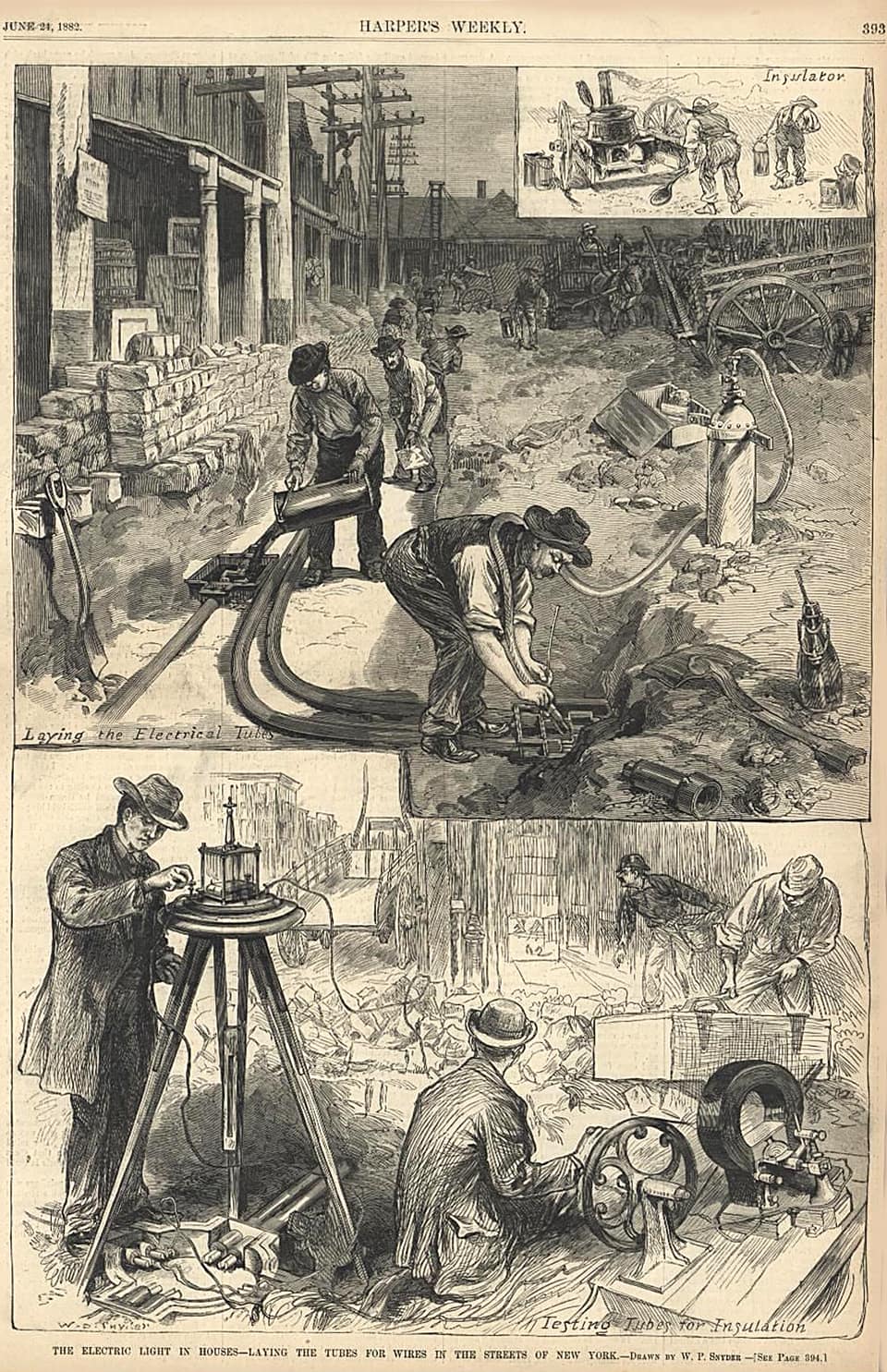
In the early summer of 1882, the streets of Lower Manhattan were opened like wounds. Men with shovels cut trenches between the warehouses, laid long iron tubes in them, and poured a hot black compound around the copper inside to keep the current from leaking into the ground. Others followed with instruments on tripods to test each joint.
At 257 Pearl Street, a building near the East River had been filled with coal fired boilers and six great dynamos. On the afternoon of 4 September, an electrician closed the main switch on Edison's order. In offices and shops across a few dozen blocks, glass bulbs began to glow with a light that did not flicker or smell of gas.
On the way to step 5
Then the wire itself became optional: in 1901, three faint dots were reported heard across the Atlantic, through the air.
James M. Vey, Marconi's Achievement, McClure's Magazine, February 1902, public domain, via Wikimedia CommonsPDMOriginal record
5 Americas · 1901
The letter S across the Atlantic
- Dated
- 1901
- Place
- St. John's, Newfoundland and Labrador, Canada
- Remains
- Fragmentary
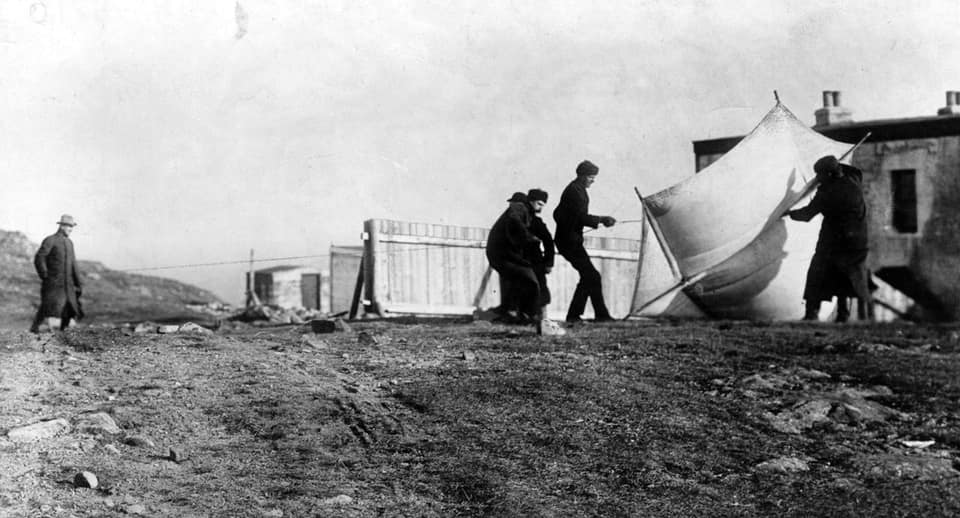
It was cold on Signal Hill, and the wind kept tearing things away. On 12 December 1901, above the harbour of St. John's, Newfoundland, a small team of men fought to keep a kite in the air. From it hung a long wire. Inside an empty building nearby, a young Italian named Guglielmo Marconi sat with a telephone receiver pressed to his ear.
Some 3,500 kilometres to the east, at Poldhu in Cornwall, his engineers were sending the same letter again and again: S, three short dots, the simplest sign in Morse code.
On the way to step 6
Radio and telephone ran on fragile vacuum tubes, until a crystal in New Jersey did the same work.
Mister rf, CC BY-SA 4.0, via Wikimedia CommonsCC-BY-SA-4.0Original record
6 Americas · 1947
The transistor
- Dated
- 1947
- Place
- New Providence, New Jersey, United States
- Remains
- Reconstructed
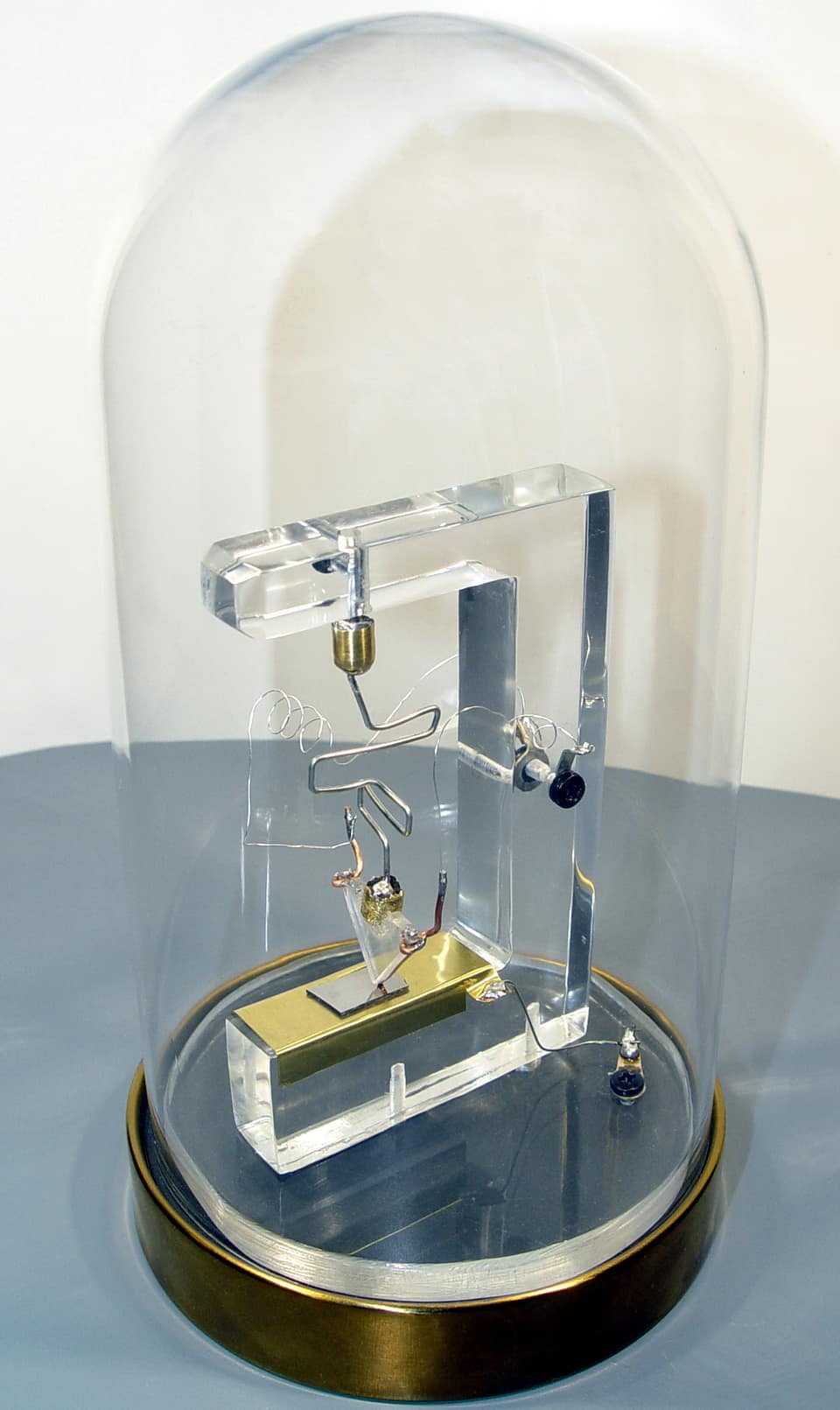
A strip of gold foil, a sliver of plastic, a bent wire acting as a spring, and a small slab of grey germanium. The thing looked as if it had been assembled on a kitchen table.
On 23 December 1947, in a laboratory of the telephone company in New Jersey, two physicists, Walter Brattain and John Bardeen, showed it to their managers. A weak signal went into one wire and came out of the other much stronger. Until then, this civilization had amplified sound and current with glass vacuum tubes that glowed, grew hot, used a great deal of power and burned out. Here the same work was done by a solid crystal, cold and silent.
On the way to step 7
Small, cold and cheap, the transistor let the telephone leave the wall and walk into the street.
Rico Shen, CC BY-SA 3.0, via Wikimedia CommonsCC-BY-SA-3.0Original record
7 Americas · 1973
A telephone call from the street
- Dated
- 1973
- Place
- New York City, New York, United States
- Remains
- Fragmentary
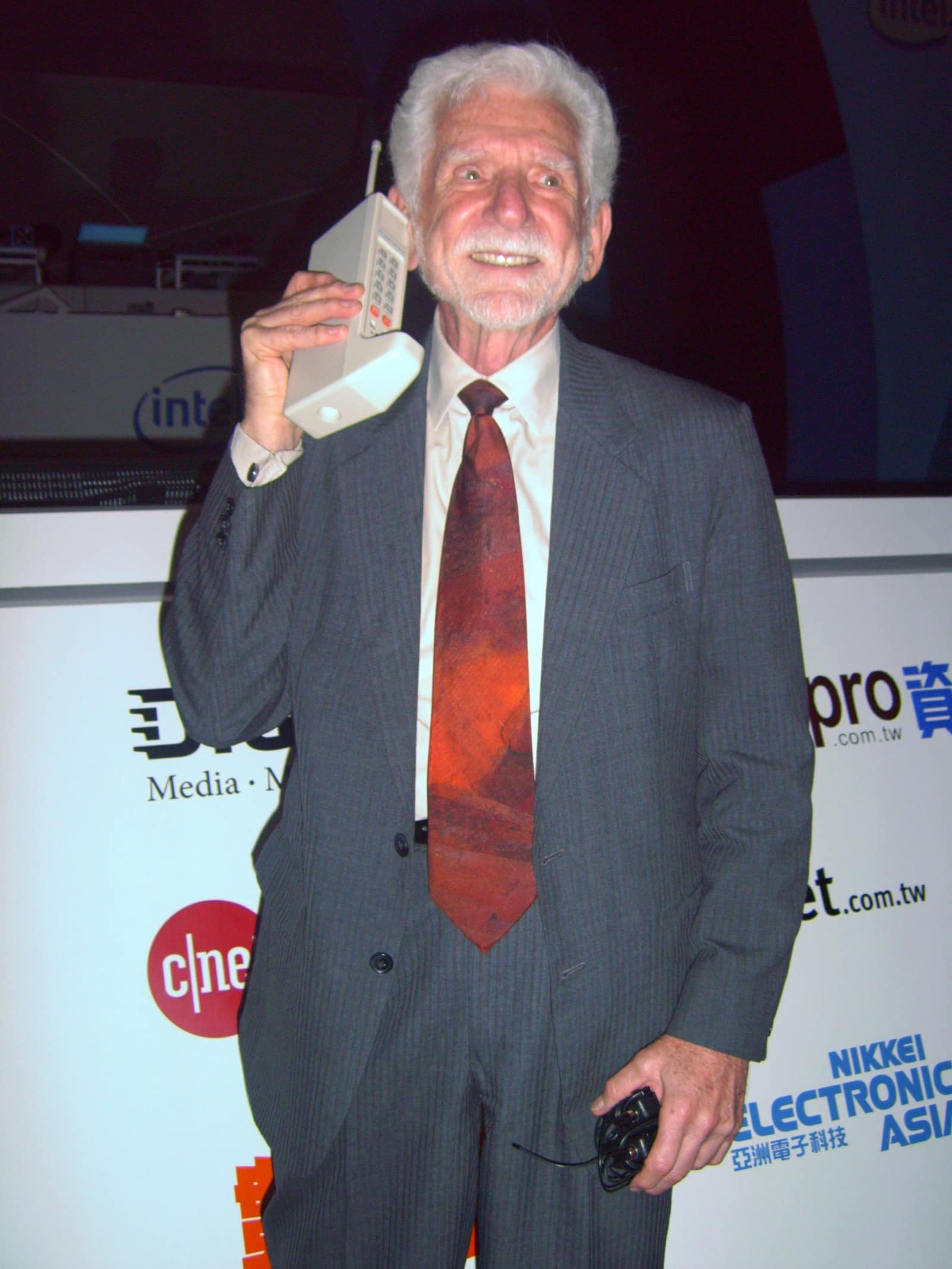
The object was cream coloured, as long as a forearm, and as heavy as a bag of flour. It had a keypad, a short antenna, and a battery that would not last long.
On 3 April 1973, on Sixth Avenue in Manhattan, an engineer named Martin Cooper held it to his ear among the passers by. He was on his way to a press conference. He dialled the number of his rival, Joel Engel, who led the same research at the great telephone company, and told him that he was calling from a real handheld cellular telephone.
On the way to step 8
Machines, too, needed a common language. On 1 January 1983, separate networks started to speak one.
ARPANET as of Aug 25, 1983, map by BBN, public domain, via Wikimedia CommonsPDMOriginal record
8 Americas · 1983
The network of networks: the switch to TCP/IP
- Dated
- 1983
- Place
- Marina del Rey, California, United States
- Remains
- Digital
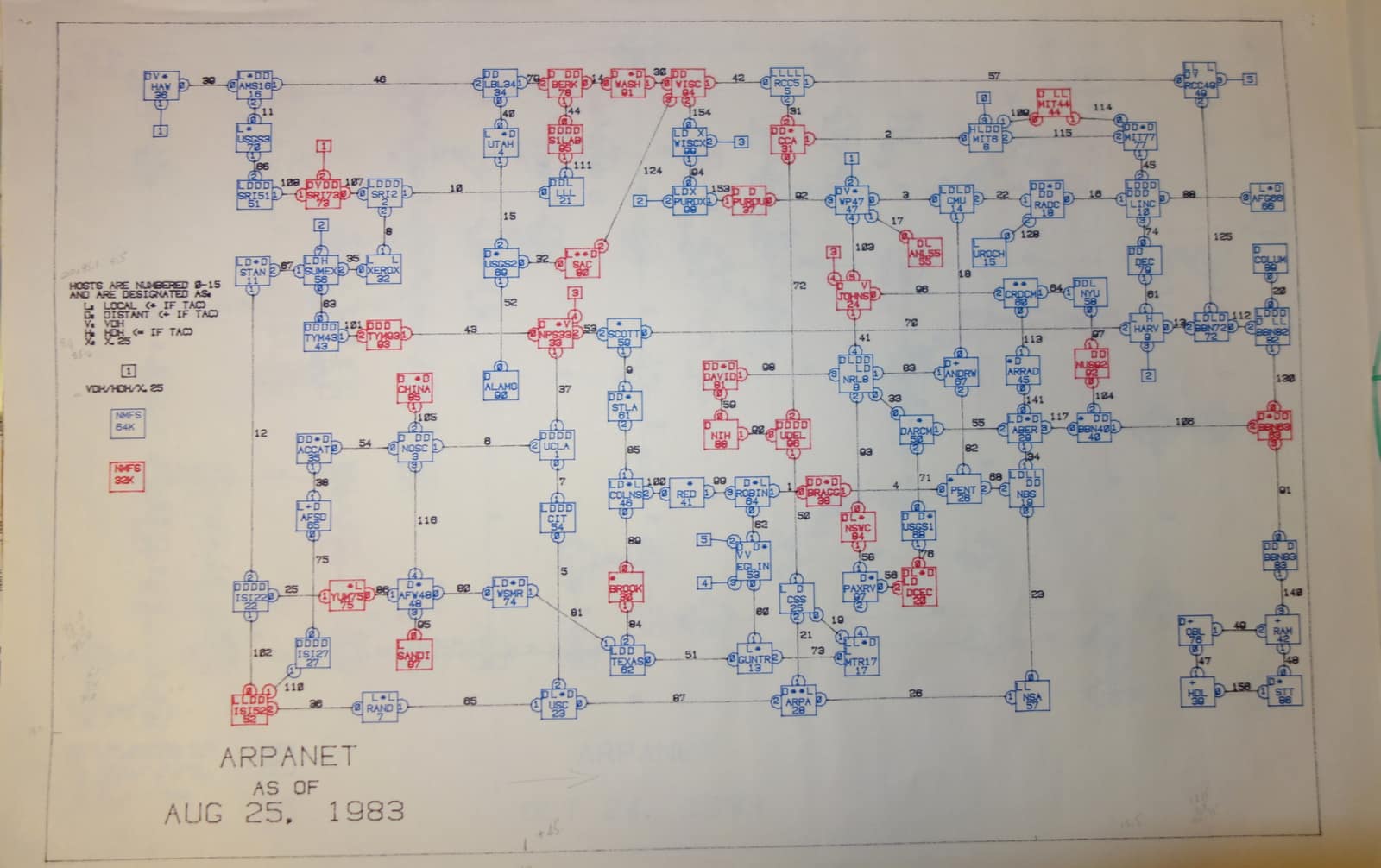
There was no ceremony. On 1 January 1983 the computers of the ARPANET simply stopped speaking their old language and began to speak a new one.
The new language had two parts, TCP and IP, and a simple ambition. Nine years earlier, two engineers, Vinton Cerf and Robert Kahn, had described how networks built by different people, over cables, radio or satellite, could pass messages to one another as if they were one. Each network could stay as it was. Only the way of addressing and handing on the packets had to be shared.
On the way to step 9
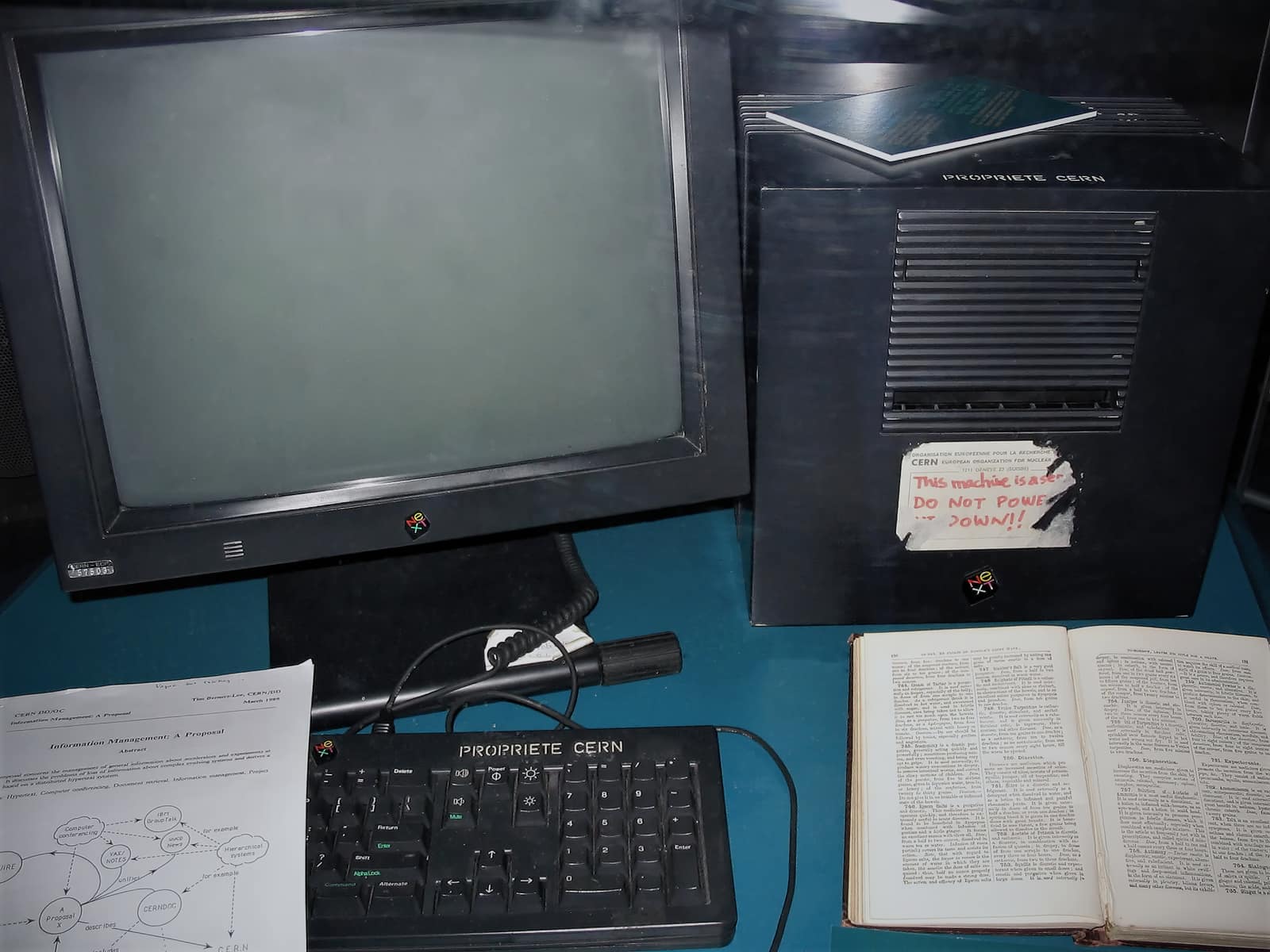
On top of that common language, a physicist at CERN placed pages that anyone could link.
Coolcaesar at the English-language Wikipedia, CC BY-SA 3.0, via Wikimedia CommonsCC-BY-SA-3.0Original record
9 Europe · 1990 to 1993
The first web server
- Dated
- 1990 to 1993
- Place
- Meyrin, Canton of Geneva, Switzerland
- Remains
- Intact
The label is written by hand in red ink, on a strip of white paper stuck to a black cube: This machine is a server. DO NOT POWER IT DOWN!!
Behind it, at CERN near Geneva, a British physicist named Tim Berners-Lee had written a proposal in 1989 for a way to share documents between the laboratory's many incompatible computers. His supervisor wrote across the top of it: vague but exciting. By the end of 1990, on this machine, he had built the pieces: a language for pages, a protocol for asking for them, an address for each one, a program to serve them and another to read them.
End of the journey
From a spark in a pile of discs to a web that joins billions. What will our wires carry in 10,000 years, and who will be listening?