Journey · 4 of 7
Turning points
Twenty-one moments after which the world was no longer the same for anyone: from the first people of our species to the day we saw the whole Earth from far away, and to the machines that now answer in our own words.
- Duration
- About 55 minutes
- Steps
- 21 fragments · 4 continents
- Audience
- For everyone
- Languages
- English and French
No sign-in and nothing to fill in: a journey collects nothing from students.
The steps
21 steps
- 1The earliest known Homo sapiens, Jebel IrhoudJebel Irhoud, about 100 km west of Marrakech, Morocco · Africa · c. 320,000 years ago
- 2Einkorn and emmer: the first wheatsKaracadağ mountains, southeastern Türkiye · Asia · c. 8500 BCE
- 3Maize, from teosinteNear Iguala, Guerrero, Mexico · Americas · c. 7000 BCE
- 4The first writing: proto-cuneiform tablets of UrukWarka, Al-Muthanna Governorate, Iraq · Asia · 3300 to 2900 BCE
- 5Paper: a sheet of pounded rags and barkLuoyang, Henan, China · Asia · 200 BCE to 105 CE
- 6Fire made to work: from Newcomen's engine to Watt's condenserConeygree, Tipton, near Dudley, West Midlands, United Kingdom · Europe · 1712 to 1769
- 7From variolation to vaccination: Jenner and the cowpoxBerkeley, Gloucestershire, England, United Kingdom · Europe · 1796
- 8Volta's pile, the first electric batteryComo, Lombardy, Italy · Europe · 1800
- 9The first photograph from a camera: the view from the window at Le GrasSaint-Loup-de-Varennes, Saône-et-Loire, France · Europe · 1826 to 1827
- 10Ether Day: the first public operation under anaesthesiaEther Dome, Massachusetts General Hospital, Boston, Massachusetts, United States · Americas · 1846
- 11The telephone: a patent and a sentenceBoston, Massachusetts, United States · Americas · 1876
- 12Three wheels and a petrol engine: the Benz Patent-MotorwagenMannheim, Baden-Württemberg, Germany · Europe · 1886 to 1888
- 13The first powered flight: the Wright FlyerWright Brothers National Memorial, Kill Devil Hills, North Carolina, United States · Americas · 1903
- 14Bread from the air: the Haber-Bosch synthesis of ammoniaKarlsruhe Institute of Technology, Karlsruhe, Germany · Europe · 1909 to 1913
- 15The discovery of penicillinSt Mary's Hospital, Paddington, London, United Kingdom · Europe · 1928 to 1945
- 16Trinity: the first nuclear explosionTrinity Site, White Sands Missile Range, New Mexico, United States · Americas · 1945
- 17Sputnik 1, the first artificial satelliteBaikonur Cosmodrome, Kazakhstan · Asia · 1957
- 18EarthriseLunar orbit, above the eastern limb of the Moon's far side · Americas · 1968
- 19The first orbital-class booster to come back: Falcon 9 flight 20Cape Canaveral Space Force Station, Florida, United States · Americas · 2015
- 20Webb's First Deep FieldOrbit around the Sun and Earth's second Lagrange point, looking towards the galaxy cluster SMACS 0723 in the southern constellation Volans · Americas · 2022
- 21ChatGPT, the machine that answered in wordsMission District, San Francisco, California, United States · Americas · 2022
Jonathan Chen, CC BY-SA 4.0, via Wikimedia CommonsCC-BY-SA-4.0Original record
1 Africa · c. 320,000 years ago
The earliest known Homo sapiens, Jebel Irhoud
- Dated
- c. 320,000 years ago
- Place
- Jebel Irhoud, about 100 km west of Marrakech, Morocco
- Remains
- Fragmentary
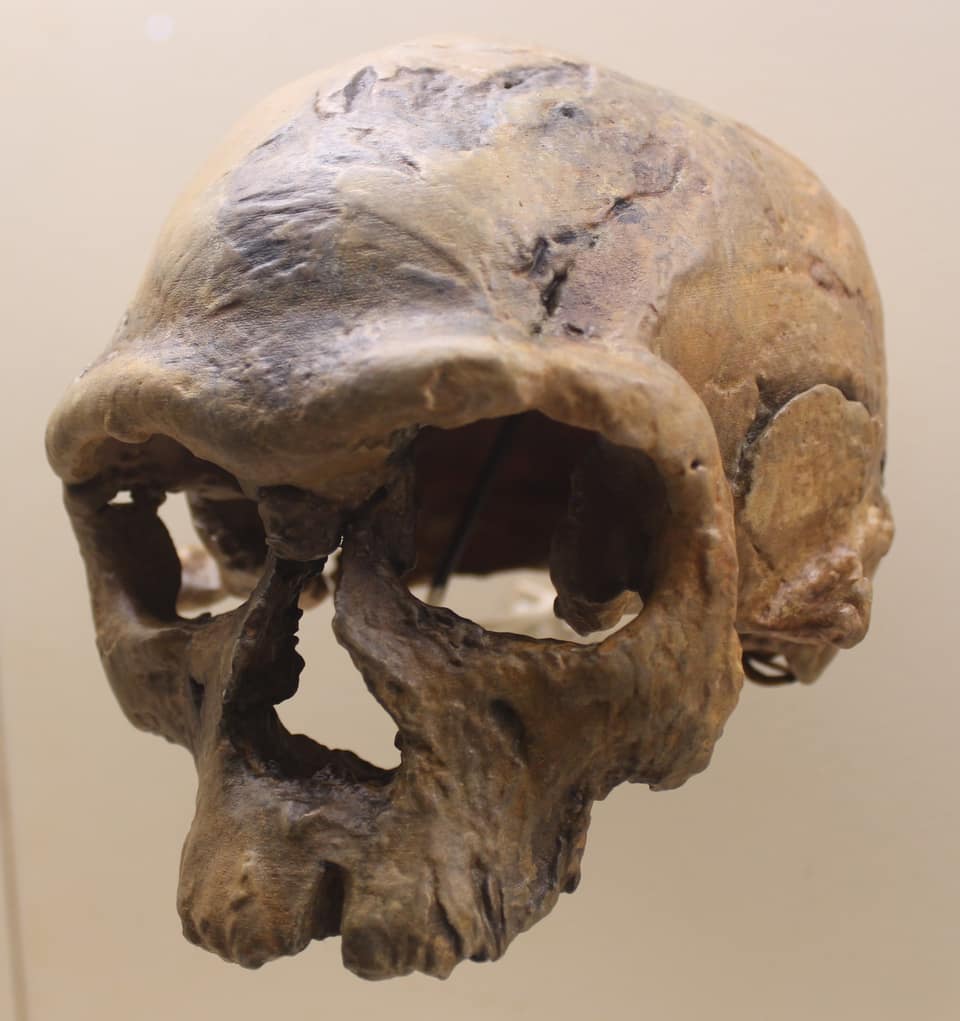
They were not looking for us. In 1961, workers cutting barite from a hill between Marrakech and the sea broke into an old cave filled with sediment, and found in it the skull of a person.
For decades this archive filed that face in the wrong drawer. It was thought too recent, then too strange. Only when excavators returned in 2004 and found more of these people, beside the flints they had dropped into their fires, could the heat stored in the stone be measured. It had last been heated about three hundred thousand years ago.
On the way to step 2
Everyone who ever lived descends from people like these. Some 10,500 years ago, in southwest Asia, their descendants began to sow the grasses they had gathered.
Roger Culos, CC BY-SA 3.0, via Wikimedia CommonsCC-BY-SA-3.0Original record
2 Asia · c. 8500 BCE
Einkorn and emmer: the first wheats
- Dated
- c. 8500 BCE
- Place
- Karacadağ mountains, southeastern Türkiye
- Remains
- Intact
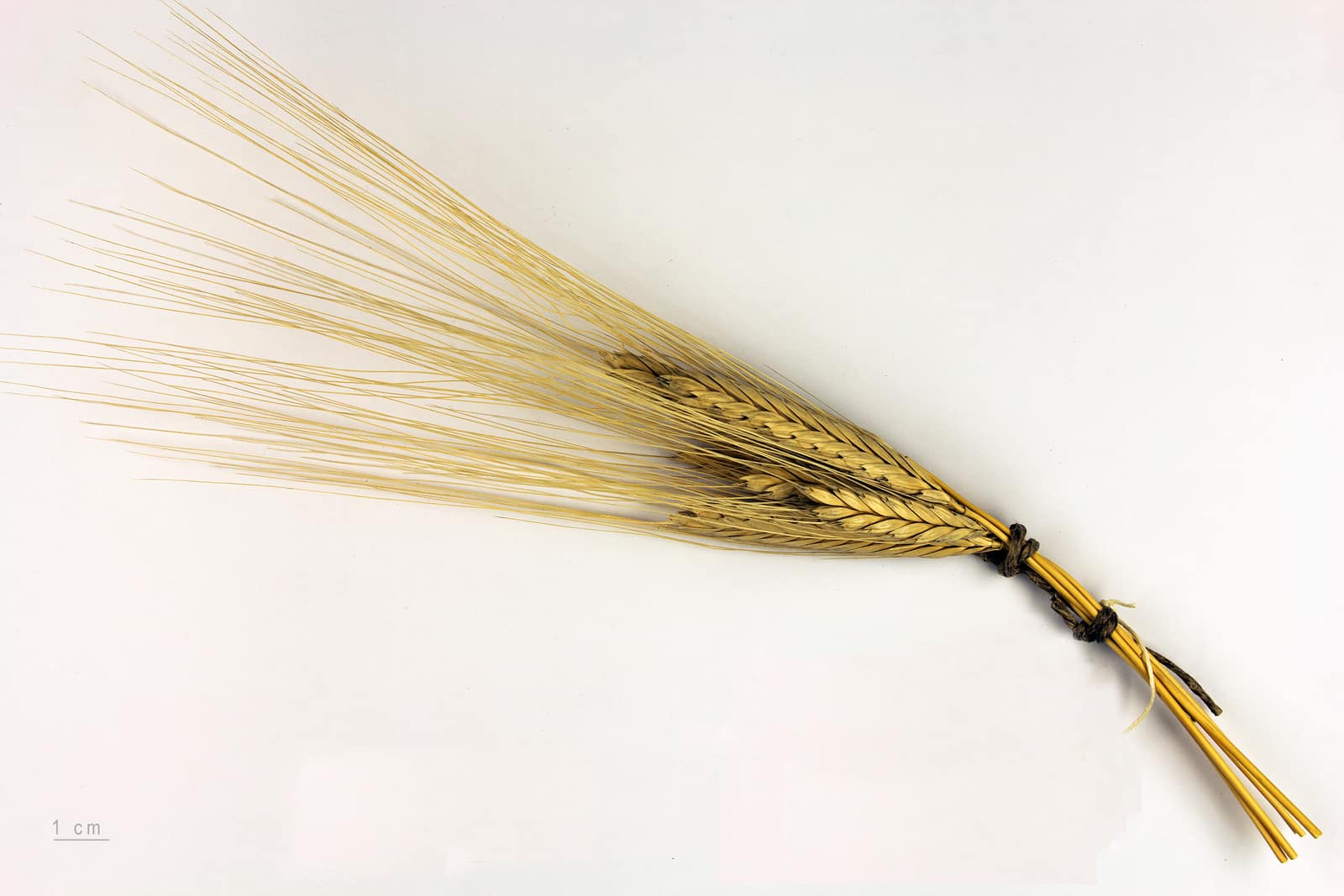
The grass on these slopes had a way of escaping. When its ears ripened, they broke apart and the seeds fell to the ground at a touch, which is how a wild plant sows itself.
People came each summer to gather it, with sickles of flint set in handles of bone or wood. Perhaps they began to keep some seed and to sow it near their houses. Year after year, without anyone intending it, the plants whose ears held together were the ones that reached the threshing floor, and the ones sown again. It took a thousand years or more.
On the way to step 3
Wheat fed the first farming villages of southwest Asia. On the other side of the world, the peoples of Mexico were slowly turning a wild grass into maize.
John Doebley, CC BY 3.0, via Wikimedia CommonsCC-BY-3.0Original record
3 Americas · c. 7000 BCE
Maize, from teosinte
- Dated
- c. 7000 BCE
- Place
- Near Iguala, Guerrero, Mexico
- Remains
- Intact
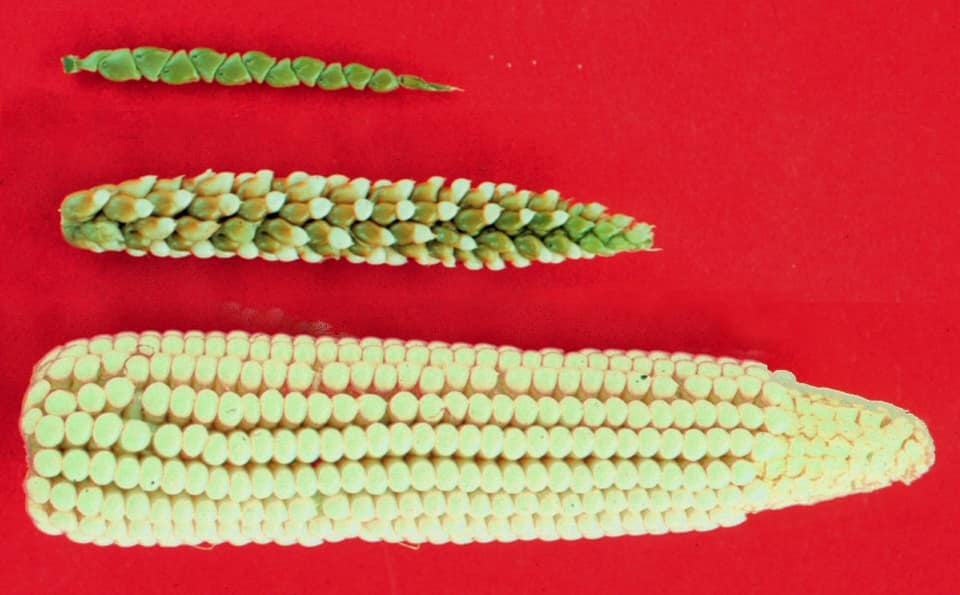
Look at the ear at the top of the picture. It is barely as long as a finger. Each of its few seeds is sealed in a case so hard that a tooth would break on it. This grass, teosinte, still grows wild on the hills of the Balsas River in southwestern Mexico.
Some nine thousand years ago, people living in the forests of that valley began to gather it, to sow the seeds they preferred, and to keep the plants whose seeds came loose. They left almost nothing we can see: only grains of starch, smaller than dust, caught in the cracks of the stones on which they ground it.
On the way to step 4
Harvests had to be counted, stored and owed. In the cities of Mesopotamia, the counting left the memory and went onto clay.
The Metropolitan Museum of Art, CC0 (Open Access), via Wikimedia CommonsCC0-1.0Original record
4 Asia · 3300 to 2900 BCE
The first writing: proto-cuneiform tablets of Uruk
- Dated
- 3300 to 2900 BCE
- Place
- Warka, Al-Muthanna Governorate, Iraq
- Remains
- Fragmentary
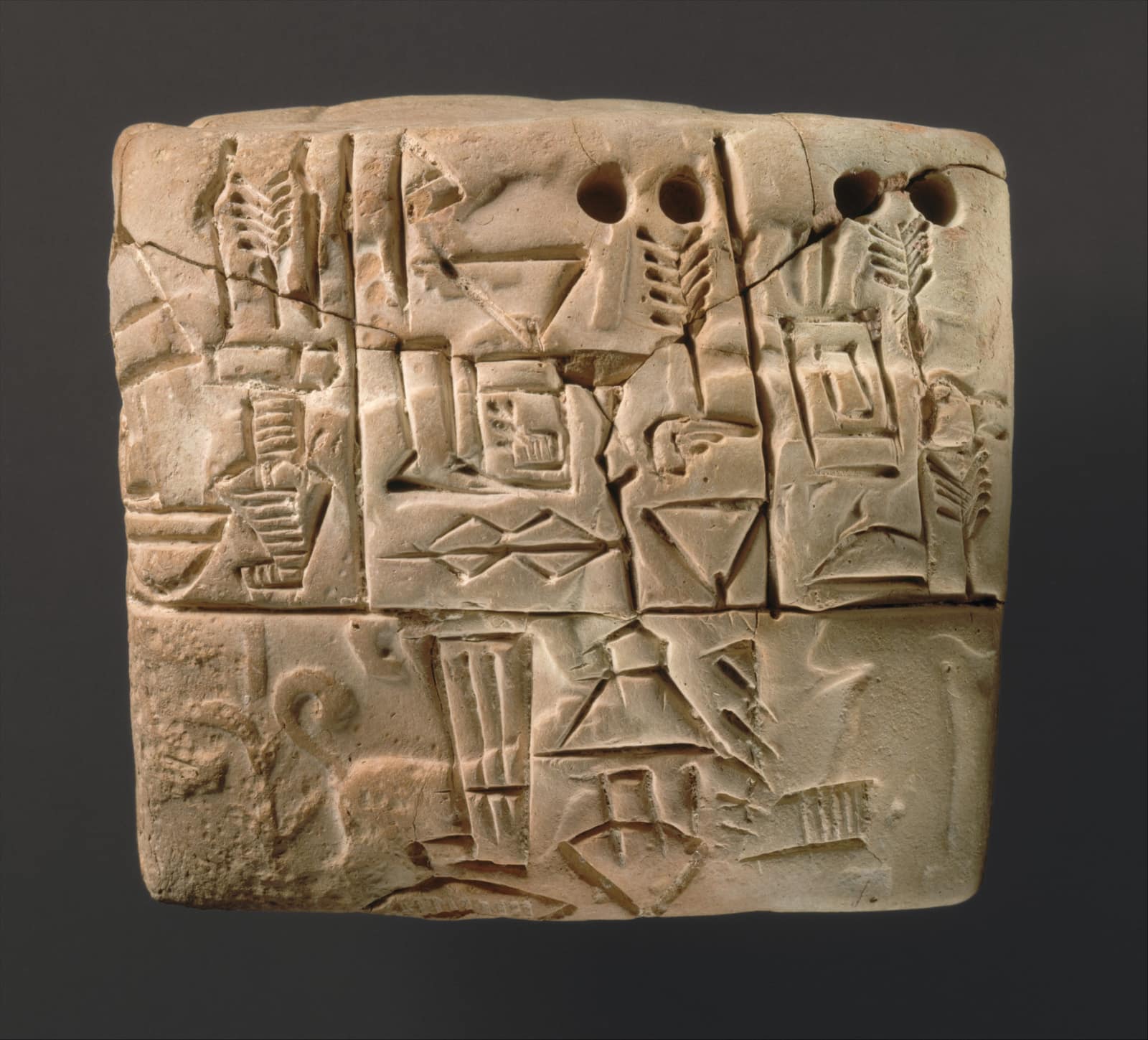
The first thing this civilization chose to write down was not a poem, a prayer or the name of a king. It was barley.
In the temple storehouses of Uruk, officials had to know who had received how much grain, how many sheep had gone out, how much beer was owed to whom. Memory was not enough. So they pressed a reed into a pad of damp clay: round holes and notches for the numbers, small drawings for the things counted, an ear of grain, a jar, a head. Then they rolled a seal across it, a little carved scene of a hunter and his dogs, to show who answered for the account.
On the way to step 5
Clay, stone, bamboo and silk carried writing for thousands of years. In Han China, a light sheet of pounded fibre began to take their place.
Gary Todd, CC0, via Wikimedia CommonsCC0-1.0Original record
5 Asia · 200 BCE to 105 CE
Paper: a sheet of pounded rags and bark
- Dated
- 200 BCE to 105 CE
- Place
- Luoyang, Henan, China
- Remains
- Fragmentary
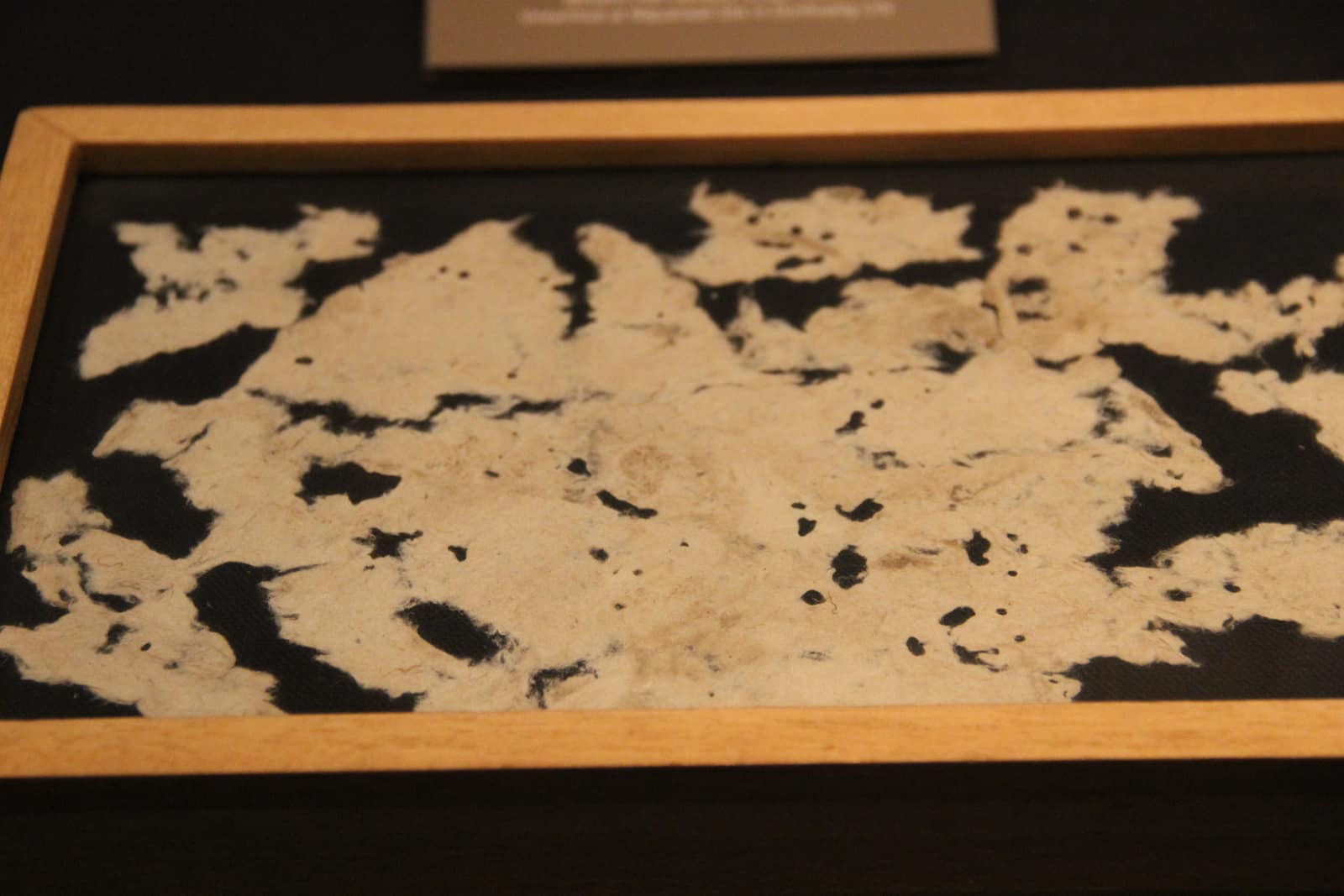
It was made from what was thrown away. Old rags, frayed rope, the worn nets of fishermen, the inner bark of trees: soaked, beaten to a pulp, spread thin on a screen, left to dry.
The court of the Han kept its records on strips of bamboo tied together with cord, heavy to carry, or on silk, too dear to waste. In the year 105 an official of the imperial workshops named Cai Lun presented the emperor with sheets made in the new way. The chroniclers gave him the credit. The earth has since given back older sheets, rough and fibrous, one with a map drawn on it, laid on the chest of someone buried two or three centuries before.
On the way to step 6
Paper carried knowledge across continents, but work was still done by muscle, wind and water. In 1712, near Dudley Castle, an engine pumped water with the force of steam.
Andy Dingley, CC BY-SA 4.0, via Wikimedia CommonsCC-BY-SA-4.0Original record
6 Europe · 1712 to 1769
Fire made to work: from Newcomen's engine to Watt's condenser
- Dated
- 1712 to 1769
- Place
- Coneygree, Tipton, near Dudley, West Midlands, United Kingdom
- Remains
- Fragmentary
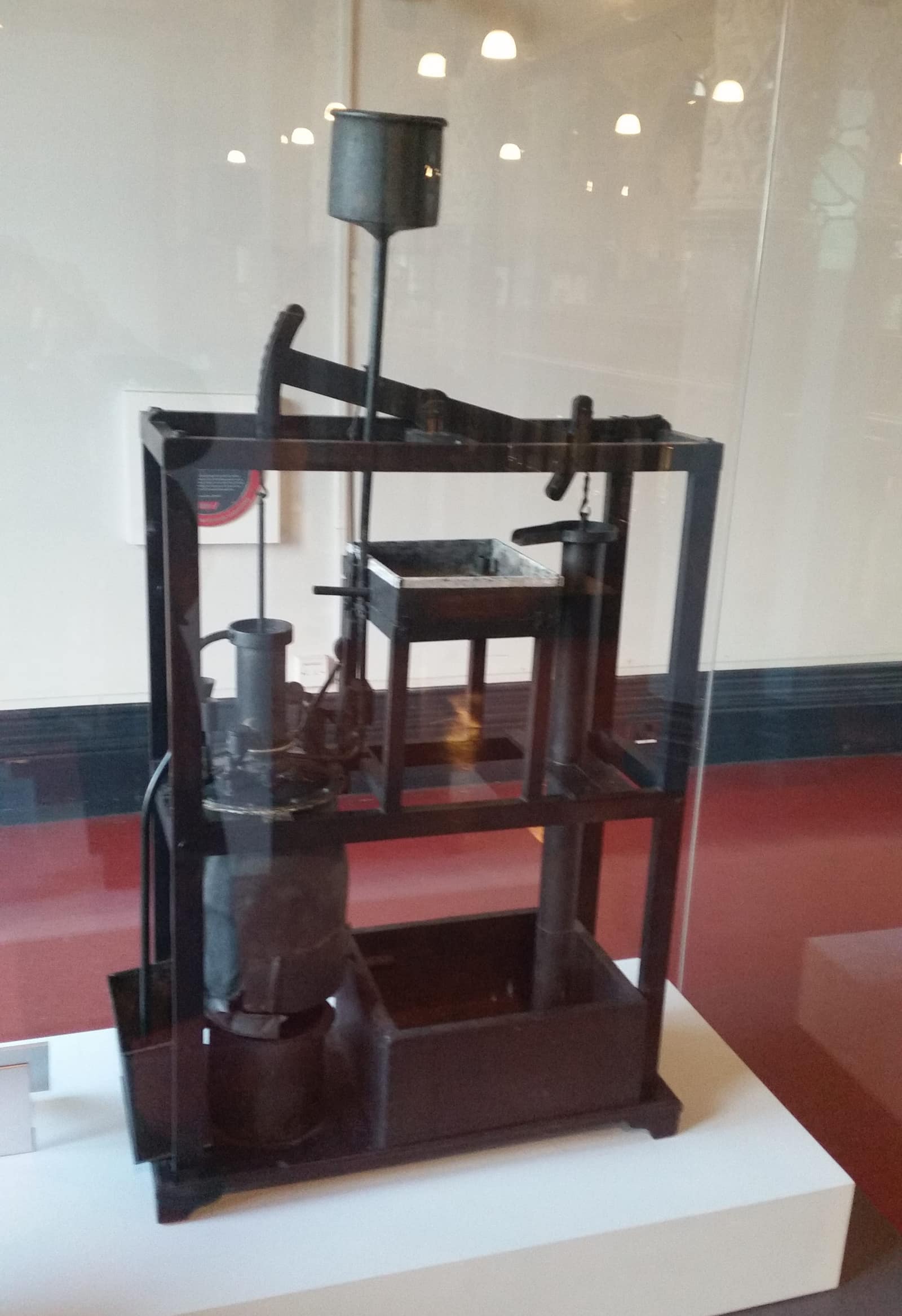
In the coal country of the English Midlands, at the beginning of the eighteenth century, the deeper the miners dug, the more water rose to drown the seams. Horses turned pumps in endless circles, and it was not enough.
In 1712, near the walls of Dudley Castle, a new kind of machine was set to work. A fire boiled water in a boiler; the steam filled a tall cylinder; a spurt of cold water collapsed it, and the weight of the sky itself drove a piston down. A great wooden beam rocked above the pit, and water came up. The engine's maker, Thomas Newcomen, sold iron tools in a harbour town in Devon.
On the way to step 7
Steam gave machines their strength. At the end of the same century, in an English village, a doctor protected a boy against smallpox with the matter of a milder disease.
Wellcome Collection, CC BY 4.0, via Wikimedia CommonsCC-BY-4.0Original record
7 Europe · 1796
From variolation to vaccination: Jenner and the cowpox
- Dated
- 1796
- Place
- Berkeley, Gloucestershire, England, United Kingdom
- Remains
- Intact
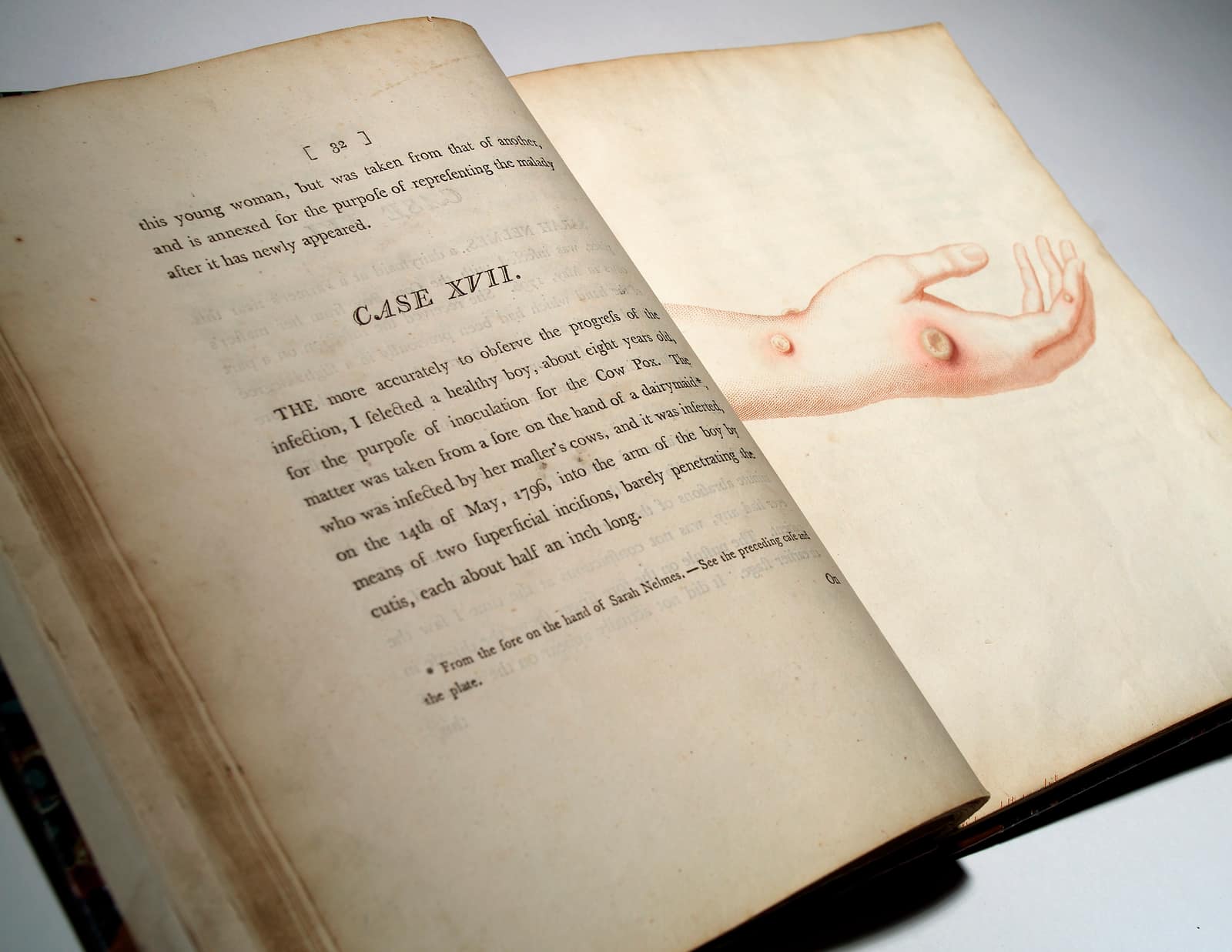
Long before the word vaccine, people had learned to fight smallpox with smallpox. In China a little powdered scab was blown into the nose; in Bengal travelling inoculators scratched the skin; in West Africa and in Ottoman towns, a blade or a needle carried the matter of a mild case into a healthy arm. Those treated usually had a light illness and were safe for life. Some died of it.
The knowledge travelled. An English ambassador's wife watched it in Adrianople and had her children treated. In Boston, a man named Onesimus, held in slavery by a minister, explained how it had been done to him in Africa; in the terrible summer of 1721 a doctor tried it on his own son.
On the way to step 8
Four years later, in Como, a stack of metal discs gave the first steady electric current.
Dario Crespi, CC BY-SA 4.0, via Wikimedia CommonsCC-BY-SA-4.0Original record
8 Europe · 1800
Volta's pile, the first electric battery
- Dated
- 1800
- Place
- Como, Lombardy, Italy
- Remains
- Fragmentary
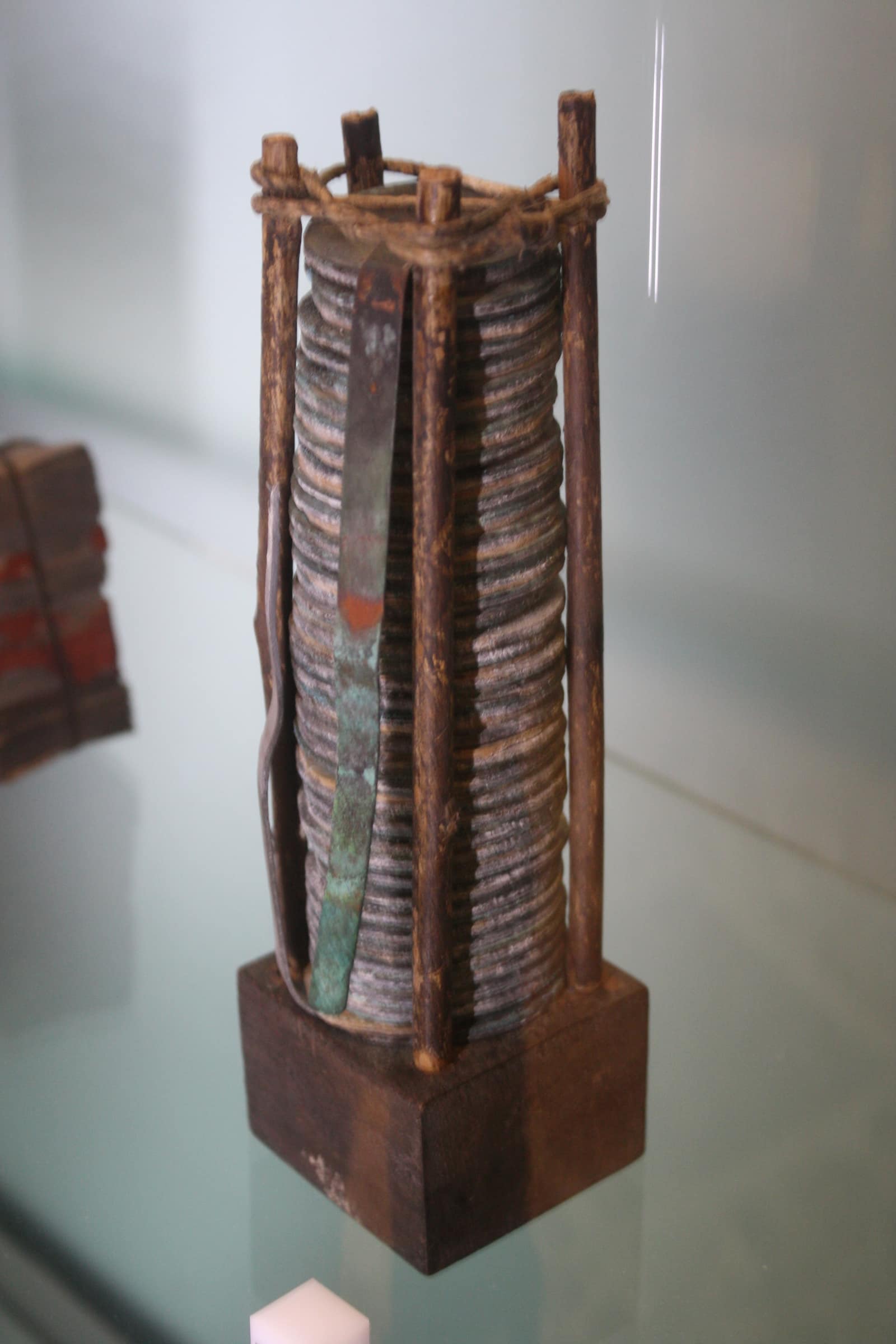
Until the spring of 1800, this civilization knew electricity only as a spark: a crack from a glass jar, a flash from the sky, gone as soon as it came.
In Como, on the shore of a lake in Lombardy, a professor named Alessandro Volta piled small discs one on another. A disc of silver, a disc of zinc, a round of cardboard wetted with salt water; then silver, zinc, cardboard again, twenty, forty, sixty times. When he touched the two ends of the column with wet fingers he felt a small, repeated shock, and it did not run out.
On the way to step 9
Electricity would one day carry signals and voices. Meanwhile, in Burgundy, light itself was fixed on a metal plate.
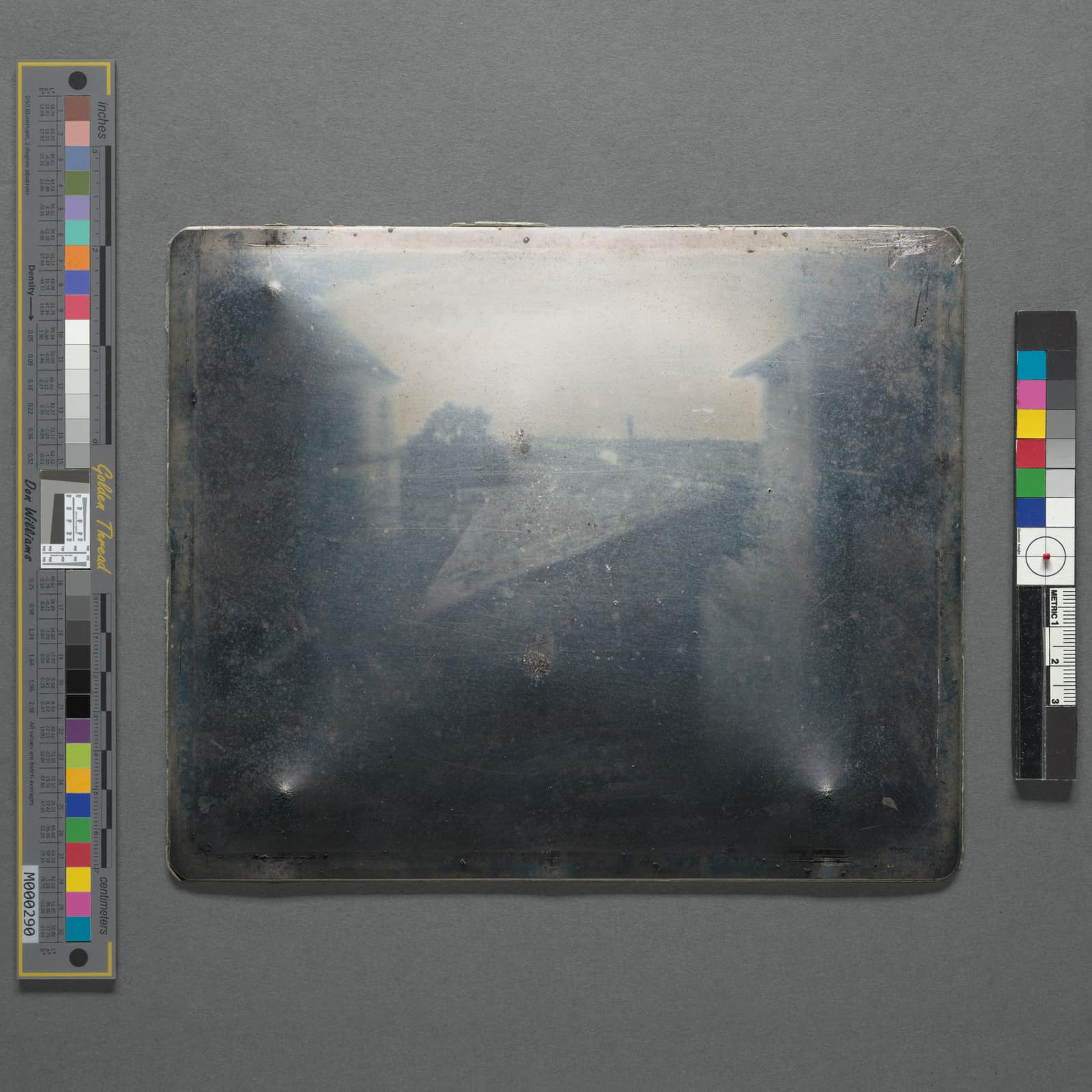
Nicéphore Niépce, domaine public ; photographie Harry Ransom Center, via Wikimedia CommonsPDMOriginal record
9 Europe · 1826 to 1827
The first photograph from a camera: the view from the window at Le Gras
- Dated
- 1826 to 1827
- Place
- Saint-Loup-de-Varennes, Saône-et-Loire, France
- Remains
- Intact
You may need to tilt your head. The image is there, in the dark mirror of the plate, but it only appears when the light strikes it at the right angle: a roof on the left, another on the right, a pale sky between them, a tree.
It is what Nicéphore Niépce saw from an upper window of his house in Burgundy. He had spread a thin coat of bitumen, a kind of natural tar, on a plate of polished pewter and set it at the back of a camera, a box with a lens. Then he waited, perhaps a whole day, perhaps several. Where the light struck, the bitumen hardened. The rest he washed away.
On the way to step 10
Images could now be kept. Two decades later, in Boston, pain itself was suspended: a patient slept through an operation.
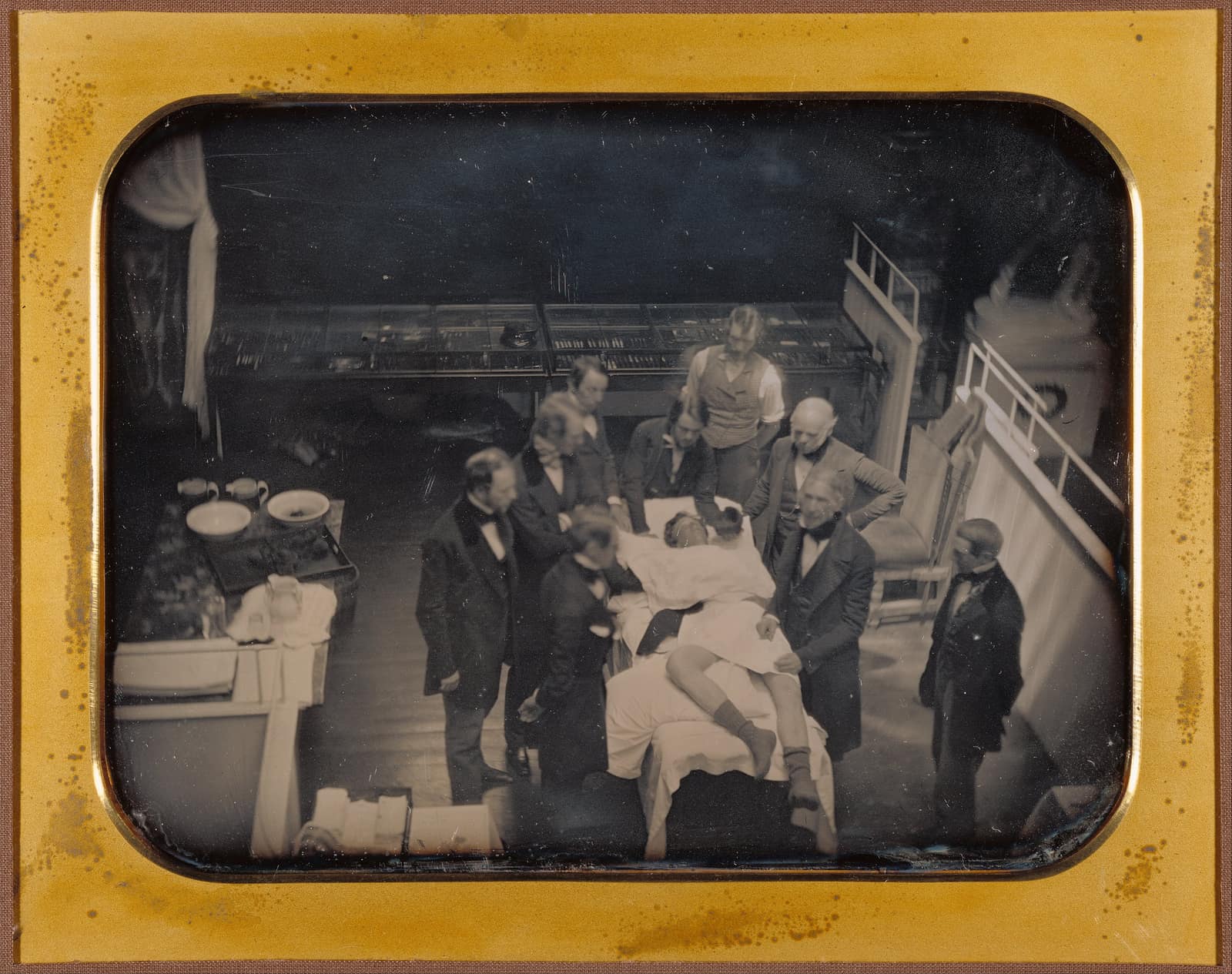
Southworth & Hawes, 1847, The J. Paul Getty Museum, domaine public, via Wikimedia CommonsPDMOriginal record
10 Americas · 1846
Ether Day: the first public operation under anaesthesia
- Dated
- 1846
- Place
- Ether Dome, Massachusetts General Hospital, Boston, Massachusetts, United States
- Remains
- Intact
Before this morning, the best a surgeon could offer was speed. Patients were held down, given alcohol or opium, and cut while they were awake; the fastest operators were the most admired.
On 16 October 1846, under the dome of a hospital in Boston, a young man named Gilbert Abbott sat in the operating chair with a tumour on his neck. A dentist, William Morton, arrived late with a glass flask. Abbott breathed from it and fell into a heavy sleep. The surgeon, John Collins Warren, made his incision. When he woke he said, by one account, that it had felt as if his neck had been scratched.
On the way to step 11
Medicine learned to spare pain; wires learned to carry speech. In 1876 the human voice travelled along a wire.
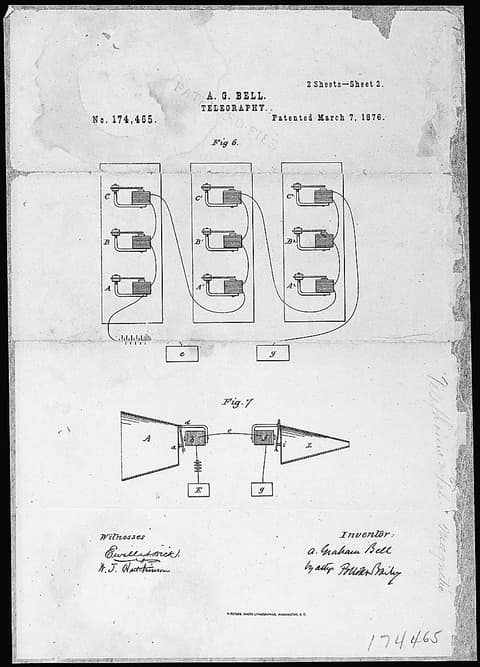
U.S. National Archives and Records Administration, via Wikimedia CommonsPDMOriginal record
11 Americas · 1876
The telephone: a patent and a sentence
- Dated
- 1876
- Place
- Boston, Massachusetts, United States
- Remains
- Intact
The first sentence was an ordinary one: a man calling another into the room.
On 10 March 1876, in rooms in Boston, Alexander Graham Bell, a teacher of the deaf, leaned over an instrument in which a fine needle touched water made sharp with acid. His assistant, Thomas Watson, waited in another room at the end of a wire. Bell spoke, and his notebook entry for that day records the words: Mr. Watson, come here, I want to see you. Watson came. He had heard and understood.
On the way to step 12
Voices crossed cities by wire. Ten years later, a light carriage with its own petrol engine drove on the roads around Mannheim.
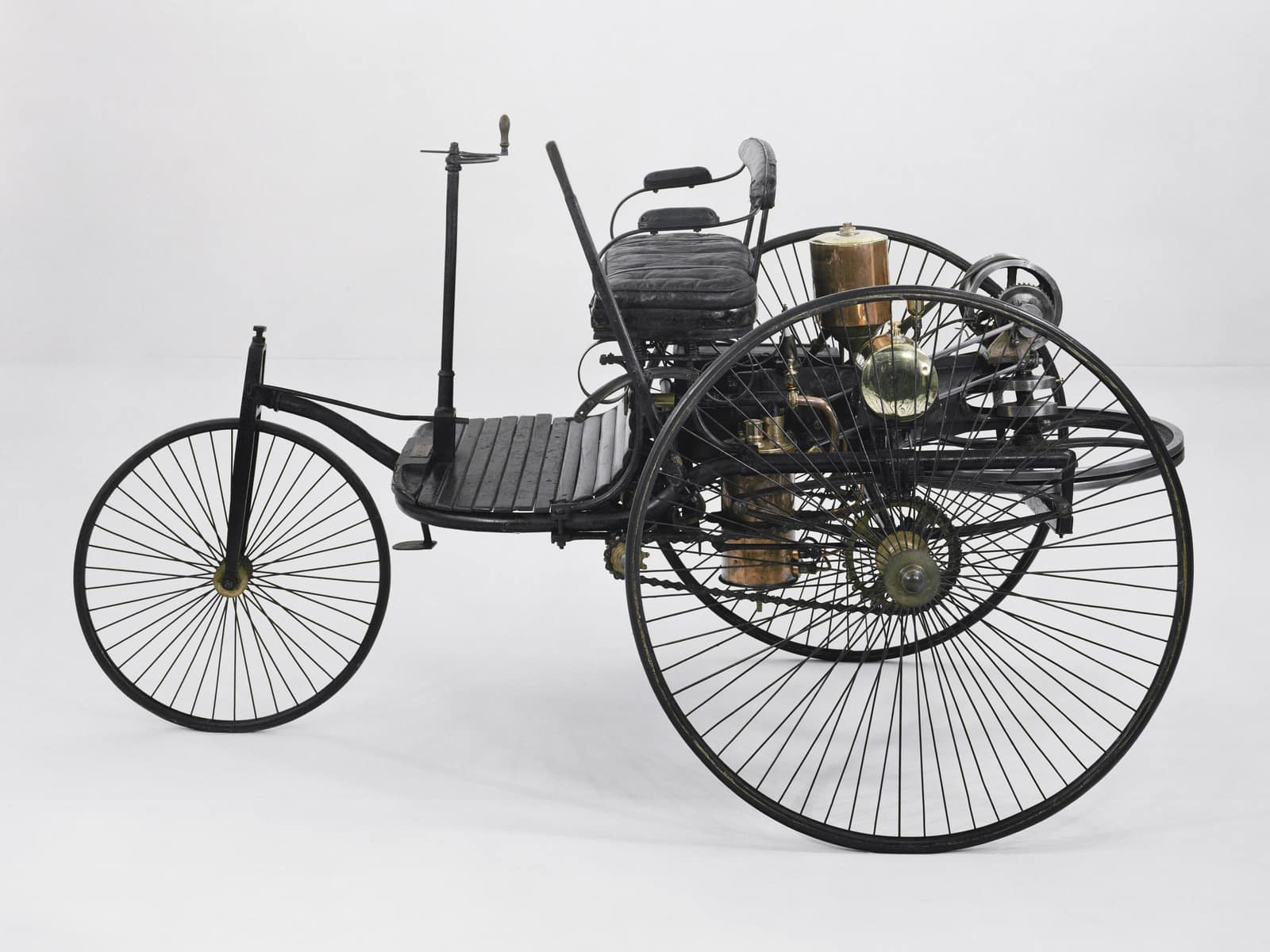
Deutsches Museum, Munich, CC BY-SA 4.0, via Wikimedia CommonsCC-BY-SA-4.0Original record
12 Europe · 1886 to 1888
Three wheels and a petrol engine: the Benz Patent-Motorwagen
- Dated
- 1886 to 1888
- Place
- Mannheim, Baden-Württemberg, Germany
- Remains
- Intact
It looks like a large tricycle that has lost its rider. Two tall wheels at the back, a small one in front, a bench, a steering rod with a little handle. Behind the seat, a single cylinder, a flywheel lying flat, a few vessels of brass and copper.
In the winter of 1886 its maker, Carl Benz, registered it at the patent office as a vehicle driven by a gas engine. The engine was his; it burned light petrol bought at a pharmacy and gave less than the strength of one horse.
On the way to step 13
Machines left the rails, then the ground: in 1903, twelve seconds over the sand of Kitty Hawk.
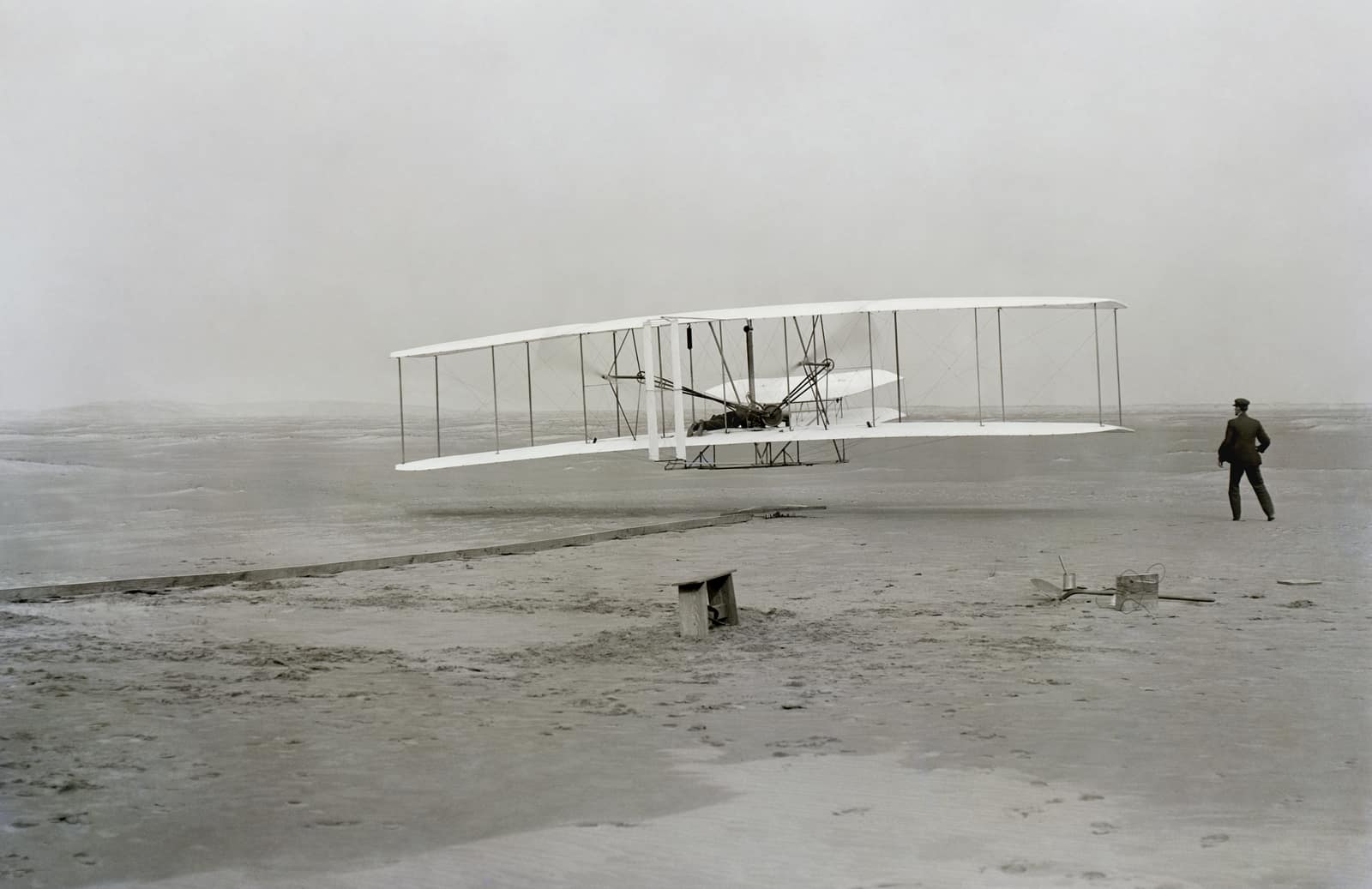
John T. Daniels, 1903, Library of Congress, domaine publicPDMOriginal record
13 Americas · 1903
The first powered flight: the Wright Flyer
- Dated
- 1903
- Place
- Wright Brothers National Memorial, Kill Devil Hills, North Carolina, United States
- Remains
- Intact
Twelve seconds. That is how long the first flight lasted, and it was enough.
On a winter morning at the edge of the Atlantic, on sand scoured by the wind, two brothers who made bicycles in Ohio laid a wooden rail along the ground. On it rested a machine of wood and muslin, driven by an engine made in their own shop. Orville lay flat on the lower wing. Wilbur ran beside him, steadying a wing, and let go.
On the way to step 14
The century of flight was also the century of the field. From 1913, nitrogen taken from the air by industry began to feed the crops of the world.
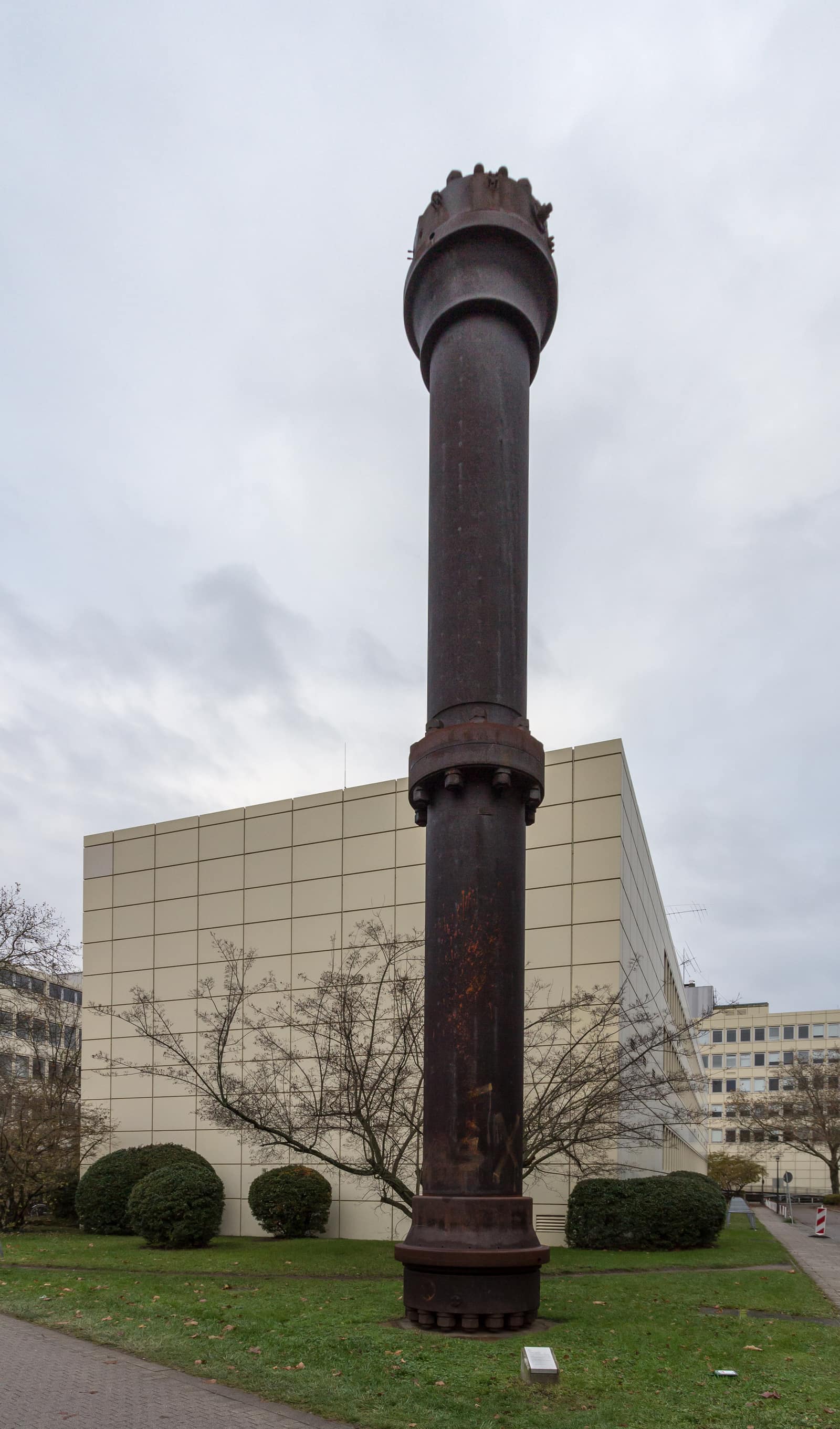
Dietmar Rabich, CC BY-SA 4.0, via Wikimedia CommonsCC-BY-SA-4.0Original record
14 Europe · 1909 to 1913
Bread from the air: the Haber-Bosch synthesis of ammonia
- Dated
- 1909 to 1913
- Place
- Karlsruhe Institute of Technology, Karlsruhe, Germany
- Remains
- Intact
Nitrogen is most of the air this civilization breathed, and yet its fields went hungry for it. The gas would not combine with anything. For centuries, farmers returned it to the soil with manure and beans; later, ships carried seabird droppings from Peru and saltpetre from the Chilean desert.
In a laboratory in Karlsruhe, on 2 July 1909, a chemist named Fritz Haber and his young assistant showed visitors from a dye company a small steel apparatus. Gas went in under great pressure; from a narrow tube, clear drops of liquid ammonia fell, one after another. The assistant kept two sealed tubes of them.
On the way to step 15
More food meant more lives. A mould on a forgotten dish in London would save many more of them.
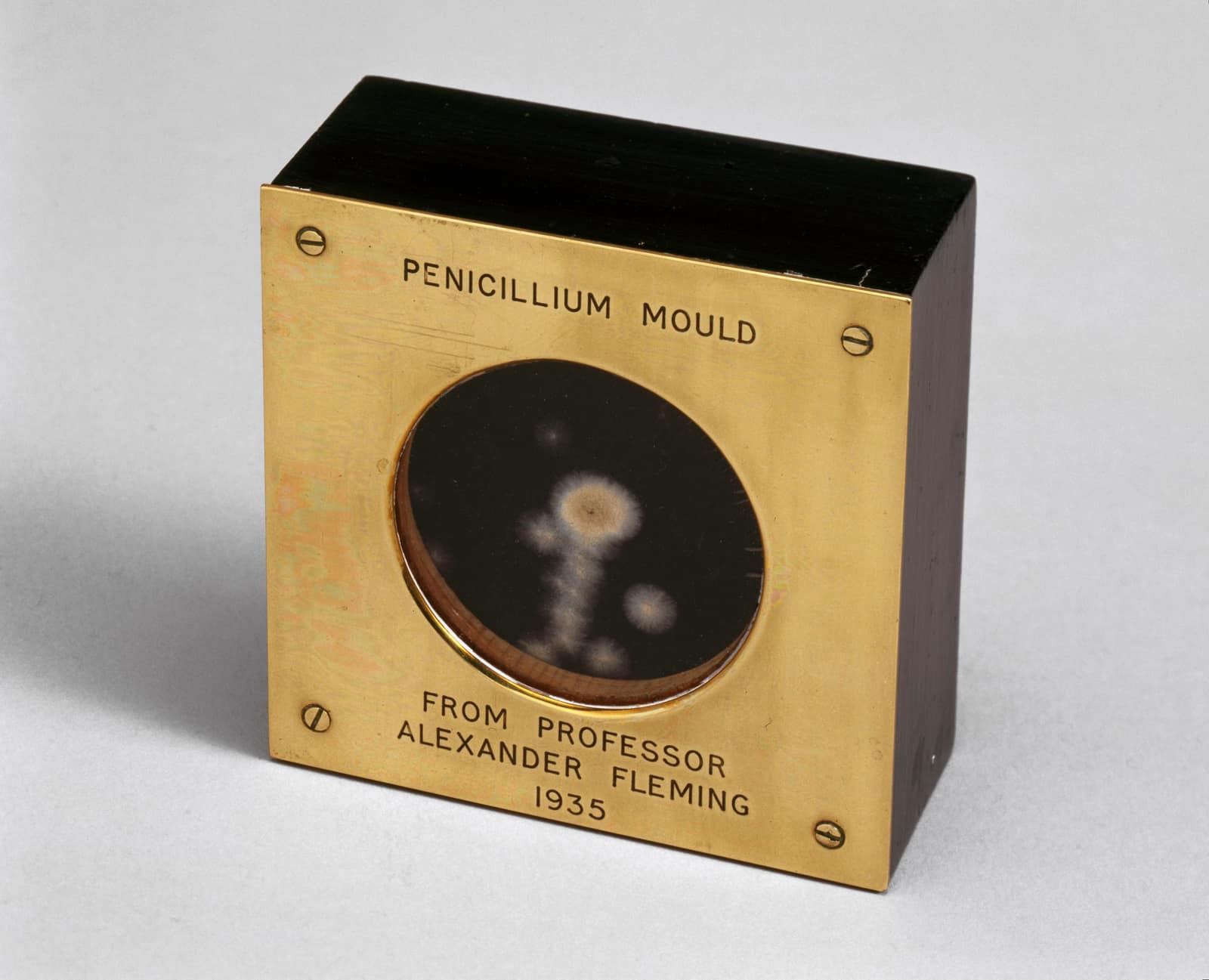
Science Museum London / Science and Society Picture Library, CC BY-SA 4.0, via Wikimedia CommonsCC-BY-SA-4.0Original record
15 Europe · 1928 to 1945
The discovery of penicillin
- Dated
- 1928 to 1945
- Place
- St Mary's Hospital, Paddington, London, United Kingdom
- Remains
- Intact
It began, as many things in this archive do, with something that went wrong. A dish of bacteria left on a bench in a London hospital during a summer holiday grew a patch of mould. Around the mould, the bacteria had died.
Alexander Fleming noticed it, kept the mould, gave its juice a name and wrote it up. Then, for ten years, little happened. The substance was fragile and hard to collect.
On the way to step 16
Medicine learned to save millions. In the same decade, physics learned to destroy a city in an instant.
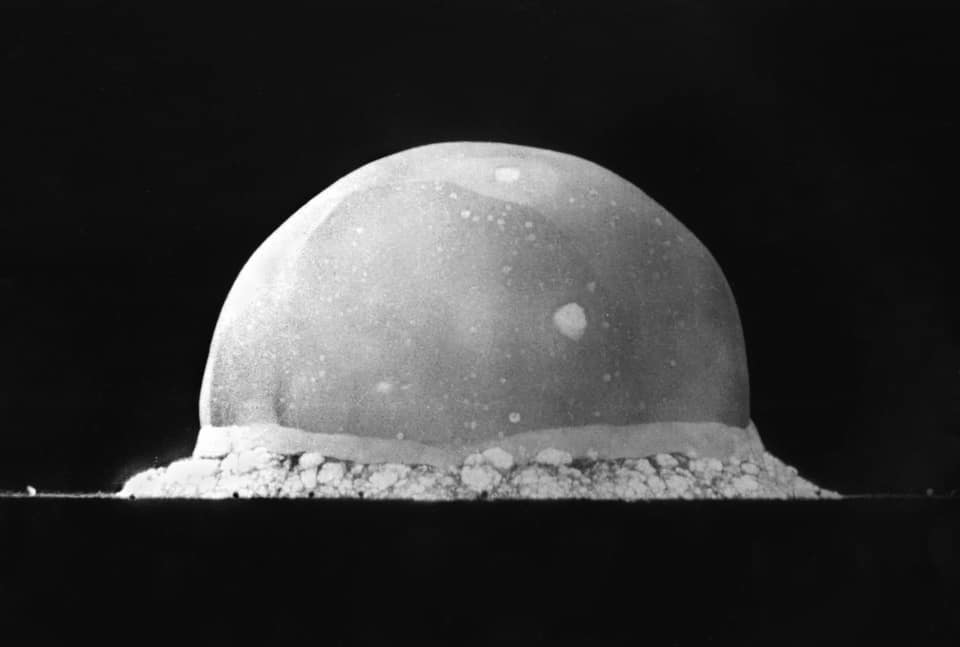
Berlyn Brixner / Los Alamos National LaboratoryPDMOriginal record
16 Americas · 1945
Trinity: the first nuclear explosion
- Dated
- 1945
- Place
- Trinity Site, White Sands Missile Range, New Mexico, United States
- Remains
- Fragmentary
The place had an old Spanish name, Jornada del Muerto, the dead man's journey. Before dawn, in rain that had delayed everything, a steel sphere sat at the top of a tower in the middle of it. Men waited in bunkers miles away, lying face down, their feet toward the tower.
At 5:29 the desert was lit as no morning had ever lit it. The photograph kept here was made sixteen thousandths of a second later: a dome of fire already two hundred metres high, lifting the ground at its edge. The tower was gone. The sand beneath it turned to glass.
On the way to step 17
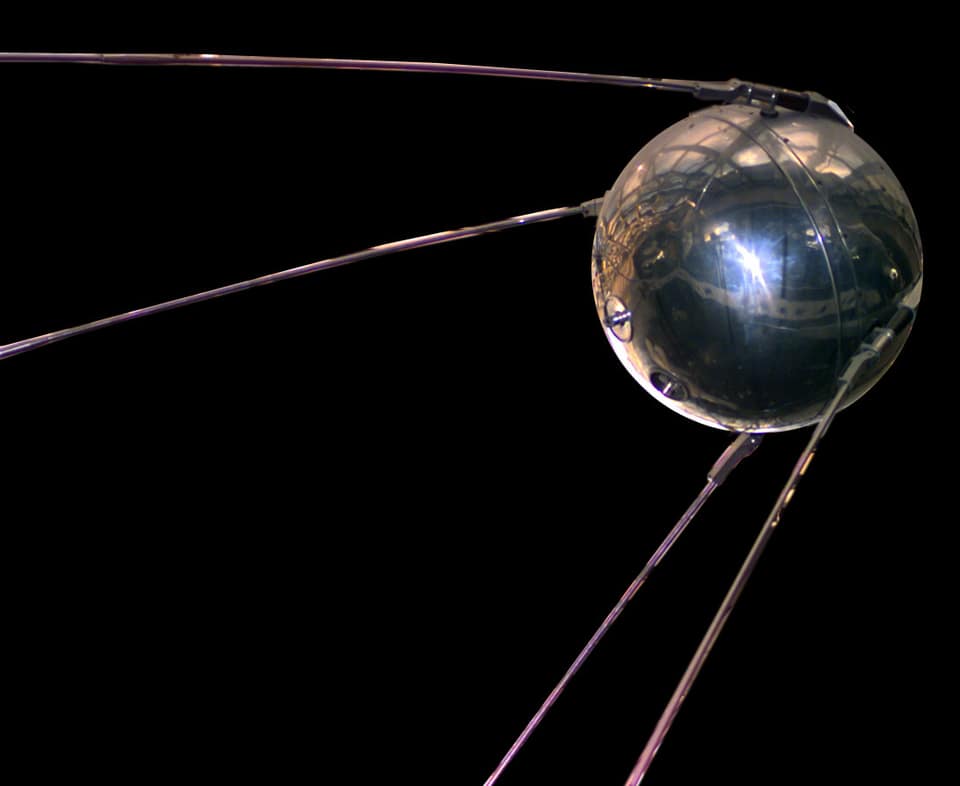
Twelve years after Trinity, the rockets built for war carried a small sphere around the Earth.
NSSDC, NASAPDMOriginal record
17 Asia · 1957
Sputnik 1, the first artificial satellite
- Dated
- 1957
- Place
- Baikonur Cosmodrome, Kazakhstan
- Remains
- Lost
It was a ball of polished metal, not much larger than a child could hold in both arms, with four whip antennas trailing behind it. Inside there were batteries, a radio, and little else.
On 4 October 1957, from the steppe of Kazakhstan, a rocket built to carry a warhead lifted it instead into orbit. It passed over the continents, again and again, about every hour and a half. It did nothing but call: a short beep, a pause, a short beep. Radio amateurs on several continents tuned in and heard it. People went out at night to look for the rocket's body tumbling along the same path, bright enough to see.
On the way to step 18
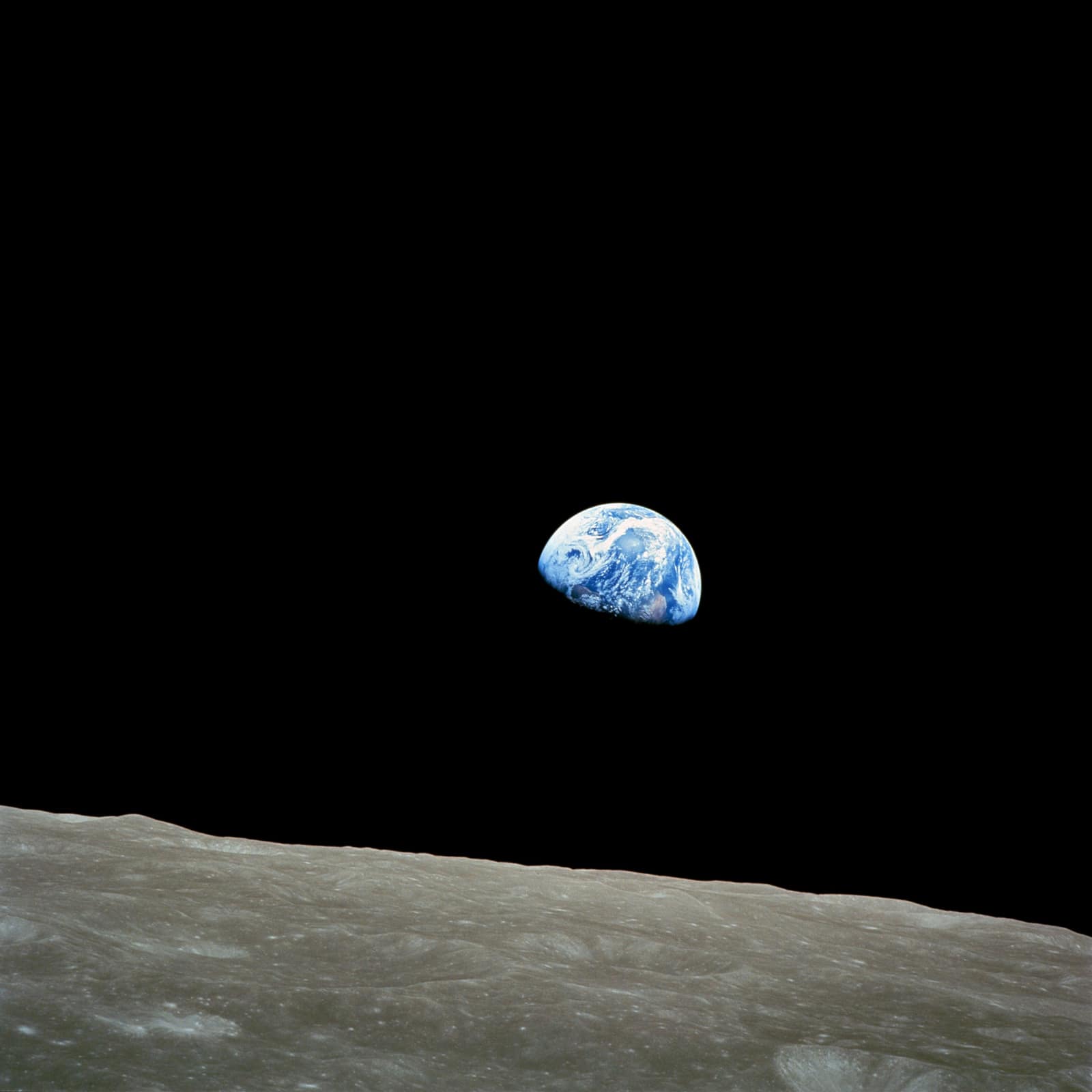
Eleven years later, people went far enough to turn around and look back.
NASA / Bill AndersPDMOriginal record
18 Americas · 1968
Earthrise
- Dated
- 1968
- Place
- Lunar orbit, above the eastern limb of the Moon's far side
- Remains
- Intact
They had gone to look at the Moon. For three orbits they photographed its craters, its grey plains, the places where others would one day land. The Earth was behind them, out of sight.
On Christmas Eve 1968, as the craft turned, one of the three saw something over the horizon and called out. It was the Earth, rising. There was a scramble for colour film. He took a picture, then another.
On the way to step 19
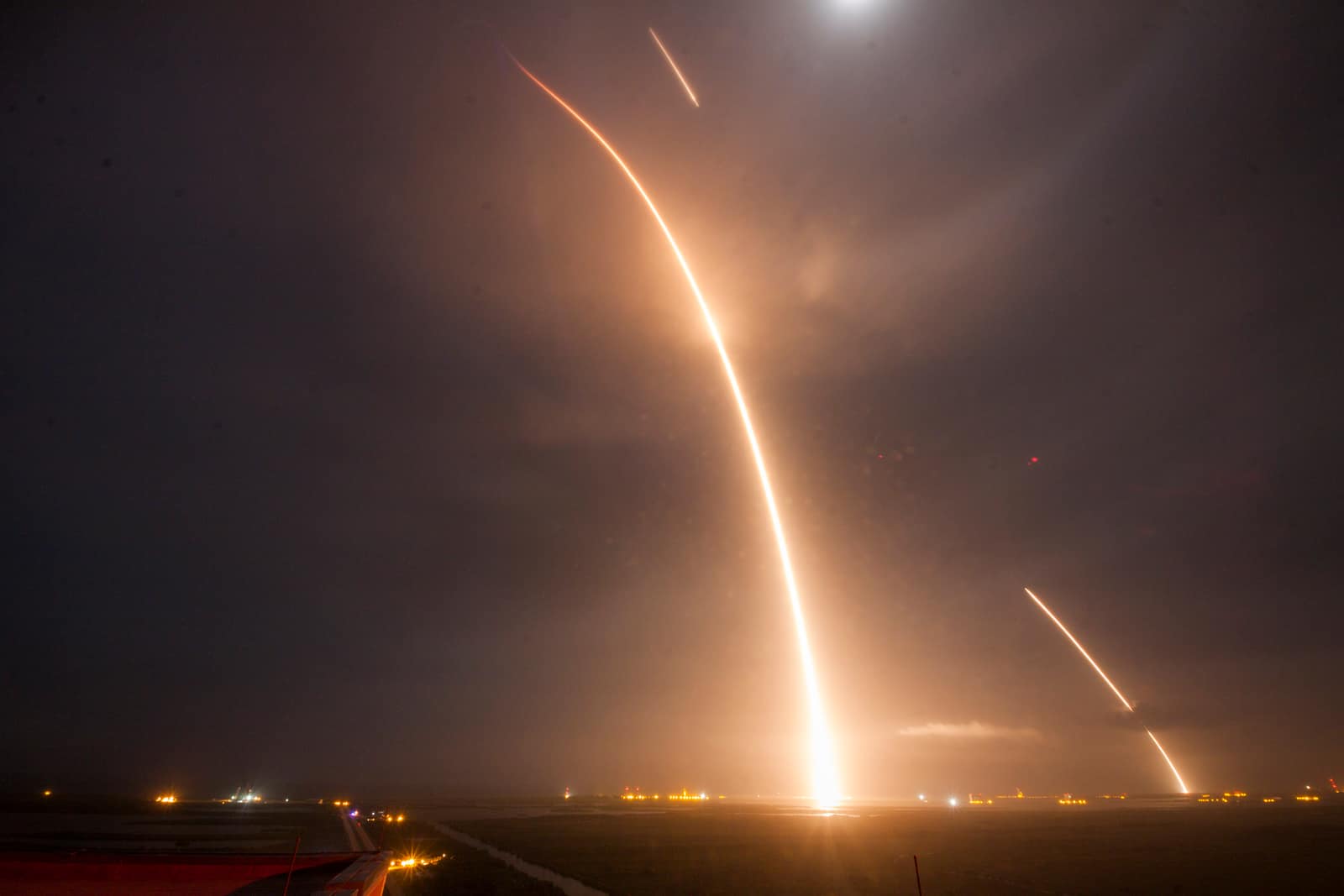
One small blue world, seen from outside. For decades after, almost every rocket that reached orbit was used once and lost. In December 2015, one came back and landed.
SpaceX, CC0, via Wikimedia CommonsCC0-1.0Original record
19 Americas · 2015
The first orbital-class booster to come back: Falcon 9 flight 20
- Dated
- 2015
- Place
- Cape Canaveral Space Force Station, Florida, United States
- Remains
- Intact
For more than half a century, this civilization built its orbital rockets, with rare exceptions, to be lost. Almost every stage carried its load a little way up, then fell into the sea in pieces, or burned. A new rocket was built for nearly every flight.
On the evening of 21 December 2015, at Cape Canaveral, a rocket rose into the dark with eleven small satellites. Two and a half minutes later its lower half let go. Instead of falling, it turned. It fired its engines against its own speed, came down through the upper air, and, over the flat ground by the coast, fired once more.
On the way to step 20
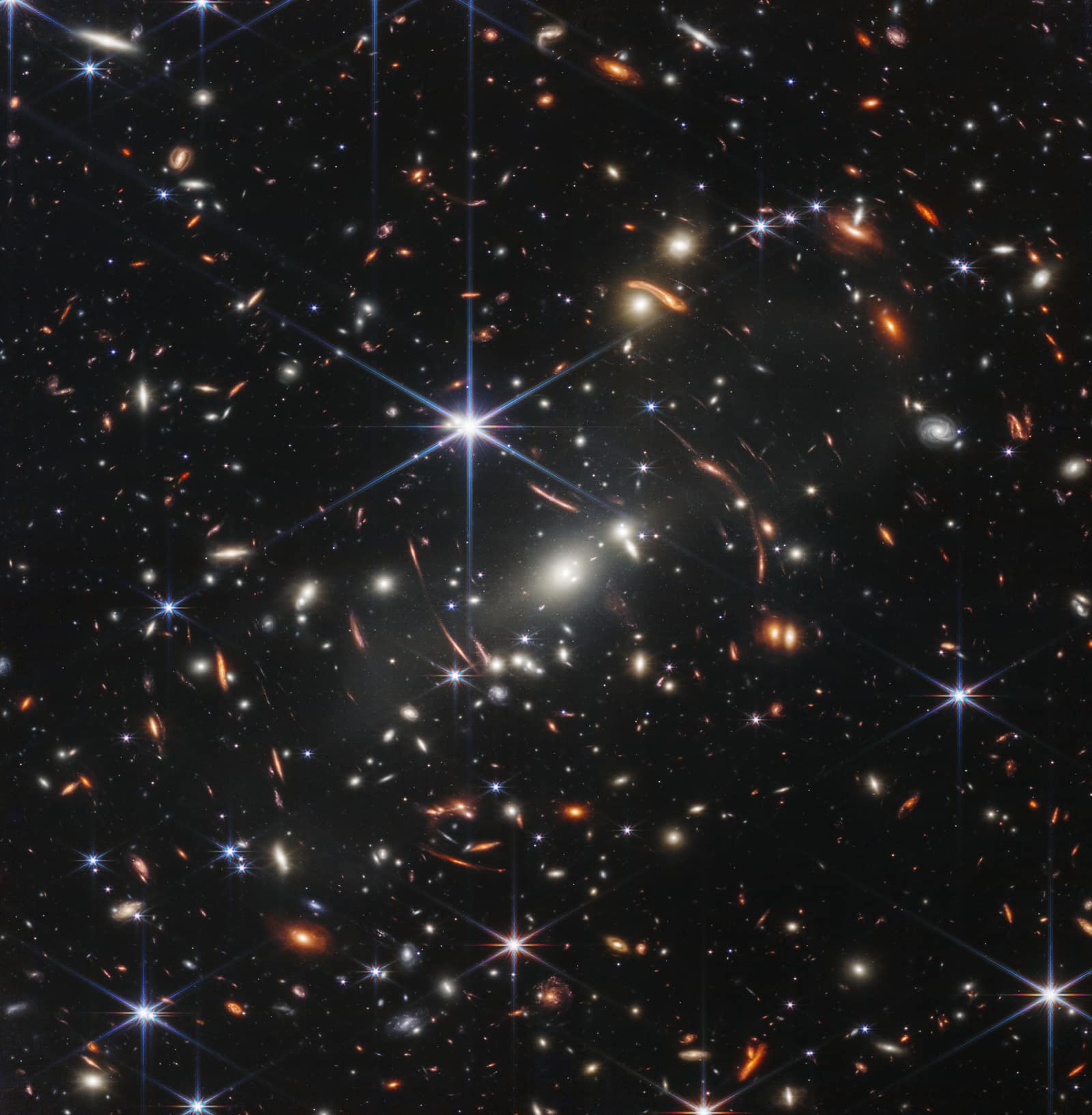
Reaching space was one path outward. Another was to look further: in 2022 a telescope a million and a half kilometres from Earth sent back galaxies seen as they were more than 13 billion years ago.
NASA, ESA, CSA, and STScIPDMOriginal record
20 Americas · 2022
Webb's First Deep Field
- Dated
- 2022
- Place
- Orbit around the Sun and Earth's second Lagrange point, looking towards the galaxy cluster SMACS 0723 in the southern constellation Volans
- Remains
- Digital
The telescope was launched on Christmas Day 2021, folded like a flower inside the nose of a rocket, from the coast of South America. For a month it unfolded itself on the way out: a sunshield the size of a tennis court, a mirror of gold-coated segments. Then it settled far beyond the Moon, in the cold, with its back to the Sun.
The first image this civilization chose to show was of almost nothing: a speck of the southern sky no bigger than a grain of sand held out at arm's length. The camera looked at it for twelve and a half hours.
On the way to step 21
The same year, a different kind of machine turned towards us. At the end of November, anyone could talk with it.
Transcription · Post on Twitter (now X)
today we launched ChatGPT. try talking with it here:
chat.openai.com
21 Americas · 2022
ChatGPT, the machine that answered in words
- Dated
- 2022
- Place
- Mission District, San Francisco, California, United States
- Remains
- Digital
There is nothing here to hold. The fragment is a box on a screen, a blinking line, and a machine that answers in whole sentences.
On the last day of November 2022, a company in San Francisco put it online as a test and let anyone use it for free. Its chief executive announced it in a single line, kept here exactly as it was written. People typed questions, requests, jokes, homework. The machine answered at once, politely, in the same language, and often it was right. Sometimes it was wrong with the same calm.
End of the journey
From the first people of our species to machines that answer in our languages. Which of our own turning points will still be told in 10,000 years?